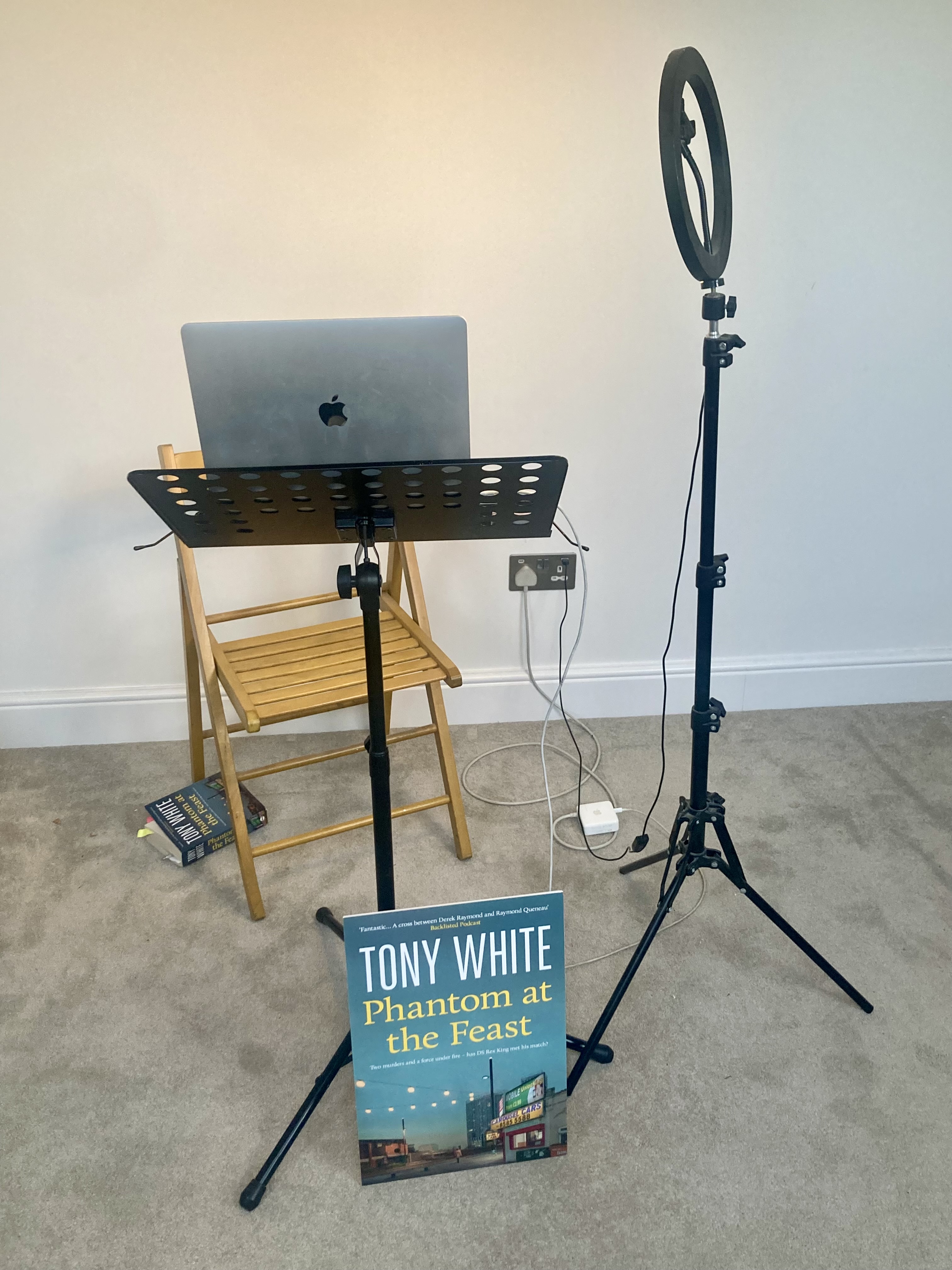
Always an exciting part of the #writinglife – proofreading the typeset pages.
§
NEW: sign up to receive occasional book news and invites to forthcoming events and launches…

Always an exciting part of the #writinglife – proofreading the typeset pages.
§
NEW: sign up to receive occasional book news and invites to forthcoming events and launches…
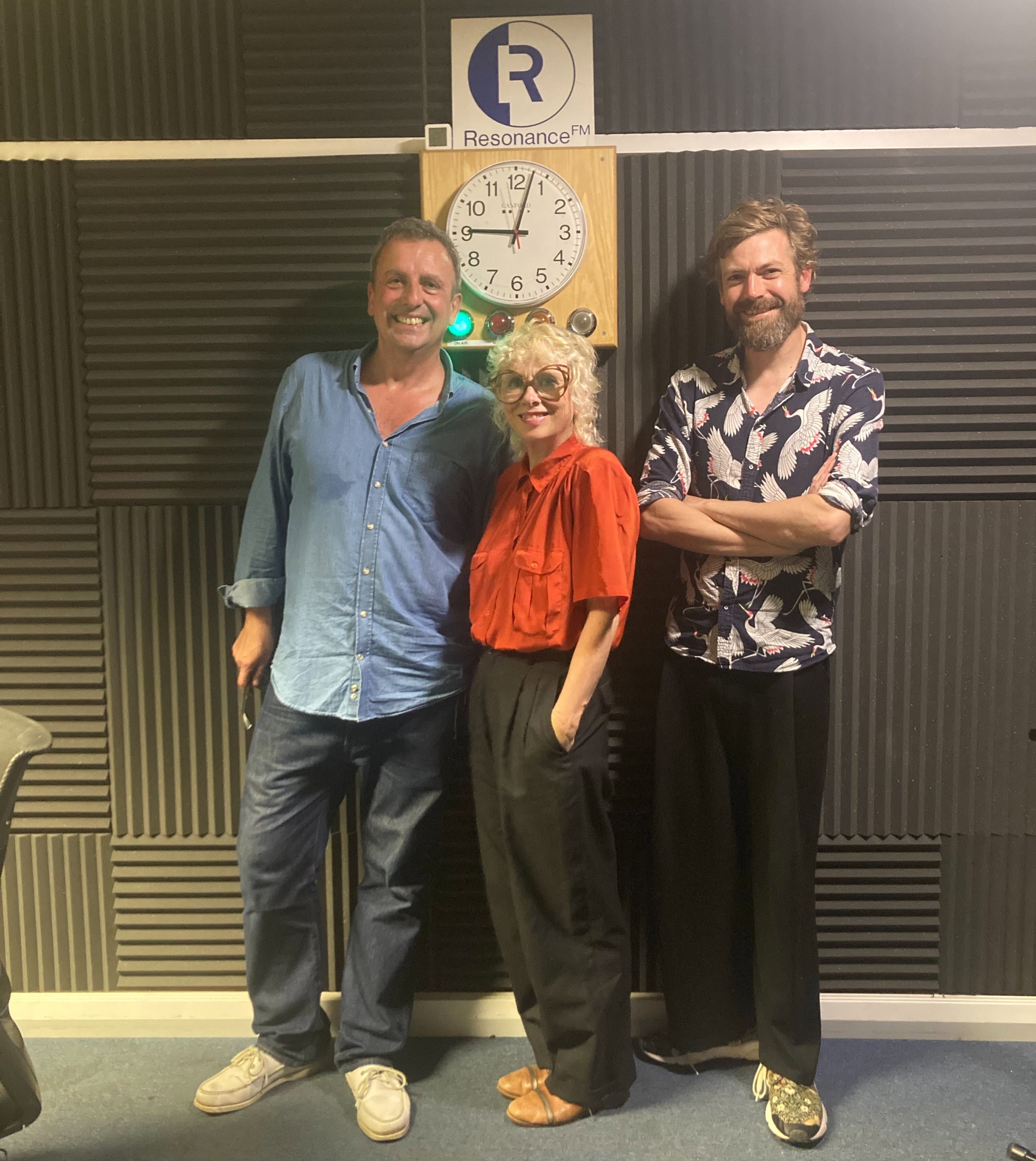
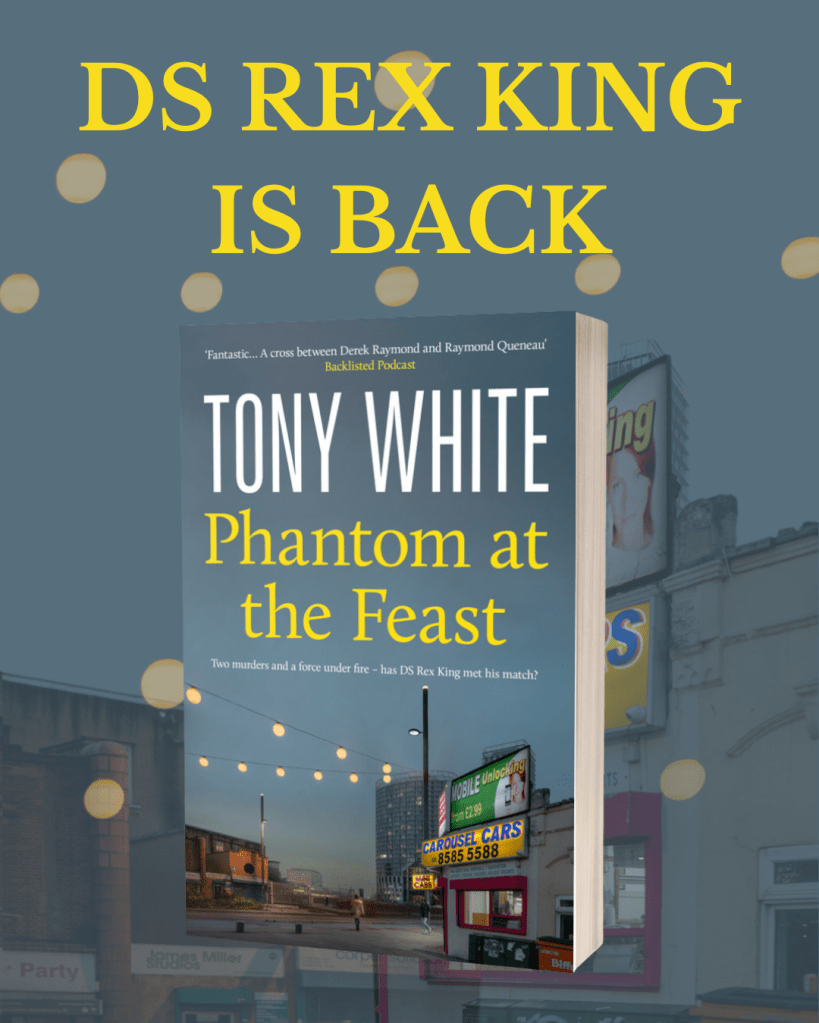
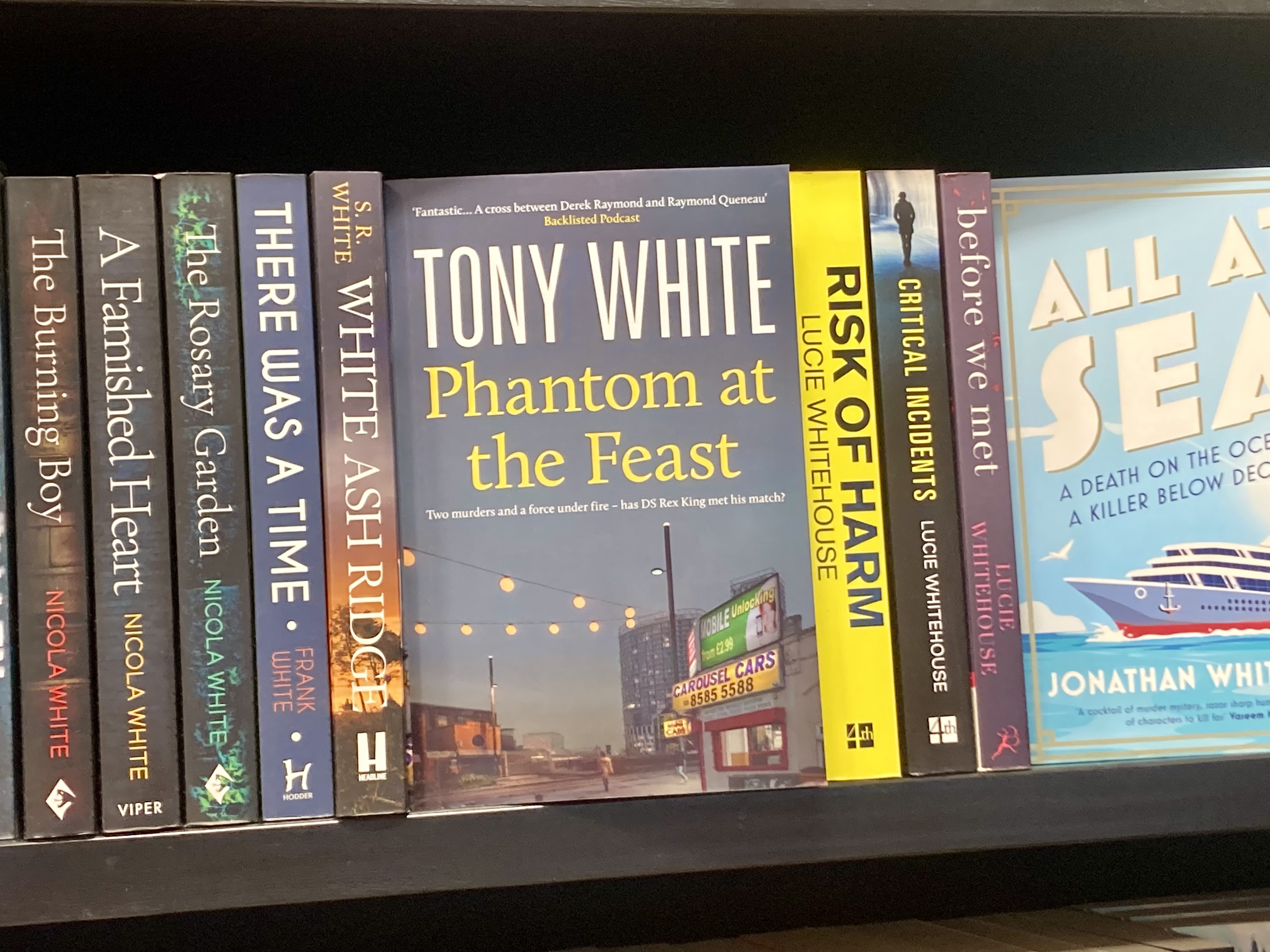
*DRUM ROLL* – cover reveal! My new novel Phantom at the Feast, the follow-up to The Fountain in the Forest, is published by No Exit Press on 18 June ’26. It has a stunning cover designed by Mark Ecob, with image by the great London photographer Chris Dorley-Brown. I’m so delighted to share it with you now, along with a pre-order link ahead of publication.

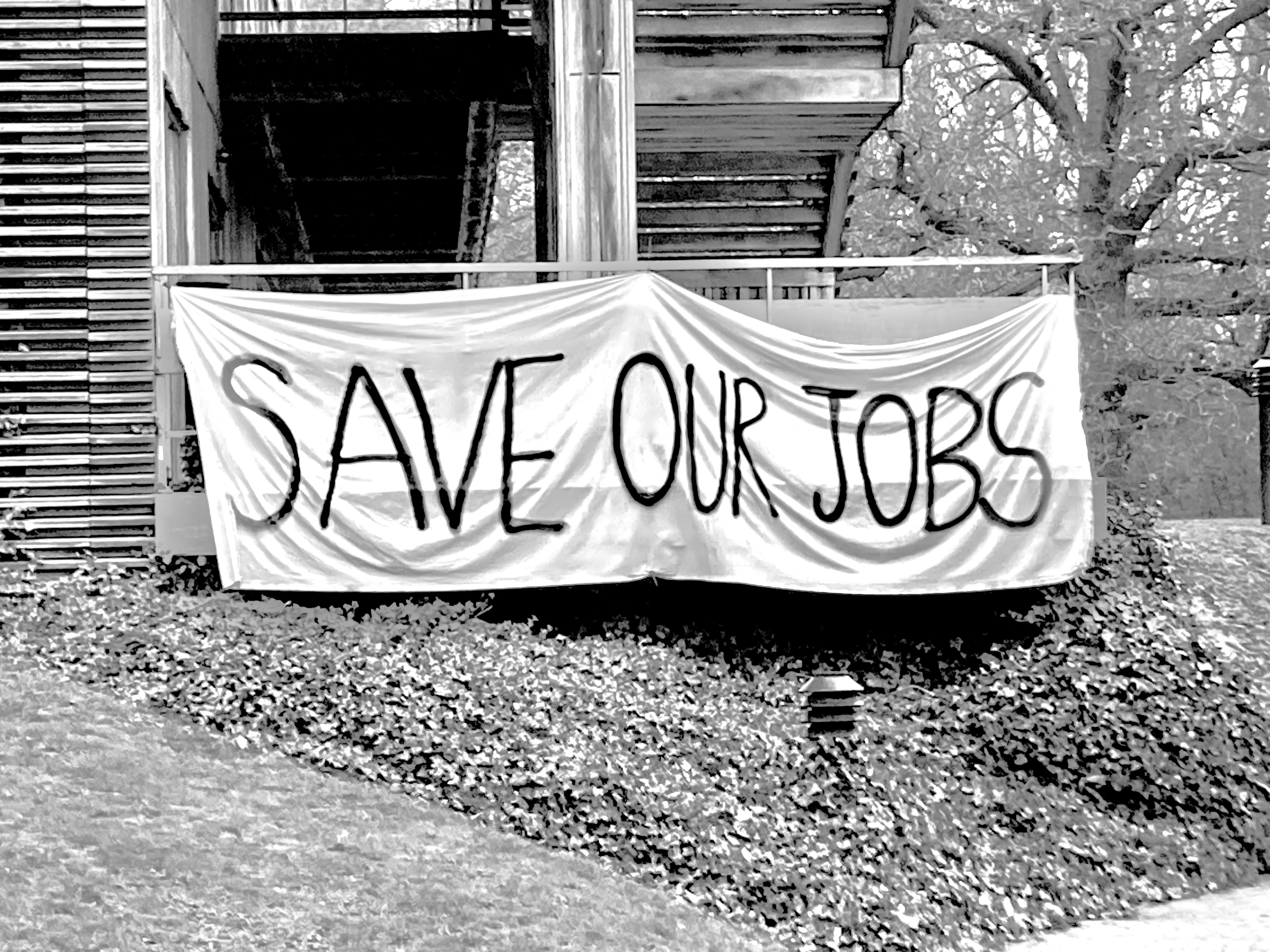
Police stations are outdated, and AI’s make more efficient detectives, or so says a UK Home Office determined to make cuts
When the sole witness in a trafficking case is discovered brutally murdered, a brass horseshoe forced between his teeth, Detective Sergeant Rex King is summoned back to London and into a labyrinth of memory, music, and political unrest. From The Clash’s ragged 1985 busking tour to the fractured legacy of the anti-nuclear movement, Rex follows threads that tug uncomfortably at his own history – echoes he can’t quite place, shadows that refuse to settle.
When Rex’s boss, DCI ‘Lollo’ Lawrence, suddenly disappears, and long-buried papers from the Miners’ Strike surface, he must work alongside a sharp young detective, a seasoned former soul boy, and the National Crime Agency’s unsettlingly brilliant new AI. Yet the deeper he travels, the more he finds the investigation folding back on him: professional loyalties strained, personal relationships tested, and accusations from his undercover past threatening to unmake him.
Two murders, one ‘misper’ and a force under fire – has former ‘spycop’ DS Rex King finally met his match?
§
NEW: sign up to receive occasional book news and invites to forthcoming events and launches…
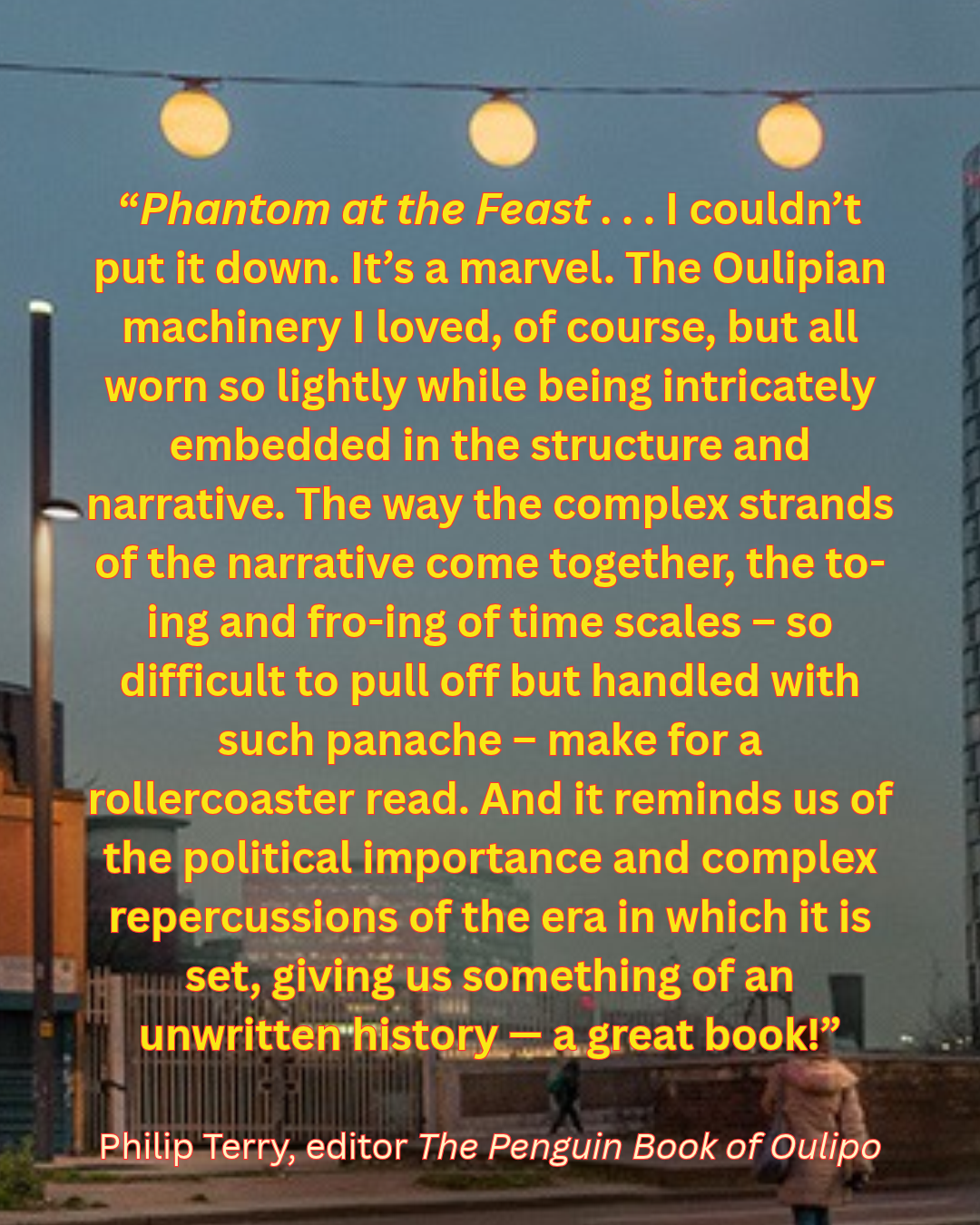
I’m excited to be able to share that my new novel PHANTOM AT THE FEAST will be published by No Exit Press (an imprint of Bedford Square Publishers) in June 2026, followed by a reissue on No Exit Press of the previous DS Rex King novel THE FOUNTAIN IN THE FOREST. See the trade announcement in today’s The Bookseller!
With thanks to Chris Dorley-Brown for the new author photos, shot in subterranean Smithfield, London.
Launch info and events to follow in the new year. I can’t wait to see you on the road.
Bedford Square Publishers are delighted to announce the acquisition for their award-winning No Exit Press imprint of Tony White’s new novel PHANTOM AT THE FEAST from Sarah Such at the Sarah Such Literary Agency of UK and Commonwealth rights including Canada, alongside rights to reissue the previous novel in the series featuring DS Rex King THE FOUNTAIN IN THE FOREST, which had been published to much critical acclaim by Faber & Faber. A gripping crime novel with acute social insights into the state of Britain, PHANTOM AT THE FEAST and its companion volume are innovative narratives combining formal innovation with a gritty plot evoking the books of Jake Arnott, Italo Calvino and Paul Auster.
Scheduled for publication in June 2026, Tony White’s series offers a widespread gallery of hardboiled characters and cops of dubious morality with deep roots in the political fabric of British society since the miner’s strike, alongside ingenious metafictional tropes which unveil a compelling new path for the crime novel.
Bedford Square Editor at large Maxim Jakubowski says:
I have long been a fan of Tony White’s utterly unique books and the opportunity to welcome him onto the No Exit list was unmissable. No one combines experimentation so acutely with engineering the most fiendish clockwork cum crossword puzzles since Agatha Christie and John Dickson Carr. Tony is the most spectacular reader I have ever seen perform in public and PHANTOM AT THE FEAST, with echoes of the coming of AI alongside a conspiracy plot worthy of John le Carré, is a crime novel for our times.
You can read Bedford Square’s full press release here…
There are a small number of Faber’s blue-liveried paperbacks of THE FOUNTAIN IN THE FOREST remaining in stock, but these can only be sold by Faber until 19 February 2026 – so if you haven’t already, and wanted to read FOUNTAIN before the release of PHANTOM AT THE FEAST now’s the time! Buy direct from Faber here or order from your favourite local bookshop — thank you!
§

Red Water is my seventh novel, first published in Croatia in 2017. Compared to my other novels, it’s less a thriller and more a classical whodunnit: a history of the disappearance of a 17-year-old girl from a small coastal community. It’s September 1989, the whole pre-existing universe is collapsing, and everybody is distracted by huge political changes: the fall of socialism, followed by the break-up of Yugoslavia, war, etc. But I wanted all these big events to be in the background, not the main topic. For my characters, their own drama is so big that there is no emotional room for global concerns. But vice versa: since everyone else is focused on massive social upheavals, nobody cares about a missing teenager. From that point, I follow several characters through the next twenty-six years, until the mystery is solved. I wanted to write a novel in which one big event transforms the lives of all the characters involved, propelling them in different directions like billiard balls scattered when you ‘break’ at the start of a game. Inspiration also came from a great ‘cold case’ novel: Blackwater by Kerstin Ekman (my title is a kind of homage).
My film criticism shaped my taste. If you are a film critic you don’t divide ‘high’ and ‘low’ cinema. You are trained to equally appreciate Bergman, Fellini, Hitchcock or Raoul Walsh. As a film critic I like good, intelligent and deep genre cinema. So inevitably I started asking myself: ‘What is the equivalent of this in literature?’ At some point I discovered Le Carré, James Ellroy, Patricia Highsmith… For example, I heard about Highsmith for the first time in an interview the young Slavoj Žižek gave a Zagreb weekly in 1986. He influenced me by promoting the values of good popular fiction. At that time he was a local star but internationally unknown. I thought, ‘He is a clever young Slovenian philosopher, if he says Highsmith is good, then she must be.’
As a writer I try to give readers all the guilty pleasures, all the reasons we read crime fiction: the suspense, the mystery, the riddle, the uncertainty. I want my books to be page-turners, but I also want them to be rooted in a specific society. It seems wrong somehow to write an American or British-style crime novel that just happens to take place in Croatia. It needs to be a Croatian crime novel, to include a Croatian type of crime, and Croatian models of family, of institutions, attorneys, police, economy, food, dialects, etc. For example in former Yugoslavia the only genre in which police were the main characters was jokes: there was a whole genre of jokes about stupid constables. Also, a good crime novel is almost always a social novel. You could say that crime and thriller fiction stepped into the shoes of the big social novels of the 19th century, as mainstream-literary fiction moved towards psychology, introspection, stream of consciousness. If you want to learn about the US in the thirties, you read hard-boiled crime fiction. If you want to understand Britain after the collapse of the Empire in the fifties and sixties, you read Le Carré. Right now Croatia is a bit like everywhere else, the market is dominated by Anglo-Saxons and Scandi Noir. Jo Nesbo is the top seller.
Croatia is a small country (pop. 3.8m) with a small literature. The entire Croatian production is about fifty novels a year. The literary field is relatively elitist, venerating more ‘highbrow’ literature – autofiction, historical novels, family sagas. Nevertheless, there is a crime fiction tradition that started in the late seventies, early eighties, a period when the socialist publishing industry in the proto-capitalist hybrid that was late-communist Yugoslavia was already market-orientated. At that time two bestselling writers started writing genre fiction: Pavao Pavličić and Goran Tribuson. In the early eighties, Tribuson introduced the first recurring investigator, Nikola Banić, who started out as a policeman, then became a private investigator. Today the most celebrated crime writer in Croatia is Drago Hedl, author of a series of inter-connected crime novels set in his home town of Osijek in the north east of the country.

Udruženje Pisaca Trilera (UPiT) – ‘Association of Thriller Writers’ – is a new crime and thriller writers’ association, announced in January 2025 by author colleagues in Belgrade. It covers the whole of former Yugoslavia. I’m a member. UPiT is based in Belgrade because the genre fiction market is stronger in Serbia than elsewhere in ex-Yugoslavia. It’s the biggest market, and the most commercially-driven. The normal work of the society has been somewhat disturbed by the riots and social upheavals in Serbia over the past ten months. We have founded an annual prize that was awarded for the first time at the inaugural Belgrade ThrillerFest in May of this year, to Polje Meduza (Field of Medusas) by Oto Oltvanji.
This interview first appeared in a slightly different form in Red Herrings (December 2025, Issue 825), the journal of the UK Crime Writers’ Association.
Piece of Paper Press is delighted to have published Obiter Dicta: an accidental conversation between visitors at Frieze London 2025 by Alexa Wright. Obiter Dicta continues Wright’s fascination with human language and how we make meaning. For several years, Wright has been obsessively collecting fragments of conversation overheard on the streets close to where she lives in London. Two previous artist’s books – Beside the Point and Between the Lines (both 2025) – have combined and reordered selections of these disconnected found utterances to create slightly absurd narratives. These texts are presented in juxtaposition with close-up photos of everyday life, many capturing random details of the same streets in which the fragments of conversation were collected. Building on those recent artist’s books, but bringing this writing practice back into the heart of the art world in London, Wright’s book for Piece of Paper Press contains a short, fictional – possibly nonsensical – dialogue-based story compiled from unattributed and otherwise unconnected fragments of conversation overheard at Frieze London 2025 during her visit on 17 October. More than a collection of non-sequiturs, Obiter Dicta creates an evocative glimpse of one of the world’s most influential contemporary art fairs, in the words of a fleeting cross-section of visitors as they experience it.
Alexa Wright is an artist whose practice spans a range of media, including photography, video, interactive installation and book-works. She has often worked in collaboration with medical scientists, and many of her projects have involved working together with people with mental or physical differences or those living with difficult life circumstances. Alexa’sinterest has recently shifted towards an exploration of our relationship with the natural world. Her work has been widely shown internationally, in festivals such as: Kochi Biennale, India; FILE, SESI Art Gallery, Sao Paolo, Brazil; DaDaFest International, Liverpool; International Women Artists’ Biennale, Incheon, Korea; and Athens Photo Festival. Inside Stories, a series of 11 short video diptychs co-created with participants in three UK prisons was shown at Saatchi Gallery, London, in 2023, and in MK Calling 2024, MK Gallery, Milton Keynes.
Find out more about Tony White’s Piece of Paper Press

Regular readers will know that I occasionally publish new works by other writers and artists as part of the artists’ book series Piece of Paper Press, which I founded in 1994. It was designed as a lo-fi, sustainable format to commission and publish new writing, visual and graphic works by artists and writers. Each miniature copy is made from a single A4 sheet, printed on both sides and then folded, stapled and trimmed by hand to create the book. There is no schedule; titles are published when they are ready, and always distributed free, usually in a limited edition of 150. Fifty copies are distributed by the contributor, and approximately a hundred to a gradually evolving mailing list (which in turn is incrementally displaced by the growing number of past contributors). Remaining copies are added to an archive.
This photo is a production close-up of what will be the forty-eighth title in the series.
Interviewed by Timothy Dixon of Matt’s Gallery recently, I described the project as ‘a serious sideline’ to my work as a novelist and author. An exhibition, ‘Thirty-one Years of Piece of Paper Press: artists’ books, art-works and ephemera, 1994–2025’, was held at Matt’s Gallery, London, 29 Jan–25 April 2025.
I was delighted to learn this week – having been emailed by a teacher in Koblenz, Germany, c/o the RLF – that my short story, ‘Plain Speaking’, which was written to mark the 110th anniversary of the birth of Brian O’Nolan (aka Flann O’Brien, etc.) and first performed at one of David Collard’s ‘Carthorse Orchestra’ online salons, then published by the mighty 3am Magazine, and the Irish Literary Society, then collected in Nicholas Royle’s Best British Short Stories 2022 (Salt Books), is now further collected in a German text book and being taught in grammar schools there, complete with glossing/explanatory footnotes, e.g.
- Steven J Fowler (born 1983): British poet, performer and curator of literature festivals.
You can read ‘Plain Speaking’ complete with educational footnotes via the ‘blick ins buch/look inside‘ preview feature at the link above.
Also it’s super cool that German students will now know that The Old Blue Last on Great Eastern Street, London, was (all together now) the first house where porter was sold!
Here’s the contents:
Tony White: Plain Speaking
Tessa Hadley: Pretending
Raman Mundair: Day Trippers
Briony Thompson: The Nights
Lucie McKnight Hardy: Badgerface
DJ Taylor: Somewhere Out There West of Thetford
Alison Moore: Common Ground
Hana Riaz: A Cartography of All the Names You’ve Ever Given Me
Zadie Smith: The Lazy River
I was also asked if there are any online resources, audio etc, relating to ‘Plain Speaking’, and as it happens there is a short video of me reading the story at Bouda Gallery, part of the Czech Centre, Notting Hill, London, this summer as part of an exhibition by the IPLA Collective entitled ‘The Sun Can Be’. (This is not my video, but posted thanks to the IPLA Collective. N.B. Youtube’s AI-generated captions do not accurately reflect the text, so I’d advise switching them off if possible in your browser.)
Read ‘Plain Speaking’ free online at the Irish Literary Society…
The Royal Literary Fund asked me to talk about location and the writer, so I spoke about my daily walks along the river, and how the Thames in London is a constant source of inspiration and renewal. I also give a shout-out to my friend the Egyptian novelist Ahmed Naji.
For me, writing is frequently inspired by, certainly informed by, place. And often that place is London. It’s not so much about always looking for the next great location, as being open to a great location finding me. The closure of an East-End mini-cab office was part of the inspiration for my novel Foxy-T. While the ‘Paint Frame’, a scene painting studio backstage at the Theatre Royal Drury Lane, became the crime scene in my detective novel The Fountain in the Forest.
But it’s not only major factors like ‘setting’ that can be inspired by particular places. Locations can also provide a different kind of creative sustenance, a vital resource in the craft and nitty-gritty of writing.

You can listen on the RLF website here… (N.B. It is the second of the two clips on my RLF profile page.)
I’m currently an RLF Fellow at Royal Holloway University of London, and looking forward to being back on campus in a couple of weeks, where my role is to offer free and confidential writing advice to anyone in the Royal Holloway community that asks for it. Visit the RLF website to find out more about the important work they do to support writing and writers.

I’m greatly looking forward to interviewing the artist Liliane Lijn at The Minories, Colchester, on Tuesday 30 September, for EA Festival.
Here’s the info from the festival site:
Join us for an evening with trail-blazing contemporary artist, Liliane Lijn, whose seminal kinetic artworks redefined the possibilities of creative and artistic expression. From her motorised Poem Machines of the early 1960s that infused language with additional meaning through movement, to her iconic spinning Koans and mesmerising masterwork, Liquid Reflections, Lijn merged industrial materials, movement, myth, and poetry in ways that were decades ahead of their time. Currently the subject of a major retrospective at Tate St Ives—Liliane Lijn: Arise Alive—Lijn will be at The Minories to discuss her acclaimed new memoir, Liquid Reflections, with author Tony White. Based on her diaries from 1958 to 1966, the book charts her formative years in bohemian Paris and Athens, her fearless experiments with new materials, and her navigation of love, motherhood, and an art world deeply resistant to women. Critics have hailed it as “utterly gripping, enraging, entertaining—and important” (Jennifer Higgie) and a portrait of “a unique and self-renewing force of creativity for six decades” (Marina Warner).
BUY TICKETS FOR LILIANE LIJN IN CONVERSATION WITH TONY WHITE AT EA FESTIVAL HERE…
§
I first met Liliane when I worked at the national office of Arts Council England in the mid-00s, and in 2006 I published a short non-fiction piece by Liliane (for the Arts Council) that had resulted from her residency at the NASA Space Science Labs at UC Berkeley entitled ‘The Language of Invisible Worlds’, which you can read more about here… (and download directly here).
Then in 2010 I published Atomanotes, an artist’s book by Liliane, on Piece of Paper Press. Since then we have shared events variously at the Horse Hospital and October Gallery, London.
I last interviewed Liliane Lijn in 2018 for 3am Magazine, on the subject of some tantalising early works she made in Paris in the late 1950s, so I am really looking forward to meeting again in Colchester on 30 September to discuss her superb new memoir Liquid Reflections (Hamish Hamilton, 2018), which is highly recommended.

You must be logged in to post a comment.