Pictured here in the spring of 1987 aged 23, I was studying for a degree in Fine Art at Psalter Lane, part of the then Sheffield City Polytechnic. Clearly my Fine Art degree course wasn’t nearly Mickey Mouse enough…
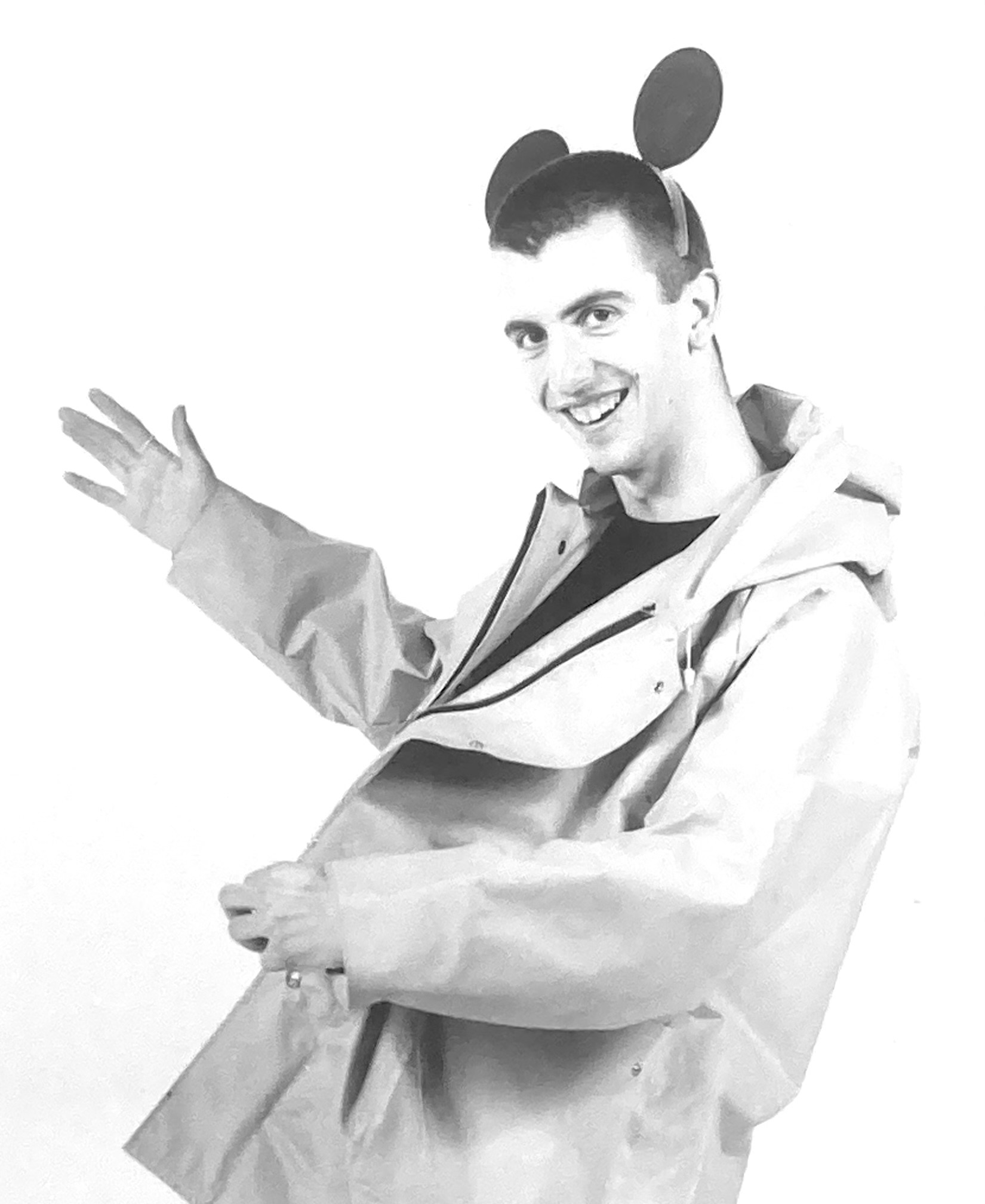
The photo, by my friend and fellow Fine Art student Brett Dee, was a first attempt at a publicity image for the spoken word performances I was doing on the margins of the UK performance art scene of the time. Juvenilia mostly, but it was by going to art school in my early twenties and by testing those early prose sketches and routines in front of live audiences around the country, then revising and testing again, that I discovered I was actually a writer. In London in the early nineties all of that quickly evolved into writing prose fiction, which is more or less what I’ve been doing ever since.

I can confidently say that without public libraries and arts education in schools and in further and higher education I wouldn’t be an author today.
Creative subjects in the arts and humanities can (and in my case did) lead to a professional life in the arts and creative industries. They are not the only way in, of course, but cutting access to arts education – or limiting such access only to the wealthy or the already-privileged – is cutting off the creative industries at the root, and taking life-enhancing educational and employment opportunities away from working class young people, and those from other excluded communities, as well as diminishing the quality and diversity of what might be available to audiences.
It is also self-defeating economically. In the words of the Creative Industries Policy and Evidence Centre, run by Newcastle University and the RSA: ‘The creative industries generate £115.9bn in gross value added (GVA), nearly 6% of the British economy, and employ 2.3 million people, as well as contributing greatly to the country’s status internationally.’
The value of Arts and Humanities degrees cannot solely be measured – as those in power cynically suggest – by the salary of the first job you do upon leaving college.
Among other things, the arts, arts education generally, and the Arts and Humanities in higher education can also bring life-enhancing thought, knowledge, scholarship, understanding and appreciation, great teaching and education, a sense of agency, self-expression, empowerment, and lead to deep (life-long) engagements with ideas, with craft, with audiences and readers and a network of peers. They can entertain, contribute to our surroundings, to the built environment, the body of human thought, and the quality of public space and discourse; create new and life-changing opportunities, experiences, concepts and products; create employment opportunities, and bring critical and analytical, research, reading, writing, questioning, listening, making, logistical, production and organisational skills, and confidence (among a multitude of other benefits), that might be of ready application in all walks and aspects of life and work and play.
§
Buy my latest novel The Fountain in the Forest (Faber, 2018)…

 Piece of Paper Press & tonywhite.london
You must be logged in to post a comment.