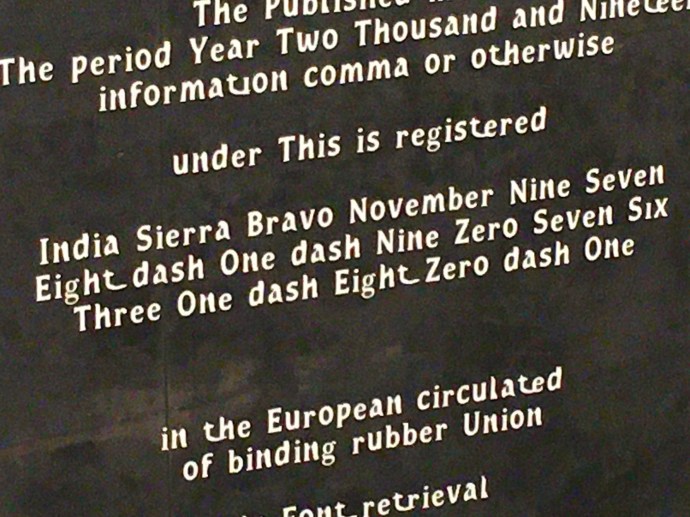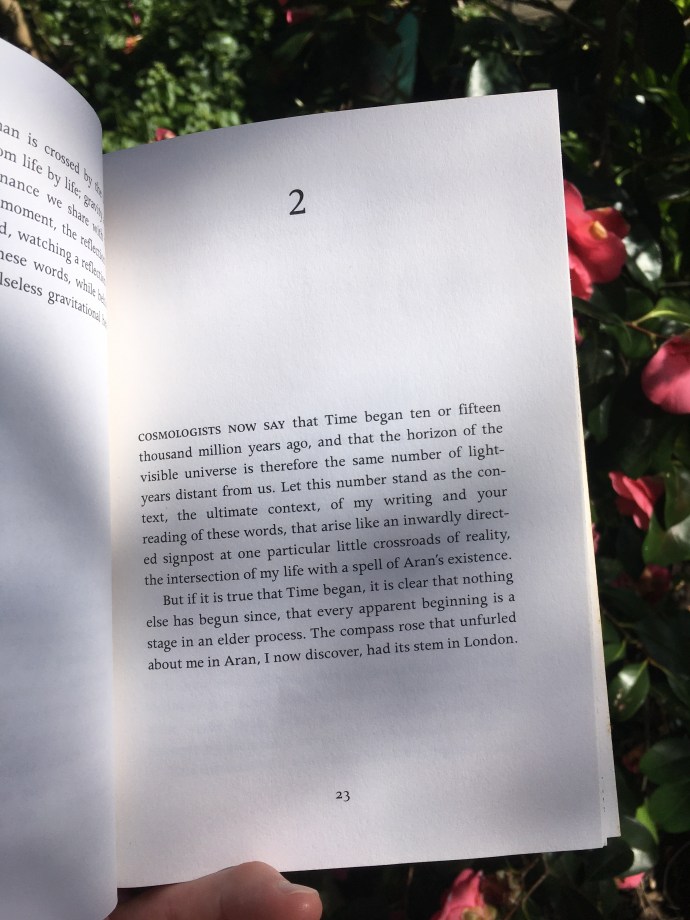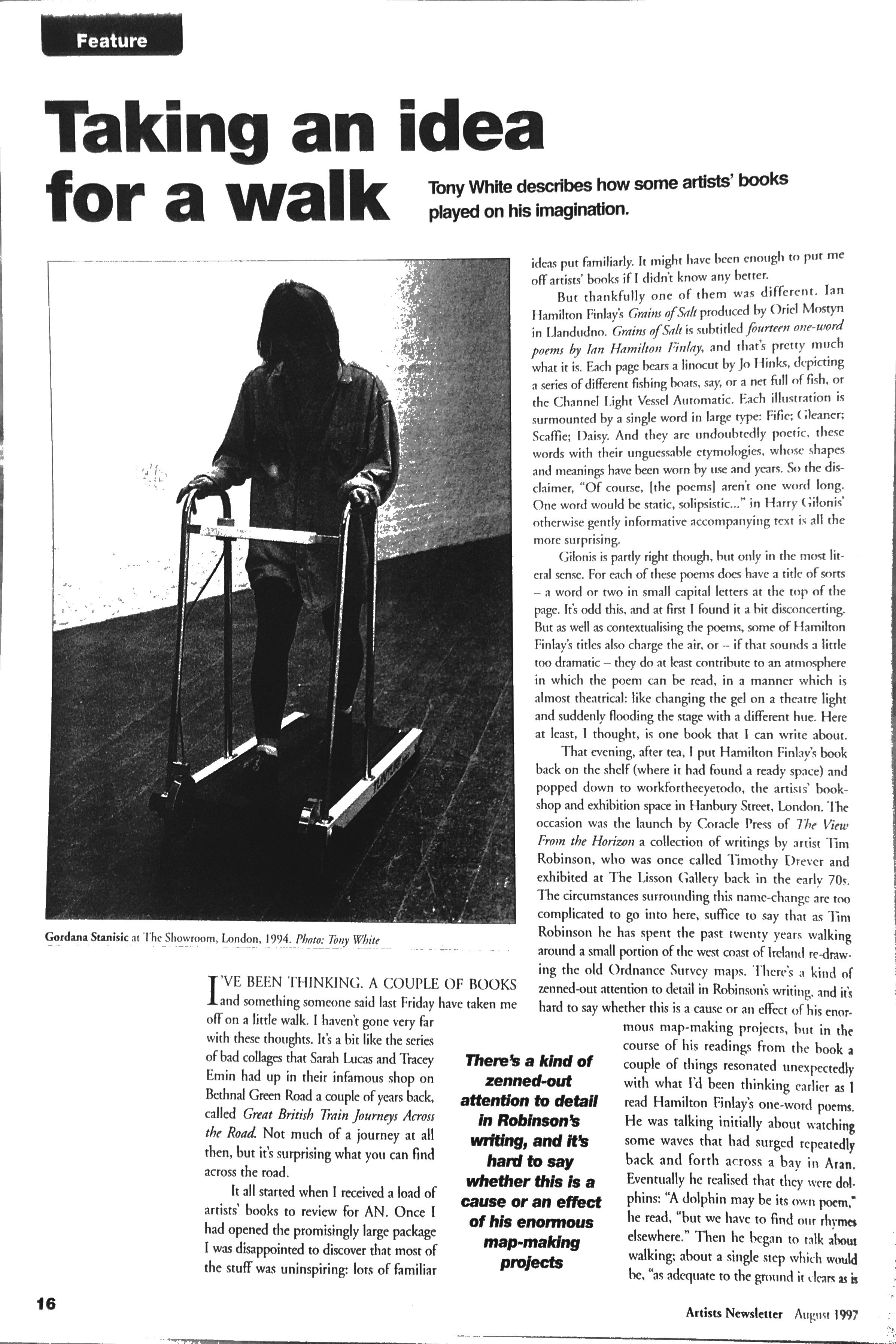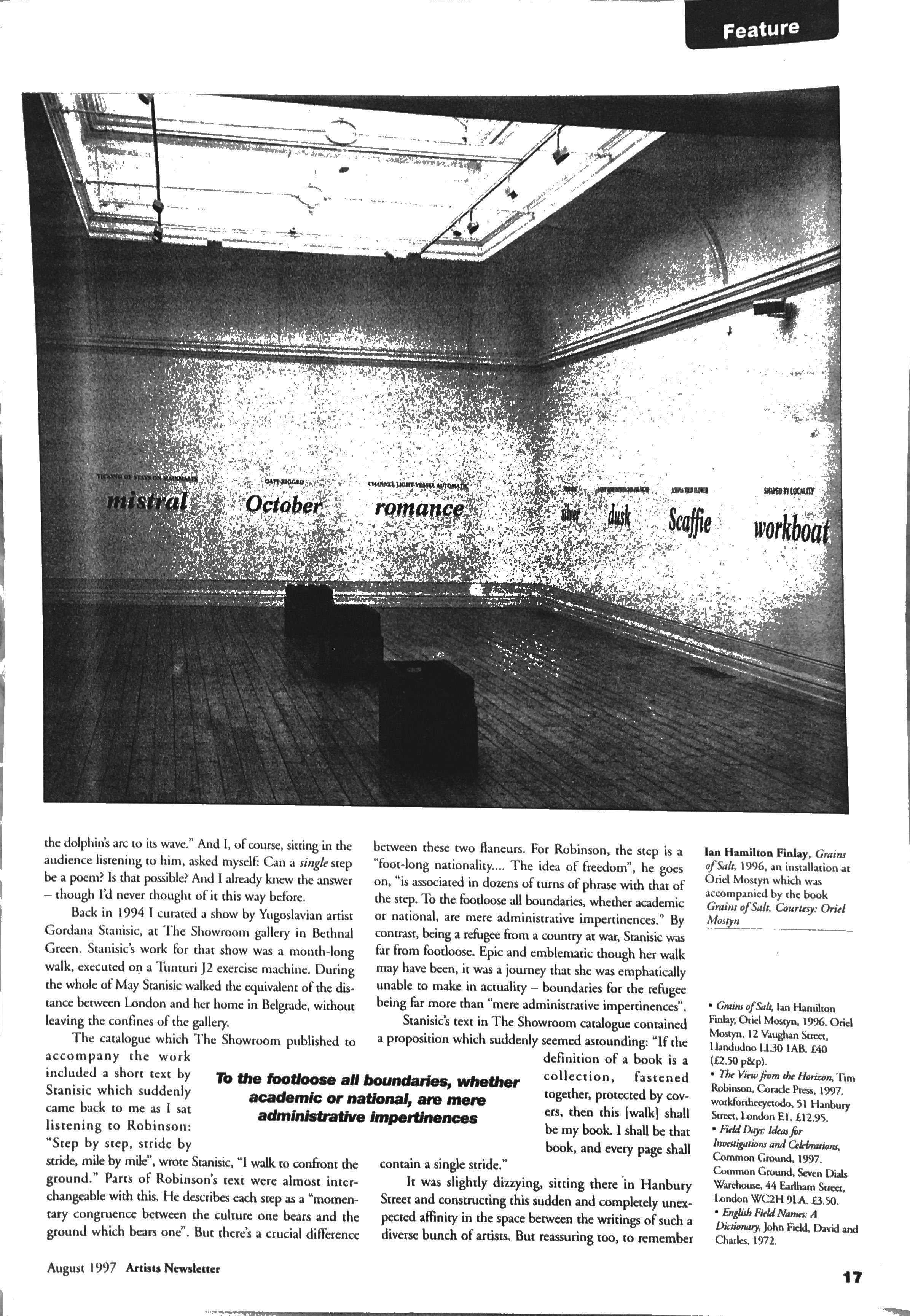
Right now and for the next nineteen days, you can read The Fountain in the Forest in synch with the actual French Republican Calendar, which features in the novel. Conversion between the Republican and Gregorian Calendars is imprecise, but by common reckoning today’s date Thursday 12 March 2020 converts to Tridi 23 Ventôse 228 in the Revolutionary Calendar. Factoring in Fabre d’Eglantine’s system of everyday rural imagery, 23 Ventôse 228 and Chapter 11 of the novel are dedicated to scurvy grass or Cochlearia, an edible coastal plant that is rich in vitamin c, and with a strong peppery taste similar to horseradish and watercress to which it is related.
Here are some tips on how to find and use scurvy grass from Bernard Lundie on BBC Scotland…
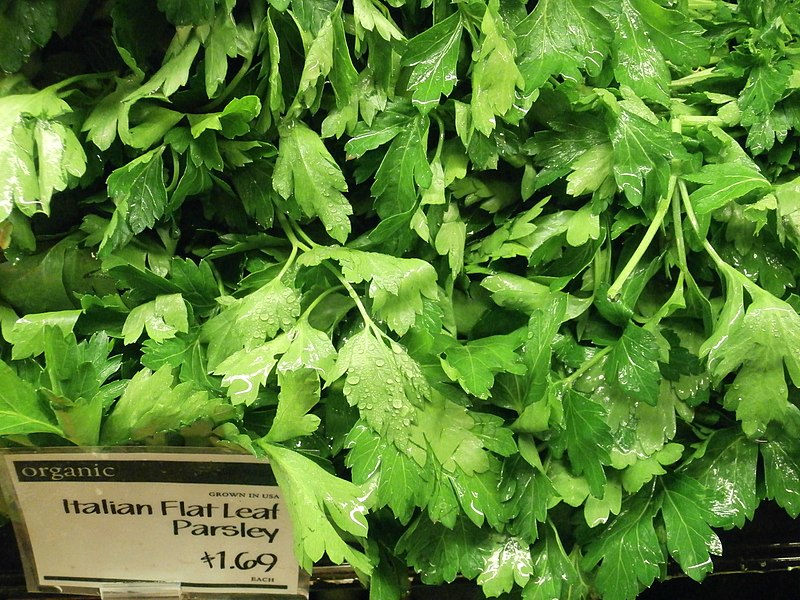
For thirty days this year and every year The Fountain in the Forest synchs up with the actual French Republican Calendar, which features in the novel. Conversion between the Republican and Gregorian Calendars is imprecise, but by common reckoning today’s date Wednesday 11 March 2020 converts to Duodi 22 Ventôse CCXXVIII in the Revolutionary Calendar. Factoring in Fabre d’Eglantine’s system of everyday rural imagery, 22 Ventôse 228 and Chapter 10 of the novel are dedicated to parsley.
A good way to celebrate the revolutionary day of parsley in a timely fashion might be to grow your own.

In Chapter 10 of the novel, Detective Sergeant Rex King dines on a boil-in-the-bag cod in parsley sauce. Alternatively, you could do worse than get hold of a big bunch of fresh parsley and make pasta with parsley and anchovy sauce. There are plenty of variations of this recipe, but the key ingredients are linguine, a tin of anchovies and the oil they come in, onion, garlic, a big bunch of parlsey, and a ladle-full of the pasta water. (You can vary this to your own taste with a couple of chopped, fresh tomatoes, 1/2 teaspoon of dried red chillies, or a sprinkling of capers.) Eat with or without parmesan. Here’s a similar recipe to give the rough idea.
For thirty days this year and every year The Fountain in the Forest synchs up with the actual French Republican Calendar, which features in the novel. Conversion between the Republican and Gregorian Calendars is imprecise, but by common reckoning today’s date Tuesday 10 March 2020 converts to Primidi 21 Ventôse CCXXVIII in the Revolutionary Calendar. Factoring in Fabre d’Eglantine’s system of everyday rural imagery, 21 Ventôse 228 and Chapter 9 of the novel are dedicated to Mandrake (Mandragora officinarum, or Mandragora autumnalis). Mandrake is highly toxic, and associated with many superstitions.
Much of Chapter 9 takes place in the paint frame, a scene painting studio in the stage house of the Royal Palace Theatre, a fictional theatre but one that is closely modeled on the real Theatre Royal Drury Lane. The paint frame is a high-ceilinged and sky-lit scene-painting studio with deep drops on either side, into which large wooden frames or stretchers can be lowered via pulleys, so that all parts of the canvas or gauze are accessible and can be painted from floor level.
My use of the paint frame in The Fountain in the Forest is in part a tribute to Alastair Brotchie, whose studio it is (and who can be seen in the background of Chris Dorley-Brown’s photo above). Brotchie is a founder of the London publishing house Atlas Press – ‘a small publishing house devoted to publishing an “anti-tradition” of avant-garde literary and artistic dissent’ – a Regent of the Collège de ’Pataphysique in Paris, the editor of books and anthologies on Surrealism, Dada, and the Oulipo, and author of the wonderful biography of Alfred Jarry, recently published by MIT.
Right now, and for the next 22 days, you can read my latest novel The Fountain in the Forestin synch with the French Republican Calendar. Conversion between the Republican and Gregorian Calendars is imprecise, but by common reckoning today’s date Monday 9 March 2020 converts to Decadi 20 Ventôse CCXXVIII in the Revolutionary Calendar. Factoring in Fabre d’Eglantine’s system of everyday rural imagery, 20 Ventôse 228 and Chapter 8 of the novel are dedicated to Twine.
In the 1990s when I worked for the Post Office, sorting post at the London NW1 mail centre on St. Pancras Way in Camden, and later the N1 mail centre on Upper Street, Islington, I learned how to tie-up a bundle of letters using a kind of yellow nylon twine that was threaded through a hole on each sorting desk from large bobbins that slotted onto spindles beneath the work stations. The knot in question – the ‘Postman’s knot’? – was a kind of one-way slip-knot, with a loop that you’d pull to tighten the twine around the bundle, so that the letters wouldn’t come lose in the rough and tumble of the mail bag. The knot seemed archaic at the time, and was something that only the old-timers, the ‘senior men’, generally used. But one of them taught it to me, and it came in handy when, periodically, the sorting office ran out of rubber bands. Mail bags too were tied with twine, but of a heavier-gauge, which came in pre-cut lengths that you fastened in a certain way before the pinching the string with a ‘bag-seal’, a hinged piece of die-stamped metal that clamped both knot and bag label in place.
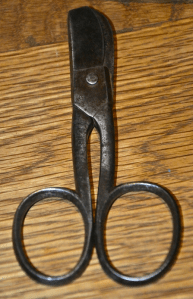
In fact the ‘veterinary scissors’ being auctioned have nothing at all to do with animal health and husbandry. They’re Royal Mail, standard issue, bag- and bundle-opening shears. So shaped that the lower blade is shallow enough to slip under a tightly-knotted round of twine.

If you look closely you can just about see the letters ‘GPO’ stamped into the metal near the hinge.
Although the early 1990s was a period of rapid mechanisation in the Royal Mail, the workplace that I joined was in many respects little-changed from the one illustrated in this ancient British Movieone News public information film about using the correct postage. And right at the beginning of the film you can see a pair of these shears in use, snipping the twine to open a bundle of letters (at about 00:08).
(ICYMI Some of my own experiences of working for the Post Office found their way into my 2012 novella Missorts Volume II, published by Situatons in Bristol, which is set in and around the abandoned sorting office, the former South West mail centre, at Bristol Temple Meads.)
Even in the early 1990s, Post Office workers, postmen and postwomen, were still being issued with a pair of these strange looking bag-opening shears. ‘Borrow your scissors?’ colleagues would ask. So of course I lost mine on the job pretty quickly, and – sad to say – having left the Post Office in 1997 I’ve long-since forgotten how to tie that special ‘Postman’s knot’.
If I could still remember how to tie it, I would of course – in honour of the revolutionary day of twine – have given you a quick demo here.
If anyone can remind me how to do it, do please let me know!
For thirty days this year and every year, you can read my latest novel The Fountain in the Forestin synch with the French Republican Calendar. Conversion between the Republican and Gregorian Calendars is imprecise, but by common reckoning today’s date 8 March 2020 converts to Nonidi 19 Ventôse CCXXVIII in the Revolutionary Calendar. Factoring in Fabre d’Eglantine’s system of everyday rural imagery, 19 Ventôse 228 and Chapter 7 of the novel are dedicated to Chervil, a herb sometimes known as ‘French parsley’.
Fresh Chervil is not so easy to get hold of in the UK, so you might be better off buying seeds and growing your own, and it seems that March is a good time to start sowing. I’m tempted to give it a go.
Illustration: Prof. Dr. Otto Wilhelm Thomé, Flora von Deutschland, Österreich und der Schweiz. Vol3, plate 381, 1888, Gera, Germany
‘Into Day One of the Revolutionary Period: a Conversation’ by Sanja Perovic and Tony White was published by Domobaal editions in Stuart Brisley – Before the Mast (2013) (ISBN 9781905957507) on the occasion of Stuart Brisley’s exhibition at Domobaal – 04.10.13 to 30.11.13 and at Mummery + Schnelle – 16.10.13 to 30.11.13.
For thirty days this year and every year, you can read my latest novel The Fountain in the Forestin synch with the French Republican Calendar. Conversion between the Republican and Gregorian Calendars is imprecise, but by common reckoning today’s date 7 March 2020 converts to Octidi 18 Ventôse CCXXVIII in the Revolutionary Calendar. Factoring in Fabre d’Eglantine’s system of everyday rural imagery, 18 Ventôse 228 and Chapter 6 of the novel are dedicated to the Pimpernel (Anagallis arvensis), a weed that is toxic to many animals and livestock but traditionally had several applications in folk medicine.
By Sannse, CC BY-SA 3.0
The pimpernel is best known in popular culture for its use as the signature calling card of Sir Percy Blakeney in the Scarlet Pimpernel play (1903) and series of novels (1905 onwards) by Baroness Emmuska Orczy de Orci, which are set in the era of the French Revolution.
JMW Turner’s Stonehenge. Photograph: The Salisbury Museum
For thirty days this year and every year, you can read my latest novel The Fountain in the Forestin synch with the French Republican Calendar. We are now on Chapter 5, part of which takes place at the last Stonehenge Free Festival of June 1984.
Conversion between the Republican and Gregorian Calendars is imprecise, but by common reckoning today’s date 6 March 2020 converts to Septidi 17 Ventôse CCXXVIII in the Revolutionary Calendar. Factoring in Fabre d’Eglantine’s system of everyday rural imagery, 17 Ventôse CCXXVIII and Chapter 5 of the novel are dedicated to Doronicum or Leopard’s bane – a member of the sunflower family and ‘the earliest-blooming of the daisies’.
Not only would a tunnel irreparably damage the historical landscape and both existing and undiscovered archeological remains, but taking the road underground would remove a view of the stones from the road that has been free to all for millennia, and which has inspired artists and writers across the centuries, from JMW Turner and John Cowper Powys to me!
Over the coming weeks you can read The Fountain in the Forestin synch with the French Republican Calendar, as each of the novel’s thirty chapters correspond to a day in the Republican Calendar. I started posting daily updates here and on Twitter on Monday 2 March, and these will continue for the next twenty-six days.
Conversion between the Republican and Gregorian Calendars is imprecise, but by common reckoning, today’s date Thursday 5 March 2020 converts to Sextidi 16 Ventôse CCXXVIII in the Revolutionary Calendar.
The French Republican Calendar is secular and non-hierarchical, and – as many readers will know – instead of each day being dedicated to a particular saint or to a religious or royal holiday, or named after an ancient god, the Republican Calendar dedicates each of 360 days of the year to an item of everyday rural life, thus 16 Ventôse CCXXVIII and Chapter 4 of the novel are dedicated to spinach.
If you want to celebrate the day of spinach in style, I can think of few things finer than a homemade saag aloo – potato and spinach – with some rice or chapati, and some spicy mango pickle on the side.
The recipe I’ve been using since forever (Sheffield, mid-1980s) is from a battered paperback of Jack Santa Maria’s pretty dependable Indian Vegetarian Cookery, that a good friend of mine recommended many years ago, and which is still available for Kindle. To give you a rough idea, Santa Maria’s Saag Aloo uses approximately a pound each (500g) of potatoes and spinach, so you’d need a large, heavy pan. He suggests beginning by frying chopped onion, garlic and ginger in ghee, before adding turmeric, chilli, and ground coriander (other recipes also include cumin and mustard seeds) and salt, and then the roughly chopped potatoes, which he suggests you fry until half-cooked – you may want to it leave a little longer – before adding the spinach and cooking until tender – add a splash of water if necessary to loosen things up – then garnishing with a sprinkle of garam masala. Vary the amounts to your own taste of course. And there are plenty of alternative recipes available online.
Good luck. If you try it, let me know – either here or on Twitter.
§
ICYMI The Fountain in the Forest is published by Faber and Faber, and now out in paperback, with Luke Bird’s striking, blue-liveried cover. Here’s the blurb:
When a brutally murdered man is found hanging in a Covent Garden theatre, Detective Sergeant Rex King becomes obsessed with the case. But as Rex explores the crime scene further, he finds himself confronting his own secret history instead. Who, more importantly, is Rex King?
Right now you can read The Fountain in the Forestin synch with the French Republican Calendar. I started posting daily updates here and on Twitter on Monday 2 March, and these will continue for the next twenty-seven days.
Conversion between the Republican and Gregorian Calendars is imprecise, but by common reckoning (i.e. Charles-Gilbert Romme’s rule for calculating leap years) today’s date 4 March 2020 converts to Quintidi 15 Ventôse CCXXVIII in the Revolutionary Calendar. Factoring in Fabre d’Eglantine’s system of everyday rural imagery, 15 Ventôse CCXXVIII and Chapter 3 of the novel are dedicated to the goat.
To celebrate here are two versions of the great Larry Marshall’s rocksteady and reggae classic ‘Nanny Goat’.
You must be logged in to post a comment.