Regular readers will know that I occasionally publish new works by other writers and artists as part of the artists’ book series Piece of Paper Press, which I founded in 1994. It was designed as a lo-fi, sustainable format to commission and publish new writing, visual and graphic works by artists and writers. Each miniature copy is made from a single A4 sheet, printed on both sides and then folded, stapled and trimmed by hand to create the book. There is no schedule; titles are published when they are ready, and always distributed free, usually in a limited edition of 150. Fifty copies are distributed by the contributor, and approximately a hundred to a gradually evolving mailing list (which in turn is incrementally displaced by the growing number of past contributors). Remaining copies are added to an archive.
This photo is a production close-up of what will be the forty-eighth title in the series.
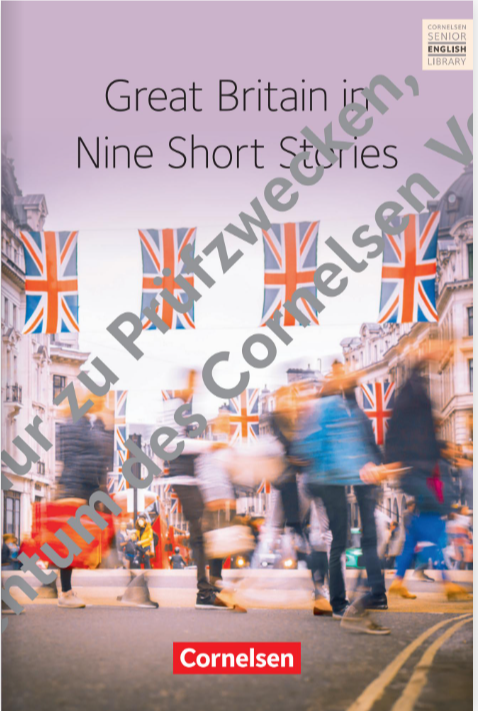
I was delighted to learn this week – having been emailed by a teacher in Koblenz, Germany, c/o the RLF – that my short story, ‘Plain Speaking’, which was written to mark the 110th anniversary of the birth of Brian O’Nolan (aka Flann O’Brien, etc.) and first performed at one of David Collard’s ‘Carthorse Orchestra’ online salons, then published by the mighty 3am Magazine, and the Irish Literary Society, then collected in Nicholas Royle’s Best British Short Stories 2022 (Salt Books), is now further collected in a German text book and being taught in grammar schools there, complete with glossing/explanatory footnotes, e.g.
Steven J Fowler (born 1983): British poet, performer and curator of literature festivals.
You can read ‘Plain Speaking’ complete with educational footnotes via the ‘blick ins buch/look inside‘ preview feature at the link above.
Also it’s super cool that German students will now know that The Old Blue Last on Great Eastern Street, London, was (all together now) the first house where porter was sold!
Here’s the contents:
Tony White: Plain Speaking Tessa Hadley: Pretending Raman Mundair: Day Trippers Briony Thompson: The Nights Lucie McKnight Hardy: Badgerface DJ Taylor: Somewhere Out There West of Thetford Alison Moore: Common Ground Hana Riaz: A Cartography of All the Names You’ve Ever Given Me Zadie Smith: The Lazy River
I was also asked if there are any online resources, audio etc, relating to ‘Plain Speaking’, and as it happens there is a short video of me reading the story at Bouda Gallery, part of the Czech Centre, Notting Hill, London, this summer as part of an exhibition by the IPLA Collective entitled ‘The Sun Can Be’. (This is not my video, but posted thanks to the IPLA Collective. N.B. Youtube’s AI-generated captions do not accurately reflect the text, so I’d advise switching them off if possible in your browser.)
The Royal Literary Fund asked me to talk about location and the writer, so I spoke about my daily walks along the river, and how the Thames in London is a constant source of inspiration and renewal. I also give a shout-out to my friend the Egyptian novelist Ahmed Naji.
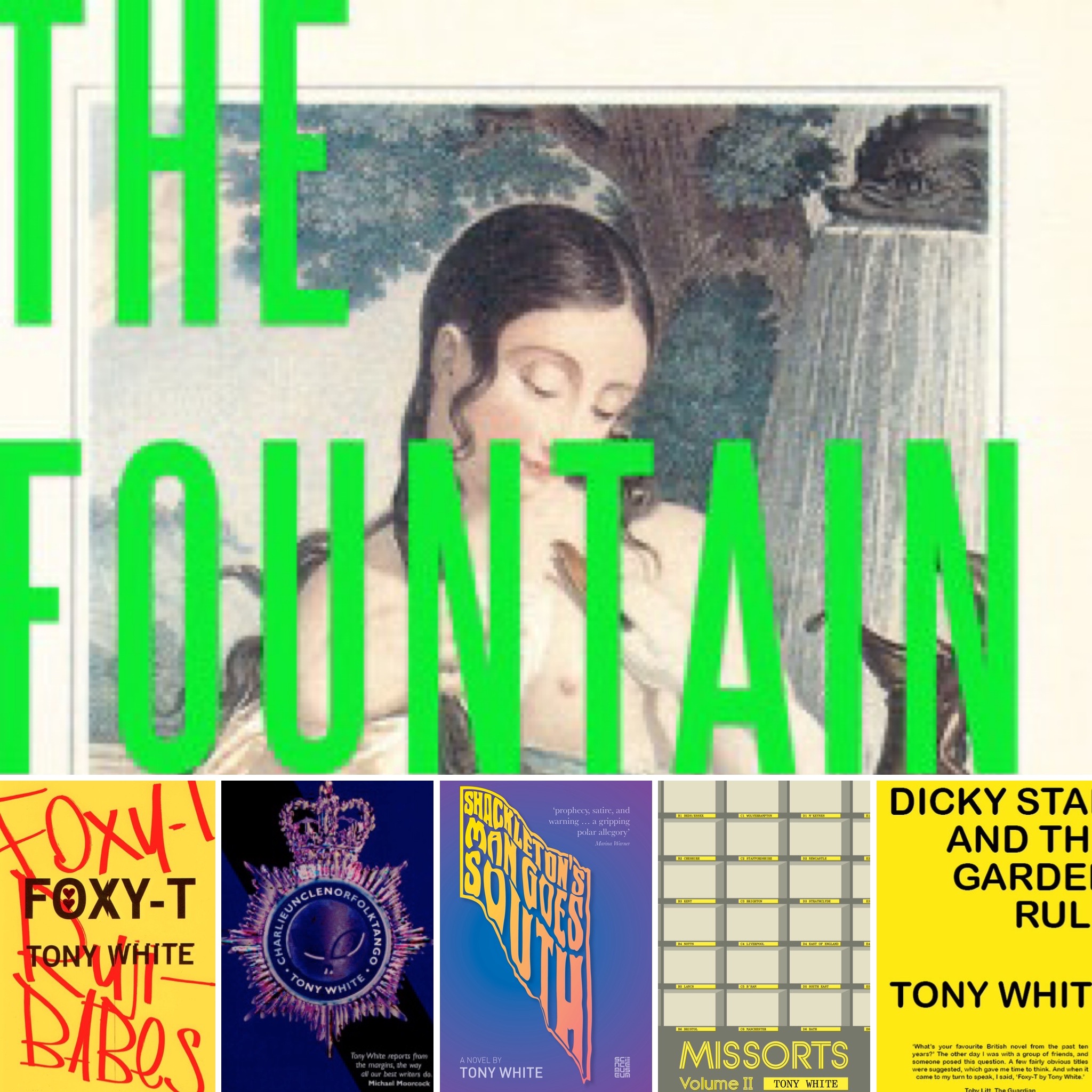
For me, writing is frequently inspired by, certainly informed by, place. And often that place is London. It’s not so much about always looking for the next great location, as being open to a great location finding me. The closure of an East-End mini-cab office was part of the inspiration for my novel Foxy-T. While the ‘Paint Frame’, a scene painting studio backstage at the Theatre Royal Drury Lane, became the crime scene in my detective novel The Fountain in the Forest.
But it’s not only major factors like ‘setting’ that can be inspired by particular places. Locations can also provide a different kind of creative sustenance, a vital resource in the craft and nitty-gritty of writing.
I’m currently an RLF Fellow at Royal Holloway University of London, and looking forward to being back on campus in a couple of weeks, where my role is to offer free and confidential writing advice to anyone in the Royal Holloway community that asks for it. Visit the RLF website to find out more about the important work they do to support writing and writers.
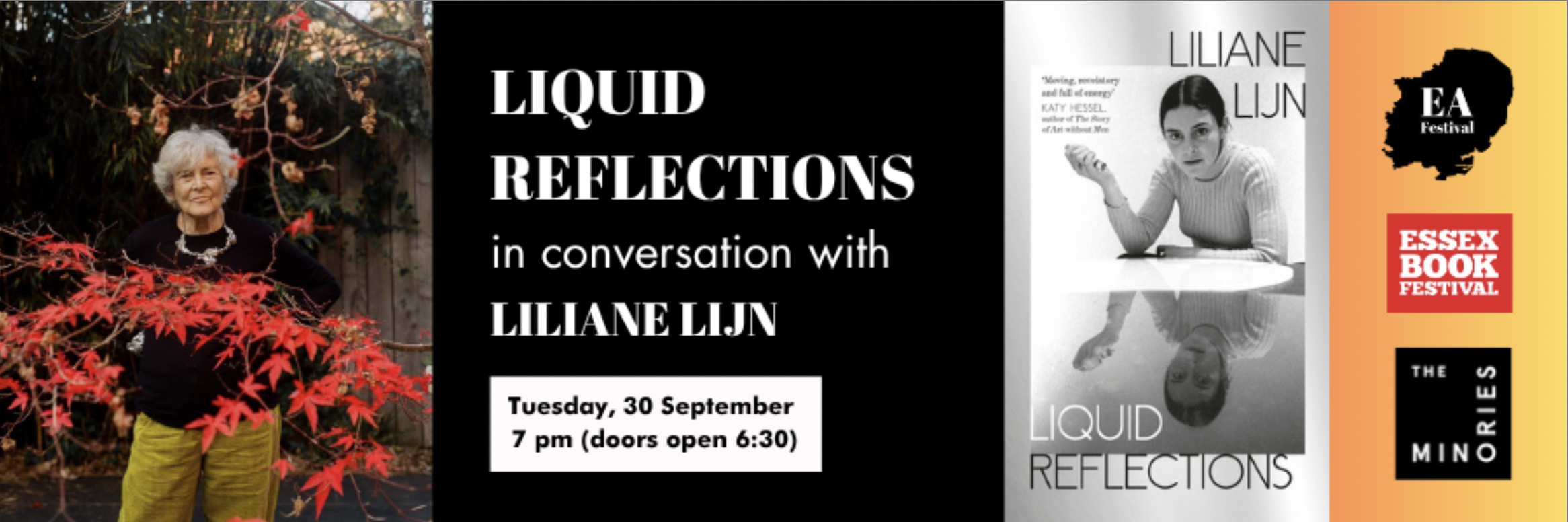
Join us for an evening with trail-blazing contemporary artist, Liliane Lijn, whose seminal kinetic artworks redefined the possibilities of creative and artistic expression. From her motorised Poem Machines of the early 1960s that infused language with additional meaning through movement, to her iconic spinning Koans and mesmerising masterwork, Liquid Reflections, Lijn merged industrial materials, movement, myth, and poetry in ways that were decades ahead of their time. Currently the subject of a major retrospective at Tate St Ives—Liliane Lijn: Arise Alive—Lijn will be at The Minories to discuss her acclaimed new memoir, Liquid Reflections, with author Tony White. Based on her diaries from 1958 to 1966, the book charts her formative years in bohemian Paris and Athens, her fearless experiments with new materials, and her navigation of love, motherhood, and an art world deeply resistant to women. Critics have hailed it as “utterly gripping, enraging, entertaining—and important” (Jennifer Higgie) and a portrait of “a unique and self-renewing force of creativity for six decades” (Marina Warner).
I first met Liliane when I worked at the national office of Arts Council England in the mid-00s, and in 2006 I published a short non-fiction piece by Liliane (for the Arts Council) that had resulted from her residency at the NASA Space Science Labs at UC Berkeley entitled ‘The Language of Invisible Worlds’, which you can read more about here… (and download directly here).
Then in 2010 I published Atomanotes, an artist’s book by Liliane, on Piece of Paper Press. Since then we have shared events variously at the Horse Hospital and October Gallery, London.
Regular readers will know that I occasionally write reviews for the Guardian and elsewhere. I will also post book reviews here from time to time…
Hazell Ward’s audacious debut opens in a self-consciously metafictional style reminiscent of Italo Calvino’s If on a Winter’s Night a Traveller, with the reader’s arrival at a Murder Mystery Party. ‘Tap lightly on the door,’ we are told. ‘They are expecting you.’
The venue is the London home of the Verreman family, scene of a still notorious murder-cum-cold case: ‘the Verreman affair’, in which professional gambler John Verreman, the 7th Earl De Verre, AKA ‘Lord Verreman’, brutally murdered the family’s nanny then attempted to kill his wife, before disappearing off the face of the Earth. If this sounds familiar, Ward’s fictional case aligns closely with the murderous circumstances associated with the 1974 disappearance of Lord Lucan, although with at least one significant difference: the fictional Verremans have only one child, David. The thirteen guests waiting with the now grown-up David in the Verreman’s large living room, are all the principal witnesses from the original (fictional) case: friends and family, coroner, blood expert, policeman, publican, etc. All of whom share names with a pantheon of legendary detective writers: Cameron McCabe, Elizabeth Mackintosh, Ronald Knox, and Nicholas Blake among them. This being a closed circle mystery, they are also – of course – suspects.
Led by David Verreman, the guests begin to piece together a familiar sequence of events: the Verremans’ separation, his financial troubles, his lying in wait in the dark for his wife but killing the nanny by mistake, his powerful friends, and so on. Initially everyone’s assumptions are confirmed – ‘Guilty!’ – but with each retelling the story starts to unravel.
The reader is first led to suppose that we are here to solve the case, but in Act 2, the ‘real’ detective appears: Max Enygma, private eye and ex-cop, who appears to have been taken prisoner by David Verreman. The Game is Murder might be inspired by a horrifying and unreachable true-crime, but as Ward reminds us, ‘Even if, heaven forbid, a novel should be based on . . . real events, the story which is captive inside the pages of the book is always fictional.’
Ward’s prose skips surefootedly between straight narrative and metafictional aside, type-written contracts, witness statements, memory games, and multiple-choice questionnaires; all punctuated by continual bickering between David Verreman and his imaginary sibling, ‘Daniel’.
Wrexham Library
Speaking at the novel’s UK launch at Wrexham Library, Ward spoke eloquently and movingly about her childhood reading, the influence of her mother’s love of detective novels, and her own longstanding interest in the history and form of the whodunnit as a literary game; an interest she had further explored while doing a creative writing MA, then PhD at Manchester Metropolitan University. She also discussed the influence on her writing of Hunter S Thompson’s gonzo style, in particular its capacity for surrealism. Transport this approach to a Belgravia town house in class-ridden early-seventies Britain, and Ward’s willingness to use surreal and dreamlike imagery invokes some interesting allies. For example, David’s multiple personalities – born of his childhood trauma, and ventriloquising in turn each of the key witnesses – bring a pleasing echo of Alec Guinness’s manyfold parts in Kind Hearts and Coronets (1949). Shades of this gently insolent vein of class-conscious British cinematic surrealism continue in Act 3, when the Belgravia basement murder scene is transformed into a courtroom, recalling the celestial trial sequences in Powell and Pressburger’s A Matter of Life and Death (1946).
Ward won the Crime Writers’ Association’s Short Story Dagger in 2023, for ‘Cast a Long Shadow’, in the eponymous anthology edited by Katherine Stansfield and Caroline Oakley (Honno, 2022). What’s additionally so enthralling about The Game is Murder is the fearlessness with which she uses her encyclopaedic knowledge of the conventions and history of detective fiction to challenge received wisdoms about the ultimate unsolved case via her own fictional proxies, with precise storytelling nous. It makes for an exhilarating, playful read: bold, propulsive, and uncanny.
With its clever pitting of reader against author and narrator, and Enygma’s mistrust of accepted accounts, Ward’s approach goes beyond Golden Age nostalgia to find a sharper edge, in places reminiscent of Marguerite Duras: ‘“What we need to discover,”’ says Enygma at one point, ‘“are the questions that were not asked.”’ In so doing, and by focusing in on her murder victim, the nanny Sally Gardner, ‘A woman who had a life as valuable as that of any titled lord or lady’, Ward’s novel carefully illuminates class and confirmation biases in the original (historical and fictional) investigations, before introducing a compelling alternative theory. Developing the notion that myths about criminal motivation gain legitimacy in inverse proportion to lack of evidence, Hazell Ward’s ingenious dénouement sees Max Enygma reach a shocking yet plausible conclusion that would satisfy any Agatha Christie fan.
ICYMI here’s a clipping of John Williams’ Time Out review of my novel Charlieunclenorfolktango (Codex, 1999) – I seem to remember that the review sections of UK listings magazines responded particularly favourably to the novel.
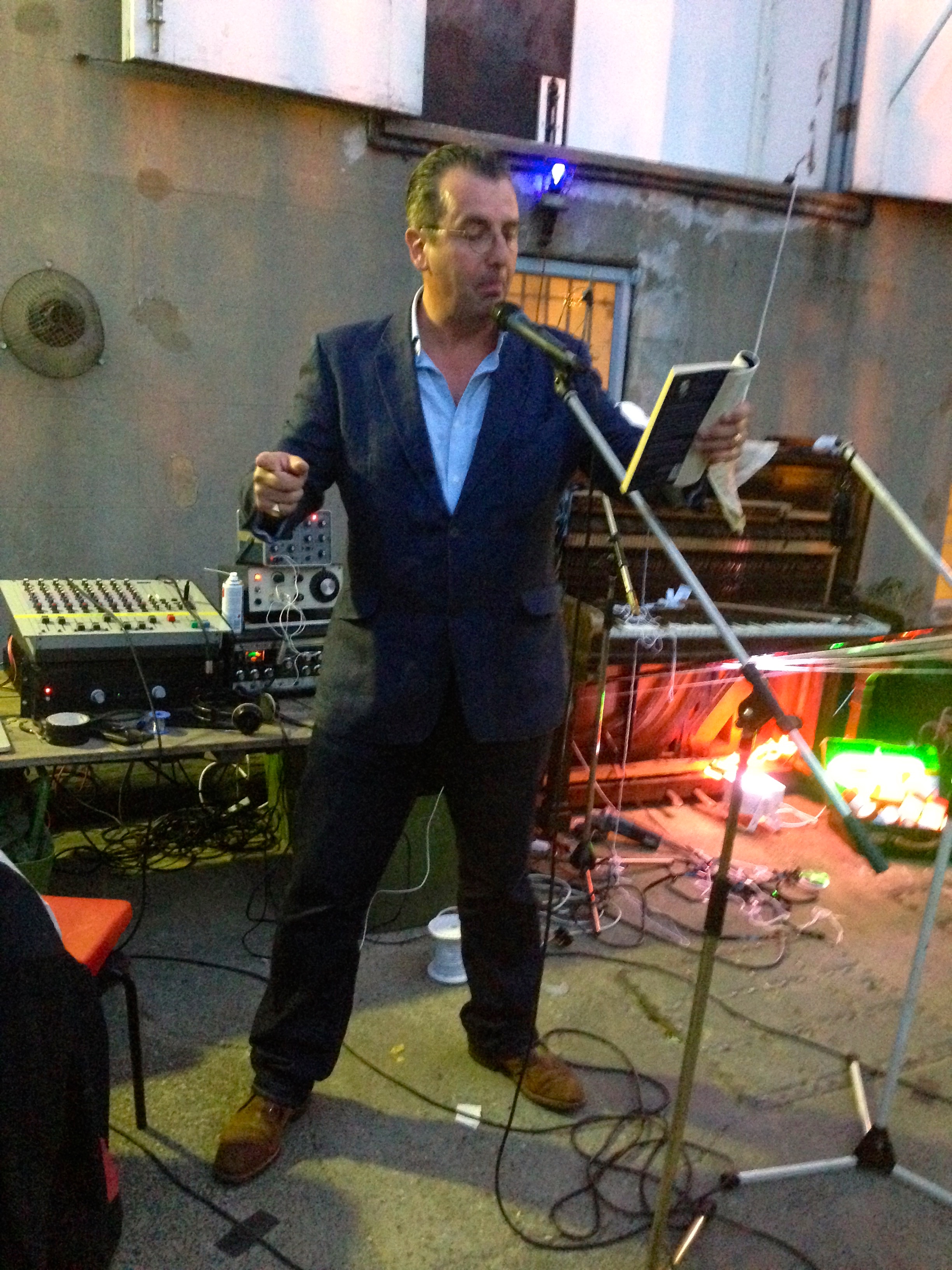
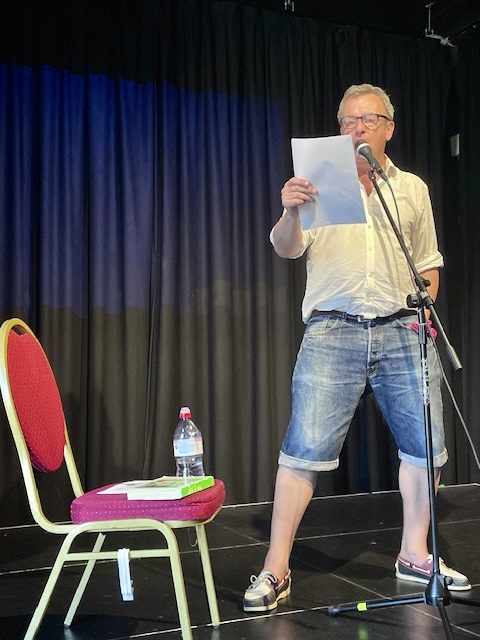
It was fun to join eight other authors at the Bread and Roses Theatre in Clapham, London, yesterday – one of many pub-theatres in the capital – for our National Crime Reading Month gig. ICYMI National Crime Reading Month is a joint promotion by The Crime Writers’ Association and The Reading Agency that runs through June each year. Thanks to author Anne Coates for sending this photo of my reading!
The welcome was warm, but the weather was in the low-mid 30s (°C). I read from something new, talked a little about The Fountain in the Forest and its follow-up, about the challenges and necessities of writing fiction set in a contemporary law-enforcement environment, and about the Guardian Quick Crosswords that I’d do every day in 1985 and returning to them as source-material now.
Interesting trivia: apparently the Bread and Roses is the only London pub to be owned by a trade union! Well, I guess the clue is in the name. And this beauty was blooming in a garden opposite.
It was a great pleasure and privilege to perform in Flanders House, London (part of the Belgian Embassy in the UK), alongside poets from Belgium and the UK, for the European Poetry Festival, curated by Steven J Fowler.
I’m not a poet, but my contribution (celebrating speech in a spirit of European exchange) was a performance remix of Thomas Shelton’s first English translation of Don Quixote by Miguel de Cervantes, the first modern European novel. This was presented as a live improvised collaboration with avant-garde musician Benedict Taylor. As part of last night’s mixed bill, we could only present the first seven minutes of the work – the whole thing might last considerably longer.
Tony White (L) and Benedict Taylor, Flanders House, London, 19 June 2025 (photo: Eleanor Wilders)
In fact Shelton’s translation (undertaken in 1607, as a favour for a friend who couldn’t read Spanish, and then published in London in 1612, and with the second part of the novel in 1620) was the first translation of ‘The Quixote’ into ANY language. It also turns out to have had a particular and very significant connection with Belgium… So it was a thrill to bring it home last night.
Steven J Fowler the curator of the European Poetry Festival filmed us from the front row – thank you to Steven, project supporters, the superb audience, and the Embassy team at Flanders House for all their hard work and hospitality.
The event opened with solo readings by Lies Gallez, Tijl Nuyts and Astrid Haerens, followed by new collaborations featuring: Lies Gallez and Mischa Foster Poole / Astrid Haerens and Mark Waldron / Tijl Nuyts and James Wilkes / Tony White and Benedict Taylor / Sinnead Singson and Regina Avendano / Bella Weerasinghe and Caitlin Nugent / Victor Rees and Iarla Prendergast Knight. And here’s the group shot! You can see more videos and photos of the whole event here…
Photo: Eleanor Wilders
EPF Flanders was generously supported by Flanders Literature and The Embassy of Belgium: Delegation of Flanders. Curated by SJ Fowler with thanks to Patrick Peeters.
I’m sad to write that my seventh novel Phantom at the Feast – the follow-up to The Fountain in the Forest – won’t now be published in November 2025 as planned. We had to end the publishing agreement with Unbound/Boundless for Phantom at The Feast owing to breach of contract due to non-payment of the signature and delivery advances. It hurts. I’ve lost time, and money I was counting on. But all rights are now back with me – which is a huge relief.
It’s always a great leap of faith when a novel goes out on submission to publishers, particularly since Phantom at the Feast marks the completion of a ten-year project. So it was a thrill to get a great deal very quickly, and to start making exciting plans with an editor I admire. I’m gutted that it’s not to be, but acutely aware that I’m fortunate compared with author and industry colleagues who’ve lost much larger sums. My heart goes out to them, and to everyone affected.
Sincere thanks to those who’ve posted, liked, or messaged in recent months to say how much you’re looking forward to reading the follow-up to The Fountain in the Forest. To everyone that jumped on board with Phantom at the Feast, who offered an advance quote, or got in touch to line up interviews or share events – thank you. I’m hopeful that we’ll be able to pick up these conversations again before too long.







 Piece of Paper Press & tonywhite.london
You must be logged in to post a comment.