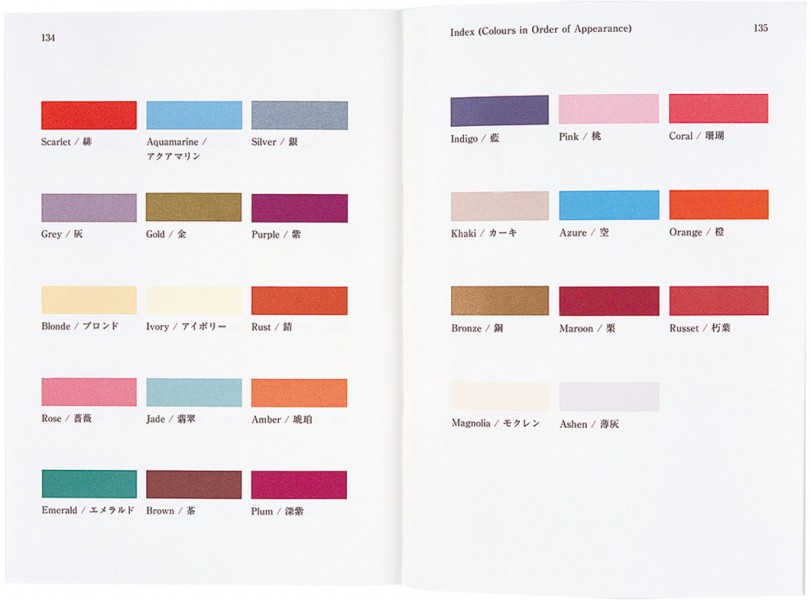
These include Turnbull’s extraordinary colour-chart translation of Yukio Mishima’s novel Spring Snow, to which I was privileged to write an introduction.
Turnbull’s Spring Snow: a translation is an object of great beauty, but it is also I think something of a rarity now. Certainly the publisher Book Works are currently showing it asout of print, so if you missed it when it came out, this may be your last and only chance to get hold of a copy!
Pay the Creator is a Creators’ Rights Alliance (CRA) campaign highlighting the disparity between creators and other sector workers in the areas of pay, business support and policy making. Unfortunately the message never gets old! Find out more here…
UPDATE: THIS ITEM WAS ONLY ON SALE FROM LRB BOOKSHOP BUT IS NO LONGER AVAILABLE
ICYM the info earlier in the summer, there’s still a chance to get your hands on this very special tribute to the great London author Iain Sinclair, published to mark his 80th birthday.
I’m honoured to have contributed to this unique tribute to a remarkable writer, film-maker and walker. Conceived and edited by Gareth Evans, and designed by Joe Hales Studio, Solution Opportunities: for Iain Sinclair at 80 is published in an edition of only 400 numbered copies – each signed by Sinclair. This 192 page A4 illustrated publication features an unmissable line-up of over 170 contributors, including myself, Peter Ackroyd, Caroline Bergvall, Keggie Carew, William Gibson, Xiaolu Guo, Philip Hoare, Stewart Home, Toby Jones, Stewart Lee, Esther Leslie, Rachel Lichtenstein, Robert Macfarlane, Jonathan Meades, Dave McKean, Michael Moorcock, Alan Moore, J.H. Prynne, Denise Riley and Marina Warner.
Featuring original essays, poems, images, letters and reflection from writers, artists, musicians, publishers, friends, critics, booksellers and readers, it is not only a celebration of a unique body of work but also a de-facto history of the last 60 years in experimental literature and culture.
Don’t miss out! For more info and to pre-order, visit this very memorable URL: LRB.me/is80
It’s not, of course, an essay. It’s a work of fiction. A detective story that explores the work of Croatian film-maker Ivan Martinac (rough pronunciation guide: eeVAN marTEEnuts) via the medium of a Coroner’s report into the death by unnatural causes, in the Croatian city of Split, of an English artist who had become obsessed with both Martinac and the city itself.
The book also features some really excellent and original writing by Victoria Best, David Collard, Dan Dalton, Andrew Gallix, Jonathan Gibbs, Susana Medina, Mathilde Merouani, Rachael de Moravia, Dan O’Brien, Christian Patracchini, Imogen Reid, Richard Skinner, Matthew Turner, Owen Vince, and Eley Williams. There was an online event in July to launch the book, but watch this space for IRL events and readings in the autumn…
Last year Vanguard Editions published the excellent Selected Essays by the French poet, novelist, teacher, essayist, art critic and translator Michel Butor (1926-2016) in English translation for the first time (translated by Mathilde Merouani, as it happens, who has also contributed to Hinge). So by buying The Hinge of a Metaphor you will also be helping an important small press to keep operating.
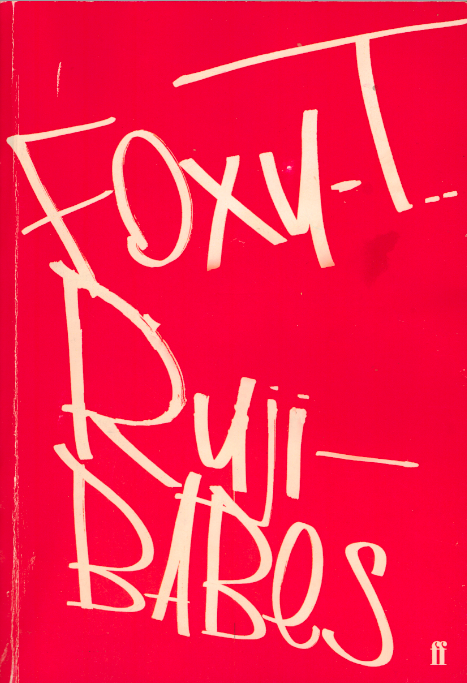
My novel Foxy-T was published twenty years ago this week, so I thought it might be interesting to open up the archives. I’ve been posting every day this week with views from behind the scenes of book publishing.
Shortly before publication of Foxy-T, I remember going in for a meeting with the team at Faber. Everything was in place: there was to be a launch at the Horse Hospital (a counterculture arts centre and exhibition space in the old cobbled mews behind Russell Square tube station), proofs and finished copies had all gone out at the right times, appearances at a couple of festivals were fixed, etc. The machine was doing its job, in other words, and there was probably not much I could add to it, in those days before social media. But it’s a stressful time. A recent article on the subject of author care and author mental health has raised lots of questions for the industry, particularly around managing the expectations of first time authors. Even with your fourth novel, or your sixth, and with a fair wind, it can be an exhilarating and slightly scary experience. Well, there’s a lot at stake. Back in 2003 I may have been whirring a little. This was after all the culmination of an all-consuming journey that had begun when I started writing Foxy-T three-and-a-half years earlier. I was excited and probably feeling a bit like I ought to still be doing something now: putting copies of the book in the right hands, perhaps? Who had we missed? Anyone?
Tony on the steps of St John, Smith Square, 2003 (out-take from Faber shoot for Foxy-T author photo). Photo: Charlotte Bromley-Davenport.
Three years later, I was sitting at my desk in what was then the Arts Council England national office on Great Peter Street, Westminster, one Thursday morning in April, when someone working nearby said, ‘Oh, Tony, Foxy-T is in the paper again.’
It was that day’s Guardian, and when he passed it over I saw that this was one of their periodic books round-up features where a number of currently fashionable authors are all asked the same question. In this case, authors and celebrities had been asked to recommend the books they loved which had failed to get the public attention they deserved.
Quickly scanning the feature I saw Ekow Eshun recommending Vertigo by W.G. Sebald, Alexei Sayle recommending Elizabeth Taylor, and Ali Smith the collected short stories of Grace Paley. There was Hari Kunzru on The Lonely Londoners by Samuel Selvon, Carmen Callil on Sylvia Townsend Warner, and Gwyneth Lewis on the Irish author, artist and map-maker Tim Robinson. Well, this was excellent company to be in.
Further down, astonishingly, the author Toby Litt was recommending Foxy-T:
“What’s your favourite British novel from the past ten years?” The other day I was with a group of friends, and someone posed this question. A few fairly obvious titles were suggested, which gave me time to think. And when it came my turn to speak, I said, “Foxy T by Tony White”. My partner said “that’s just what I was going to say”. Foxy T is mostly set in the E-Z Call shop on Cannon Street Road. It’s written in a style that I can only describe as 100% Pure London, meaning a mix of here, there and everywhere. It tells the story of Foxy-T and Ruji-Babes, two very streetwise girls who are not without their troubles. Although not a big book in terms of length, Foxy-T encapsulates an astonishing amount of now – and it does it funnily, honestly, sexily and tenderly.
Toby Litt
Wow; so exciting! And I’d have gone out to the newsagents in Strutton Ground immediately, to buy a couple of copies of the paper for the file.
There’s a moment that comes in the publishing lifecycle, and it comes every time, with every book, where you think – and I don’t know if other authors recognise this? – where you think something like: Well, it’s just a book after all.
This is not a negative thing to say. I mean it in a good way. It’s a book. And it’s out there.
And if you’re lucky some people will enjoy it, and others won’t. For every blessing there’ll surely be a brickbat or two: someone slagging you off for this or that. Some will boast that they haven’t read it, and still slag it off.
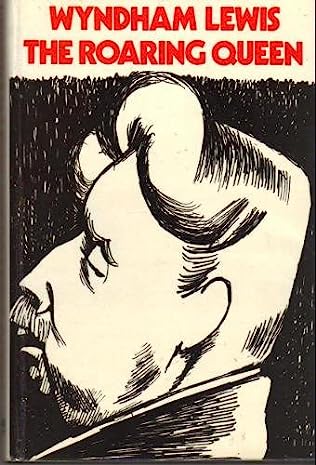
(It happens all the time. ICYMI there’s a line in the Wyndham Lewis novel The Roaring Queen where a London newspaper’s bombastic literary editor, a thinly veiled Arnold Bennett, is derided for just this: claiming to be able to review a book without reading it.)
But that’s okay, because it’s just a book, after all, and you’ll be on with the next thing soon enough: the next book, the next short story, the next article or whatever. And so will they. And no-one else will care.
There was a funny moment at the Foxy-T launch in July 2003; a bit of a reality check. The Horse Hospital was rammed, and sweltering, on what was surely the hottest night of the year. Not long before the speeches, I bumped into another writer I knew.
‘Hi Tony,’ he said. ‘How’s it going?’
‘Yeah, pretty good, thanks,’ I said.
‘So, what are you up to?’ he said, rather surprisingly.
Was he joking?
‘Well, I’ve got a new book coming out,’ I said.
‘Oh, great,’ he said. ‘When?’
But the interesting thing is that once a book is published, it’s out there in the world, doing its thing: representing you, and performing and circulating in the way that books do, at any scale: being read, passing from hand to hand. And if you’re lucky people will find it, and they’ll do what they want with it. And if you’re not, they won’t, for a bit. But then maybe they will. Who knows? And who knows who might come across your book, and not just in a bookshop, but in a charity shop, or on the shelf in a pub, or a holiday home. Or be lent a well-worn copy by a friend.
But I’ve been very lucky over the years since 2003, because Foxy-T made an impact, and people have continued to discover it since. And people enjoyed it, and some people used it in their teaching, put it in grammar text books, and PhDs, and it led to lots of other gigs and opportunities and commissions. And people have continued to speak up about Foxy-T; on social media, and in the press. Sometimes so positively it takes you aback, and sometimes negatively – and other times very positively but slightly puzzlingly all at the same time, as here...
There was an event at Whitechapel Library on the tenth anniversary of the book’s publication! And earlier this year I was invited to discuss Foxy-T at the Modern Cockney Festival as part of a panel on the changing languages of London.
And on it goes, and I’m very grateful. Thanks, all.
Last few paperbacks of Foxy-T selling out at NOIR AT THE BAR recently…
And funnily enough, I gave a reading from Foxy-T just the other week, for NOIR AT THE BAR in London. Foxy-T is not something I’d usually think of for a Crime Writers’ Association gig. But because it’s in the repertoire, and because we were coming up for the book’s twentieth anniversary, and mostly because I was on last, at the end of a 3-hour bill of about twenty authors(!) I thought I’d better put on a bit of a show; go out with a bang; so Foxy-T it was. But also because I remembered that when Mark Lawson and Iain Sinclair had discussed Foxy-T on BBC Radio 4’s Front Row back in the day, Lawson had described it as a ‘crime novel.’ Something no other critic ever did. He’d evidently homed in on a certain accelerated murder-mystery element that’s hiding there in plain sight. And it was a good choice for a live reading at NOIR AT THE BAR. It worked well in that context. And we sold all the copies I’d brought along. And not only that but they were the last copies I’d been able to get from the Faber warehouse. Which means that the mass-market paperback is now out of stock – OFFICIAL! So if you wanted to buy a print edition of Foxy-T right now you’d better be quick, because whatever is out there really is all there is, for now anyway; either that or buy it second-hand while you can. And in the meantime there’s the ebook, of course.
So what did Charles Boyle say, in our cigarette break out there on the damp and leafy Faber fire escape, just a week or so before Foxy-T was published, all those years ago in 2003?
He said something like this: Take a deep breath and savour this moment, with all its possibilities and potential. It’s a special moment, a magical moment, just before publication, and anything could happen, but there’s not much you can do about it now except go with the flow. So just take in this moment, take a deep breath, and run with it, and see where it takes you, and enjoy it.
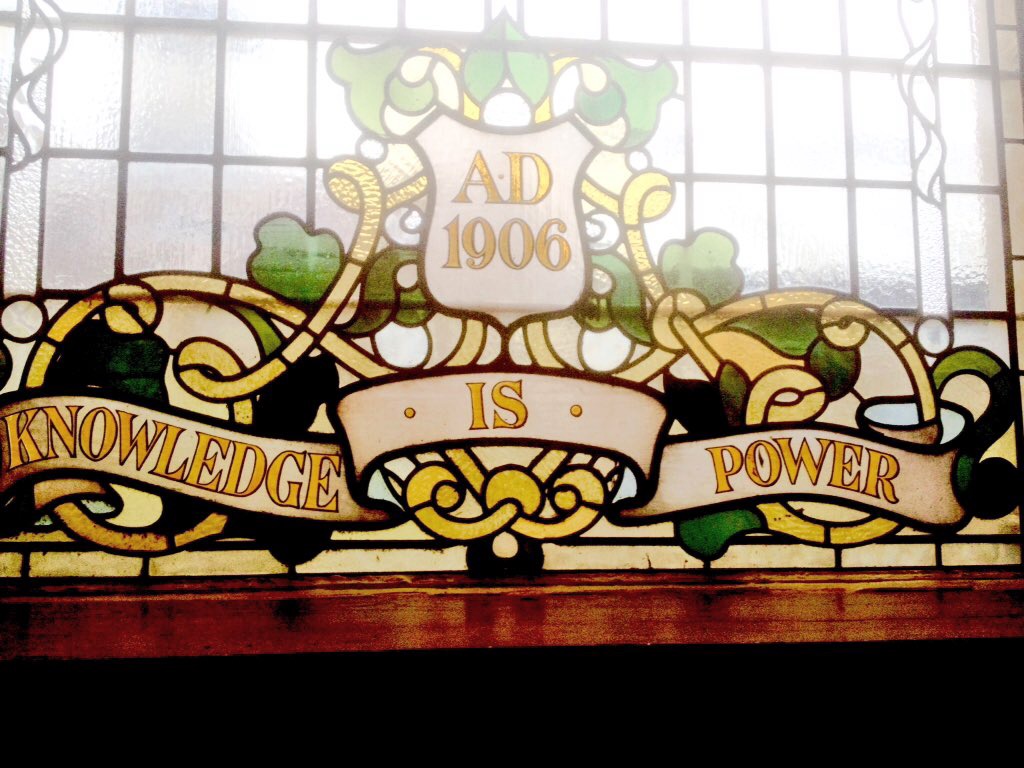
‘Knowledge is power’ – stained glass window in Twickenham Library – a purpose-built Carnegie Library – photo TW following appearance at Richmond Literature Festival 2019
My novel Foxy-T was published twenty years ago this week, so I thought it might be interesting to revisit publication with a few posts from behind the scenes. Today the art of the advance quote…
Around the time that bound proofs of Foxy-T were being prepared, my commissioning editor at Faber Lee Brackstone called to ask if I had any thoughts who about we might approach to give us an advance quote, i.e. a brief and personal pre-publication endorsement. Fairly standard practice, but with a novel as experimental as Foxy-T it was felt that we needed some critical backup pre-publication from disinterested allies.
Foxy-T, Faber bound proof
There are mixed feelings among authors, readers, and in the industry generally, about the value or otherwise of advance quotes.
I’ve heard from colleagues, authors who’ve hit a certain level of public visibility – winning a major prize, for example – that the number and frequency of requests for advance quotes goes through the roof. They are inundated, and they have to start saying no.
On a more day-to-day basis though, I’ve seen both readers and emerging authors claiming that it is off-putting to see the same old rent-a-quote names on book after book. But perhaps advance quotes are aimed less at readers per se, or as much at sales forces and retail, and at potential reviewers via the press release: trusted names helping to gently position a book.
It is also true that I’ve sometimes seen authors under pressure to get advance quotes and overdoing it: getting too many advance quotes from the wrong people.
Yikes! What do I mean by ‘the wrong people’? Aren’t all advance quotes good?
Well, no. Here’s a Pro-tip: don’t make the mistake of getting advance quotes from anyone who might otherwise have reviewed your book. Why? Because having given an advance quote that’s ended up there on the cover, they won’t be able to review it.
For Foxy-T I suggested the authors Michael Bracewell and Stella Duffy, while Lee suggested Niall Griffiths, who I don’t think I’d met at the time (unless fleetingly at Richard Thomas’s Vox ‘n’ Roll events) and Matt Thorne, co-editor of the short story anthology All Hail the New Puritans, to which I’d contributed. Thankfully, all of them agreed.
Michael Bracewell had reviewed my Britpulp! short story anthology for the Guardian, and I was and remain a great admirer of his writing; in particular his novels, and especially The Conclave. At the time I’d quite recently reviewed his 2002 novel Perfect Tense for The Idler. Bracewell’s response to our request – he phoned me at work – was typically modest. He said something along the lines of being flattered to be asked, though unsure he’d be much help, but if I thought so then he’d of course be delighted. I’ve lost the full text of the quote that he sent through a week or two later, which would have been emailed to me at work via my now-defunct Arts Council email address. A bit about the novel being (IIRC) ‘confrontational, in a good way’ got edited out somewhere along the line. Anyway, this is what survived and was used:
An astonishing and audacious novel – the compelling voice of Foxy-T reads like a 21st-century update of Salinger’s Holden Caulfield.
Michael Bracewell
Niall’s advance quote followed shortly after, as did Matt’s. Stella, meanwhile, emailed me separately to tip me off that she’d designed her quote tactically. She wanted, she said, to give us something that might get Foxy-T on the news. Here’s what she wrote (and it’s a lesson in how to give a quote a topical political hook):
In his new novel Foxy-T, Tony White writes the urban contemporary in perfect modern English: a broken-rhythmic patois that has nothing to do with the Literacy Hour and everything to do with real words coming out of real mouths. What’s more, unlike so much of the hard/urban/gritty ‘realism’ being traded at the moment, his is also a sweet and sad love story that stars real girls, instead of wish fulfilment faux-chicks. Truly impressive.
Stella Duffy
‘Perfect modern English’ — genius! If you were writing this now, you might say ‘fronted adverbials’ instead of ‘literacy hour’. And that hook of Stella’s didn’t find any traction with first publication, but fast-forward a year to the mass-market paperback, and Foxy-T was now in B-format with a new jacket, complete with reviews front and back. (That quote on the front cover is from Michael Moorcock’s Guardian review of course.)
With a paperback publication date in mid-August, there were not many events planned. And I was unavoidably out of the country, attending ISEA for work: a roving international electronic arts festival, which that year was taking place in Finland and Estonia, and various points between.
Before leaving for Helsinki, I gave my schedule – hotels and contact numbers – to Anna Pallai, Foxy-T’s publicist at Faber, just in case. Remembering Stella’s email, we agreed that Anna would send the paperback to The Today Programme, highlighting Stella’s advance quote. Because it was also A-Level results season.
The trip to ISEA was all consuming, an endless round of gigs and shows, most of which took place on a ship that sailed from Helsinki to a disused military island in the Swedish Archipelago, and then on to Tallin, where there was a further day and night of gigs and exhibitions to be seen.
Arriving back at my Tallin hotel late that night I found a sheet of A4 paper had been slid beneath my door. It was a fax from Anna at Faber. The next day was A-Level results day, with all the predictable stories expected about falling standards in English. As part of their coverage they would be interviewing the then Schools Minister David Milliband and others about these supposed falling standards in secondary education, after which they would turn to me to talk about Foxy-T. I was to call them for a chat with the producer at whatever time I got back to the hotel; no matter how late. This I immediately did – borrowing a friend’s phone to do so.
Come the next morning, and allowing for the time difference, I was waiting by the phone in my hotel room with a cup of coffee. It turned out to be simpler for Today to call me there than for me to go to the small, city-centre radio studio that the BBC often used when reporting from Tallin. The hotel were primed to put the call through. I was really nervous. I’d never done a radio interview before, let alone a live one, and I listened to The Today Programme regularly, so knew they had a reputation for giving interviewees a hard time. And here I was, presumably being brought in to represent those very same falling standards. What if I was up against John Humphreys? He’d have my guts for garters.
But I’d prepared a little, by writing down the two or three key things I wanted to be sure and say whatever happened: that language evolves, to namecheck Linton Kwesi Johnson and James Kelman, to talk about the new language that had been emerging in the East End.
As I waited for the call to come in, a bit of ‘stage craft’ kicked in: wisdom learned from years of giving live readings. I realised that I had a trump card here; grist for the mill that I could call upon if at any point the interview threatened to go astray. If that happened, I could simply say, ‘Sorry I can’t hear you, I’m in Estonia! – but the thing is…’ and then quickly shoehorn in whatever point I did want to make.
During the interview, Today presenter Ed Stourton gamely read a section of my novel aloud before asking whether by using such contemporary language I was in fact excluding ‘some of us’.
Curiously, The Today Programme‘s sound archive which includes every programme broadcast since 2003, seemed to always be missing this one section, even though it was listed at 08:20 on 19 August 2004. However I do own a low quality cassette recording, which (with apologies for sound quality) I digitised and put on YouTube.
Here it is. Take a listen to how Ed Stourton seizes upon Stella Duffy’s tasty bait… (Thank you, Stella!)
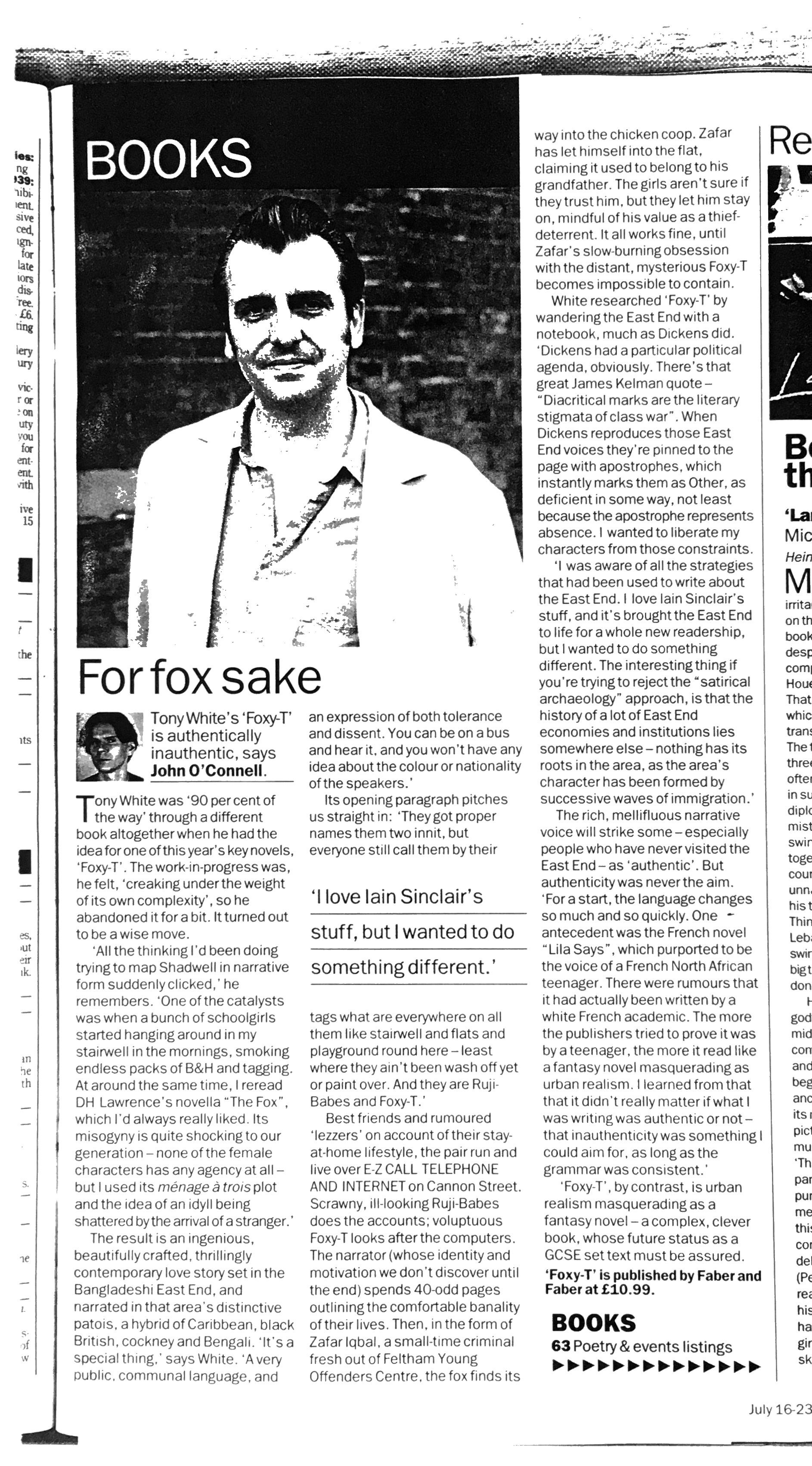
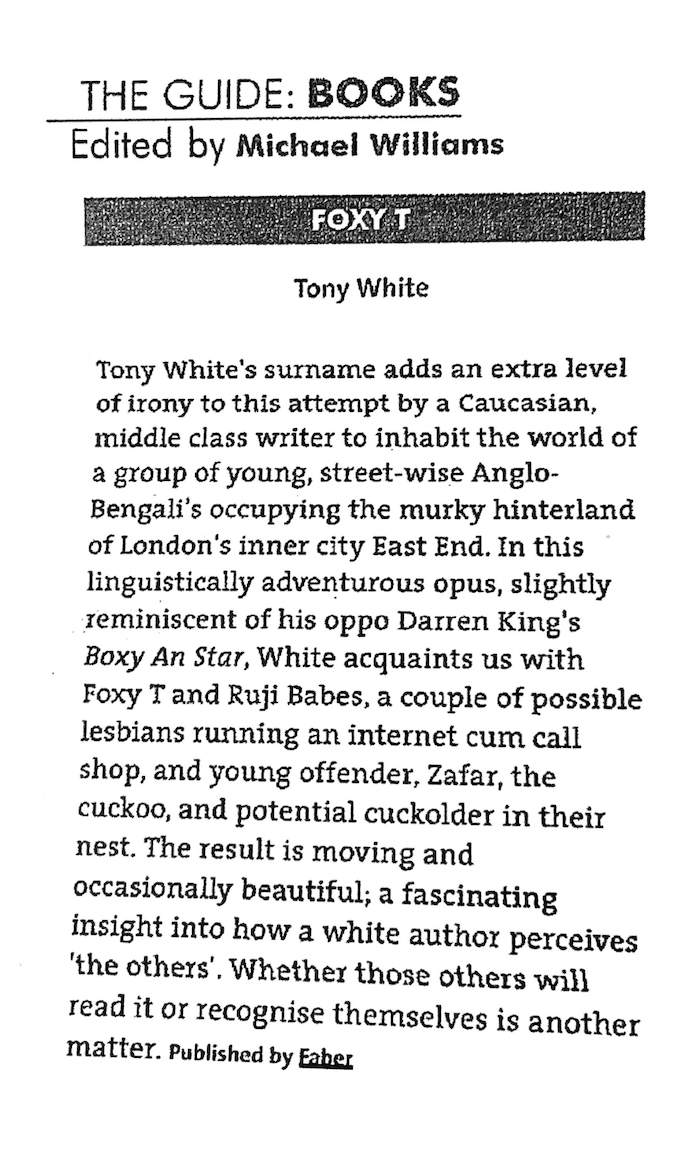
I’ve gathered various reviews of Foxy-T on my press page. But going through the archive recently, I came across some other clippings that I’d missed. It feels like a different time. Foxy-T was published before social media existed, and if your book wasn’t a big acquisition with a correspondingly big marketing budget, in the early ’00s reviews were about all there was.
But Time Out liked Foxy-T, and in the week of publication they ran an interview. This was filleted for a quote to go on Amazon and on the paperback jacket, but I just found a couple of photocopies of the whole thing:
Wow, Time Out was a big deal.
How big? Well, recently I took part in ‘The Big Read’ at The King’s Head in Crouch End. It was part of National Crime Reading Month, a books, reading and literacy promotion that runs through June each year. As well as readings there was a Q&A, and author Jennie Ensor who’d put the event together tried out some of her questions on us: ‘Has it changed the way you write,’ she said, ‘now that you get recognised in the street?’ Cue much laughter all round.
But then I remembered something. Before it moved over to free-giveaway and online models in 2012, Time Out supposedly sold around 110,000 copies weekly, and up to 300,000 or more at its peak, but each of those copies would reach many more individual readers, whether in homes and house-shares, in schools, colleges and public libraries, workplaces, staff rooms and waiting rooms, etc. I don’t know how that broke down in terms of age and other demographics, but the net result was that if you were lucky enough to get a big photo like this in Time Out, people would see it. You’d go into a shop and someone would say, for example, ‘How’s the writing going, Tone?’
‘Yeah, alright, thanks!’ you’d say, once you’d got over the shock.
Blimey.
Some of the early reviews were a bit meh, like these two from Metro (L), and Sleazenation.
(‘Who are you calling middle class?’ I remember thinking. Quickly followed by, ‘But there aren’t any bookshops in Shadwell!’)
The review that changed everything came later; more than two months after publication. It was a Saturday morning. I was in Islington and bought The Guardian before catching a bus on Upper Street. I can’t remember where I was going or why, but I got a front seat on the top deck. Settling in for the ride, I opened the paper, turning habitually to the ‘Books’ section.
We hadn’t known the review was coming – sometimes you do, sometimes you don’t – and it took a moment to recognise what I was seeing.
‘Benglish for beginners,’ said the headline. And above it the standfirst: ‘Michael Moorcock celebrates the voice of the modern city in Tony White’s Foxy-T.’
Constantly invigorated by successive waves of immigrants, London produces a literature unrivalled by any other great city; she’s a powerhouse of fiction, using whole cultures for fuel. London erupts with street language to match the tenor of the times, drawing vitality from the word-hoards of the powerless and disenfranchised. Working novelists, usually too poor to live anywhere but the ghettos, listen and take notes.
Michael Moorcock, ‘Benglish for Beginners’, The Guardian, 27 September 2003
I was gobsmacked. They say you shouldn’t take reviews too seriously, and some authors claim not to read or be interested in them at all. But this was by the great London novelist Michael Moorcock, so of course I was going to read it. I’d want to know what he thought about almost any book, let alone one of mine.
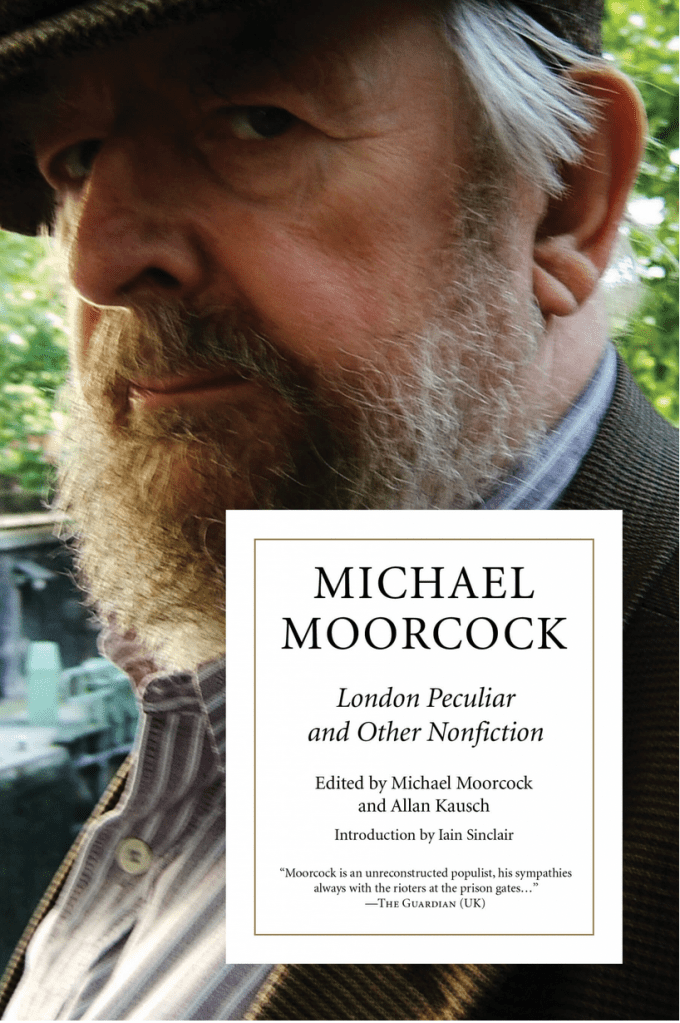
The review is also collected in Moorcock’s excellent 2012 collection London Peculiar and Other Non-fiction, which I would highly recommend. In fact, it’s essential reading for anybody with any interest whatsoever in London’s literatures.
A great thing about books is that they are out there in the world, doing their thing, regardless. And you never know who will pick one up in a bookshop, a library, or a charity shop, and what it will mean to them. It’s a huge thrill when people get in touch from the other side of the world to tell you; or from just around the corner.
Towards the end of that same year, Faber had a call from an East End journalist named Hussain Ismail. A near neighbour of mine it turned out, he’d missed publication of Foxy-T, but had borrowed a copy from what was then the public library in Watney Market (now replaced by a more modern Idea Store). Hussain was planning to write about Foxy-T for a recently-launched style-press magazine called The LIP that was then being published out of Brick Lane. I’d seen posters for it around the place. He wanted to meet up for a chat.
It may be surprising to some readers to learn that there were hardly any bookshops in the East End of London in the 1990s and the early ’00s. Not like there are now. I wish that Pages of Hackney, Donlon, The Broadway Bookshop, Brick Lane Bookshop, and Burley Fisher had existed when I was starting out! In 2003 I’m pretty sure there were just the Newham and Stoke Newington Bookshops, and nothing in between but the small bookshops at Centerprise in Dalston and Eastside in Whitechapel. There was a newsagent on the Narrow Way near Hackney Central station that stocked a limited selection of books (it’s where I’d have bought Victor Headley’s Yardie) and a bookshop in the Whitechapel Art Gallery, but they didn’t do any fiction. So thank goodness for public libraries.
We fixed a date for the interview. I took a couple of hours off work and met him in one of the cafés in the arcade by St James’s Park tube station. A few weeks later, the review came out:
Although this kind of language may surround us, we are not used to reading it, and for this reason Foxy-T is a difficult book to get into for the first 30 – 50 pages. But the effort pays off . . . This is the real sound of the East End, and it deserves to be recognised.
My novel Foxy-T was published twenty years ago this week, so I thought it might be interesting to revisit publication with a few posts from behind the scenes. In setting the novel on Cannon Street Road, in turn-of-the-century Whitechapel and Shadwell, London E1, Foxy-T attempted to take a snapshot of a new language form – a sociolect? a dialect? a patois? a vernacular? – that was emerging all around the East End where I lived, and would several years later become known as Multicultural London English (MLE). At the time I would simply talk about ‘the language I was hearing all around me’, as I watched and listened in respectful awe. Of course, language changes and evolves all the time, even if the velocity and scale of those transformations may vary; from something seismic like the emergence of MLE, to tiny shifts in usage.
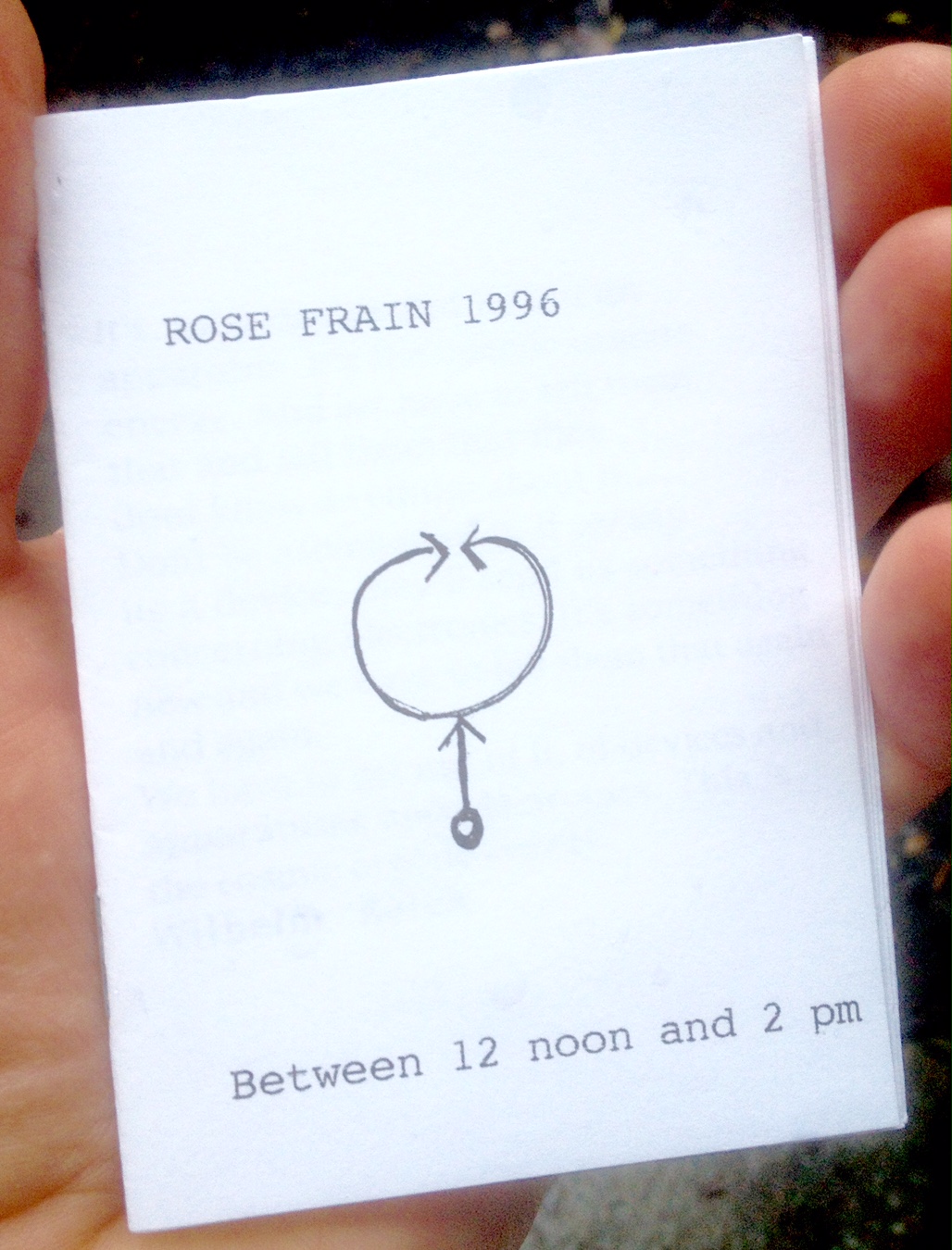
A decade earlier, in the mid-nineties, my good friend the Scottish artist Rose Frain had a residency as part of an exhibition called Zij Sporen (‘side tracks’) at Gynaika, in Antwerp, Belgium. This would have been very shortly before we worked together on an artist’s book by Rose that I published on Piece of Paper Press, which was itself to be distributed by post.
Rose’s Belgian residency had involved working in and with a restored TPO (or ‘travelling post office’) rail carriage. The work that she made involved a facility to receive and to send post, including an officially designated franking machine that incorporated her own postmark. Here’s a photo from her own archive:
You probably already know that the word ‘cliché’ (derived from the French passive past participle of the verb ‘to click’) comes from the world of print and typesetting. Where a common phrase was used particularly frequently, in order to save time the typesetters would have it pre-cast as a permanent block. That way they wouldn’t have have to set it, character by character, every time that phrase was used; they could simply insert the whole, pre-cast cliché. Maybe the click is the sound of this larger piece being snapped into place; a different sound quality compared to the lighter, looser rattle of type.
As it happens, usage of the word cliché is shifting slightly in contemporary culture. The way that I was taught is that something can be (noun) a cliché, or it can be (adjective) clichéd. However, as anyone who has taught in Higher Education in recent years will tell you, these distinctions have become blurred, perhaps by usage in international English.
Increasingly in UK English, cliché is being used as the adjective form (rather than clichéd). As in, this observation is so cliché, but I’m saying it anyway.
Another example: until recently, UK English usage would say ‘to set foot in (a place)’ meaning ‘to enter’, where e.g. international or American usage – which is increasingly adopted by a younger generation of emerging writers and sub-editors in the UK – would say ‘to step foot in…’ See also, the growing contemporary use in UK English texts of the archaic English form ‘gotten’. (And don’t get me started on how you or I or anyone might pronounce ‘ay’, ‘eh’, and ‘uh’…) If you were writing an English-speaking character who was in their twenties right now, a character who writes, the way they wrote would maybe need to reflect such subtle shifts.
Rose Frain, ‘Between 12 noon and 2 pm’ (POPP.010, 1996)
In the Belgian postal system, Rose Frain told me, back in the mid-’90s, the cliché was the name given to the pre-cast or moulded postmark stamp that would be inserted into the franking machines to communicate the official message of the day.
This would have struck a chord because at the time of the conversation, and for most of that decade I worked for the Royal Mail, first in the former London NW1 Mail Centre on St Pancras Way, and later in the Islington Mail Centre off Upper Street. I was never out on deliveries, but worked in the sorting offices. Arriving in London with a degree in Fine Art at the start of a recession, the job had been a lifeline. I’d replied to an ad in the Camden New Journal, and when I joined it was a condition of the job offer and the pay-grade that you had to pass a touch-typing exam: more power to this young writer’s elbow. Chatting about all this with Rose today, she reminds me that in the same conversation in 1996 I had told her that just that week I’d sorted a postcard addressed to ‘The Queen’ from ‘God’.
All of which is prompted by the recollection that for a week or two around publication, Foxy-T was the official postmark on the Faber and Faber franking machine. Every item of post that left the building in that week or two bore Gray 318’s ‘Foxy-T’ device. How cool is that?
Or maybe it was just the former postal worker in me that found this prospect exciting.
Once the Foxy-T franking machine was up and running, Anna Pallai who was Faber’s publicist on Foxy-T sent me a couple of printouts, which I have just found in the archive. Then when it was finished-with, she very thoughtfully sent me the actual stamp (or cliché) as a souvenir. It’s been in a little glass box on the shelf ever since. Thank you, Anna!
More ‘behind the scenes’ from Foxy-T at twenty tomorrow: OMG a big review
OTD 17 July in 2003, my novel Foxy-T was published by Faber and Faber. I thought it might be interesting to revisit publication with a few posts from behind the scenes. I’d started writing the novel in late ’99 early 2000 – on a massive old laptop that had come with a new job at the Arts Council – and finished it in the autumn of 2001.
My beloved grandmother (RIP) was very excited to hear that Faber would be publishing Foxy-T. ‘Ooh,’ she said, ‘maybe you really are a writer then!’ She’d heard of Faber because they published Old Possum’s Book of Practical Cats by T.S. Eliot (1888–1965). There were not many books in her house, but she knew that one. I might also have told her that at the first Faber event I attended that summer I’d been introduced to T.S. Eliot’s second wife, his widow Valerie Eliot (1926–2012), who in the early ’00s was still very much an active and interested presence at Faber events and parties.
Speaking of which, this was the recent Society of Authors summer party. I’m a member of the Society of Authors – they’re like the writers’ trade union in the UK. If you’re a published author, I would recommend joining.
Society of Authors summer party 2023. Photo: Adrian Pope. (That’s me, between Val McDermid and Betty Trask Prize-winner Daniel Wiles.)
Among many conversations in Southwark Cathedral this year, I got talking to the comic artist/writer duo Fantom Limb. We were exchanging stories. I’d asked them about their work. They asked me about my work, so I told them aboutmy latest novel.
‘So how did you get published by Faber?’ they asked. ‘Did you know someone?’
‘No,’ I said, ‘it wasn’t like that.’
But it’s a good question. And maybe taking this opportunity to look behind the scenes might demystify the process a little, if anyone needs it demystifying.
I told them (long-short) that when I started out I’d known nobody and nothing. That my first three novels had been published by small presses, un-agented. But that I did by then – the early ’00s – have a literary agent (BTW if you need to know how to get a literary agent, read the Writers & Artists Yearbook) and he’d submitted the full manuscript of Foxy-T to Jon Riley, now at Quercus but then Publisher at Faber. Riley and Faber were on a list we’d drawn up of six editors/publishing houses we’d thought might respond to the novel. Three others on that list were already in the process of turning it down, and two more would bow out. But Jon had called Ant (Antony Harwood, my agent at the time) within a week of receiving the manuscript, wanting to get me in for a meeting. This was fast work, and a good sign…
I would have had to take half-a-day off work to go to the meeting. Faber’s offices at the time were in an elegant, purpose-built modernist block in Queen Square, Bloomsbury. As I was shown around, first to say hello to then CEO now Chair Stephen Page, I was astonished to find that other people in the building had read the manuscript too. The meeting with Jon Riley went well, and he said that Faber would almost certainly be in touch with Antony to make an offer, but that the acquiring editor would be Lee Brackstone, who had also joined the meeting. Since 2019 Lee has been the force behind Orion’s new music imprint White Rabbit Books, but twenty-one years ago he was a younger editor who’d worked across Faber’s lists, before becoming Jon’s assistant; an intensive training that had included a spell working at FSG in New York. After the meeting, Lee showed me to the lift, and in a gently agonistic act of editorial and rhetorical brinkmanship, i.e. with impeccable timing just as the lift doors were sliding shut, he said, ‘We’re gonna have to change the title though…’ [CLUNK – and I was whisked away.]
With the novel acquired in spring 2002, copy-editing was done in-house by Charles Boyle, now of CB editions, but then part of Faber’s poetry department.
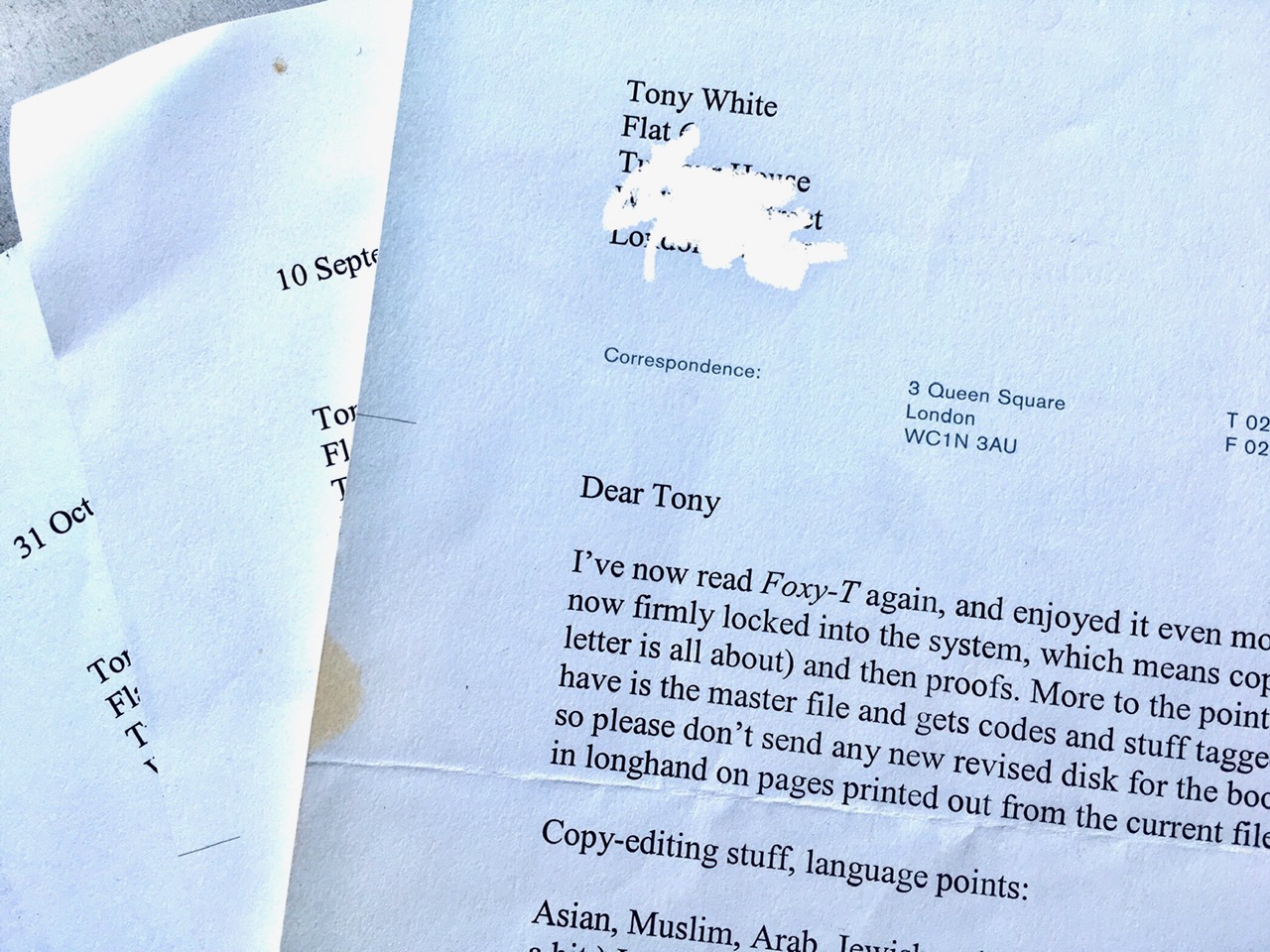
Foxy-T, copy-edited manuscript (accompanying letter dated 10 September 2002)
Actually, I’ve slightly misremembered. Checking through the papers in my archive (successive copyedits and proofs, scene-by-scene breakdowns, pages of detailed notes, and the responses to those notes, and the accompanying correspondence) I see that Charles not only did the copy-edit, but also oversaw and managed the whole process through to print. Copy-editing and proofing was still done on-the-page in those largely pre-digital days. Here’s a photo of the copy-edited print-out, full of Lee’s and Charles’s comments, and my Post-its as I’d gone through making changes.
One thing you learn quite quickly during the publication process, is that finishing a novel and getting it into a good enough state to be submitted for publication is not the end of a journey, but just the beginning. You could say that’s when the real hard work begins. Only now you’re working against the clock, because the book will have been scheduled for publication. But you’re also working in collaboration with lots of people who want the book to succeed. It’s an exhillarating ride.
We never did change that title though.
Thinking about it, I had met Charles Boyle once or twice before. He’d enjoyed my 1999 novel Charlieunclenorfolktango, published by the then Hove-based small press Codex. If I remember correctly, the thinking was that Charles’s prior knowledge of that one book at least, plus the fact that he could bring a poet’s close attention to the text, would be a good match for the sustained linguistic experimentation and the voice of the novel. They were right: it was.
Charles patiently coached me through each stage, and two months later in October 2002 we had fully typeset page proofs. One set that I kept for file, and another that I sent back, marked up.
The first edition of Foxy-T was a ‘demi’-format trade paperback, complete with dust-jacket. The strikingly simple and graphic cover design was by Gray 318, AKA Jon Gray. This was a great thrill, because at the time he’d just done the very striking and influential cover for Jonathan Safran-Foer’s best-selling novel Everything is Illuminated.
The Gray 318 concept for Foxy-T had glitchy typography and bold, free-style marker-pen work emulating the tags mentioned on page one of the novel. It had two hearts (echoing the Papermate pen logo) picked out in red foil. The design seemed really in tune with the novel, but also to continue Faber’s tradition of typographically-based cover designs. I loved it.
I seem to remember being told that a couple of booksellers had fed back to say that readers don’t like yellow and black covers, because the colour-combination reminds people instinctively of wasps, of danger…
That edition is of course long sold out. A mass-market paperback edition published in 2004 (with a different jacket design) is also close to being sold out, give or take a copy or two. But since 2018 the novel has also been available in Faber ebook for all platforms/devices.
More ‘behind the scenes’ posts about Foxy-T at twenty all this week: clichés, ‘the art of the advance quote’, and more…
Late last year I was thrilled to be invited by editor Richard Skinner to contribute to a book he was planning, of essays by writers on cinema.
This was a timely invitation for me, because I had been looking for a way in to write about the Croatian film maker Ivan Martinac, whose work I first saw in the city of Split, Croatia, a few years ago, and found captivating.
Ivan Martinac, MONOLOG O SPLITU, (Kino-klub Split, 1961–62, B&W, 16mm, 7m 21s) – title sequence.
There was a cover reveal a couple of days ago. Here it is:
Here’s the blurb:
Victoria Best, David Collard, Dan Dalton, Andrew Gallix, Jonathan Gibbs, Susana Medina, Mathilde Merouani, Rachael de Moravia, Dan O’Brien, Christian Patracchini, Imogen Reid, Richard Skinner, Matthew Turner, Owen Vince, Tony White, Eley Williams
A unique collection of essays on the world of Cinema, its films, actors and directors, by a spectacular array of poets, playwrights, essayists, interdisciplinary writers, novelists and academics. Includes new, exclusive work on subjects as diverse as fairy tale animation and toxic parenting in Coraline, Hitchcock’s The Trouble with Harry, Panos Cosmatos’ Beyond the BlackRainbow, Olivier Assayas’ Après mai, Hal Hartley’s Amateur, Wim Wenders’ Wings of Desire, Felix van Groeningen’s The Broken Circle Breakdown, navigating neurodegeneration through Michel Gondry’s Eternal Sunshine of the Spotless Mind, Amadeus as both play & film, Nuri Bilge Ceylan’s Once Upon a Time in Anatolia, Psycho & hypnosis, Eisenstein’s ‘montage of attractions’, the idea of ‘home’ in Antonioni’s ThePassenger, themirrorsofJean-DanielPollet, Croatian filmmaker Ivan Martinac, Peter Strickland’s Berberian Sound Studio.















 Piece of Paper Press & tonywhite.london
You must be logged in to post a comment.