Andrew Mottershead, TONES (POPP.046), and Katie Cuddon, NO DIMENSIONS (POPP.047)
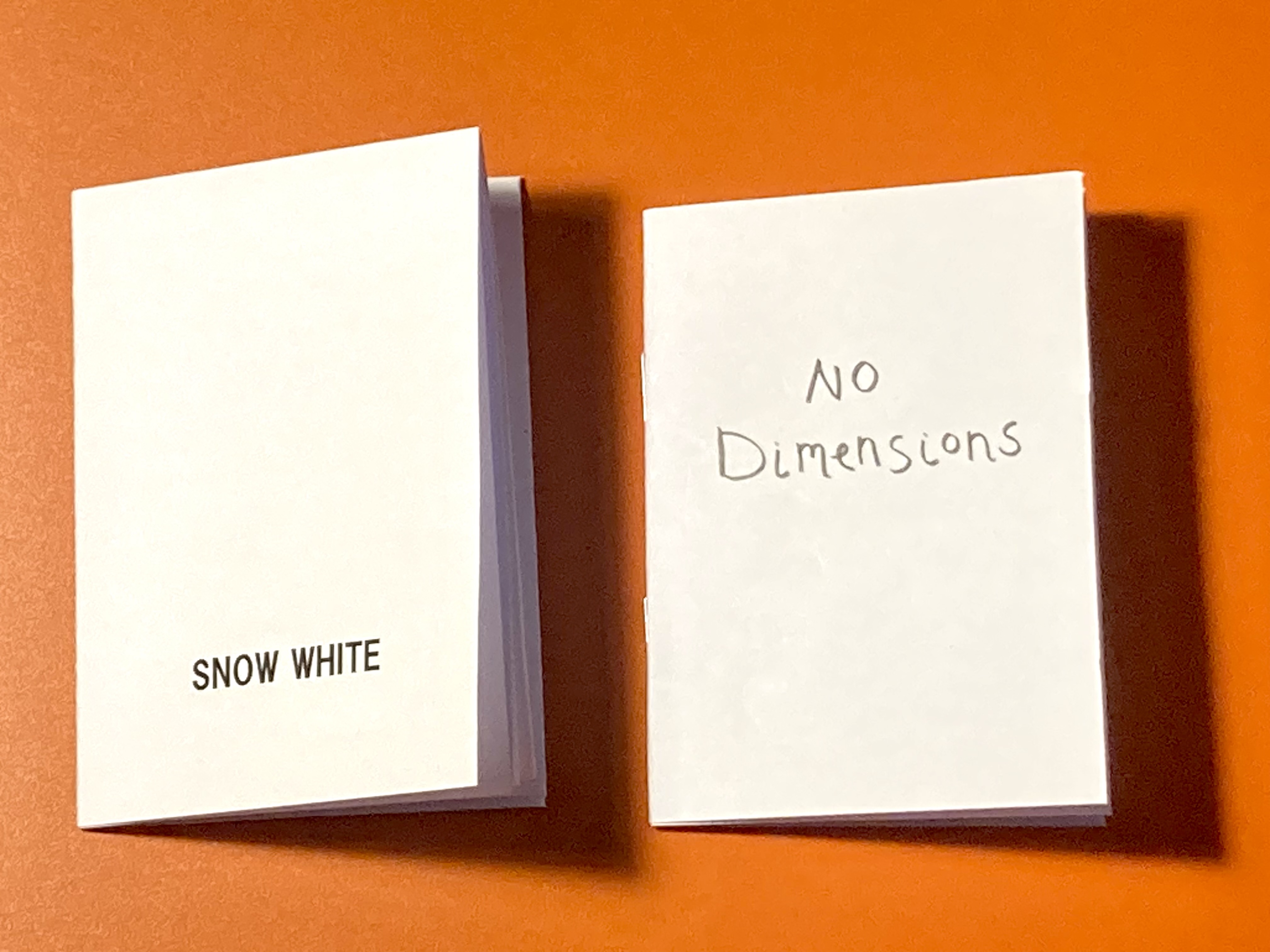
Join us for the launch of two new publications released by Piece of Paper Press in association with Matt’s Gallery as part of the archival display Thirty-one Years of Piece of Paper Press: artists’ books, artworks and ephemera, 1994–2025. The books will be given away free during the evening, and will then be a free giveaway to gallery visitors while stocks last (to 23 March).
Andrew Mottershead, TONES (POPP.046)
Deceptively simple, Mottershead’s contribution to the Piece of Paper Press series is a slow-burn joke that gathers a succession of two-word names for different shades of white: ghost white, off white, bone white, etc. Significantly, although the book is made the same way as all previous titles in the series (i.e. a printed A4 sheet folded in half three times, progressively, across its shortest dimension) the production process is here arrested at that point. For the first time in the series, TONES is published both unstapled and untrimmed, so must be unfolded and re-folded by the reader. In so doing, TONES both honours and illuminates the Piece of Paper Press design.
Katie Cuddon, NO DIMENSIONS (POPP.047)
While working with the team at Matt’s Gallery to prepare the printed list of works to accompany her Matt’s Gallery exhibition No Dimensions (29 January to 23 March 2025), Cuddon produced a series of outline drawings of the twelve sculptures included in the show so that they could be linked with ease by the viewer to their title, date and material. They are being reproduced in this publication both to accompany the exhibition, and to become an intimate lasting trace of it.
Free, no booking required
Matt’s Gallery, 6 Charles Clowes Walk, London SW11 7AN
Upstairs on the mezzanine floor of Matt’s Gallery, Nine Elms, London SW11, you’ll find an archival display: ‘Thirty-one Years of Piece of Paper Press: artists’ books, artwork and ephemera, 1994–2025.’
You can read more about the background to Piece of Paper Press here. In short, it’s an artists’ book series that I founded in 1994. In that time I’ve published limited edition artists’ books by contributing artists and writers including Ian Bourn, Pavel Büchler, Peter Bunting, Barbara Campbell, Mikey Cuddihy, Stevie Deas, Joolz Denby, Tim Etchells, Stephanie Fawbert, Rose Frain, Jane Gifford, Bruce Gilchrist, Halford + Beard, M John Harrison, David Hayden, Christopher Hewitt, Steven Hull, Sharon Kivland, Liliane Lijn, Elizabeth Magill, Andrea Mason, Penny McCarthy, Susana Medina, Katharine Meynell, Michael Moorcock, Andrew Mottershead, Courttia Newland, James Pyman, Borivoj Radaković, Sheena Rose, Pete Smith, Gordana Stanišić, Selina Thompson, Suzanne Treister, Alison Turnbull, and Joanna Walsh – all of whom are represented in the display.
After a private view Sunday 26 January, the show opened this week, and runs to Sunday 23 March. It is the most comprehensive exhibition of Piece of Paper Press to date, and I really hope you can come along and see it.
Here’s how it looked the other evening, before it got really busy. As you can see, there are handling copies of many of the books:
And here are some close-ups of the vitrines (photos by old pal Scats, who kindly shared them with me). Every book in the series is represented in the display – often with never-before-seen artwork or correspondence…
To accompany the exhibition, there’s a free publication in Matt’s Gallery’s Q series, number Q14.1, in which Matt’s Deputy Director Tim Dixon interviews me about the project.
I think I’m correct in saying that this is the first time I have ever been interviewed about Piece of Paper Press since the project began in 1994, so don’t forget to pick up a copy! (It looks like this.)
I hope you enjoy ‘Thirty-one Years of Piece of Paper Press’!
If you are able to visit, do please share thoughts and photos, tagging me, Matt’s Gallery and Piece of Paper Press if you can – it will really help us to spread the word!
Also do follow Matt’s Gallery, watch this space, or sign up to my mailing list (link below) for information about events during the exhibition run, and make a date in your diary for March 7 – more info about that very shortly.
*This article first appeared on Hodderscape in autumn 2014 to publicise the first ebook publication of britpulp! It is reproduced here for archival purposes. See below for Michael Bracewell’s Guardian review of britpulp! from 1999.
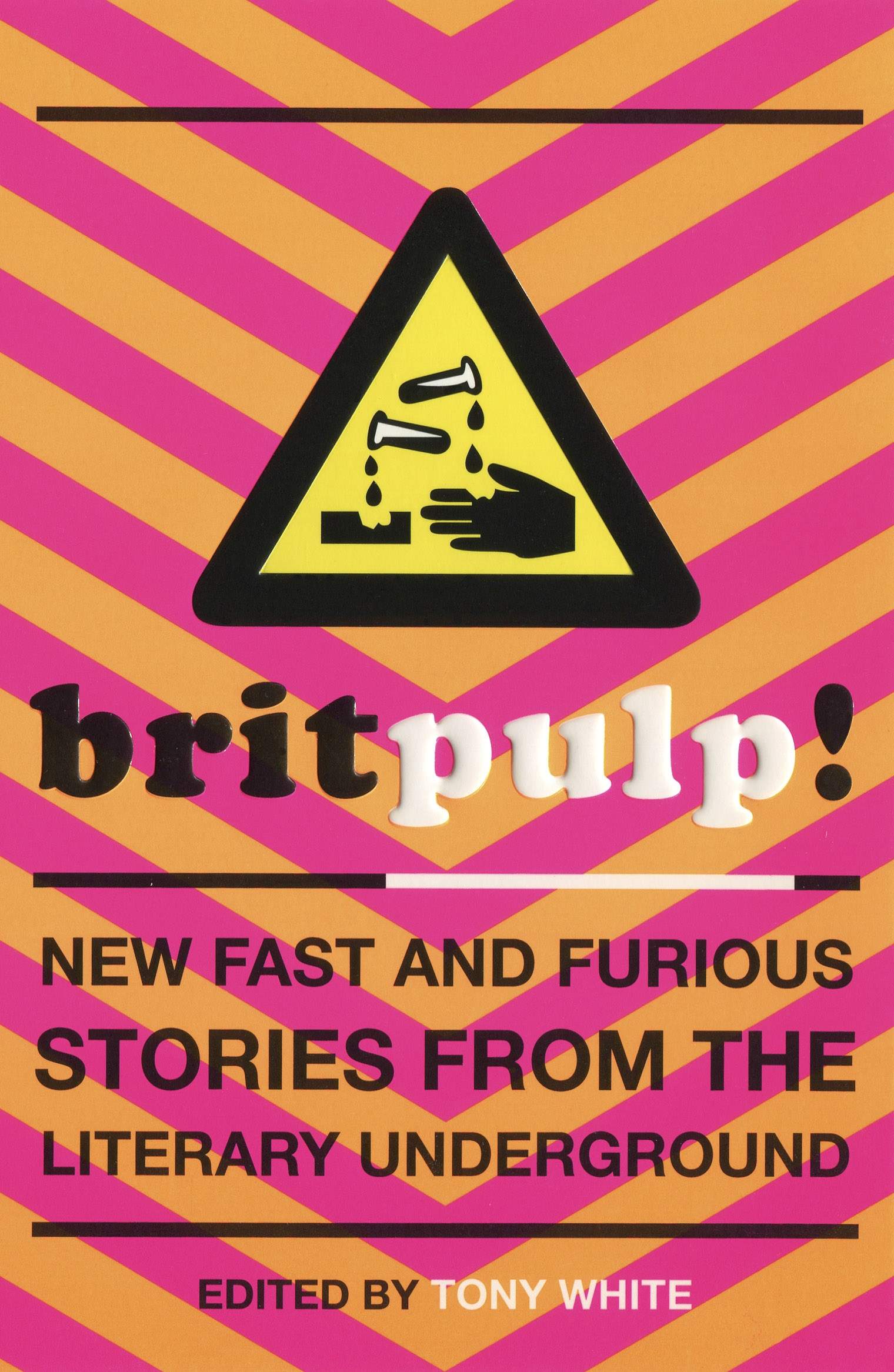
My short story anthology britpulp! was first published by Sceptre in 1999, and is now* being published as an ebook. The book features new and original stories from (in order of appearance) Michael Moorcock, Ted Lewis, Richard Allen, Victor Headley, Nicholas Blincoe, Catherine Johnson, Roy A. Bayfield, Steve Aylett, Stella Duffy, Simon Lewis, J.J. Connolly, Jane Graham, Karline Smith, Tim Etchells, Stewart Home, Jenny Valentish (née Knight), Billy Childish, Darren Francis, China Miéville, Steve Beard, me, and Jack Trevor Story. It is particularly pleasing that Sceptre are releasing the first ebook edition of britpulp! at a time — fifteen years later — when according to Neilsen Book Scan’s annual book research for 2014, short stories and fiction anthologies are (along with Westerns and all graphic novels) one of the three categories in adult fiction publishing to see growth in the last year.
The first time around, Iain Sinclair gave us an advance quote for the cover, which was inevitably cut down to a sentence or so, but looking through my papers to write this short piece for Hodderscape, I found his original letter, which gives a great sense of the anthology, its positioning and purpose:
britpulp!is urban, nervy, agressive. Fast-twitch prose that fizzes and spits. Narrative with a kick. Jump-cuts that hurt like a knuckle in the eye. Here are the improper (and therefore reliable) tales of the city — most of them Hackney. Here are stars who glory in their anonymity. Here too, in Michael Moorcock, Ted Lewis and Jack Trevor Story, are the best of the reforgotten (they’ve never gone away, although it has taken someone with Tony White’s sharp eye for history to acknowledge a proper debt). Pulp has always been a secret. Read by millions, remembered by few. There is no room for prima donnas in a world where gaudy-covered shockers have the lifespan of a fruitfly. There is only one rule: keep the pages turning. Get your retaliation in early, and often. Let this book read you.
A generation of writers emerged in the 1990s who were publishing novels and short stories that seemed to draw upon the energies and forms of popular and genre fictions of the 1960s and ’70s, and declaring an interest, one way or another, in pulp. The resurgence of interest in the UK pulp fiction of that period had been bubbling under in the gaps between literature and the art world, in the spoken word scene, music and the style press, for a decade or more, but it was publication in the early 1990s of groundbreaking novels such as Victor Headley’s Yardie (X-Press, 1992), and Stewart Home’s Defiant Pose (Peter Owen, 1991), that brought the conversation back full circle to literature. Both authors were responding to, but also radically subverting the 1970s skinhead novels of Richard Allen, a pseudonym of Canadian expat author James Moffat (1922-1994).
This was all coming closer to my home, too. X-Press were based around the corner from where I lived in Hackney, while Stewart Home’s third novel, Red London (AK Press, 1994) was set just down the road in Mile End.
Author and britpulp! contributor Steve Beard (then a style journalist for iD) anatomised this scene very succinctly in his review of my first novel, Road Rage! (Low-life Books, 1997), a story about ‘crusties’ and road protestors in Hackney in which I had tried to also make a connection with the swords ’n’ sorcery novels of Michael Moorcock:
Who would have guessed that Richard Allen’s range of ’70s bootboy novels would have proved so influential? First Stewart Home samples the speed and aggression in order to turn round the political message and make the link with Burroughs and Blake; then Victor Headley steals a few riffs to draw up a map of the Black Atlantic in London. […] what subculture could be appropriated next? Tony White’s Road Rage makes it clear. Mixing psycho-social realism and techno-pagan fantasy, Tony White stakes out a position between Stewart Home and Martin Millar to offer a vision of London which is romantic, revolutionary and conservative all at the same time. […] a signpost to the fantastic worlds of a Michael Moorcock or an Alan Garner.
I wasn’t alone in wanting to join this conversation. Headley and Home’s novels were quickly joined by many others: Nicholas Blincoe’s Acid Casuals (Serpent’s Tail, 1995), Karline Smith’s Moss Side Massive (X-Press, 1995), Stella Duffy’s ‘Saz’ novels, such as Wavewalker (Serpent’s Tail, 1996), the hardboiled and surreally comic routines of Steve Aylett’s The Crime Studio (Serif, 1994) — and many more. With britpulp! I decided to try and bring these writers — both established and newly emerging — together with the authors whose work in the 1960s and ’70s had influenced them, with rare, or never-before-published material from Michael Moorcock and late greats such as Jack Trevor Story, Richard Allen, and Ted Lewis.
Working across literary generations meant that britpulp! hinged on the cooperation of various rights holders, but with only a few exceptions, everyone (and their estates) that I invited to contribute responded immediately and positively. Billy Childish, Jane Graham and Jenny Knight all said yes. Stewart Home offered a fantastic unpublished novella, while Mike Moorcock showed me the never-before-published last words of the legendary Jack Trevor Story, with their tragic final twist (a heartbreaking, handwritten note that is reproduced on the last page of the book).
I wrote to Victor Headley about britpulp!, and his fellow X-Press author Karline Smith who both — to my delight — agreed to contribute. I also dropped a line to X-Press author Donald Gorgon (author of the Headley-like Cop Killer) but I’m not sure if he ever really existed. Perhaps someone out there knows differently, but the minute I had posted my letter to ‘Mr. Gorgon’ I immediately kicked myself for not seeing through what suddenly seemed an obvious pseudonym.
In those pre-email days, Victor Headley had to fax his stories to me by satellite phone from wherever in the world he was. Sitting there late at night watching this incredible material – an unpublished Headley manuscript – scrolling out of my machine inch by inch was just one of the exciting moments in the britpulp! editorial process, and in my view Off Duty (as it was finally called, from which his story in britpulp! is extracted) is Headley’s finest novel.
Looking at the list of contributors now, it is hard to believe that when I was compiling britpulp! some of the authors had yet to be published. Discussing the anthology over a game of pool with an editor at a Verso book launch in July 1998, I was told about someone who I absolutely had to get in touch with: ‘He’s just sold his first novel,’ I was told. ‘It’s a kind of drum ’n’ bass Pied Piper!’ I scribbled down the name and number and called the next day: China Miéville said he would be delighted to send a story.
J.J. Connolly was working on the huge manuscript of what would become the bestselling novel and hit movie Layer Cake. We looked at a few of the short stories and off-cuts that were spilling out of that and chose the great ‘Know Your Enemy’. With my submission date fast approaching, we realised that there was already a well-known author called John Connolly. I asked what his middle name was: ‘Joseph,’ came the reply – another established name! So that was out, too. Remembering The Stranglers’ bass guitarist Jean-Jacques Burnel, J.J. said, ‘What about “J.J.”?’
Revisiting the original author biographies, we decided to leave them in place in this new edition. There is a certain ‘time-capsule’ quality that is fascinating. However we did invite the living contributors that I was able to contact to send updated biographies, which are collected together in the end papers, so readers can catch up with the very many more books that have been published by these great authors, who I was so lucky to work with fifteen years ago. It is great, too, to see the films that have been made — and are still being slated — J.J. Connolly’s Layer Cake, Catherine Johnson’s script for Bullet Boy, Simon Lewis who had three feature films released in 2014 including Jet Trash, based on his debut novel Go (Pulp Books 1998/Corgi 1999). Now Victor Headley’s Yardie is slated for feature production, with Idris Elba directing.
Back in 1999, the author Syd Moore — who was then working at Random House — was fronting a books programme called Pulped on Channel 4’s short-lived, late night cultural slot 4 Later. (Aside from noting the various contemporary uses of ‘pulp’ as a kind of standard, it is strange to remember how many books programmes were on TV at that time.) Pulped was keen to cover the anthology but we needed a location, and an angle. Walking down Brick Lane, I happened to bump into some hard-hatted official who was locking the enormous gates to the vast Victorian ruins of the former Bishopsgate Goodsyard, and managed to get us and the TV crew access to the incredible vaulted spaces beyond (which are mostly now demolished or under threat). Pulped filmed some interviews in the Golden Heart pub on nearby Commercial Street, then we strolled around the corner to the Goodsyard. The TV shoot and the setting also provided the incentive to pull together a photo-shoot of as many of the living contributors as could be assembled in one place. Photographer Hugo Glendinning agreed to take the photos, including the stunning panoramic shot at the top of this piece, and portraits (like this one) of all the authors present.
It is not just Bishopsgate Goodsyard that has largely vanished. We launched the paperback of britpulp! in Brick Lane’s Vibe Bar which I was sad to hear had to close last year. But then I remembered what a great party we had there for the launch of this anthology, and the excitement of bringing together these writers from different generations for the first time. Something that is still well worth celebrating. I am delighted that Sceptre are publishing an ebook of britpulp! I hope you enjoy it.
Matt’s Gallery is pleased to present an archival display of artists’ books, artworks and ephemera from Piece of Paper Press, dating from 1994 to the present day.
Piece of Paper Press is an ongoing artists’ book series founded by author Tony White in 1994. The project was designed to address the economic conditions of the period, but has continued unchanged: a lo-fi, sustainable format used to commission, publish and distribute limited editions of new writings and visual works by artists and writers. Each book is made from a single A4 sheet, printed both sides then folded, stapled and trimmed by hand. Piece of Paper Press editions are always given away free.
For Matt’s Gallery, White presents a vitrine-based display of all Piece of Paper Press titles to date – from contributors including Ian Bourn, Tim Etchells, M John Harrison, Sharon Kivland, Liliane Lijn, Elizabeth Magill, Andrea Mason, Katharine Meynell, Michael Moorcock, James Pyman, Sheena Rose, Suzanne Treister, Alison Turnbull, Joanna Walsh and many more – alongside a wealth of artwork, ephemera and clippings from the project’s archive.
The forty-sixth title from Piece of Paper Press, Tones by Andrew Mottershead, will be released during the exhibition run.
Piece of Paper Press is delighted today to publish SHITFLOWERS by Pete Smith in a numbered limited edition of 250 copies – the forty-fifth title in the series. Since 2019, Smith has been using his phone camera to photograph bird droppings on Hackney pavements, posting them on Instagram as ‘Shitflowers’. Smith has long used found forms in his painting and collage work, but for me, the casual and prosaic mode of the ‘Shitflowers’ epitomise a key aspect (part flâneur, part urban beachcomber) of Smith’s lived practice as an artist, while the formally repetitive imagery suggested collection in book form.
Pete Smith says:
When I posted the first Shitflower, I hadn’t envisaged a series but was glad to be noticing these fugitive expressions, soon erased by rain or footfall. I doubt the artist birds are intentional or conscious of their often graceful work, but a little part of me would like to think so.
The photo above is Pete’s, taken from a first floor room overlooking Russell Square in Bloomsbury, central London. We spent an enjoyable afternoon last week folding, stapling and trimming the books, while chatting about this and that: a social facet of the Piece of Paper Press production process that was necessarily dropped during the Covid pandemic, but which it has been a pleasure to reintroduce.
Piece of Paper Press is an artists’ book project founded in 1994. The project was designed as a low-tech, sustainable format to commission and publish new writings, visual and graphic works by artists and writers. Each miniature copy is made from a single A4 sheet that is printed on both sides and then folded, stapled and trimmed by hand to create the book. There is no schedule; titles are published when they are ready. Piece of Paper Press titles are always given away free, and usually produced in an edition of 150. Fifty copies are distributed by the contributor, and around a hundred to the press’s slowly evolving mailing list, which is gradually being displaced by the growing number of past contributors. Remaining copies are added to the project’s archive.
Thanks to Sarah for this photo with one of Brion Gysin’s Dream Machines at the opening of Electric Dreams at Tate Modern, Tuesday night. Exhibition runs until 21 June 2025.
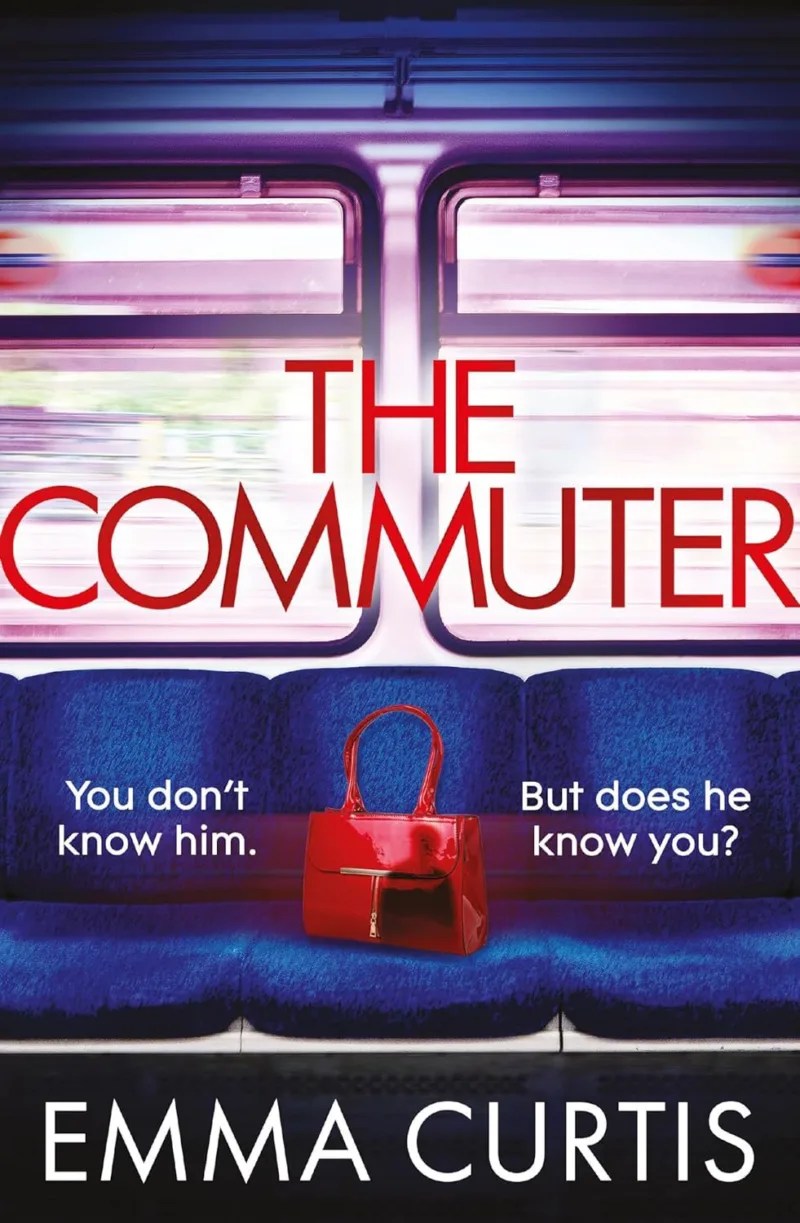
Tune in to Resonance 104.4fm at 8pm this Thursday 28 November for Literature Live, when I’ll be joined for readings and chat by two great crime and thriller writers: Emma Curtis and John Lincoln aka John Williams.
ICYM the show’s first outing last year, Literature Live is an occasional programme focusing on live literature – a spoken-word gig on the radio – with the emphasis firmly on authors reading from their prose fiction live on the air.
We’ll be broadcasting live from the Resonance studio in London SE1 — join us on 104.4 FM, on DAB in London, or online!
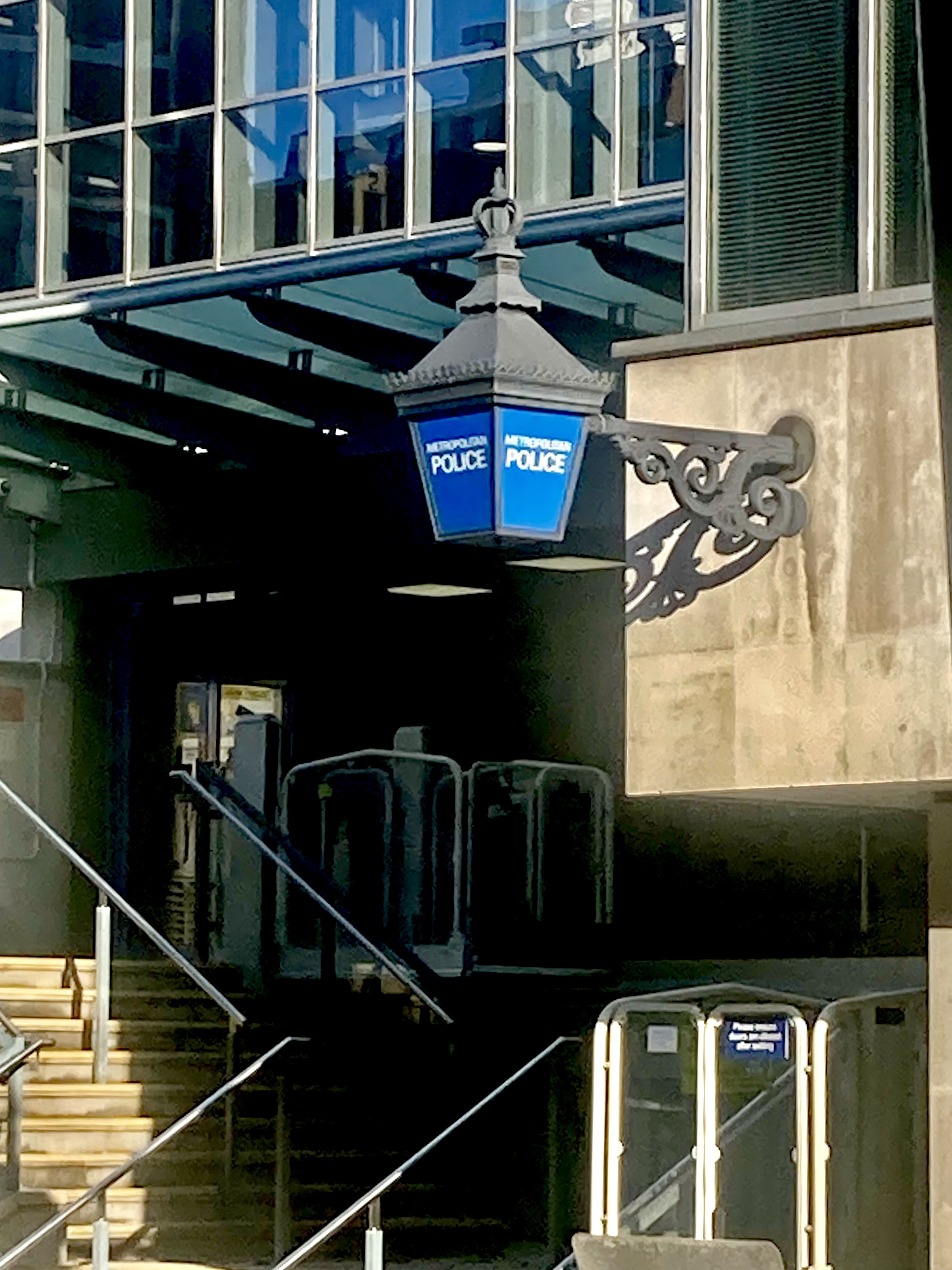
I was pleased to see Holborn Police Station on Lamb’s Conduit Street, London WC1 – the real-life base of my fictional London detective DS Rex King – looking fine in the wintry sun yesterday!








You must be logged in to post a comment.