Clarke Awards

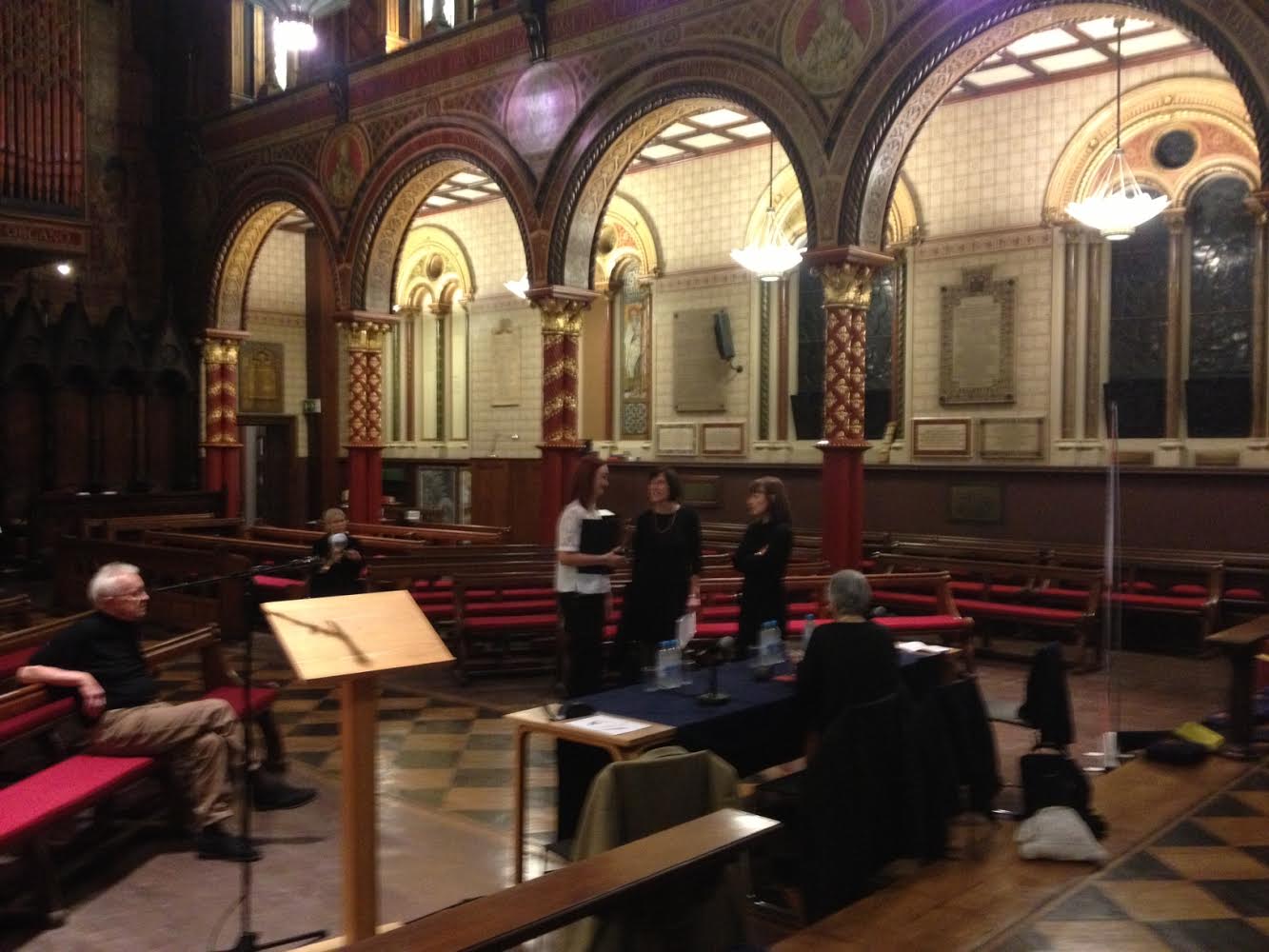
Clarke-Award-submissions-If you didn’t already see it, the Arthur C Clarke Awards released this great photo yesterday via SFX Magazine, along with the full list of submissions to the prize.

The Arthur C. Clarke Award

is given for the best science fiction novel first published in the United Kingdom during the previous year. The award was established with a grant given by Sir Arthur C. Clarke and the first prize was awarded in 1987 to Margaret Atwood’s The Handmaid’s Tale.

Last week, the Clarke Awards released a list of the novels by women that had been submitted. Award director Tom Hunter hoped that this would make ‘a positive contribution towards further raising the profile of women writers of science fiction in the UK.’ It also ties in nicely with the brilliant Joanna Walsh a.k.a. Badaude’s Readwomen2014 campaign — a year-long celebration of women’s writing — that can be followed on Twitter and/or joined by using hashtag #readwomen2014.

The Clarke Award publish the list of submissions,

as a snapshot of the current state of science fiction publishing and to help readers everywhere get a fuller understanding of the judging process before the official short list is announced in March.

I think it’s a great idea to open up this information for discussion and analysis in this way. Perhaps it is something that other literary prizes might learn from.

Screen Shot 2014-01-18 at 11.15.13Shackleton’s Man Goes South is just visible up in the top left corner of the picture, between James Lovegrove’s The Age of Voodoo and James Brogden’s Tourmaline.

Shackleton’s Man Goes South is available from the Science Museum as a free and DRM-free ebook, compatible with most devices. These are available free online and also via a touchscreen ‘ebook dispenser’ that is part of a display about the novel in the Science Museum’s Atmosphere Gallery. The Museum have also produced a limited edition paperback of the novel. Print aficionados may be interested to know that signed copies of this first paperback edition of Shackleton’s Man Goes South are currently available from the Science Museum shop for the sale price of £5.00.

§

Download Shackleton’s Man Goes South directly from the Science Museum website

Read press and reviews of Shackleton’s Man Goes South

‘Like’ Shackleton’s Man Goes South on the novel’s official Facebook page

Visit the Shackleton’s Man Goes South display in the Science Museum’s Atmosphere Gallery, Exhibition Road, South Kensington, London SW7 2DD. Opening hours: 10.00 – 18.00 (last entry 17.15) every day except 24 to 26 December. 

Missorts mini-readings

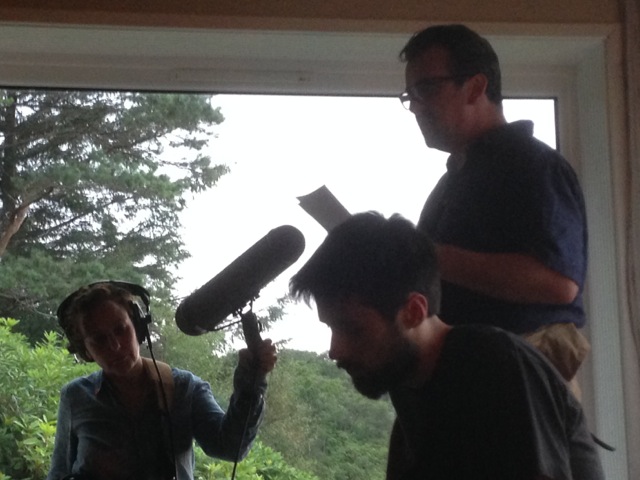
Situations and I have made some small videos of mini-readings from my novella Missorts Volume II, which just came out as a limited edition paperback. The idea was to pick some very short but vivid extracts that would introduce readers to each of the novella’s four characters — Paul, Ronnie, Jessica and Oliver — and contain some actual ‘story stuff’, but without being more than a minute or two long.

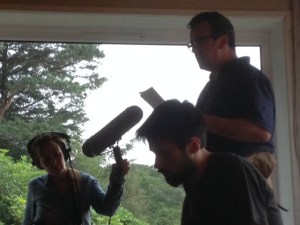
We shot eight of these mini-readings, on location on Vauxhall Bridge.

Starting on Tuesday 21 January, Situations are releasing one mini-reading every weekday lunchtime at 1:00pm on Twitter.

Here is the second video: ‘A broken auto-level trolley’

§

Tony White
Missorts Volume II
Published by Situations
ISBN 978-0-9574728-2-2
Price: £10.00 £5.00
Format: Paperback
Pages: 128
Publication date: 11 December 2013
Distribution: Central Books

Buy Missorts Volume II direct from publisher Situations

Animate Me

Screen Shot 2014-01-14 at 13.41.16Here courtesy of PEER and Animate Projects is a PDF of the Joe Ewart-designed pamphlet edition of ‘Animate Me’, my short story that was commissioned to accompany Out of Site, four new films by Savinder Bual, Kota Ezawa, Karolina Glusiec and Margaret Salmon.

You were always blagging equipment. Not like now when you can do stop-motion with any old digital camera – or on your phone – bung it through whatever free graphic converter software you can find and have the Quicktime on Youtube in the space of an hour! Back then it was about booking the studio, putting your name down for a lightbox; getting in early to use the rostrum camera or one of the Steenbecks. A different world.

Pick up a copy of ‘Animate Me’ in the gallery, or download a copy here, by clicking on the link above, or clicking-through this cover image.

N.B. It may take a bit of trial and error to print the pamphlet double-sided, depending on your printer. You might be able to do it by adjusting your printer settings, or by printing page 1 and then reloading the paper manually, so that both sides are the same way up when the PDF is printed in landscape format.

§

Out of Site, PEER in association with Animate Projects, runs from 16 January to 8 March 2014. The films are viewable from Hoxton Street between 3pm and 8pm Wednesday to Saturday, or watch the films online here.

Prizes are all we’ve got left

Screen Shot 2014-01-18 at 11.15.13It is great to hear that Shackleton’s Man Goes South has been nominated for a British Science Fiction Association award, especially because BSFA awards are nominated anonymously by members of the Association.

Shackleton’s Man Goes South is one of about fifty novels nominated. From this long-list, the BSFA shortlist is ‘drawn up from the most popular titles’, and will be released shortly.

Interestingly, another science fiction prize, the Arthur C Clarke Award, has just begun to release information about their nominations received. Unlike the BSFA Awards, nominations for the Arthur C Clarke are made by publishers, but the first announcement is made more interesting because it lists the thirty-three novels by women that have been submitted.

Arthur C Clarke award director Tom Hunter hopes that this

will be a positive contribution towards further raising the profile of women writers of science fiction in the UK and beyond. We’ll be releasing details of the full submissions list shortly, and will be encouraging readers everywhere to review and comment on the data in as many creative ways as possible.

I think this is a great idea. When I was a teenager, the late Doris Lessing’s Canopus in Argos Archives series of novels (borrowed from my then local library) were a big part of reinforcing my interest not just in science fiction, but in literature generally.

I’m pleased about the BSFA nomination for Shackleton’s Man Goes South as — obviously — it may bring the novel to the attention of readers who might not otherwise have heard of it. As review space in the broadsheets starts to get pinched, and if (as one frequently hears) orders from traditional bookshop chains are a fraction of what they were only a few years ago, I’m reminded of something that a publisher colleague said on the panel of a recent conference we were speaking at. I’m paraphrasing, but it was something like: ‘Don’t quote me on this, but prizes are all we’ve got left!’

You can download a free ebook of Shackleton’s Man Goes South in formats compatible with most devices (Kindles, iPads etc) from the Science Museum website, or you can email the novel to yourself from the touchscreen ebook dispenser that is part of the display about the book in the Museum’s Atmosphere Gallery. Shackleton’s Man Goes South was launched in April 2013, and both the free download offer and the accompanying exhibition are due to run for a whole year, until the end of April 2014.

For those who prefer print formats, there are also a few copies of the Science Museum’s beautiful paperback edition currently available at half-price in the Science Museum shop’s January sale. So if you are visiting the Museum for any of the other current exhibitions, or find yourself in the South Kensington area, pop in and grab a bargain.

§

Shackleton’s Man Goes South is available free and DRM-free (in ebook formats compatible with most devices) from the Science Museum website.

An exhibition accompanying the novel runs in the Science Museum’s Atmosphere Gallery until 24 April 2014.

Press about Shackleton’s Man Goes South.

Manifesto paperback

rotm_cover_digtal-1_1Manifesto for a Republic of the Moon, is now up on the Republic of the Moon exhibition microsite. The book, which costs £3.00 from the exhibition shop, includes my short story ‘Occupy the Moon.’ Here is the blurb, plus further info about the free ebook version:

Introductory essay and edited by curator, Rob La Frenais with contributions from the exhibiting artists – Agnes Meyer-Brandis, Leonid Tishkov, Liliane Lijn, Katie Paterson, WE COLONISED THE MOON, Joanna Griffin and additional material from Tony White, Andy Gracie, Dr Ian Crawford and from the Whole Earth Catalog.

Download Manifesto for a Republic of the Moon epub (open standard for most devices including iphone, ipad, Android phones, Kobo, Sony and Nook readers).  You can also read the epub version on your desktop comptuer using various browser plugins or other applications.

 Please note that the formatting has been optimised for reading in colour using the epub format. To download the file and start reading follow these instructions:

On iphones, ipads and android devices, first install some eReader software.

  • On iphones and ipads, ibooks is most commonly used and is free
  • On android try the free FBReader or other app if you prefer

Then download the .epub file.

Manifesto for a Republic of the Moon pdf

This eBook is DRM-free – you may copy and redistribute the eBook in its entirety.

Other traditional books published by The Arts Catalyst are listed in our online Bookshop.

ISBN 9 780992 777609

Exhibition price £3 (hard copy).

§

Republic of the Moon — London

10 January – 2 February 2014
Open daily, 11am-6pm
Admission free

Bargehouse, Oxo Tower Wharf
, South Bank, London, SE1 9PH

Out of Site

Screen Shot 2014-01-14 at 13.41.16My new short story, ‘Animate Me’ has been commissioned by PEER and Animate Projects, for publication alongside four new commissions by artists that go on show from Thursday 16 January 2014.

There were dozens of them – a generation, near enough – working as ‘inbetweeners’ and cleaners-up, doing thumb-nailing or little animation tests, getting to know particular characters and ending up as animators, compositors. That’s where it all starts […] So why was I the only one in the Hawley Arms not wearing a Roger Rabbit UK crew jacket?

PEER in partnership with Animate Projects has commissioned four new moving image works to be back-projected through PEER’s gallery windows and viewed from Hoxton Street, from 3pm to 8pm Wednesday to Saturday, until 8 March 2014.

‘Animate Me’ is published as a free, A5 one-fold pamphlet, typeset by the brilliant Joe Ewart, and will be available in the gallery throughout the exhibition.

On Saturday 1 March at 4pm I am chairing a panel discussion with artists Savinder Bual, Karolina Glusiec and Margaret Salmon. This will take place at the gallery, and is free, but booking is essential. Click here to reserve your place.

Images clockwise from top left: Kota Ezawa, Paint on Glass, 2013; Savinder Bual, Wing, 2013; Margaret Salmon, Housework, 2014; Karolina Glusiec, Out of Sight, 2013

Images clockwise from top left: Kota Ezawa, Paint on Glass, 2013; Savinder Bual, Wing, 2013; Margaret Salmon, Housework, 2014; Karolina Glusiec, Out of Sight, 2013

Republic of the Moon

Screen Shot 2014-01-07 at 09.04.06I’ll be reading from my short story ‘Occupy the Moon’ on Thursday evening, at the private view of The Arts Catalyst’s exhibition Republic of the Moon — London, which has been getting some good press in the run-up to opening. Coverage includes the Space Policy blog, Wall Street Magazine and the Guardian.

Liliane Lijn, Moonmeme. Click through to go to Liliane Lijn's website.‘Occupy the Moon’ was first published online by The Arts Catalyst two years ago, having been commissioned to accompany an earlier version of the exhibition at FACT, Liverpool. The story responds in particular to the work of Agnes Meyer Brandis and — especially — Liliane Lijn’s Moonmeme (left). It was also an attempt to write a science fiction short story in the mould of those great, old, yellow-jacketed Gollancz anthologies that I loved to borrow from my local library when I was a child.

This is the first time that ‘Occupy the Moon’ has been available in print form, where it is among the writings included in A Manifesto for the Republic of the Moon. (Bibliographical info etc. to follow.)

Eagle-eyed readers will know that I have worked with Liliane Lijn and blogged about her work before.

Here’s the exhibition blurb from The Arts Catalyst’s site:

After two decades working with space dreamers from the European Space Agency to anarchist autonomous astronauts, The Arts Catalyst will transform Bargehouse into an Earth-based embassy for a Republic of the Moon, filled with artists’ fantastical imaginings. Presenting international artists including Liliane Lijn, Leonid Tishkov, Katie Paterson, Agnes Meyer Brandis, and WE COLONISED THE MOON, the exhibition combines personal encounters, DIY space plans, imaginary expeditions and new myths for the next space age.

Marking the start of its twentieth anniversary year, The Arts Catalyst will animate the exhibition with performances, workshops, music, talks, a pop-up moon shop by super/collider and playful protests against lunar exploitation.  A manifesto declaring the Moon a temporary autonomous zone, with responses from artists and scientists to novelist Tony White’s call to “occupy the Moon!” will be published in print and e-Book formats to coincide with the exhibition.

Speeches and readings will begin at Bargehouse at 7:30pm, Thursday 9 January.

§

Republic of the Moon — London
Bargehouse
Oxo Tower Wharf
South Bank
London SE1 9PH
UK

10/01/2014 – 02/02/2014
11am-6pm daily, late opening 6.30-8.30pm Thursday 9 January and 6.30-10pm Thursday 16 January

There is an extensive events programme to accompany the exhibition. For more information see The Arts Catalyst website.

Paolozzi at New Worlds

PrintA quick plug for David Brittain’s Eduardo Paolozzi at New Worlds: Science Fiction and Art in the Sixties, which arrived in the post shortly before Christmas.

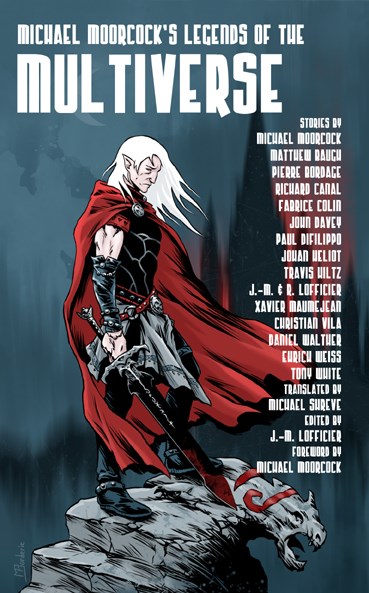
Michael Moorcock, ‘A Twist in the Lines’, POPP.027Last year I published a limited edition of a new short story by novelist and former New Worlds editor Michael Moorcock, called A Twist in the Lines. It is a fantastic new Jerry Cornelius short, but also something of a tribute to Paolozzi, suggesting as it does that the central artistic pattern upon which the multiverse depends is Paolozzi’s iconic mosaic at Tottenham Court Road London Underground station. Given these connections, Savoy kindly suggested that we might do a swap.

I’m glad they did, because this is a great book; full of colour plates, essays, interviews and contextual information:

The book contains rare and unseen images from the archives of New Worlds and the Eduardo Paolozzi Foundation, including excerpts from what is thought to be an unpublished science-fiction novel by the artist. There are also new interviews about the magazine and its times with editor Moorcock, art editor Christopher Finch, designer Charles Platt, contributor Michael Butterworth, and critic John Clute.

The whole is beautifully designed by John Coulthart. There are also reproductions of all kinds of New Worlds ephemera, including some tantalizing thumbnails of J.G. Ballard’s ‘Project for a New Novel’, an incredible graphic work from the late 1950s, a shorter version of which is reproduced across a number of double-page spreads throughout New Worlds No. 213 from 1978.

Eduardo Paolozzi at New Worlds is published by Savoy to follow the Brittain-curated, 2012 exhibition of the same name at Manchester Metropolitan University Special Collections. Here is part of the blurb from the exhibition brochure:

Between 1967 and 1970 the British magazine, New Worlds aimed to widen the scope of what could be called science fiction by developing a rich visual culture that mirrored the world around it. Artists as well as writers became involved – including Eduardo Paolozzi (1924-2005) who produced his own radical science fiction in the form of graphic art.

Eduardo Paolozzi at New Worlds follows the 2009 publication of the similarly excellent Jet Age Compendium: Paolozzi at Ambit (Four Corners Books), also edited by Brittain. I am struggling to think of any contemporary equivalent here. Anyone? I can’t think of another artist whose work is so in tune with and so integral to the ethos and the identity of one literary magazine, let alone two.

§

Eduardo Paolozzi at New Worlds
Publication: 16th December 2013
ISBN: 978-0-86130-128-7
Pages: 184
RRP: £17.00

Antarctic negatives?

Screen Shot 2014-01-01 at 14.41.07Thanks to the anonymous British Science Fiction Association members who have nominated my novel Shackleton’s Man Goes South for a BSFA award.

Rather less pleasingly, a few news stories that have emerged over the Christmas and New Year period have seemed to echo elements of Shackleton’s Man Goes South, or to be redolent of the fictional world in which some of the novel’s action takes place. These news stories are in addition to the series of storms, gales and floods (with their attendant severe weather warnings), that have hit the UK in recent weeks. I was astonished in the early hours of Christmas Eve, for instance, when the usually highly codified language of the Shipping Forecast (broadcast at 00:48 on 24 December 2013), was interrupted by discussion of ‘a massive area of low pressure of almost unprecedented depth’ that stretched from the UK to Iceland.

First, the announcement that some extraordinary items of Shackletoniana have been discovered in Antarctica. Twenty-two cellulose nitrate negatives of photographs were found in Captain Robert Falcon Scott’s expedition hut at Cape Evans. The photographs turned out to have been taken not by Scott’s expedition photographer Herbert Ponting, but by person unknown during the occupation of the hut a few years later by members of Sir Ernest Shackleton’s Ross Sea party, who used the hut as a base when they became stranded on Antarctica while attempting to lay supplies for Shackleton’s Endurance party. The terrible hardships endured by the Ross Sea party, and the deaths of Arnold Spencer-Smith, Victor Hayward and party leader Lieutenant Aeneas Mackintosh are often omitted from more triumphalist accounts of Shackleton’s expedition. See a slideshow of the photos on the New Zealand Antarctic Heritage Trust website.

Screen Shot 2014-01-01 at 15.00.11Secondly, in an echo of the 2007 sinking of the MS Explorer, which struck an iceberg and capsized while attempting to retrace parts of Shackleton’s Endurance expedition, a Russian vessel, the MV Akademik Shokalskiy has been trapped in ice for more than a week, with seventy-four scientists, tourists and crew on board. The Australasian Antarctic Expedition 2012-14 set out to retrace the 1911-14 expedition of Douglas Mawson, conducting ‘a programme of research across the region, building on the work 100 years ago, to try to better understand present and future change in Antarctica and Southern Ocean.’ All attempts at rescue have so far failed, and yesterday the BBC speculated that at least one of the rescue vessels — the Chinese vessel Xue Long — had itself become stuck in ice. Back in 2007-8, Dr John Shears of the British Antarctic Survey told me that the passengers and crew rescued from the MS Explorer had been ‘lucky to survive’. One hopes that those trapped on the Shokalskiy share that luck. (Note: Thankfully, 24-hours after I posted this, Chris Turney posted this video clip: ‘The first of the helicopters to take us home!’)

Shackleton’s Man Goes South, square thumbnailThirdly, an article published by the Nation reports the views of a number of scientists who fear that climate change may be both far worse and much more sudden than anticipated, to create what one of those interviewed (John Nissen, chairman of the Arctic Methane Emergency Group) describes as an “instant planetary emergency.” Dahr Jamail’s article for the Nation is a must-read, and it echoes the suggestions of scientists that I’ve interviewed, that IPCC forecasts, however grim-sounding, have been underestimative, best-case scenarios. Another article, published in Nature and widely reported on New Year’s Eve, backs this up, suggesting that (in the words of the Guardian newspaper’s Damian Carrington):

Temperature rises resulting from unchecked climate change will be at the severe end of those projected, according to a new scientific study. The scientist leading the research said that unless emissions of greenhouse gases were cut, the planet would heat up by a minimum of 4C by 2100, twice the level the world’s governments deem dangerous.

In the most alarming echo of Shackleton’s Man Goes South, Dahr Jamail’s Nation article quotes atmospheric and marine scientist Ira Leifer, who says:

“Some scientists are indicating we should make plans to adapt to a 4C world,” [ … ] “While prudent, one wonders what portion of the living population now could adapt to such a world, and my view is that it’s just a few thousand people [seeking refuge] in the Arctic or Antarctica.”

My novel Shackleton’s Man Goes South follows Emily and Jenny, refugees who are trying to reach the safety of  Antarctica. In the slang of their post-melt world, Emily and Jenny are refugees known as ‘mangoes’, a corruption of the saying ‘man go south’. Emily and Jenny’s journey purposely echoes not only Sir Ernest Shackleton’s heroic escape, but those of many contemporary migrants. Even having written about just such a world, I am still surprised and shocked to read Leifer’s vision of the future: ‘a few thousand people [seeking refuge] in the Arctic or Antarctica’.

§

Shackleton’s Man Goes South is available free and DRM-free (in ebook formats compatible with most devices) from the Science Museum website.

An exhibition accompanying the novel runs in the Science Museum’s Atmosphere Gallery until 24 April 2014.

Press about Shackleton’s Man Goes South.
D132414