The Science Museum have just released the first of three free audiobook extracts from my novel Shackleton’s Man Goes South. The extract is now up on the Museum’s SoundCloud page, and can also be downloaded for off-screen listening, on your phone or MP3 player. I was pleased to work once again with Jamie Telford, who composed the ‘Going South Theme’ that is used to frame the audiobook extract.
Shackleton’s Man Goes South is the Science Museum’s 2013 Atmosphere commission, published as part of the Contemporary Arts Programme. Visitors to the atmosphere gallery and the Museum’s website will be able to download a free e-book of the novel from 24 April 2013.
Here is the handy SoundCloud widget that links to the page:
When The Writing Platform commissioned me to write an article discussing how working collaboratively – as I do from time to time – might have influenced my writing process, I wasn’t immediately sure.
It was useful to have a space to think through some of the actual activities and processes that ‘collaboration’ might entail, whether in my work with Blast Theory on Ivy4evr or working on Missorts, my permanent soundwork for the city of Bristol. Read the whole piece here.
I briefly wanted to share info about the event I’m doing at Bristol Central library on the evening of Friday 12 April. I have been asked to talk about Missorts, my new, permanent public artwork for Bristol inspired by the city’s radical literary heritage, and also to talk about writing for new digital platforms, including my work with Blast Theory.
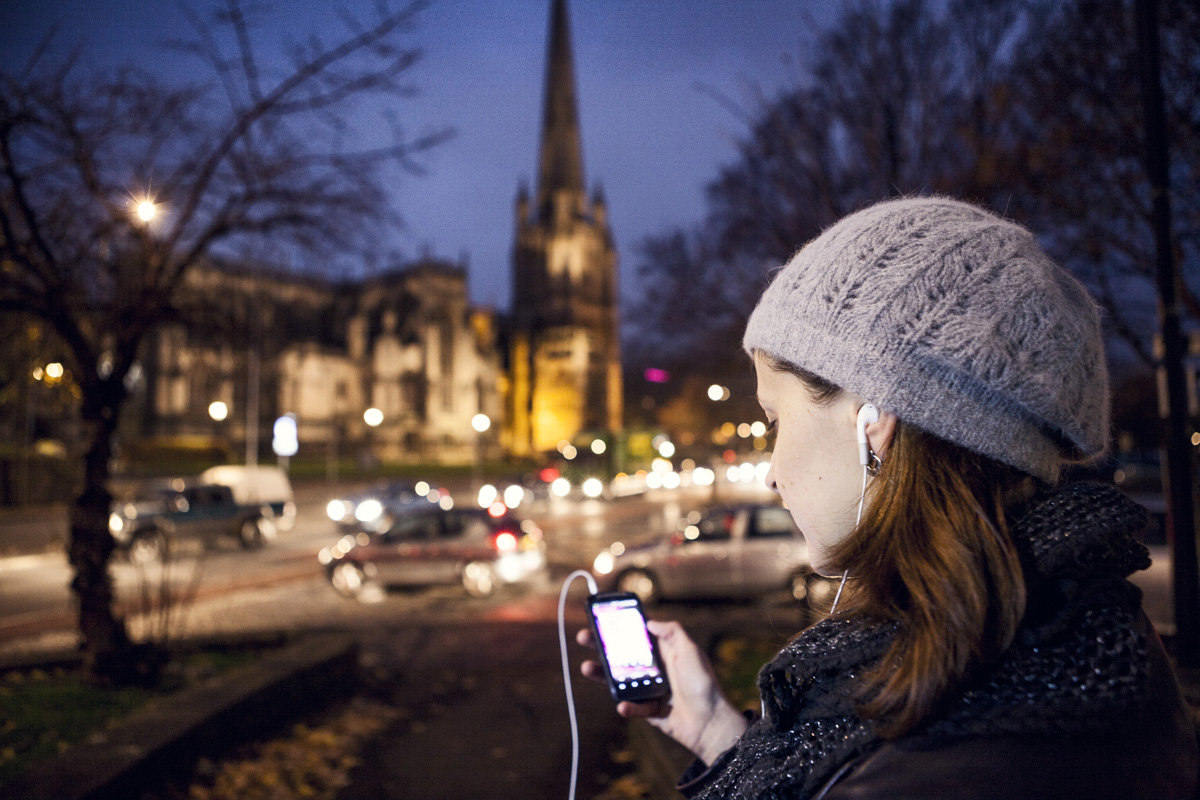
Missorts is a GPS-triggered work of fiction that is accessed as a permanent soundwork in the Redcliffe area of Bristol. Missorts features new and interconnected short stories by the writers Sara Bowler, Holly Corfield-Carr, Thomas Darby, Jack Ewing, Katrina Plumb, Jess Rotas, Hannah Still, Helen Thornhill, Isabel de Vasconcellos and Sacha Waldron. The stories are accompanied by Portwall Preludes, a series of striking new musical works specially commissioned from composer Jamie Telford for St Mary Redcliffe’s Harrison and Harrison organ in its centenary year. There is no ‘armchair version’ of the soundwork, you have to be there to experience it, but you can download Jamie Telford’s amazing music on MP3.
I’ll be in conversation with Claire Doherty, director of Situations (producers of Missorts) who will discuss new approaches to commissioning public artworks.
The event is part of Writing Britain: Bristol Writing a new exhibition at Bristol Central Library until April 30th, exploring the city’s literary heritage and held in partnership with the British Library. This sounds like a great exhibition so I’m doubly looking forward to the visit.
You can book a FREE place at my talk by visiting any Bristol library or by ringing 0117 9037250. Don’t forget that if you are in Bristol but haven’t had a chance to ‘do’ Missorts yet, and would like to have a go before you come to the talk, the app is free to download from www.missorts.com.
Don’t worry if you don’t have an iPhone or Android phone. You can borrow phones preloaded with the app from Bristol’s Central and Bedminster Libraries using your library card.
My companion novella Missorts Volume IIis available for free and DRM-free download in formats that are compatible with most devices. You can also get that from the Missorts website.
I have blogged some of the background to Missortshere, here and here.
§
Missorts: Literature Reinvented
Tony White in conversation with Claire Doherty Bristol Central Library
12 April 2013
7:00 PM – 8:15 PM
Bookings at any Bristol library or ring the Central Library on 0117 903 7250.
The Science Museum is publishing my latest novel Shackleton’s Man Goes South on April 24. It is the Museum’s Atmosphere commission 2013, published as part of their Contemporary Arts Programme. More information nearer the time, of course, and a novel that I can’t wait for people to read — ideas to discuss — but this being the Science Museum (which I was describing to The Writing Platform the other day as an entity of about the size and population of a small town) we are also experimenting with opening up new ways for readers and Museum visitors to get hold of the book. I’m looking forward to sharing that with everyone soon. In the meantime, last week I blogged about the ‘cover kit’ and Jake Tilson’s logotype, and now here is a sneak preview of the contents page of the print edition.
I wanted to quickly share the cover of my latest novel Shackleton’s Man Goes South, which is published by the Science Museum on 24 April as their Atmosphere Gallery commission for 2013 (replacing David Shrigley’s ‘House of Cards’). The cover has been beautifully designed by the Museum’s Design Studio, with a central title by the brilliant Jake Tilson. I love Jake’s work and can’t think of anyone better at producing a dynamic logotype. Maybe I will try and find a way to write more about our collaboration in due course.
It used to be that a cover was a cover was a cover — one fixed and portrait-format rectangle — but not any more. What seems to be needed these days is a ‘cover kit’ that can be adapted for the multitude of differently proportioned screens, formats and files required, so that the cover can tell its story clearly across platforms, rather than forever being awkwardly cropped and shoe-horned into wrong-sized or shaped windows.
In this case the ‘kit’ comprises Jake Tilson’s dynamic graphic device, a couple of simple colour-gradients, my name, the Science Museum logo, and an advance quote. In the Science Museum context there is an additional imperative to be clear that this is a work of fiction. All recognisably framed by the Museum’s house style, and all designed to be adjusted for B-format paperback, audiobook/MP3 thumbnail, the differently proportioned ebook covers, Twitter or Facebook profile photos, etc.
Finished copies are due back very soon, but I met with Charles Boyle a week or so ago to give the imposition proof a once-over, over a quick and tasty lunch at Shepherd’s Bush’s finest, the Abu Zaad on Uxbridge Road. So here, while Charles and I wait for some of the tastiest shish in town, is a still-life with mint tea and printer’s proof.
A book by Andrzej Bursa (1932-1957) received in the post a day or two ago prompts me to mention here that it has been great working with the brilliant Charles Boyle again over the past couple of months. Author and poet, publisher of CB editions and founder of the Free Verse: Poetry Book Fair, Charles is also a brilliant editor and typesetter. It is this, Charles’s typesetting work on a forthcoming novel of mine, that has brought us back into a familiar kind of collaboration in recent weeks.
We first worked together a decade ago, when my novel Foxy-T was in production at Faber and Faber. Because of editorial challenges presented, perhaps, by the language used in Foxy-T, it had been felt — I was told — that it might take someone with the precise eyes of both a poet and a poetry editor to do the manuscript justice. That was when Charles’s name was mentioned, since at that time as well as being ‘a Faber poet’ he also worked for them in-house. Now, a decade later, it would be unusual to find such aspects of the publication workflow as the copy-edit being staffed in-house; more likely these days they’d be outsourced. But that was then, and I knew Charles socially already. What is more, he had responded enthusiastically to my previous novel Charlieunclenorfolktango, so it was to my considerable delight that Charles took on the job. The rightness of the decision was borne out as soon as the first batch of particularly perceptive editorial notes arrived a week or two later.
Back then ‘delivery’ of a novel might have been on floppy disk but most of the publication workflow was still done on paper, with photocopies of marked-up manuscripts sent by post. Now of course it’s by email, has been for yonks, but still, among the numerous collaborations that publishing entails, whether notes come by email or by post you know when you’re working with someone good. More about the current project in due course, of course (the novel is to be published on 24 April), but right now I wanted to give a plug to Charles’s brilliant CB editions, and in particular to what I think is a great new way of getting their books into people’s hands: The CBe Circulating Library.
CB editions has been called ‘brilliantly idiosyncratic,’ in fact it has a consistently interesting, international list of poetry, short novels, prose and literature in translation. All titles feature good, simple design that begins with the covers and their bold type on brown-board and continues past the golden-yellow fly leaves to clear typographic layouts that always feel equal both to the task of making the books’s contents as accessible and readable as possible and of responding to the particular needs of each text. Just as publishing should be, but so often isn’t.
A week or two ago Charles announced a new scheme, the CBe Circulating Library: He would send a book out to anyone that wanted to participate, either a title of their choosing or one randomly selected from the list. It seems like a great idea to me, getting books into people’s hands and encouraging the sharing of them, so I am taking part. This is why the copy of Bursa’s Killing Auntie & other work (translated by Wieseik Powaga) landed on my doormat the other day. I’m not sure who I will pass the book on to yet… The informal network thus created, as the book is passed on, can be tracked as it grows by means of a ‘library card’ style form on the front fly leaf upon which — while it lasts perhaps — the reader can write the name of the person they are passing the title on to. Here’s what it says in the CBe newsletter (which you can sign up to here):
The deal is this: you read, and then send or pass on to a friend; and then that friend reads and sends or passes on, and so on.
The CBe Circulating Library label gently invites participants to keep in touch, if they feel like it, to tell where a book has got to, but at this stage the Library is not a digital social network, the M.O. is reassuringly analogue, personal and one-to-one. Unlike e.g. Book Crossing this is also a commercial proposition, and one that draws the participant/recipient’s attention to the CB editions catalogue and to the fact that any book thus received is common property: ‘To order a copy of this book for yourself…’ the label says, ‘see www.cbeditions.com.’
I’m looking forward to reading more of Killing Auntie. The opening story, ‘Fairy Tale,’ is a belter. If you are already a friend of mine and want to be the person I pass this library copy on to, then let me know! If you want to be next on the list and we’re not already in contact then come and find me on Twitter or something. Either way, CB editions is great and should be supported in the traditional way too, so in the meantime why not have a look at the CBe catalogue 2013 (link downloads as PDF) and buy a book. I’d recommend Days and Nights in W12 by Jack Robinson.
§
Into CB? Any excuse…
Also, news just in…
Poetry on Broadway: Stephen Knight and Charles Boyle
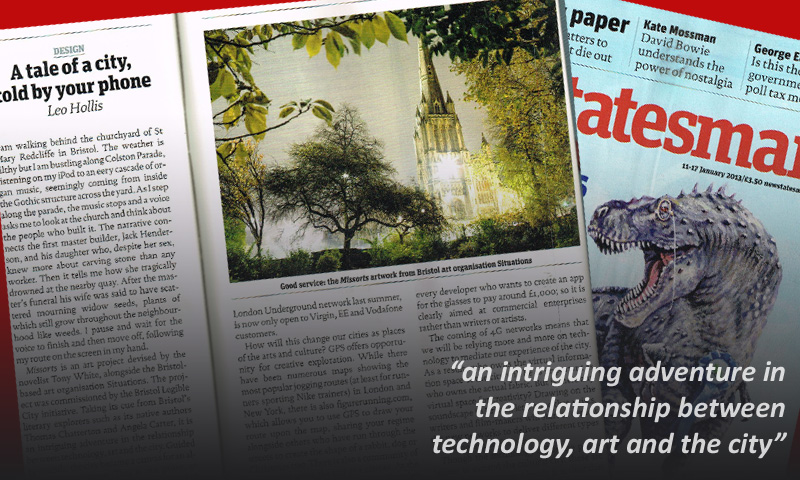
Situations sent through this scan of Leo Hollis’s article on Missorts for the New Statesman, which approaches the project from a technology/policy angle. I’ve blogged about the ideas, process and creative background to Missortshere, here, and here, and posted some of Max McClure’s great images of the launch here. The app which activates the soundwork on iPhone or Android phones in the Redcliffe area of Bristol can be downloaded free here. If you do not have a smart phone, you can use a library card to borrow a pre-loaded phone from Bristol’s Central and Bedminster Libraries. You can also download a free copy of my new novella Missorts Volume II from the site, to read on screen or on most ebook devices.
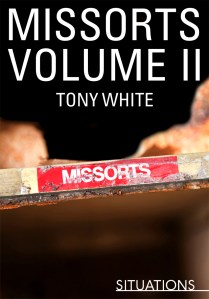
My new novella, Missorts Volume II, was published by the brilliant Situations on 20 November, as a companion volume to my permanent public soundwork for Bristol. While the Missorts app can only be experienced in the city of Bristol, where stories and music are activated by GPS technology in the locations where the stories are set, the novella can of course be downloaded and read anywhere.
Missorts Volume II is publshed by Situations as an ebook. If the novella had a back cover, the blurb might say something like this:
Paul is a postman working nights at Bristol Temple Meads, while Ronnie does the Missorts duty on the late shift. Oliver is a lecturer who makes an unexpected discovery about William Blake – and himself – in the archives. Jenny is a young woman seeking a kind of peace with the father who walked out on her when she was a child. Four lives that barely connect, but they have all been shaped by loves lost and letters found. Now they must each find their own way to write a reply.
Missorts Volume II is part of what Situations have described as a new kind of public art work, and part of achieving this is to make the novella available not only for free but also without restrictive Digital Rights Management software. The novella is offered as a DRM-free ebook in order that it will be compatible with the majority of ebook devices and ebook reading softwares. See www.missorts.com for the DRM-free files and a help page.
The Free Software Foundation’s Defective by Design campaign has been opposing what they call Digital Restrictions Management since 2006. This DRM-free badge is made available on their site. In the words of the Defective by Design campaign, ‘This label indicates that all files provided by the supplier come free of DRM and do not require any restrictive technologies.’
As a writer I necessarily collaborate with a host of institutions and publishers on all scales to bring my fiction to readers on a variety of platforms using traditional print and emerging distribution technologies, and have been doing so for many years now. This might mean that as well as being published by Faber and Faber, I’ll work with the Science Museum to offer a free giveaway. It might mean being commissioned by art and science organisation The Arts Catalyst or collaborating with Blast Theory for Channel 4. It could mean working with Forma and the artists Jane and Louise Wilson, or having a reader post a video online within hours of a live appearance. The variety and complexity of such relationships means that it would be impossible for me to say that all my work is available DRM-free, but I do make a variety of works available on a DRM-free basis on this site. The publication of Missorts Volume II — as part of a freely available public art work — seems a good point at which to reassert the importance of doing so where possible and to draw attention to the excellent work of the Free Software Foundation. To understand the philosophy behind the Foundation, you should think, as they put it, ‘of “free” as in “free speech,” not as in “free beer.”’
For readers not based in Bristol and the south west, here is the full page that was devoted to my Missorts project in south west editions of the Metro last Tuesday, including two beautiful new photos by photographer Max McClure.








 Piece of Paper Press & tonywhite.london
You must be logged in to post a comment.