§
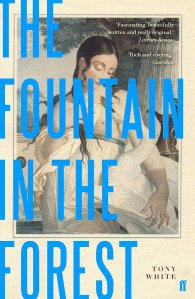
Buy The Fountain in the Forest direct from publisher Faber and Faber
Sign up to receive news and invites to Tony White’s book launches and events
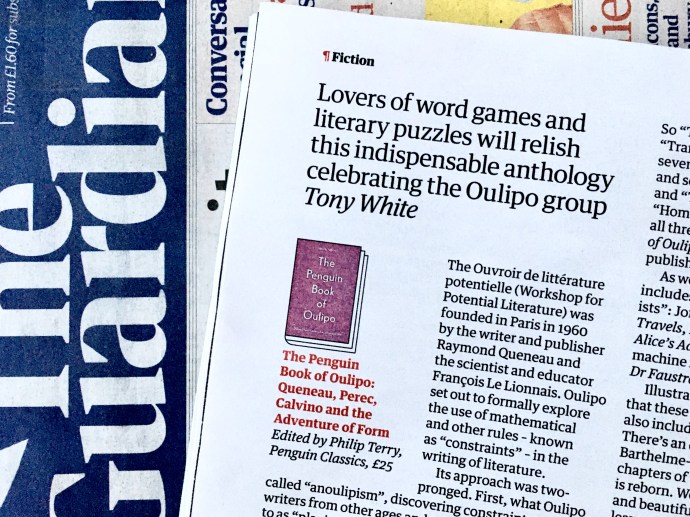
My review of Philip Terry’s The Penguin Book of Oulipo is now online at the Guardian. Along with Georges Perec (pictured), Italo Calvino, Harry Mathews et al, the review includes notable mention of novelists Christine Brooke-Rose and Anne Garréta, and of Lauren Elkin and Veronica Esposito’s 2013 The End of Oulipo?

The review appeared in the Guardian’s Review section, Saturday 21 December 2019.
§
Read Tony White, ‘The Penguin Book of Oulipo review’, on the Guardian site
Buy The Fountain in the Forest direct from publisher Faber and Faber
Sign up to receive news and invites to Tony White’s book launches and events
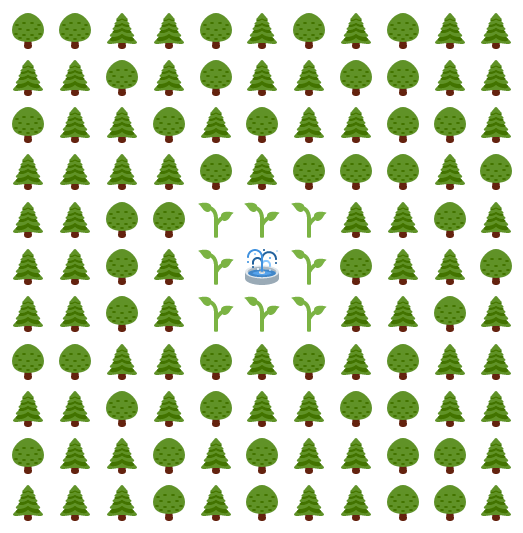
Very pleased to learn today that another book group is reading The Fountain in the Forest right now!
If your book group is reading The Fountain in the Forest, do let me know. And if you have any questions about the novel, do feel free to ask, and I’ll answer if I can!
§
Buy The Fountain in the Forest direct from publisher Faber and Faber
Sign up to receive news and invites to Tony White’s book launches and events
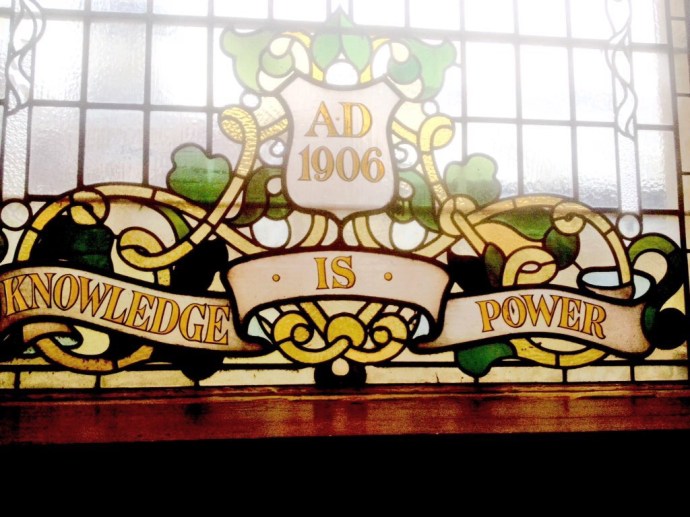 I had to get a picture of this stunning piece of stained-glass work, which you can find on the first mezzanine landing of the grand stairwell of Twickenham Library. I was visiting to talk about my latest novel The Fountain in the Forest on a panel with fellow authors Emma Curtis and Amanda Robson, hosted by Richmond Libraries’ Cheney Gardner, for Richmond Literature Festival’s Local Author Day.
It was a privilege to speak at this very enjoyable event, and I’m grateful to Richmond Libraries, Richmond Literature Festival, my fellow panelists and the wonderful audience for their hospitality and interest – it was great fun.
‘Knowledge is power’. That’s certainly as true now as it was in 1906, when the library – originally called the Carnegie Library Twickenham – was dedicated by F.W. Allison Esq. J.P., the then Chairman of Council.
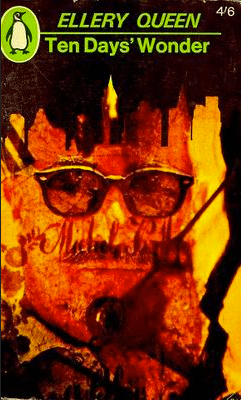 During the panel discussion we were each asked how we got started on the road to becoming published authors. In responding I had to speak up for public libraries, because when I was a child – growing up in a household without much money and not many books – the public library in Farnham was where I was introduced to literature, quickly graduating from wonderful children’s story books like The Wombles, Doctor Dolittle and Wurzel Gummidge to the general fiction section where I found authors like Mervyn Peake, Agatha Christie, the Ellery Queen mysteries, as well as yellow-jacketed Gollancz Science Fiction anthologies, Doris Lessing and more. Without that public library, followed by access to arts subjects at secondary school and an arts education (A-level art at Farnham College, a foundation at the then West Surrey College of Art and Design, now University of the Creative Arts, Farnham, and a Fine Art Degree at Sheffield City Polytechnic, now Sheffield Hallam University) I would almost certainly not be an author today, nor have had access to any kind of professional life in the arts.
I’ve spoken about the importance of public libraries in more detail, including when I was interviewed after giving a masterclass as part of Nottingham UNESCO City of Literature last year.
§
Buy The Fountain in the Forest direct from publisher Faber and Faber
Sign up to receive news and invites to Tony White’s book launches and events
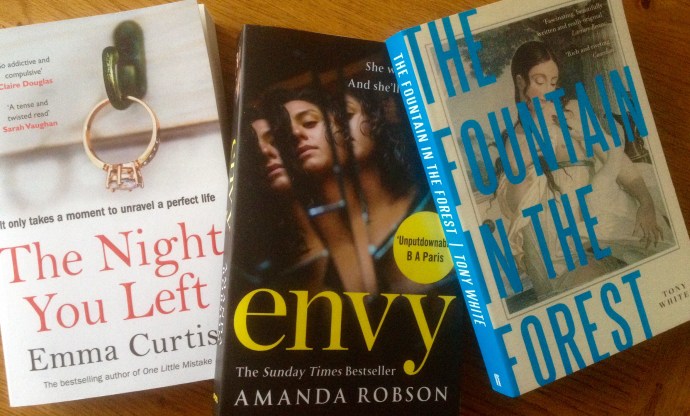
From cutting edge psychological suspense to literary detective novels, what draws writers and readers to crime fiction? Join three celebrated local authors, all members of the Crime Writers’ Association for a fascinating discussion about their latest work, careers and experiences of writing crime fiction.
Emma Curtis’ latest novel The Night You Left explores the nuances of family relationships, the abuse of authority, the darker side of friendship and the breakdown of trust. She is the founder of the Psychological Suspense Authors Association.
Amanda Robson worked in the Poisons Unit at Guy’s Hospital, where she became a co-author of a book on cyanide poisoning. Amanda attended the Faber novel-writing course and is now a full-time author. Her debut novel, Obsession, was a number one eBook bestseller.
Tony White is the author of six novels including his latest The Fountain in the Forest, one work of non-fiction and numerous short stories. He has written for the Guardian and Channel 4 and is a former writer in residence at the Science Museum.
§
Book tickets for Emma Curtis, Amanda Robson and Tony White at Richmond Literature Festival
Buy The Fountain in the Forest direct from publisher Faber and Faber
Sign up to receive news and invites to Tony White’s book launches and events
I’m taking a break for a few weeks this summer but there are some cool things coming up in the autumn, so if you don’t already get invites to my events and launches, and you’d like to, it’s easy — sign up here, or click the link below!

§
Buy The Fountain in the Forest direct from publisher Faber and Faber
Sign up to receive news and invites to Tony White’s book launches and events
‘Fantastic . . . A cross between Derek Raymond and Raymond Queneau . . . It can be enjoyed at the level of a thriller, and yet it does all these other fascinating things . . . It’s such a good book.’ Andy Miller BACKLISTED PODCAST
‘The most satisfying books in crime as in any area of literature tend to be those that do not fit easily into any category, that confound expectations. Tony White’s The Fountain in the Forest contains some of the best police procedural writing I have encountered – gritty, dense with detail, obsessively forensic – and on the level of a detective story it is entirely satisfying. That it also works as an experimental novel of the OULIPO school, and as a work of political and social commentary gives it a denseness and what I can only call composure that few novels in any genre can hope to emulate.’ Nina Allan
22–30 June 2019 was Swift Awareness Week in the UK. Swifts are migratory birds that return to the UK – as to other European countries – each summer, but their numbers are in dramatic decline.
In 2018, Britain & Ireland were the first countries in the world to dedicate a national week in support of Swifts . . . These events aim to raise awareness of Swifts and bring a focus to their plight, and of course provide information about how to help them. The Swift is one of the few endangered species that individuals really can help in their own property and there are many groups across the country working hard to try to halt their dramatic decline of 50% in just 20 years.
You can also enter your own UK swift sightings as part of the RSPB’s Swift Survey.
Swifts are a recurring motif in my latest novel The Fountain in the Forest, and I somehow feel a personal attachment to these birds whenever I encounter them, whether in the UK or around the Mediterranean, in places such as the city of Split, Croatia, where thousands of them nest in the ancient stone walls of Diocletian’s Palace.
 In advance of the first publication of The Fountain in the Forest in 2018, we made a short trailer that was shot on Super8 in the South of France, one of the settings used in the novel.
I remembered that while making the trailer, I’d accidentally recorded swifts swooping close overhead in Place du Frêne at the gates of the historic walled town of Vence on the Côte d’Azur in the South of France. This digital video and audio wasn’t used in the original trailer, so I’m using it now for this short paperback trailer, published to mark Swift Awareness Week 2019.
Shot on location in Place du Frêne and Avenue Colonel Meyere, 06140 Vence, Côte d’Azur, France, 17 July 2017. Video, iPhone 4S; additional audio, Edirol R-09.
§
Take part in the RSPB Swift Survey by entering your own sightings
Buy The Fountain in the Forest direct from publisher Faber and Faber
Sign up to receive news and invites to Tony White’s book launches and events
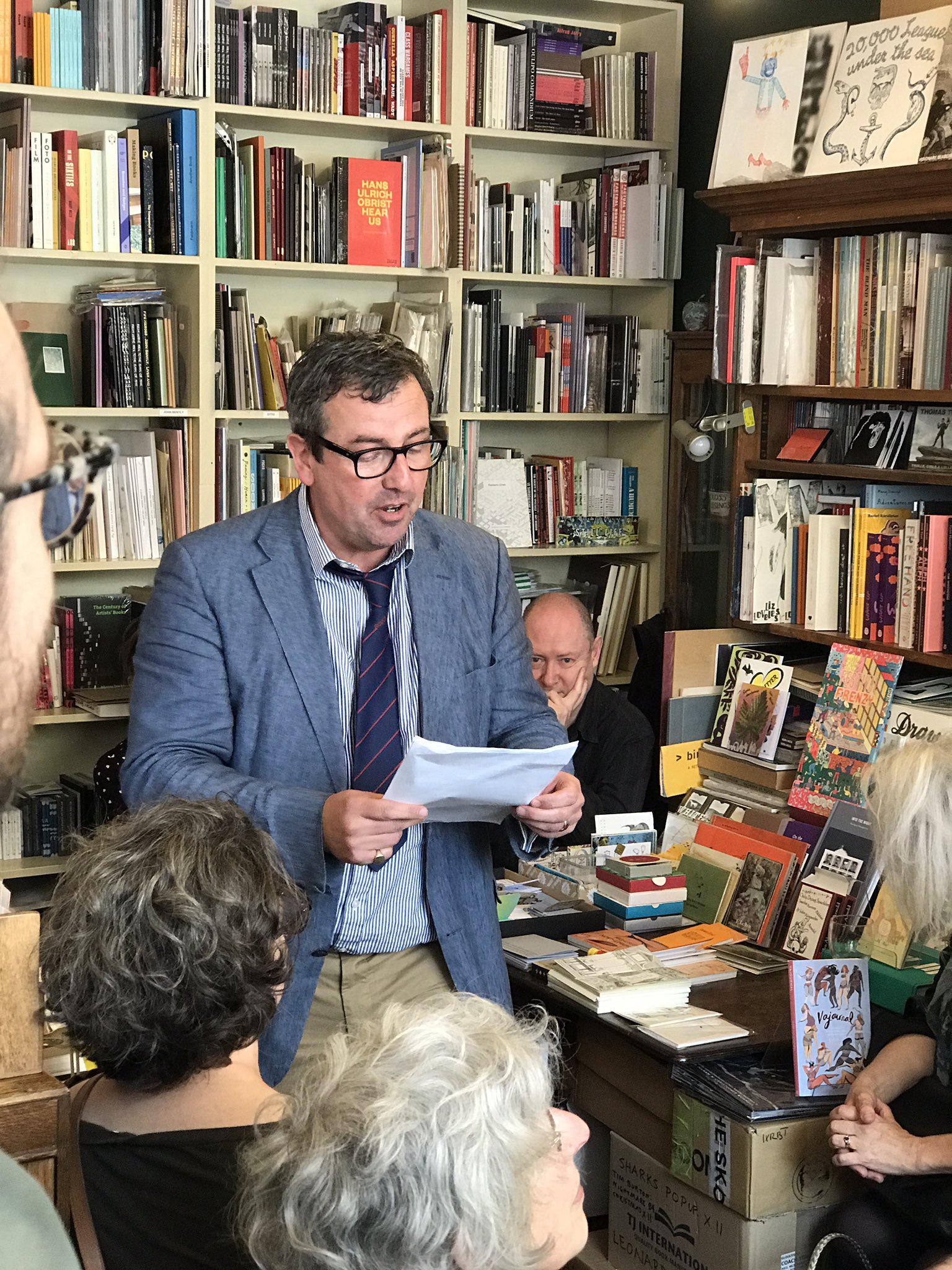
© Patrick Walsh, 2019
It was a pleasure and a privilege to read the ‘Willingdone Museyroom’ from Finnegans Wake at London’s wonderful Bookartbookshop’s Bloomsday celebration yesterday. And to see the great Marcia Farquhar’s generous, intimate and mesmerising reading of Molly Bloom’s soliloquy from Ulysses; you could have heard a pin drop.
 I was proud to wear my old Royal Mail tie for the occasion, partly because I introduced my own reading by talking about reading Finnegans Wake – my now very battered copy of Faber’s 50th anniversary paperback edition of 1989 – when I was working as a postman in Camden Town in the early 1990s, and partly in honour of the postman who appears on p.488 of the novel:
— Oyessoyess! I never dramped of prebeing a postman
Thank you to Alastair (at my left elbow there) and Tanya for their warm hospitality, and to the friends old and new who travelled from as far afield as Brighton, Birmingham and, er, Bloomsbury – including my literary agent Patrick Walsh who took this photo. Thank you, Patrick ;)
§
Peter Chrisp’s ‘This way to the Museyroom!’ gives some really fascinating background on Joyce, Waterloo, and the writing of this section of Finnegans Wake – well worth a read
Buy the new paperback edition of The Fountain in the Forest direct from publisher Faber and Faber
Sign up to receive news and invites to Tony White’s book launches and events

Photo © Chris Dorley-Brown, 2018
Mathew Clayton is a writer, publisher and happening-maker, a folk aficionado of the margins and the mainstream, who has started a new series of interviews, talking to (he says),
people running interesting creative projects that i hope will give inspiration to people thinking of starting something themselves.
Such a great idea, so I am delighted to have been first in line for a chat, which covers Piece of Paper Press, art school, The Fountain in the Forest, collaborations with Blast Theory and the Science Museum, Resonance FM, and my unique view of the Poll Tax Riots of 1990, from the podium beneath the Neo-Classical portico of the National Gallery…
So there I was, watching the Poll Tax Riot from this ornate gazebo, with the public square and this historic struggle on one side, and the gallery on the other: a unique vantage point, right in the thick of it.
§
Buy the new paperback edition of The Fountain in the Forest direct from publisher Faber and Faber
Sign up to receive news and invites to Tony White’s book launches and events

 Piece of Paper Press & tonywhite.london
You must be logged in to post a comment.