§
Find out more about Tony White’s crossword competition, T&Cs etc
Buy The Fountain in the Forest direct from publisher Faber and Faber
‘Intelligence Squared’, David Collard reviews The Fountain in the Forest for the TLS

Photo: © Kit Caless, 2018
Thank you to Faber and Faber and to the wonderful Daunt Books on Marylebone High Street for hosting such a memorable launch for The Fountain in the Forest on 11 January, and to the 200-plus friends and colleagues who came along. Thank you also to my editor at Faber, Lee Brackstone, who rose to the challenge by writing and delivering an Oulipo-inspired speech* that was both touching and very funny. Many books were sold — and many signed! Thank you again. To be able to celebrate the publication of a book in such great company really is the cherry on the cake.
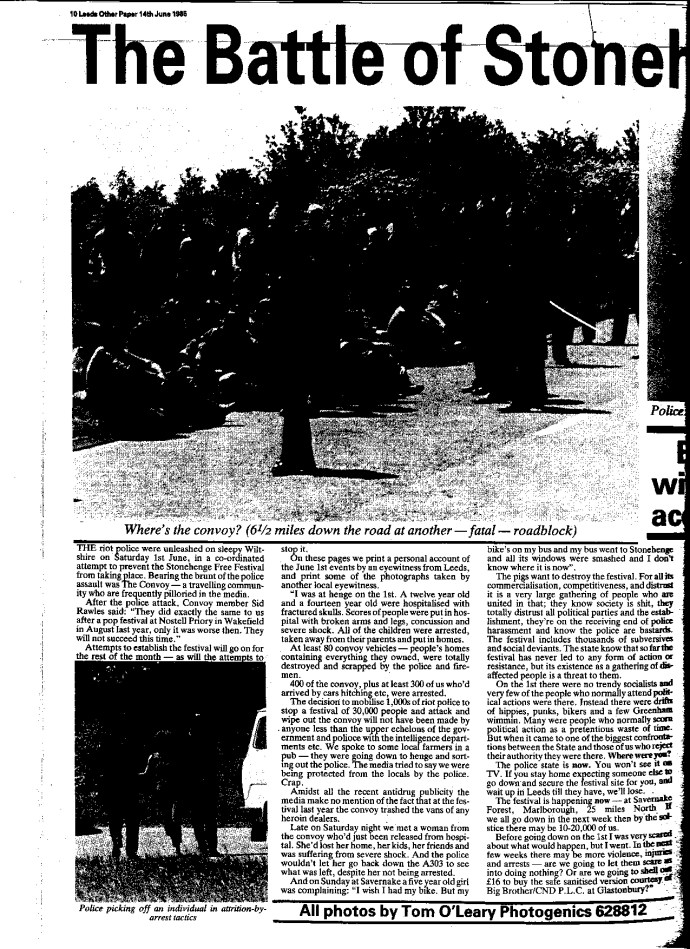
Just before the launch I was at BBC Broadcasting House pre-recording an interview for BBC Radio 3’s Free Thinking, a programme about Protest and Counterculture – from the Columbia University occcupations of 1968 to the Battle of the Beanfield, and 1990s rave culture. The programme went out later that same night, and you can ‘listen again’ here. (During what was – thanks to host Matthew Sweet and my fellow guests – a fascinating conversation to have been part of, I did also manage to mention the important campaigning being done by the Orgreave Truth and Justice Campaign, and by the charity INQUEST.)
The Fountain in the Forest also had its first print review, in the TLS (No. 5989, 12 January 2018) which was published that same morning. This is subscriber-only content at the moment, but here’s an extract:
Much experimental writing may strike sceptical readers as “clever-clever”, a phrase that Gilbert Adair once observed tends to mean “half-clever” rather than “double”. The skills involved in the production of, say, Oulipian texts may dazzle in their virtuosity, but the result may seem to lack the pulse of life.
Tony White’s fifth novel, a gripping police procedural set in and around the London Borough of Holborn, while impeccably Oulipian in conception and execution, has that pulse. The hero is Detective Sergeant Rex King, smart, single, with a taste for Fred Perry shirts and Harrington jackets. When a horribly mutilated body is discovered in the Georgian scenery-painting studio of a Covent Garden theatre we follow his investigation into a crime that appears to implicate an old friend. […] None of this may seem to be in any way experimental. But certain words in each chapter appear in bold print as part of a “mandated vocabulary”, a pre-determined lexicon derived from – well, that would give the game away, and I don’t want to spoil the fun. […] This may all seem highly contrived (which of course it is) but there’s no stink of the lamp, and the complex, non-linear plot barrels along confidently, enriched rather than impeded by the technique. I occasionally found myself checking the appendices to find out in advance what words would appear, admiring all the more the ingenuity involved in their seamless inclusion. […] The Fountain in the Forest sets the author and his readers a bracingly high bar.

(I was also delighted to see that this same issue of the TLS carries a review of Benjamin Koerber’s English translation for the University of Texas Press of Using Life, a novel by persecuted Egyptian novelist Ahmed Naji. I interviewed Naji last spring for the English PEN as part of their Festival of Modern Literature, and you can read that interview here.)
*Thanks to Lee Brackstone for his generosity in allowing me to post this print-out of notes for his speech, which he signed on the night:

§
Buy The Fountain in the Forest direct from publisher Faber and Faber
‘Intelligence Squared’, David Collard reviews The Fountain in the Forest for the TLS
One of the great things about social media is that readers are able to post book reviews within hours or days of publication. Here are a just a few of the reader reviews of The Fountain in the Forest that have appeared on Twitter, Goodreads and Instagram.
‘You’re going to want to read this book and you deserve to enjoy the mix of bewilderment and shock I just experienced, because in a world where everything is telegraphed having the applecart upended, smashed to pieces and then sold as firewood is something to cherish […] plays with the genre with a twist so brazen that, on its own, is a commentary on the police procedural […] a gripping stunning read. As thrilling, page-turning and suspenseful as any potboiler anyone will read this year, brilliantly set up […] The Fountain in the Forest has set a high bar for the rest of the novels I read this year.’ ⭐️⭐️⭐️⭐️⭐️ @Mondyboy
‘A book to sit back and enjoy. The cover is so beautiful that I strongly recommend getting hold of a paper copy, rather than an e-book. […] This is a book to savour and think about. […] Great for Book Clubs or studying.’ ⭐️⭐️⭐️⭐️ @emmabbooks
‘An extremely clever narrative and a very quirky storytelling style. Loved this one for all it’s differences to my normal reads.’ ⭐️⭐️⭐️⭐️⭐️ @Lizzy11268
‘one of the most original and unique novels I’ve read for a while, offering a fascinating and intricate crime story that genuinely keeps you guessing until the end.’ ⭐️⭐️⭐️⭐️ @bookshelfwonders
Thank you all for this amazing feedback!
§
Buy The Fountain in the Forest direct from publisher Faber and Faber
My new novel The Fountain in the Forest is published today – 4 January 2018. Here’s the blurb:
When a brutally murdered man is found hanging in a Covent Garden theatre, Detective Sergeant Rex King becomes obsessed with the case. Who is this anonymous corpse, and why has he been ritually mutilated? But as Rex explores the crime scene further, the mystery deepens, and he finds himself confronting his own secret history instead. Who, more importantly, is Rex King?
Shifting between Holborn Police Station, an abandoned village in rural 1980s France, and the Battle of the Beanfield at Stonehenge, The Fountain in the Forest transforms the traditional crime narrative into something dizzyingly unique. At once an avant-garde linguistic experiment, thrilling police procedural, philosophical meditation on liberty, and counter-culture bildungsroman, this is an iconoclastic novel of unparalleled ambition.
Here is Luke Bird’s phenomenal cover – hopefully you will see this around a fair bit in the coming weeks and months…

§
Buy The Fountain in the Forest direct from publisher Faber and Faber
I was delighted that my ‘Top 10 Experimental Thrillers’ piece for Guardian Books during the holidays (27/12/2017) prompted much online discussion, both about the titles I discuss – by Robbe-Grillet, Duras, Burroughs, Headley, Perec, et al – and of course about the many other possible contenders for inclusion. I promised (rather rashly) to pull these suggestions together for ease of reference.
Firstly, here is my reserve list. The ten novels (and Michael Moorcock’s short story collection) that I considered, but that didn’t make it into my final Top 10 for Guardian Books:
Michael Moorcock, The Metatemporal Detective
Tom McCarthy, Men in Space
Roberto Bolano, 2666
Italo Calvino, If on a Winter’s Night a Traveller…
Gertrude Stein, Blood on the Dining Room Floor
Truman Capote, In Cold Blood
Flann O’Brien, The Third Policeman
Antonio Tabucchi, Pereira Maintains
Samuel Beckett, Mallone Dies
M John Harrison, Nova Swing
And here (with no additional commentary from me) are the suggestions made by friends – mainly on Facebook – and in reader comments submitted on Guardian Books in response to my article. N.B. i) where readers suggested an author or a body of work, I have selected one illustrative title. N.B. ii) suggestions of novels that were merely ‘experimental’, or the various suggestions for alternative introductions to the oeuvre of William S. Burroughs – rather than experimental thrillers per se – have not been included here:
Ivan Vladislavić, 101 Detectives
Trevor Hoyle, Blind Needle
Sebastian Japrisot, The Lady in the Car with Glasses and a Gun
Georges Simenon, The Man Who Watched Trains Go By
Boileu-Narcejac, The Living and the Dead
Friedrich Durrenmatt, Suspicion
Raymond Chandler, The Long Goodbye
Mark Z. Danielewski, House of Leaves
Patricia Highsmith, The Talented Mr. Ripley
John Franklin Bardin, The Deadly Percheron
Michel Houellebecq, The Map and the Territory
Richard Brautigan, Dreaming of Babylon
Kobo Abe, The Ruined Map
Norman Spinrad, Bug Jack Barron
Andrea Marie Schenkel, The Dark Meadow
Umberto Eco, The Name of the Rose
China Mieville, The City and the City
Jean Patrick Manchette, The Prone Gunman
Leonardo Sciascia, The Day of the Owl
Carlo Emilio Gadda, Quer pasticciaccio brutto de via Merulana
Cameron McCabe, The Face on the Cutting Room Floor
Alfred Bester, The Demolished Man
Michael Chabon, The Yiddish Policemens’ Union
Agatha Christie, The ABC Murders
Michel Butor, L’emploi du temps / Passing Time
With thanks to Chris Power, Aaron Williamson, Jason Bowman, Nicholas Royle, abkquan, Laurence Bury, stvkiley, renaultfloride, kushti, keithyd, Matthew Cobb, praxismakesperfec, andrew staines, referendum, Martin Silenus, proust.
§
Tony White, ‘Top 10 Experimental Thrillers’, Guardian Books
My 2003 novel Foxy-T is now available in ebook for the first time.
I gave a talk about the novel at Whitechapel Idea Store in 2013, at an event marking the 10th anniversary of publication. You can read an edited transcript of that talk on the Faber website.
The catalyst for the novel – though I didn’t know it yet – was the closure of the area’s only minicab office: the former Megna Cars on Cannon Street Road, just around the corner from where I lived at the time. Then, even more than ever, the East End was in a state of flux, and it was impossible to tell whether this now-empty shop and the flat above it might become a garment factory or a high-spec commercial art gallery. Two extremes, perhaps, but either was just as likely. Or maybe it would become an internet shop. If it were the latter, in those pre-broadband days, it would save me walking up to the one that had recently opened on Whitechapel High Street.
It sounds almost incredible now, but at that time it was still only a few years since the internet café had been invented, with the opening of Cyberia in London in 1994. In the intervening period, the slightly humbler internet shop, or internet and international telephone call shop, had become ubiquitous in the poorer and the more transient areas of probably most cities of the world, and yet I couldn’t think of a novel that was set in one.
ICYMI here’s some of the press the novel has received over the years:
…this affectionate tale may tell you more about love, longing and ambition in the inner city than a dozen official reports. Indeed, some readers would argue that it captures the flavour of Asian lives in London E1 with more inside-track relish than another novel of 2003: Monica Ali’s Brick Lane. Boyd Tonkin, Independent
There have been a few East London books — Manzu Islam’s Burrow, Salman Rushdie’s The Satanic Verses, Farrukh Dhondy’s East End At Your Feet, there’s Claire Alexander’s sociological The Asian Gang; and there are more laddist, wide-boy fictions around — Londonstani, of course (though that’s about Hounslow) […] The book I like best is Tony White’s Foxy-T. Ventriloquism among the Cannon Street xeroxing machines, innit? Sukhdev Sandhu, 3am
“What’s your favourite British novel from the past ten years?” The other day I was with a group of friends, and someone posed this question. A few fairly obvious titles were suggested, which gave me time to think. And when it came my turn to speak, I said, “Foxy T by Tony White”. Toby Litt, The Guardian
In Foxy-T he excels himself. […] With vivid economy White describes young Bangladeshis’ domestic, business and street life in intelligent, beautifully sustained prose. Coherent and compelling, the novel has a wonderful, if slightly tricky, denouement which made me grin with surprised admiration. Rejecting familiar influences of the past 20 years, White joins a handful of contemporary writers who are proving that the novel has never been more alive. He is a serious, engaging voice of the modern city. Michael Moorcock, The Guardian
This is, in fact, the best book that has ever been written about Brick Lane […] it is based around two girls who work in a telephone and computer place off Cannon Street Road, the E-Z Call phone shop. There are all these dubious characters coming in who are out of young offenders institutes or whatever, people from the Bangladeshi community, and it’s really about the progress of these two girls, and the whole book is written in Bangladeshi idiom. It takes a while to get into, but then you do get into it and it’s an amazing tour de force. Roy Moxham, ‘Five Books’, The Browser

§

My Top 10 Experimental Thrillers piece, including Marguerite Duras’ brilliant L’Amante Anglaise (seen here in Grove Press’s beautiful, 1968, Evergreen Black Cat edition) went live on Guardian Books. It is one of many articles, interviews etc. commissioned around publication of The Fountain in the Forest on 4 January.
Gertrude Stein once said fiction that merely related events was no longer interesting in an age of ubiquitous mass media. But Stein remained fascinated by literature, specifically the detective novel, which she considered the singularly modern fictional form. When the man or woman in question is dead from the start, you’re done with mere events before page one. Furthermore: “In real life … it is the crime that is the thing the shock the thrill the horror but in the story it is the detection that holds the interest.” [READ MORE…]
§
I am thrilled and honoured to be introducing a rare screening of Wetherby (1985) on Friday 19 January 2018 as part of the wonderful London Review Bookshop’s screenings programme, and to celebrate publication of The Fountain in the Forest. Wetherby is playwright and screenwriter David Hare’s first film as director, and stars Vanessa Redgrave – I think it is a masterpiece.
I will be in conversation with writer, poet and CB Editions publisher Charles Boyle about the film after the screening. The evening will be hosted by Gareth Evans, film curator at the Whitechapel Gallery.
‘Hare’s first film as director, set in Yorkshire, does seem to be playing mind games. Tim McInnerny is the uninvited guest who twice turns up at the Wetherby home of schoolteacher Jean Travers (Redgrave) – first at a dinner party and then, the following day, to commit suicide in front of her. Flashbacks, to the night before and a dark episode in the teacher’s past, with Joely Richardson fittingly playing the young Travers, seek to cast light. Redgrave’s performance is superb and she’s ably supported by Ian Holm, Judi Dench, and Suzanna Hamilton in particular.’ – Nicholas Royle, Time Out
This promises to be a very special night, and booking is essential. Please join us.
§
7:00pm, Friday 19 January 2018, London Review Bookshop, 14 Bury Place, London WC1N 2JL. Tickets £15.00 — Please click here for bookings
‘A Policeman who quits the force out of shame’ — Read this post about Wetherby from 2010
Bristol City Council have commissioned a redesign of the Missorts website, which has just gone live. Missorts is my immersive soundwork for Bristol. The project was launched on 20 November 2012, on the anniversary of Thomas Chatterton’s birth. Missorts was originally designed as a GPS-triggered smartphone app that activated automatically in the Redcliffe area of Bristol, and could not be accessed anywhere else.

@ Max McClure, 2012
The work features ten original and interconnected short stories by Sara Bowler, Holly Corfield Carr, Thomas Darby, Jack Ewing, Katrina Plumb, Jess Rotas, Hannah Still, Helen Thornhill, Isabel de Vasconcellos and Sacha Waldron. In the original app, the stories unfold each in their own specific location as you walk around Bristol Temple Meads and Redcliffe, near Thomas Chatterton’s birthplace, and are accompanied by – or embedded within – the Portwall Preludes, a series of striking new musical works specially composed by Jamie Telford for St Mary Redcliffe’s Harrison and Harrison church organ. Stories and music could be listened to in any order. This new browser-based version of the project means, further, that stories and music can now be listened to anywhere. I’m interested to see how an audio work designed for a particular location in Bristol might sound in other locations, including those with their own radical literary histories.

The redesign extends the life of the project and makes it available to wider audiences – and includes director David Bickerstaff’s short documentary. Whilst the app did enable an incredible degree of automation (and using GPS to trigger the stories in the places where they’re set, and allowing users to mix between stories and music in real time and space was an integral part of the work), backwards compatibility has proved a challenge, and the fact that users needed to acquire an app in the first place was a frequent obstacle. User experiences that are echoed by Futurebook’s Molly Flatt, writing in The Bookseller this summer about browser-based vs app-based reading experiences:
On this same subject, I was also interested to note that one of my favourite digital literature experiences of 2017 – Joanna Walsh’s mesmerising Seed (from Editions at Play) – was purely browser-based.

© Max McClure, 2012
§
You must be logged in to post a comment.