‘Something odd’s happened, but we’re gripped’

I pricked up my ears at an interesting but only half-heard fragment of conversation on the BBC Radio 4 programme Start the Week this morning. I had to go back and listen again in order firstly to see who had been speaking, and secondly how the theme of climate change had briefly emerged in a conversation that had otherwise been largely devoted to news reporting of ‘the whistle-blower Edward Snowden’, and a posing of the question of why there had been so ‘little outcry among the British public’.

Click-through to listen to the programme again on BBC i-Player (until 9am 10.02.14)

Click-through to listen to the programme again on BBC i-Player (until 9am 10.02.14)

Joining host Anne McElvoy had been former GCHQ director Sir David Omand, journalists Annette Dittert and Luke Harding, and writer Alain de Botton (I resist using his self-styled title of ‘philosopher’).

What had caught my attention comes at around thirty-four minutes in to the programme (34:54), when the conversation takes a slight detour into the need to ‘popularise’, i.e. to create a wider and more engaged readership for, complex issues such as climate change (here called ‘global warming’).

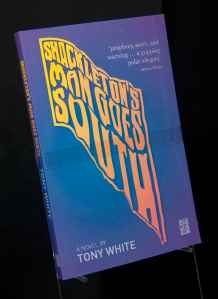
Here is a transcript of that part of the conversation. It is worth bearing with the solipsistic newsroom jargon, the talk of ‘packages’ etc., because de Botton particularly begins (albeit fleetingly) to make an interesting case for the value of art, of literature and stories in understanding climate change. Even if ‘climate change’ here is being used as a proxy for any complex and international mega-news story, this strikes a chord. I’ve said for a while that if you want to hear interesting and engaging stories about climate change you might do better to ask writers of fiction rather than the vast committees of scientists and civil servants who are charged with generating the reports of the IPCC. Indeed this was part of the motivation for writing my 2013 novel Shackleton’s Man Goes South (Science Museum).

We pick up the conversation as host Anne McElvoy asks whether it matters that more people click on celebrity froth than serious stories:

Alain de Botton: It matters hugely, because we’re in a democracy. And in a democracy you have to win a majority in order to get things to change. So it’s all very well, making a cogent, sober case and then blaming everybody else for being too stupid to care about it, but the real challenge is how do you get people to care as much about global warming as they do about Taylor Swift. That is an artistic, aesthetic, communication problem that places like the Guardian are only just beginning to think about. Because that’s–

Anne McElvoy: Well OK, you’ve beaten up the Guardian a fair bit there, but just look to the readership–

Alain de Botton: It’s a problem of all serious, a problem of all serious news.

Anne McElvoy: –here, an emerging readership, and the fact that we were just discussing where our children read news and if they did, did they read it online, and did they read it in the same sources as we did, and the answer for a lot of people is probably not, but in effect people probably vote with their eyeballs now. So, however brilliantly you presented a package on, say, global warming, you might find that you’re outdone in hits by a piece on Taylor Swift, and there’s not much you can do about it.

Alain de Botton: Well, you have to, I think, too often the most serious journalists think that the seriousness of the issue absolves them from the challenge of popularisation. And popularisation is a word with a sort of ambiguous history of associations. It’s seen normally as a sort of cheapening thing. If you popularise something you’re cheapening it, and serious people are very averse to popularisation. In a democracy, if you care about something, you have to know how to popularise it, because otherwise– [inaudible]

Anne McElvoy: But what would that, I don’t quite understand what that would look like.

Alain de Botton: Well, what it would look like, we all know that we’ve sometimes seen packages on very serious issues, and we’ve yawned and switched channel or flipped to another page on the internet. In other words, it is to do [with], I mentioned the word ‘art’, you know. Think of Shakespeare. Shakespeare takes us into the machinations of political dramas etc., and he makes us care about pretty weird stuff. So suddenly there we are in the Danish court and something odd’s happened, but we’re gripped. It’s really exciting. You know, sometimes when we get taken into what’s happening in Turkish politics, people are falling asleep, because the article that is telling you about it has not done it with sufficient artistry and imagination. And that’s a real problem in a democracy.

Anne McElvoy: For some reason I have a mental image of a piece on global warming accompanied by an image of Miley Cyrus saying, ‘Phew, it’s hot in here.’ [Laughs.] Annette, as news correspondent for many years, do you recognise that conundrum that Alain throws up.

Annette Dittert: I totally see the point and the problem, although you cannot accuse the Guardian of being too boring here, because it’s a complex story, but I think in general this is a problem: how do you get a story that complex still in the public interest. How do you make sure that the sense of outrage doesn’t wear off before something has changed and that is certainly a big challenge not only for the Guardian but for all the media all over the world …

Screen Shot 2014-02-03 at 14.37.31The discussion then returns to Edward Snowden. Perhaps climate change is too off-topic so late in the programme. In any case that aspect of the discussion is closed down rather than expanded. McElvoy seems to still be responding to some pejorative idea of what the popular might be, rather than to the larger more expansive point that de Botton’s talk about ‘popularisation’ presaged: how good art can engage the imagination on the most complex and/or arcane subject matter. (Dittert then seems to be about to speak of the challenge of making a complex story stick in the public imagination, but instead speaks of ‘the public interest’, and we return to Snowden.)

Perhaps it’s just me, but for a minute de Botton came close to saying something much more interesting than his usual ‘art-as-therapy’, self-help schtick.

Also listening — and commenting on Twitter — was Hannah Redler, director of the Science Museum Arts Programme.

Shackleton’s Man Goes South was published by the Science Museum as their Atmosphere Commission 2013, with an accompanying display in the Museum’s Atmosphere Gallery, out of a stated and specific desire to commission art works that might ‘explore potential political, social and cultural impacts of climate change.’ In other words, the Science Museum at least are already bringing the ‘artistry and imagination’ that de Botton calls for into how they are prepared to engage the public with climate change.

§

Download Shackleton’s Man Goes South free and DRM-free from the Science Museum website.

Press about Shackleton’s Man Goes South


Interview archive

Shackleton’s Man Goes South, cover jpegHere are a couple of archived interviews about my novel Shackleton’s Man Goes South that have recently gone online.

Clifi Books. Mary Woodbury set up the Clifi Books website, in order to gather information and resources relating to depictions of climate change in literature, and the emergence of cli-fi as a genre (identified/coined by Dan Bloom). Mary got in touch to find out more about Shackleton’s Man Goes South:

I noticed that the book is part-fiction and part-non-fiction. I think it’s interesting how you accomplished telling a story this way. Do you have any insight about how you decided to narrate the book this way?

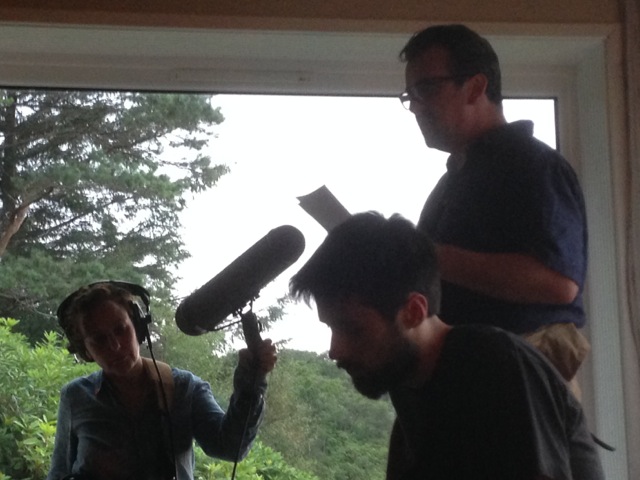
Resonance 104.4fm. Wendy Jones presents a weekly author-interview programme called ‘Interesting Conversations’ on London’s arts radio station Resonance 104.4fm. ‘Interesting Conversations’s is just one of several regular books programmes on Resonance. Wendy invited me to the studio just before Christmas to record an interview for the programme. Click-through to hear the interview on the station’s Soundcloud page, or listen via the WordPress player here:

§

Download Shackleton’s Man Goes South free and DRM-free from the Science Museum website.

Clarke Awards

Clarke-Award-submissions-If you didn’t already see it, the Arthur C Clarke Awards released this great photo yesterday via SFX Magazine, along with the full list of submissions to the prize.

The Arthur C. Clarke Award

is given for the best science fiction novel first published in the United Kingdom during the previous year. The award was established with a grant given by Sir Arthur C. Clarke and the first prize was awarded in 1987 to Margaret Atwood’s The Handmaid’s Tale.

Last week, the Clarke Awards released a list of the novels by women that had been submitted. Award director Tom Hunter hoped that this would make ‘a positive contribution towards further raising the profile of women writers of science fiction in the UK.’ It also ties in nicely with the brilliant Joanna Walsh a.k.a. Badaude’s Readwomen2014 campaign — a year-long celebration of women’s writing — that can be followed on Twitter and/or joined by using hashtag #readwomen2014.

The Clarke Award publish the list of submissions,

as a snapshot of the current state of science fiction publishing and to help readers everywhere get a fuller understanding of the judging process before the official short list is announced in March.

I think it’s a great idea to open up this information for discussion and analysis in this way. Perhaps it is something that other literary prizes might learn from.

Screen Shot 2014-01-18 at 11.15.13Shackleton’s Man Goes South is just visible up in the top left corner of the picture, between James Lovegrove’s The Age of Voodoo and James Brogden’s Tourmaline.

Shackleton’s Man Goes South is available from the Science Museum as a free and DRM-free ebook, compatible with most devices. These are available free online and also via a touchscreen ‘ebook dispenser’ that is part of a display about the novel in the Science Museum’s Atmosphere Gallery. The Museum have also produced a limited edition paperback of the novel. Print aficionados may be interested to know that signed copies of this first paperback edition of Shackleton’s Man Goes South are currently available from the Science Museum shop for the sale price of £5.00.

§

Download Shackleton’s Man Goes South directly from the Science Museum website

Read press and reviews of Shackleton’s Man Goes South

‘Like’ Shackleton’s Man Goes South on the novel’s official Facebook page

Visit the Shackleton’s Man Goes South display in the Science Museum’s Atmosphere Gallery, Exhibition Road, South Kensington, London SW7 2DD. Opening hours: 10.00 – 18.00 (last entry 17.15) every day except 24 to 26 December. 

Missorts mini-readings

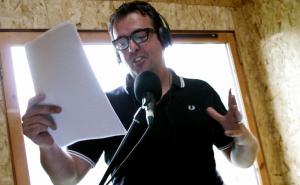
Situations and I have made some small videos of mini-readings from my novella Missorts Volume II, which just came out as a limited edition paperback. The idea was to pick some very short but vivid extracts that would introduce readers to each of the novella’s four characters — Paul, Ronnie, Jessica and Oliver — and contain some actual ‘story stuff’, but without being more than a minute or two long.

We shot eight of these mini-readings, on location on Vauxhall Bridge.

Starting on Tuesday 21 January, Situations are releasing one mini-reading every weekday lunchtime at 1:00pm on Twitter.

Here is the second video: ‘A broken auto-level trolley’

§

Tony White
Missorts Volume II
Published by Situations
ISBN 978-0-9574728-2-2
Price: £10.00 £5.00
Format: Paperback
Pages: 128
Publication date: 11 December 2013
Distribution: Central Books

Buy Missorts Volume II direct from publisher Situations

Animate Me

Screen Shot 2014-01-14 at 13.41.16Here courtesy of PEER and Animate Projects is a PDF of the Joe Ewart-designed pamphlet edition of ‘Animate Me’, my short story that was commissioned to accompany Out of Site, four new films by Savinder Bual, Kota Ezawa, Karolina Glusiec and Margaret Salmon.

You were always blagging equipment. Not like now when you can do stop-motion with any old digital camera – or on your phone – bung it through whatever free graphic converter software you can find and have the Quicktime on Youtube in the space of an hour! Back then it was about booking the studio, putting your name down for a lightbox; getting in early to use the rostrum camera or one of the Steenbecks. A different world.

Pick up a copy of ‘Animate Me’ in the gallery, or download a copy here, by clicking on the link above, or clicking-through this cover image.

N.B. It may take a bit of trial and error to print the pamphlet double-sided, depending on your printer. You might be able to do it by adjusting your printer settings, or by printing page 1 and then reloading the paper manually, so that both sides are the same way up when the PDF is printed in landscape format.

§

Out of Site, PEER in association with Animate Projects, runs from 16 January to 8 March 2014. The films are viewable from Hoxton Street between 3pm and 8pm Wednesday to Saturday, or watch the films online here.

Prizes are all we’ve got left

Screen Shot 2014-01-18 at 11.15.13It is great to hear that Shackleton’s Man Goes South has been nominated for a British Science Fiction Association award, especially because BSFA awards are nominated anonymously by members of the Association.

Shackleton’s Man Goes South is one of about fifty novels nominated. From this long-list, the BSFA shortlist is ‘drawn up from the most popular titles’, and will be released shortly.

Interestingly, another science fiction prize, the Arthur C Clarke Award, has just begun to release information about their nominations received. Unlike the BSFA Awards, nominations for the Arthur C Clarke are made by publishers, but the first announcement is made more interesting because it lists the thirty-three novels by women that have been submitted.

Arthur C Clarke award director Tom Hunter hopes that this

will be a positive contribution towards further raising the profile of women writers of science fiction in the UK and beyond. We’ll be releasing details of the full submissions list shortly, and will be encouraging readers everywhere to review and comment on the data in as many creative ways as possible.

I think this is a great idea. When I was a teenager, the late Doris Lessing’s Canopus in Argos Archives series of novels (borrowed from my then local library) were a big part of reinforcing my interest not just in science fiction, but in literature generally.

I’m pleased about the BSFA nomination for Shackleton’s Man Goes South as — obviously — it may bring the novel to the attention of readers who might not otherwise have heard of it. As review space in the broadsheets starts to get pinched, and if (as one frequently hears) orders from traditional bookshop chains are a fraction of what they were only a few years ago, I’m reminded of something that a publisher colleague said on the panel of a recent conference we were speaking at. I’m paraphrasing, but it was something like: ‘Don’t quote me on this, but prizes are all we’ve got left!’

You can download a free ebook of Shackleton’s Man Goes South in formats compatible with most devices (Kindles, iPads etc) from the Science Museum website, or you can email the novel to yourself from the touchscreen ebook dispenser that is part of the display about the book in the Museum’s Atmosphere Gallery. Shackleton’s Man Goes South was launched in April 2013, and both the free download offer and the accompanying exhibition are due to run for a whole year, until the end of April 2014.

For those who prefer print formats, there are also a few copies of the Science Museum’s beautiful paperback edition currently available at half-price in the Science Museum shop’s January sale. So if you are visiting the Museum for any of the other current exhibitions, or find yourself in the South Kensington area, pop in and grab a bargain.

§

Shackleton’s Man Goes South is available free and DRM-free (in ebook formats compatible with most devices) from the Science Museum website.

An exhibition accompanying the novel runs in the Science Museum’s Atmosphere Gallery until 24 April 2014.

Press about Shackleton’s Man Goes South.

Manifesto paperback

rotm_cover_digtal-1_1Manifesto for a Republic of the Moon, is now up on the Republic of the Moon exhibition microsite. The book, which costs £3.00 from the exhibition shop, includes my short story ‘Occupy the Moon.’ Here is the blurb, plus further info about the free ebook version:

Introductory essay and edited by curator, Rob La Frenais with contributions from the exhibiting artists – Agnes Meyer-Brandis, Leonid Tishkov, Liliane Lijn, Katie Paterson, WE COLONISED THE MOON, Joanna Griffin and additional material from Tony White, Andy Gracie, Dr Ian Crawford and from the Whole Earth Catalog.

Download Manifesto for a Republic of the Moon epub (open standard for most devices including iphone, ipad, Android phones, Kobo, Sony and Nook readers).  You can also read the epub version on your desktop comptuer using various browser plugins or other applications.

 Please note that the formatting has been optimised for reading in colour using the epub format. To download the file and start reading follow these instructions:

On iphones, ipads and android devices, first install some eReader software.

  • On iphones and ipads, ibooks is most commonly used and is free
  • On android try the free FBReader or other app if you prefer

Then download the .epub file.

Manifesto for a Republic of the Moon pdf

This eBook is DRM-free – you may copy and redistribute the eBook in its entirety.

Other traditional books published by The Arts Catalyst are listed in our online Bookshop.

ISBN 9 780992 777609

Exhibition price £3 (hard copy).

§

Republic of the Moon — London

10 January – 2 February 2014
Open daily, 11am-6pm
Admission free

Bargehouse, Oxo Tower Wharf
, South Bank, London, SE1 9PH

Out of Site

Screen Shot 2014-01-14 at 13.41.16My new short story, ‘Animate Me’ has been commissioned by PEER and Animate Projects, for publication alongside four new commissions by artists that go on show from Thursday 16 January 2014.

There were dozens of them – a generation, near enough – working as ‘inbetweeners’ and cleaners-up, doing thumb-nailing or little animation tests, getting to know particular characters and ending up as animators, compositors. That’s where it all starts […] So why was I the only one in the Hawley Arms not wearing a Roger Rabbit UK crew jacket?

PEER in partnership with Animate Projects has commissioned four new moving image works to be back-projected through PEER’s gallery windows and viewed from Hoxton Street, from 3pm to 8pm Wednesday to Saturday, until 8 March 2014.

‘Animate Me’ is published as a free, A5 one-fold pamphlet, typeset by the brilliant Joe Ewart, and will be available in the gallery throughout the exhibition.

On Saturday 1 March at 4pm I am chairing a panel discussion with artists Savinder Bual, Karolina Glusiec and Margaret Salmon. This will take place at the gallery, and is free, but booking is essential. Click here to reserve your place.

Images clockwise from top left: Kota Ezawa, Paint on Glass, 2013; Savinder Bual, Wing, 2013; Margaret Salmon, Housework, 2014; Karolina Glusiec, Out of Sight, 2013

Images clockwise from top left: Kota Ezawa, Paint on Glass, 2013; Savinder Bual, Wing, 2013; Margaret Salmon, Housework, 2014; Karolina Glusiec, Out of Sight, 2013

Republic of the Moon

Screen Shot 2014-01-07 at 09.04.06I’ll be reading from my short story ‘Occupy the Moon’ on Thursday evening, at the private view of The Arts Catalyst’s exhibition Republic of the Moon — London, which has been getting some good press in the run-up to opening. Coverage includes the Space Policy blog, Wall Street Magazine and the Guardian.

Liliane Lijn, Moonmeme. Click through to go to Liliane Lijn's website.‘Occupy the Moon’ was first published online by The Arts Catalyst two years ago, having been commissioned to accompany an earlier version of the exhibition at FACT, Liverpool. The story responds in particular to the work of Agnes Meyer Brandis and — especially — Liliane Lijn’s Moonmeme (left). It was also an attempt to write a science fiction short story in the mould of those great, old, yellow-jacketed Gollancz anthologies that I loved to borrow from my local library when I was a child.

This is the first time that ‘Occupy the Moon’ has been available in print form, where it is among the writings included in A Manifesto for the Republic of the Moon. (Bibliographical info etc. to follow.)

Eagle-eyed readers will know that I have worked with Liliane Lijn and blogged about her work before.

Here’s the exhibition blurb from The Arts Catalyst’s site:

After two decades working with space dreamers from the European Space Agency to anarchist autonomous astronauts, The Arts Catalyst will transform Bargehouse into an Earth-based embassy for a Republic of the Moon, filled with artists’ fantastical imaginings. Presenting international artists including Liliane Lijn, Leonid Tishkov, Katie Paterson, Agnes Meyer Brandis, and WE COLONISED THE MOON, the exhibition combines personal encounters, DIY space plans, imaginary expeditions and new myths for the next space age.

Marking the start of its twentieth anniversary year, The Arts Catalyst will animate the exhibition with performances, workshops, music, talks, a pop-up moon shop by super/collider and playful protests against lunar exploitation.  A manifesto declaring the Moon a temporary autonomous zone, with responses from artists and scientists to novelist Tony White’s call to “occupy the Moon!” will be published in print and e-Book formats to coincide with the exhibition.

Speeches and readings will begin at Bargehouse at 7:30pm, Thursday 9 January.

§

Republic of the Moon — London
Bargehouse
Oxo Tower Wharf
South Bank
London SE1 9PH
UK

10/01/2014 – 02/02/2014
11am-6pm daily, late opening 6.30-8.30pm Thursday 9 January and 6.30-10pm Thursday 16 January

There is an extensive events programme to accompany the exhibition. For more information see The Arts Catalyst website.

Paolozzi at New Worlds

PrintA quick plug for David Brittain’s Eduardo Paolozzi at New Worlds: Science Fiction and Art in the Sixties, which arrived in the post shortly before Christmas.

Michael Moorcock, ‘A Twist in the Lines’, POPP.027Last year I published a limited edition of a new short story by novelist and former New Worlds editor Michael Moorcock, called A Twist in the Lines. It is a fantastic new Jerry Cornelius short, but also something of a tribute to Paolozzi, suggesting as it does that the central artistic pattern upon which the multiverse depends is Paolozzi’s iconic mosaic at Tottenham Court Road London Underground station. Given these connections, Savoy kindly suggested that we might do a swap.

I’m glad they did, because this is a great book; full of colour plates, essays, interviews and contextual information:

The book contains rare and unseen images from the archives of New Worlds and the Eduardo Paolozzi Foundation, including excerpts from what is thought to be an unpublished science-fiction novel by the artist. There are also new interviews about the magazine and its times with editor Moorcock, art editor Christopher Finch, designer Charles Platt, contributor Michael Butterworth, and critic John Clute.

The whole is beautifully designed by John Coulthart. There are also reproductions of all kinds of New Worlds ephemera, including some tantalizing thumbnails of J.G. Ballard’s ‘Project for a New Novel’, an incredible graphic work from the late 1950s, a shorter version of which is reproduced across a number of double-page spreads throughout New Worlds No. 213 from 1978.

Eduardo Paolozzi at New Worlds is published by Savoy to follow the Brittain-curated, 2012 exhibition of the same name at Manchester Metropolitan University Special Collections. Here is part of the blurb from the exhibition brochure:

Between 1967 and 1970 the British magazine, New Worlds aimed to widen the scope of what could be called science fiction by developing a rich visual culture that mirrored the world around it. Artists as well as writers became involved – including Eduardo Paolozzi (1924-2005) who produced his own radical science fiction in the form of graphic art.

Eduardo Paolozzi at New Worlds follows the 2009 publication of the similarly excellent Jet Age Compendium: Paolozzi at Ambit (Four Corners Books), also edited by Brittain. I am struggling to think of any contemporary equivalent here. Anyone? I can’t think of another artist whose work is so in tune with and so integral to the ethos and the identity of one literary magazine, let alone two.

§

Eduardo Paolozzi at New Worlds
Publication: 16th December 2013
ISBN: 978-0-86130-128-7
Pages: 184
RRP: £17.00