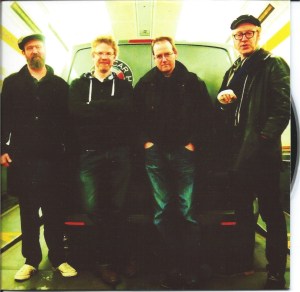
 Mark Eitzel and band played a great gig in the Purcell Room at London’s South Bank Centre last night. There were old songs and new songs, and an insight (presented as fleeting aside) about how ‘you songs’ are usually — of course — about whoever is singing them. Which was the cue for one such (former) ‘you song’, ‘Decibels and Little Pills’ (from 2008 American Music Club album The Golden Age), with it’s usual sing-along chorus of ‘No-one here is gonna save you,’ to be recast as a ‘me song’. Great stuff. Remaining UK tour dates are below.
Support act were self-styled (in a good way) cinematic Roman surf guitar heroes Sacri Couri. I’m glad we caught them.
I interviewed Eitzel for the Idler magazine back in October 2007, when he was in London developing a musical called Marine Parade with playwright Simon Stephens, and playing a solo gig at the Luminaire in Kilburn. The interview was published in May 2008, in issue 41 of the magazine, but is now only available online to Idler subscribers behind a paywall, which was never the point, so I thought it might be a good idea to rescue it and put it online for free, too. Here is the full text as it appeared in the magazine, plus whichever press illustrations used at the time I could still find on file.
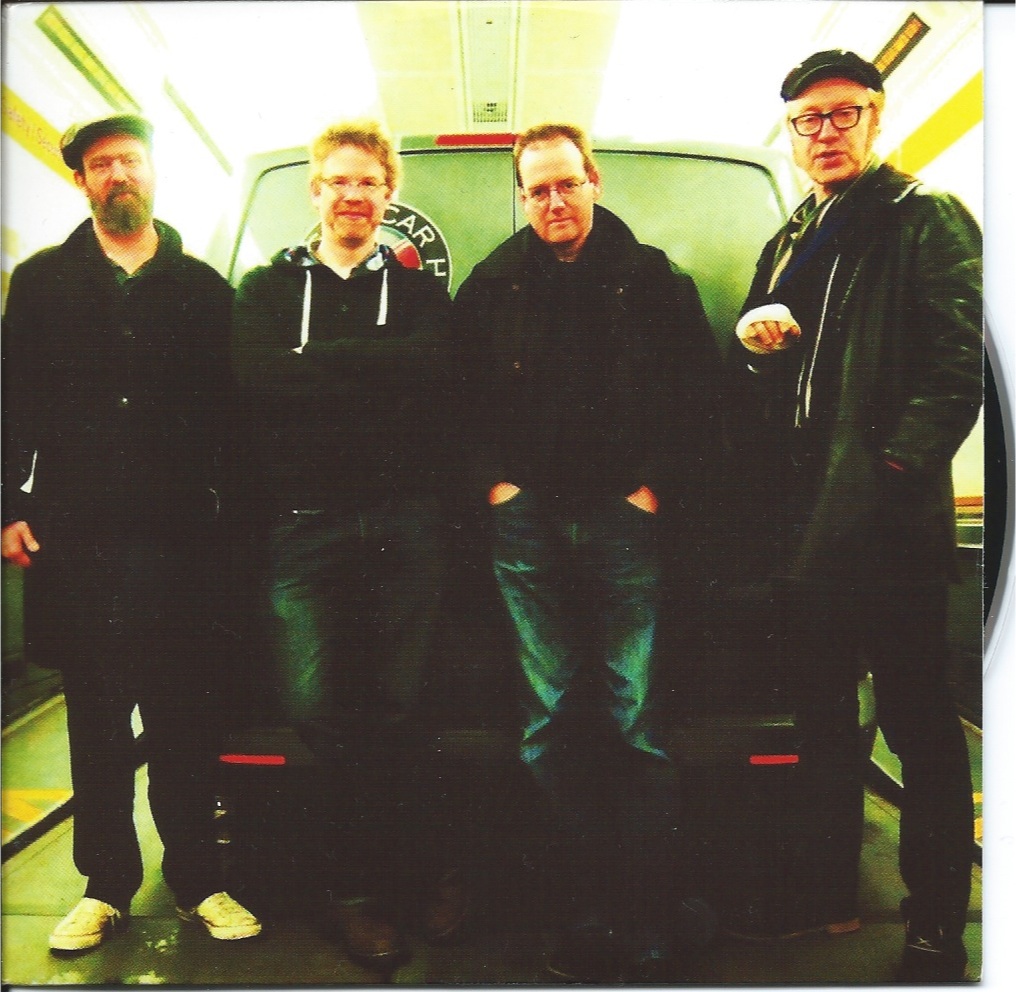
Illustration at right is a scan of the ‘merch’ CD on sale during Mark Eitzel’s current tour: The Konk Sessions, recorded with his touring band in London earlier this year, and credited to The Eitzel Ordeal. Actually there were two merch stalls. The other was laden with novels from the Man Booker prize shortlist, since the Man Booker readings were taking place next door in the larger Queen Elizabeth Hall, which shares a foyer with the Purcell Room. You may or may not be surprised to know that I saw more writers in the audience for Mark Eitzel.
Mistakes in what follows are of course the author’s own, and since this interview took place pre-Crash, in the last days of the George W. Bush presidency, anachronisms are inevitable.
§
Mark Eitzel has been making records and performing with American Music Club since the mid-1980s. The string of albums that have seen him called ‘America’s Greatest Living Lyricist’ include California, Everclear and 2004′s Love Songs for Patriots. Solo outings include The Ugly American and Candy Ass. Start anywhere you want and you’ll find plaintive, soul-bearing and witty songs that have been bracketed as alt.country, americana, and indie, amongst other things, but which exceed attempts at categorisation. What there is is a cussed and contrary artistic streak and an illuminating honesty and insight into the joys and tragedies of human dramas – from the out-and-out elegaic (as in Everclear’s ‘Why Won’t You Stay’) to a moment of fragile optimism occasioned by a visit to a bookshop. Eitzel brings an almost willful ‘outsiderness’ (on stage at the Luminaire he jokes, ‘I’m not like you!’) and his music continues to shock, provoke, surprise and delight.
We meet at the Soho landmark Maison Bertaux, and repair to a quieter corner, chatting randomly en route about my new digital recorder, the UK’s ‘Underage’ movement that in the past year or so has seen gigs and festivals put on by teenagers for teenagers, and Eitzel’s own first attempt-at-a-band – a bunch of prog-rock inspired school friends in Southampton, UK, in the mid-1970s who called themselves Instant Bucephalus (or maybe he was winding me up). The band fell apart after five church hall rehearsals when he discovered punk, reggae and Joan Armatrading.
TW: So how do you write? What’s the process?
I wasn’t kidding about being endlessly lazy. I’ll do everything I can to avoid working, everything. You know, endless, endless, everything else but… Except that I always have a notebook, and I always make notes, and I’m always trying to keep my mind focused on a song. You know I’ll play the song before I leave the house and I’ll play it when I get home, because that keeps it in your head. You kind of wait for those moments when it all kind of sparks. You can’t rely on inspiration but with all these notes you’re kind of working out ‘what is it that this is?’ And it kind of unfolds. You make it up too. Especially when you’re a rhymer. I love that story about Charles Bukowski, who whenever he hated a poet he’d say [disdainfully], ‘Ah, that guy’s just a rhymer.’ And I’m a rhymer!
TW: I always find it interesting how we all still continue to make work; to write songs, write books, against the balance of the odds. It’s an Idler preoccupation – how to wrest your freedoms from The Man and try to sustain a creative life.
Yes, ridiculously against the odds, sometimes. I think it’s interesting how people grow older differently. There’s no morality in it. Most of it’s just habits and physiology. But also it’s a philosophy that keeps you reading and keeps your mind not stultifying into… Listen, testosterone is great, for fucking and making children and going and hunting and coming home, but it’s also great for keeping you home and keeping you hunting and keeping you frozen in this isolated, incoherent male dullness, that I’ve noticed so many people just relax into. You know, great! It’s not a bad thing. It’s normal. But music really comes from enthusiasm.
TW: I read somewhere you said that a piece of music makes the world a better place.
I really think so. Maybe there’s too much of that. Maybe it’s a desperate attempt to band-aid over the fall of the west or something. This is the last days of our golden era, it really is. It’s amazing. There’s so much good stuff happening now. I see bands that I just can’t believe. I mean, talk about prog rock. I’ll go to see some musician’s amazing side-project and there’ll be about 20 people there. And I just think, ‘as the empire falls; all this beautiful art.’
TW: Which empire’s collapsing? Are we talking climate change?
 No, just ‘the West’. I’m sure that China will be a vicious, brutal empire, but it will be the next one. And the EU, if it survives, and it can’t survive unless it learns how to deal with less oil. But I think America won’t survive because it’ll never be able to deal with any of those changes. You know, 30 years of spending more money on prisons than schools have left it kind of over. I’m talking about what so many Americans talk about, the theory of it, but it’s the last remnant of the cold war; a failing cold war power with an increasingly despotic regime.
It’s interesting. I was in Brighton last week, and I’m walking through the streets. Really not wanting to drink because there’s so many people drinking and it was just like saturday night and all these hen party girls with their matching outfits, stumbling around half-naked in the middle of the night, and drunk out of their minds. And everybody is out and I was, you know, it kind of frightens me a little bit. Not because it’s threatening, but more because it makes me feel, ‘Oh, I’ve wasted so much of my life and they’ve wasted so much of their lives. But also, I wish…’ Because it’s so beautiful and anarchic and crazy and great, and in that way frightening to me. And these cops were walking along, these bobbies, and they were smiling at the girls and the girls were being cheeky to them and it was all fun. There was no problem.
But in America everyone is so frightened of the cops. If the girls were being cheeky to [U.S.] cops, they’d be on the ground, handcuffed, and thousands more cops would be called and suddenly it’s a riot. Just because people were partying in the streets, having fun.
In New Orleans it could happen, it happens some of the time in San Francisco. But where else in America? I don’t know, New York, maybe. In the American government there’s just instilled in everybody a fear of the people. A real fear! This leaking ship, trying to stay afloat with fear, and it really frightens me for America. Only 24 per-cent of Americans have a passport. They never leave. They never know that other people are freer than us. Other people are not afraid to speak, they’re not afraid to… I have a little thing on my website about how much I hate Bush. I did it myself. It’s very amateurish, with links to MoveOn.org. It’s kind of lame; middle-aged man style. But I’m kind of afraid of it now, because they’re hiring a private corporation to track people who travel internationally and see what they say and do.
TW: Mapping dissent?
Yes, and it’s not government controlled. It’s a private corporation that has to find results, you know. So you have this weird sort of power, this corporation that’s feeding into government and completely bypassing any supposed rights that we’re supposed to have, because it’s a private corporation.
TW: So maybe in a couple of years they’ll need to look for a new revenue stream, new kind of business model, and they’ve got all this data, so what are they going to do? Sell it, or look at ways to merge it with other databases, with RFID data?
Exactly, so everywhere you go with your drivers licence and your RFID Chip – it’s like driving down the freeway with a helicopter overhead, following you: ‘Oh yeah, you went there yesterday – you went to San Rafael, and you turned down the street, and we saw these other people that we suspect of being Al Qaeda were on the other side of the street …
TW: … and you phoned them.’ They just passed a law here – it was in the papers a week or so ago – that every telecoms company now has to keep a record of every phone call that’s made – cell phones and everything. So that – the argument goes – during criminal investigations they can mine through this vast ocean of data. That’s going to be a reality here.
It’ll be a reality everywhere. Visitors’ irises are scanned when they arrive in the US, but there’s talk of this happening to everyone. And if you don’t have your iris scanned, and you don’t have an RFID chip, then you don’t exist. Or you’re a terrorist. And with the increasing divide between rich and poor in America, it’s really frightening. But I hope I’ll be dead before it all happens.
TW: But you know the expression it only takes two people to think the same thing and you have a conspiracy – and if the technology’s there, it’s going to be used. And like Naomi Klein’s recent book, The Shock Doctrine; how the invasion of Iraq was parceled back to US corporations. It’s already happening.
It’s terrifying. They spent more in a month in Iraq than they’ve ever spent reconstructing New Orleans. The Spike Lee documentary, When the Levees Broke, was amazing – it really made you realise that there are two countries, that everyone in America lives on a knife edge between a bourgeois existence and the street.
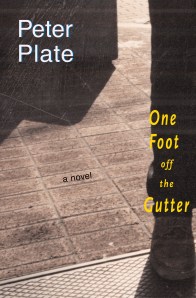 TW: Like the title of that great cop novel by the San Francisco writer Peter Plate: One Foot off the Gutter.
Yes, and there’s nothing in between. Why do we pay taxes? Why have a government? Why call ourselves Americans?
TW: You’re forced to collude. But in spite of that, here we all are making art. There’s a great British writer, Rebecca West. She was writing about history and politics in Europe on the eve of World War II, and she says ‘art is a necessity… a cup into which life can be poured and lifted to the lips and tasted.’ But then she also goes on to say that in dangerous times – like these dangerous times – you’ve got to reach for it, because there’s no other way to save yourself from becoming like them – the ones who inflict death and destruction on the rest of us. And then John Berger says the only way to counter Bush and co is to completely reject the terms of their discourse; to find the voices you want to join.
Yes, I agree, but at the same time I don’t trust artists that don’t address that, that say, ‘I’m completely apolitical, completely uninterested in politics.’ Then I think, OK, then you’re probably an ass-hole, you probably don’t care about anyone else but yourself, you’re probably a narcissistic fool.
TW: So do you go back to an idea like ‘the personal is political’?
You know it’s impossible for me to write anything [overtly] political – because in my private life I’m such a completely lost soul, and I can’t really find a connection between my private life and the political – mostly because I hate political people so much. They always seem one step away from being fascists themselves, but then in America most people don’t even know what the word ‘fascist’ means! So you can’t even use those words.
But OK, personal and political, the dot com boom: commercial spaces in San Fransisco went from being $2 a square foot to being $1600 a square foot, overnight. So all these artists, everyone from hippy candle-makers to recording studios were suddenly gone. I mean who cares really, things evolve, but it was a big part of what made San fransisco interesting. This completely vibrant streeet culture. Not just white artists, all artists. People moved out.
A lot of the people that moved in were like these 20 year old kids getting 6 figure salaries for doing web design for these dotcoms. And they weren’t nice. They were suburban kids that were used to the sense of entitlement. They really resented the street thing. They resented the lack of services: they couldn’t park their fucking Mercedes! And they hated all the old guard artists. And these kids were not shy about saying, ‘Yeah, you had your time and, you know, we have a new revolution which is bringing this information highway.’ And I’m like ‘NO! It’s just a channel for fascism. You’re middle-men, you’re not doing anything, you’re not making anything’
And this one kid said, ‘Well, what do you make?’ So I said, ‘I make songs – I’m a songwriter.’ And he said, ‘Oh RIGHT! One of those! OK so you’re a songwriter, what the fuck do you sell?’ And I said, ‘Well I sell songs.’ And he said, ‘Oh yeah they’re widgets, they’re just widgets – think of it like that, that’s all they are, wallpaper, something to sell.’ And I’m like, ‘Yeah, I get that, but there’s something else, there’s other kinds of value.’ And he’s like, ‘No, there isn’t!’ So I asked him, ‘Have you ever read Rimbaud? Have you ever read anything?’ And he said, ‘Who needs to read? I don’t know who that is and I don’t care!’ And I ended up just picking up this bowl of fish crackers and said, ‘Yeah, here’s your fucking widgets, here are all of your souls!’ And I crushed ‘em and I threw them in his face. It was not my best moment. I felt bad, but it’s that weird thing of, I don’t know, my personal and political don’t always match up…
TW: But there is actually some overtly political stuff on the last couple of albums. The kind of fascist parody on ‘Homeland Pastoral’, and the song ‘Patriot’s Heart’, too.
Well, you know, I’m a gay man and I was in Columbus Ohio a month or two after 9/11, and every other person had an american flag, or a bumper sticker, and you knew they probably didn’t vote, you just have to look at the figures. So how patriotic is that? There’s a right not to vote I guess, but if your’re going to talk about patriotism then vote, support the system. You know I love America, but everyone should vote. Every republican, every democrat, every freak should vote. Change things. The way the system was set up it could have been this incredible thing, a very, very people-based voting system. But suddenly people going to the polls had to have two forms of ID, to prove they could vote. And if you went to a polling station that wasn’t the one you registered at, you couldn’t vote at all. So a lot of people didn’t know, or if they showed up at the wrong polling station, or it moved and they didn’t tell you, or you didn’t read your mail, and you didn’t have your passport and driving licence, then you’re fucked. They disenfranchised millions of voters.
So I was hanging out with this friend of mine and he said look we have to go to this one gay bar because the cops pulled everyone out and photgraphed them, so let’s go! And it’s a male strip club. And I didn’t know this, but in Columbus, Ohio there are eleven of these bars, and they’re all great. All down and dirty, human scale. So all these american flag cars are outside and inside, half of them are in the closet: all these older guys with sweaters and rugs and all their wives and kids at home! I just had the idea that the real Americans, the real patriots were the strippers, doing their thing on the edge and trying to be free. But don’t start me off on the religion-will-destroy-the-world rant!
TW: It was the same in California, a flag on every lawn. But then, I was in NY right after 9/11 and it was different; more a kind of incoherent grief.
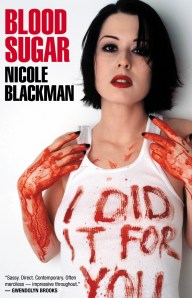 Yes, and Susan Sontag said it best: ‘Let’s by all means grieve together. But let’s not be stupid together.’ [New Yorker, 24 September 2001.] Everyone in New York, all my friends, and I, were totally traumatised. But I have this friend, the poet Nicole Blackman who went down the World Trade Centre and said, ‘How can I help?’ So they took her over to the Stuyvesant girls’ school and the downstairs was going to be a place where they were going to feed all the firemen who were working in the pit, you know, Ground Zero. And it was just piles of boxes. There was no-one to organise this. So Nicole said, ‘Right! I’ll do it!’ And she was there for 2 months, 24-hours a day. The firemen started calling her ‘mama’, and she’s this diminutive young girl, not what the firemen would usually love, but it’s New York City where… God! What a great place! The best of America. It’s such a great New York story: a lower east side art chick suddenly is this great hero. And it’s so New York that they would let her.
TW: I’m not religious in any way, not at all, but I remember thinking, well, OK, George W Bush, you’re supposedly a Christian, so what’s the first thing you could have said? You know: ‘I Forgive them.’
Yeah, ‘I forgive them. Now let’s all do our best. Let’s be the best we can be.’ How inspiring would that have been? But I was having a conversation with a British man, who loves America, and he said, ‘How come America’s so diminished now?’ And actually it starts right there, if our response to 9/11 is nothing but stupid-ass, dumb-ass revenge!
TW: But here we are hoping for something better.
Well, yes, but the difference between us is that you have kids. You have to hope for something better. Me, I can just revel in my knowledge of the coming apocalypse.
§
 Spike Lee, When the Levees Broke: A Requiem in Four Acts, 3 DVD set (HBO), £25.99
Peter Plate, One Foot off the Gutter (Seven Stories Press), £8.99
Naomi Klein, The Shock Doctrine: The Rise of Disaster Capitalism (Allen Lane), £25.00
Arthur Rimbaud, Selected Poems and Letters (Penguin Classics), £10.99
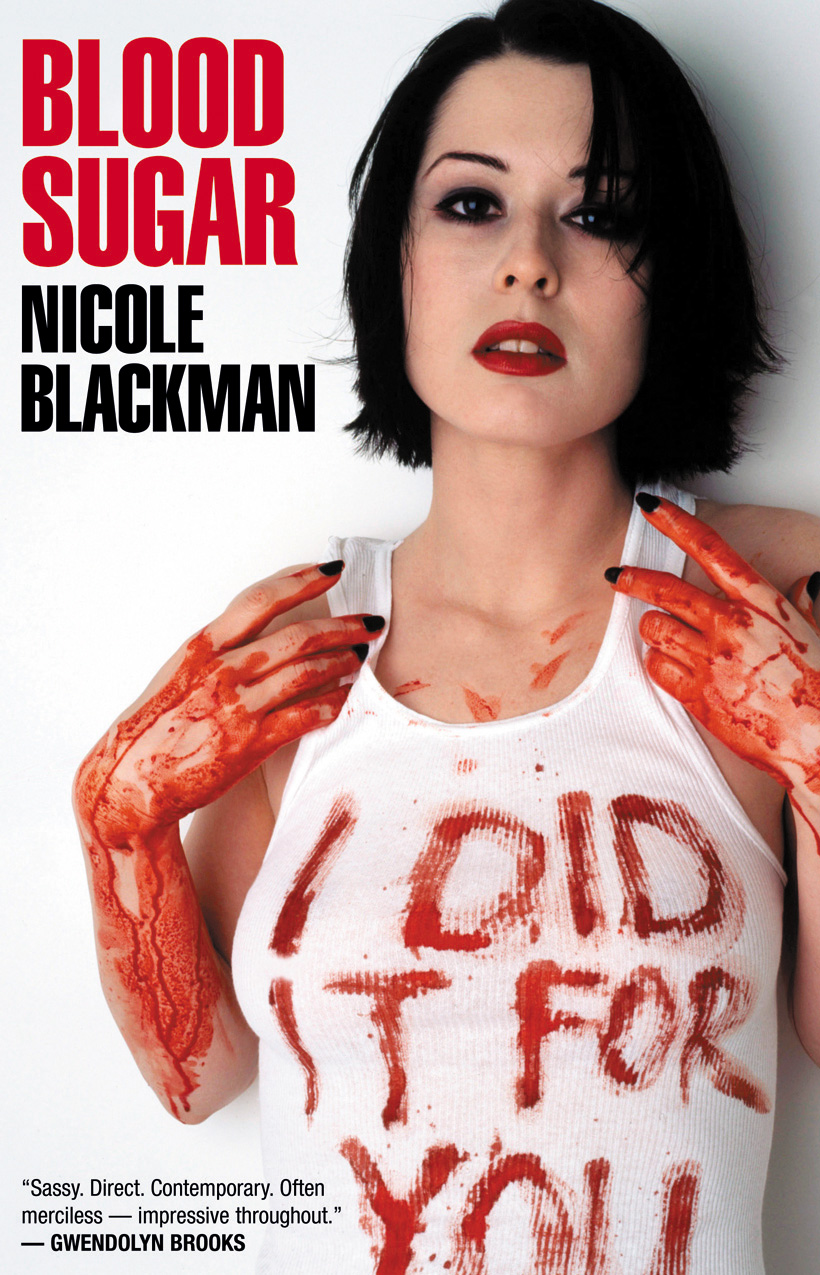
Nicole Blackman, Blood Sugar (Akashic Books), £9.99
Rebecca West, Black Lamb and Grey Falcon (Canongate), £14.99
§
Beautiful and Anarchic and Crazy and Great: Tony White interviews Mark Eitzel, originally appeared in the Idler #41, May 2008.
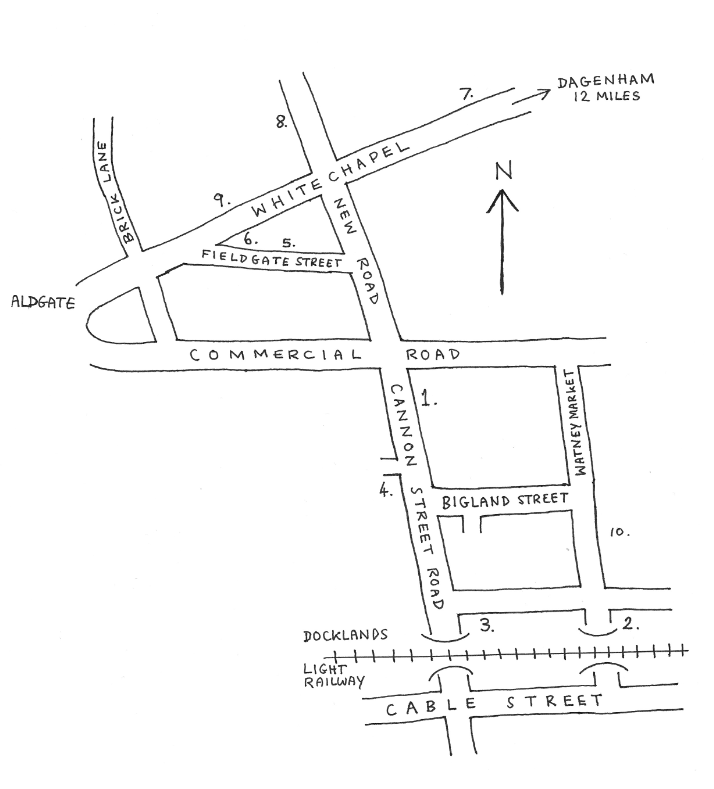 These rough maps were made for the Croatian translation of my novel Foxy-T.
 This was part of a conversation with publisher AGM and translator Borivoj Radaković about whether readers in Croatia might find it useful to see where the novel’s Whitechapel and Shadwell locations could be found on a map of London, and in relation to the familiar line of the Thames. The maps were not intended for publication in this form, but to act as guides from which finished maps might be drawn.

















 Piece of Paper Press & tonywhite.london
You must be logged in to post a comment.