Guardian Masterclasses and decent pizza lunches

News just in… I’m one of three writers giving a Masterclass for the Guardian newspaper on 12 September, called Reinventing Fiction. The session has been put together by fellow author Kate Pullinger. Here is the blurb:

What happens when you put text on a screen? What do the current transformations in reading, writing, and publishing, mean to us as readers, writers, and artists? The new technologies allow us to create stories that mix media with text, stories that utilize the vast potential that the new technologies give us for creating hybrid forms, and stories that find new ways to connect with readers. Showcasing a mix of new approaches, this is an exceptional opportunity to spend an evening with writers who operate at the cutting edge of where fiction meets new technology. This event will consist of a series of three presentations and a discussion with guest speakers Tim Wright and Tony White.

I talked to Kate Pullinger about some of these issues last year. You can read that interview here.

In recent years it has been striking how many creative writing classes and courses are increasingly being offered not just by Universities, but also by different parts of the publishing industry. I know that as a mid-career author I’m not the target market, but when I see some such opportunities advertised they seem almost prohibitively expensive, with unpublished writers frequently being asked to shell out hundreds or even thousands of pounds to take part. One way to look at this is perhaps to say that at last the slush pile has been monetised. Another, that the participants obviously and rightly enjoy doing them, that they get all kinds of value for their money in terms of feedback and contacts, access to publishers and agents, not to mention an audience, and precious time to write. But looking at some of these only recently I joked that I simply couldn’t afford to be an unpublished writer now.

It is almost the antithesis of a gag once offered by the novelist Stewart Home. When someone asked him what advice he might have to give the aspiring writer, he simply said, ‘Learn to eat less!’

This is why the recent short story workshops I gave in Bristol as part of my Missorts public art project — as well as the workshops I did for the Science Museum, when I was writer in residence there — were free.

In light of all this then, I’m delighted to be giving this Guardian Masterclass session with Kate Pullinger and Tim Wright in September, and doubly pleased to note that these sessions are priced more at the level of a decent pizza lunch for two than a month in a villa in Tuscany!

§

Reinventing fiction with Kate Pullinger: Spend an evening with writers who operate at the cutting edge of where fiction meets new technology

Date: Wednesday 12 September
Timings: 6.30pm- 9.30pm
Location: The Guardian, 90 York Way, King’s Cross, London, N1 9GU
Maximum attendees: 100
Price: £39 (inclusive of VAT and booking fees)

Click here for speaker biogs and to book a place.

Dicky Star… at Port Eliot

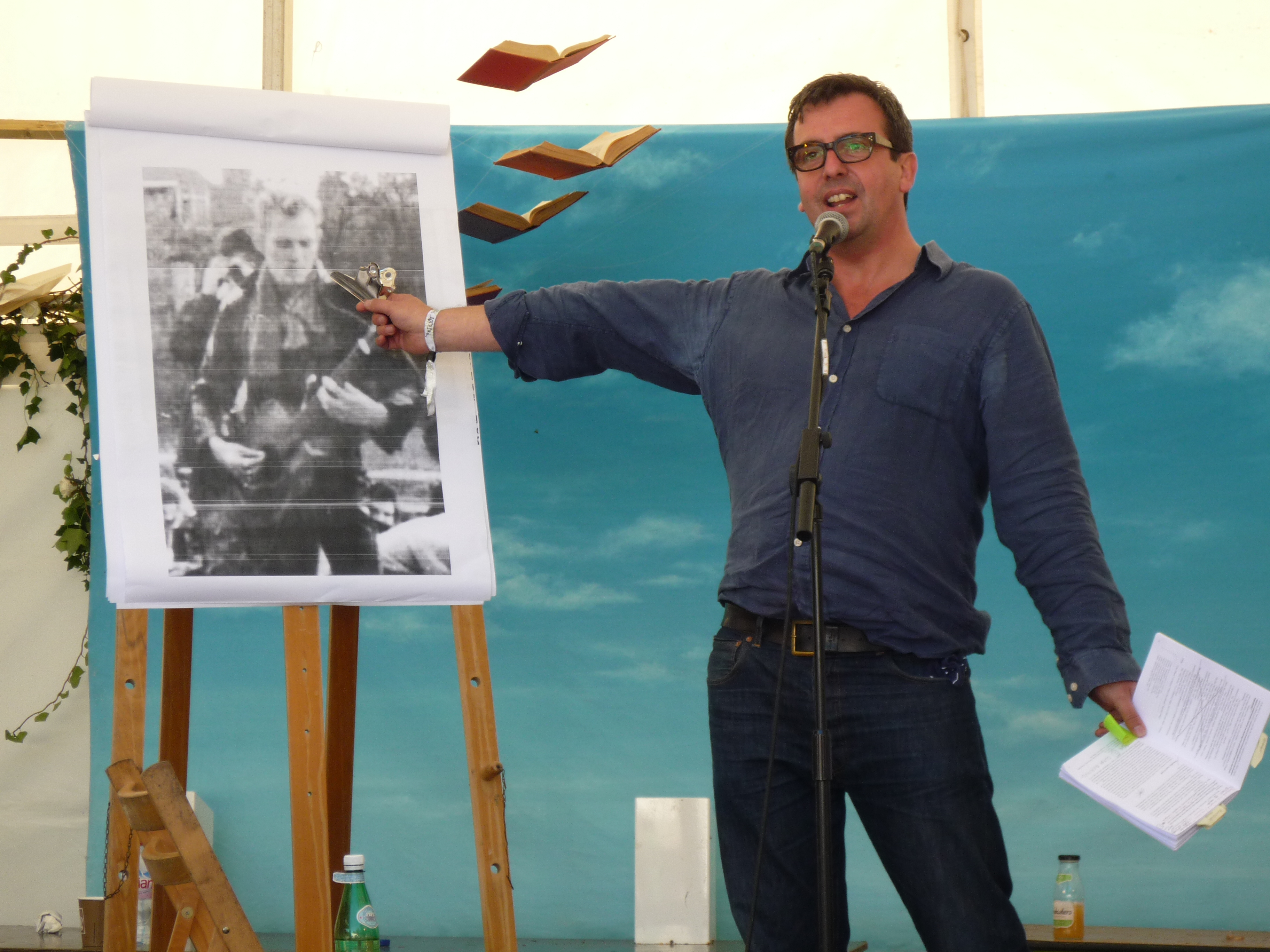
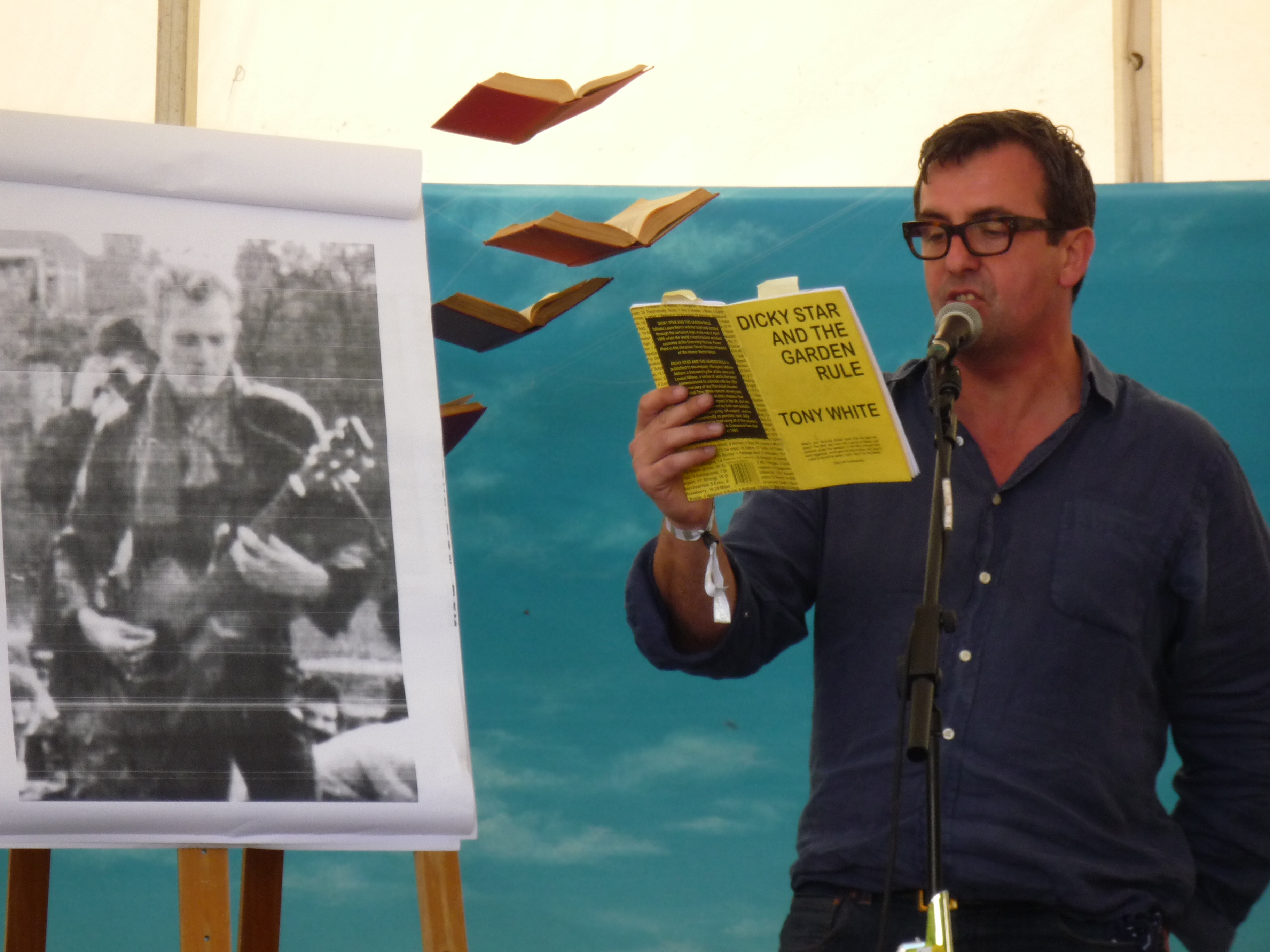
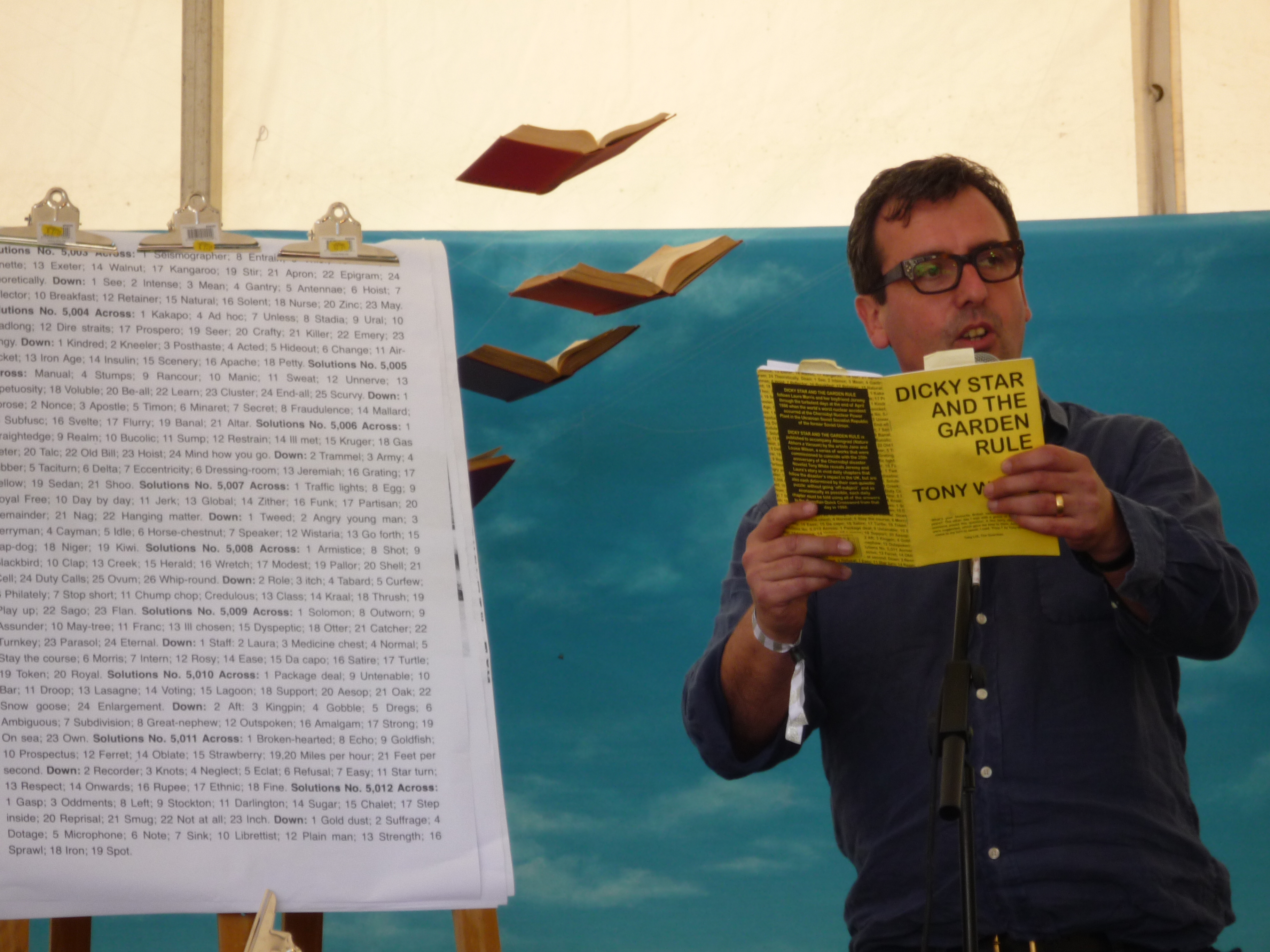
Reading from my specially commissioned novella Dicky Star and the Garden Rule to the generous and attentive audience gathered at the Five Dials stage at Port Eliot was a delight. It was a great opportunity too, to talk in more detail not only about the book itself and the Chernobyl disaster, but also about the ‘interwar period’* generally, the Clash busking tour of May 1985 and the Guardian Quick Crossword.

It was too bright to project slides — even using my prized old analogue warhorse, the justly and widely celebrated Kodak Carousel of yore — so instead I had some of the images printed up to flipchart size. Here are some fab photos of the gig by Sarah Such.

There will be more Dicky Star and the Garden Rule events after the summer break. Please check my events page or your local listings for details. I like giving readings from my fiction, and try to do this as often as I can, but if — as chances are — I’m not appearing at a literary festival or event near you, don’t moan at me, moan at the organisers!

If you or they want a taster of how these readings go, here is a short video from my gig at the Free Word Centre, London.

A word of warning: I may make this look easy, but devising a readings-based set for an outdoor festival around the use of flipcharts, with the concomitant need to carry an ungainly and fragile bundle of A1 paper to and around said festival in potentially volatile weather conditions and to improvise a flipchart stand with extra-strong bulldog clips during a two-minute turnaround is dangerous and may pose risks to your long-term well-being so should not be attempted by the inexperienced writer.

You can buy Dicky Star and the Garden Rule direct from the distributor Cornerhouse.

* More about this ‘interwar period’ anon.

Dicky Star… live

Forma have just released this short clip of me reading from Dicky Star and the garden rule at the book’s launch at the Free Word Centre, London. A longer video — including more reading and some of my conversation with the accomplished and ever erudite writer and broadcaster Ken Hollings — will be released by Forma later in the year.

I’ll be reading from Dicky Star… next on the Five Dials stage at the Port Eliot festival on Sunday 22 July at 4:15. You can download a PDF of the day-by-day timetable for the festival here.

Tony White reads from Dicky Star and the garden rule at the Free Word Centre, London, 26 April 2012. From Forma Arts & Media on Vimeo.

Anywhere but nowhere

A story of mine entitled ‘The Beatification of John C. Yoo’ is published this week as part of the Resident Thinker programme for artist Alex Hartley’s Nowhereisland.

Here is what it says about the 52 Resident Thinkers on the Nowhereisland site:

From the moment the expedition team set sail to the Arctic in September 2011 until the final weekend of the Cultural Olympiad in September 2012, Nowhereisland will have a different Resident Thinker each week. Our 52 Resident Thinkers will be drawn from environmentalism to peace activism, broadcasting to stand-up comedy, sustainable farming to human rights. Each week’s letter will be the focus of live public discussion here online and you can follow previous conversations in response to previous thinkers here.

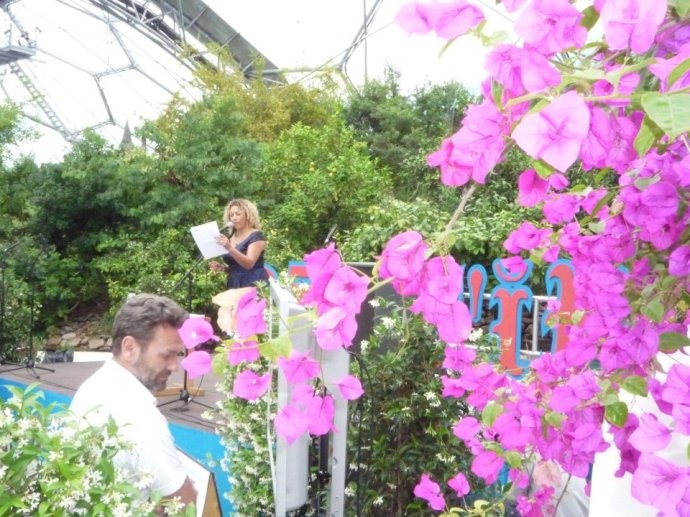
As part of all this, the poet Salena Godden and I traveled down to the Eden Project in Cornwall to read in the verdant splendour of the Eden Project’s Biotik stage. The gig was part of The Eden Sessions arts and music programme. It was great fun to share a gig with Salena of course, and the lush surroundings made this one of the more surreal venues I’ve read at over the years. Sweat dripped amidst the citrus trees and sunflowers, while above our heads swallows darted and swerved beneath the giant honeycomb structures of the geodesic dome, but the artificially stabilised climate and the raised temperature of Eden’s Mediterranean Biome were in marked contrast to the extreme weather that had been hitting much of the UK that same day, the widespread flooding caused by which was all too evident from the train the next day.

‘The Beatification of John C. Yoo’ is an extract from a larger work, which draws on research begun when I was writer in residence at the Science Museum, London, including extensive interviews with contemporary climate scientists at the Met Office Hadley Centre, Open University and the British Antarctic Survey. As such it was not written especially for Nowhereisland, but it seemed an apt contribution to what has become a wide-ranging discussion that over the past forty-three weeks — or indeed since Alex Hartley first set foot in 2004 on an uncharted island that had been exposed by a retreating glacier off the coast of Norway — has explored questions of climate change, human rights, migration and national vs international interests, policies and jurisdictions. Consequently I am delighted to see my story published for the first time in that context.

Click-through the image (left) or here to read the full text version of ‘The Beatification of John C. Yoo.’

As you will see, comments on Resident Thinker pieces are welcomed, so if you do read my piece — or indeed those of other Resident Thinkers such as artist and musician Yoko Ono, exiled journalist Forward Maisokwadzo and Eden Project co-founder Tim Smit — do please feel free to contribute to these discussions. I look forward to hearing what people think.

Here is the text of a short explanatory footnote which gives some further background to ‘The Beatification of John C. Yoo’:

This text is derived for satirical purposes from then US Assistant Deputy Attorney General John C. Yoo’s memo to the US Department of Defense of 14 March 2003, comprising an 81 page legal justification and argument for the legitimacy of US armed forces’ and secret services’ use of torture against non-US nationals during the so-called ‘war on terror.’ It was de-classified and reproduced around the world in 2008. The text above was produced by redacting around 99% of Yoo’s memo to create a series of simple anti-torture statements (in strict order of the appearance of their constituent parts in his original text and without any rewriting or insertions, this extends to capitalisations, italics, spacing and punctuation, which are all Yoo’s own) in repudiation of his own chilling argument to the contrary.

§

Sharp-eyed readers will recognise that the title of this post is taken from the title of a great song. I know K.C. White’s reggae version best, but here is the original recording by Gene Chandler and Barbara Acklin from 1968.

Missorts #1 — short story workshops and more

Information is now up about Missorts, my new fiction and public art project for Bristol, commissioned by Situations for Bristol City Council. Missorts will be developed through short story workshops inspired by Bristol’s radical literary heritage and reflecting the past and present of the Portwall and Redcliffe areas of the city. Here’s the blurb:

Missorts takes account of the transient nature of the area and the diversity of writings, objects and architectures that are found there. The project will contribute its own set of new ideas to the site: a series of short stories which will be published as part of a street-level mobile app and interventions edited by Tony White for Redcliffe Way. The project will launch in November 2012. 

I love writing short stories, and I’ve edited and published a fair few by other people over the years too, whether in the anthologies I’ve edited, for the Idler, or with Piece of Paper Press, and some great writers among them: Steve Aylett, Stewart Home, Nicholas Blincoe, Stella Duffy, Victor Headley, Tim Etchells, Billy Childish, Michael Moorcock and many, many more. I’ve also devised some short story workshops that have been offered to all kinds of writers in recent years, ranging from the workshops I developed when I was writer in residence at the Science Museum in London, to those for architecture postgraduates at the UCL Bartlett School of Architecture and at Portsmouth University. Of course I’ll be bringing all of that experience with me to inform the process in Bristol, but Missorts is also an opportunity to explore the possibilities of publishing new fiction in a new way, as part of a public art project, and using new technology to do new things. I’ll blog more on this aspect of the project as it progresses.

Right now, the most important thing to say is that at the heart of the Missorts project are a series of free short story workshops that I’m running, beginning on 19 and 22 June at Bristol Record Office, which will lead to publication of selected stories and are open to anyone over 18. We’re spreading the word through writers’ groups and bookshops, by e-flyer and leaflet, looking for writers who might be interested in taking part and working with me to write one or more new short stories that could be published as part of Missorts. Places are limited of course — there is a registration/application form on the Situations website.

Panel beating

This Friday 8 June I’ll be speaking at The Literary Conference: Writing in a Digital Age. Here’s the blurb:

an up-to-the-minute conference to make sense of the many possibilities open to writers today, with practical sessions, workshops, case studies, working examples, debates and networking. […] The discussions will explore the key issues facing writers, such as making and selling ebooks, choosing to self-publish or go via traditional routes, an exploration of the emerging international markets, how technology changes literary forms, social media and other promotional tools.

The panel I’m part of has been put together by Sophie Rochester of the excellent The Literary Platform, which if you don’t know it is, ‘a free online resource dedicated to showcasing projects experimenting with literature and technology,’ and well worth checking out. Here’s the blurb for our panel, which is at 12:15 on Friday:

What does new technology mean for the art of storytelling? This session, curated in association with The Literary Platform, gets to the bottom of how much writers should factor in other platforms and, importantly, the reader when constructing their stories. It will look at how traditional writing is changing, and help inspire writers to develop their skills around new approaches to storytelling.

Among other things, Sophie has asked me to talk about Ivy4evr, my collaboration with the brilliant Blast Theory for Channel 4.

§

The Literary Conference: Writing in a Digital Age
8th June – 9th June 2012
Free Word Centre, 60 Farringdon Road, London EC1R 3GA

Publication pre-history

Here is a link to a recent interview that I gave to Richard Marshall (right) of 3:am Magazine and which was just published. We met up in a pub on the Thames on a sunny day in April to talk about Dicky Star and the garden rule, my specially commissioned novella published to accompany a series of new works by the artists Jane and Louise Wilson. But first we spoke about the Balkans, about the short story anthology Croatian Nights that I co-edited with Borivoj Radaković and Matt Thorne, my non-fiction work Another Fool in the Balkans, and a particular strand among my short stories published since 2005:

perhaps a dozen, which again are not collected but were published in small editions here and there, and which began with my own short story for Croatian Nights – ‘Gobbledegook’ – which applied the cut up technique to transcripts of the Milošević trial. I was reading these transcripts, and found myself drawn to the linguistic and performative texture of the proceedings as well as what was being discussed, the bigger story. Glitches in translation and corrections to pagination. Points in the proceedings where the defendant was dissembling, wasting time or pretending the equipment was broken. Complaining about his headphones. Places where the proceedings were breaking down.
 
3:AM: Why were you reading this stuff?
 
TW: Because it is important. Here is a body of writing that is being produced by the ICTY, the International Criminal Tribunal for the Former Yugoslavia, which is concerned with understanding the creation of criminal fascist states in contemporary Europe and the commission of war crimes and genocide. But this body of work – the evidence and the proceedings – is almost unimaginably vast. There are literally hundreds of thousands of pages of transcripts of just the Milošević trial alone, and you can multiply that by all the other trials that are happening and see that there exists this vast literature that is published but largely unread by anyone outside of the proceedings, unless scholars or academics. It’s a huge archive but largely ignored. Yet to me it’s one of the most significant bodies of writing that has been produced in the last decade and it seems imperative to engage with this, to open it up, to read it and draw attention to it. However, because I’m a writer of course I engage with it through fiction…

In the interview we traced the networks that produced those books, the short stories and various related activities back to the early 1990s. Publication pre-history for me, in the sense that my fiction was first published in 1995. We briefly discussed my work with the artist Gordana Stanišić, whose untitled, month-long walking piece I commissioned for The Showroom gallery and which took place during May 1994. I have written more extensively about Stanišić’s work in Another Fool in the Balkans, but interestingly I see that copies of the small publication produced to accompany Stanišić’s live art work — which I’d thought long sold-out — are still available to buy from The Showroom.

Here are a couple of photographs of that work taken by Hugo Glendinning.

Jeremy, ill — the afterword from Dicky Star and the garden rule

My new work of fiction, Dicky Star and the garden rule is published by Forma on 26 April with a launch event at the Free Word Centre in London. Here is the text of a short afterword that is included in both the print and ebook editions, which discusses some aspects of the story’s relationship to the work of the artists Jane and Louise Wilson.

§

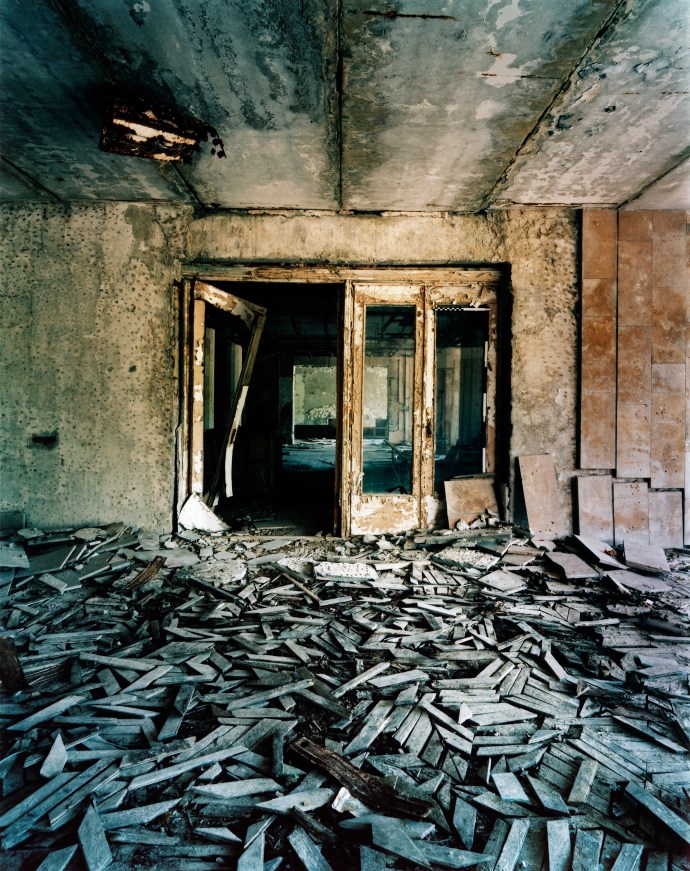
Dicky Star and the garden rule was commissioned alongside and to form a critical response to the remarkable body of research and creative works currently being produced and exhibited by the artists Jane and Louise Wilson, who themselves are responding to and investigating the Chernobyl disaster of 1986 for a major commission and series of exhibitions that began at the John Hansard Gallery, Southampton in 2011 and continues at Dundee Contemporary Arts and the Whitworth Art Gallery, University of Manchester through 2012.

The story occupies the Chernobyl time-line, from 26 April 1986 when the accident occurred, until 7 May when reports of the true scale of the disaster were printed in UK newspapers following the Kremlin press conference of the previous day. Rather than work with Jane and Louise in Ukraine or to have drawn too heavily upon the unique interviews and testimonies that they have been collecting in the course of their own research, it seemed pertinent to explore, in a work of fiction, the same events from a UK perspective and using contemporary print media as my primary source.

A metaphor for this approach might be that of the scientific control. In an experiment – e.g. one designed to test the effects of a particular drug – the control is of course the experimental sample that remains untreated or subject only to some standard or pre-existing variable or attribute in contrast to, or to provide a point of comparison with the main, treated sample.

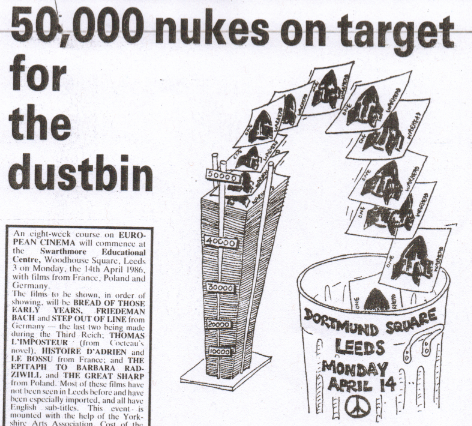
My own research draws on two main sources. Firstly, the Leeds Other Paper archive, which is held in the local and family history section of Leeds Central Library. LOP was an independent, alternative left-wing newspaper published between 1974 and 1994 in that city, where I lived during the period in question. Secondly, archive copies of the Guardian newspaper held in the British Library’s national newspaper collection at Colindale, London.

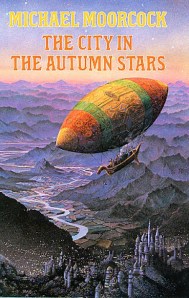
I am also indebted, as ever, to the writings of Michael Moorcock. As noted by a character in the text, the Guardian book page (singular) of Thursday 1 May 1986 includes a review by Robert Nye of a then new Michael Moorcock novel, The City in the Autumn Stars. This is the sequel to an earlier novel by Moorcock, 1981’s The Warhound and the World’s Pain, in whose pages my character Jeremy finds what seem like eerie predictions of the Chernobyl disaster. These few short and prophetic-seeming passages are quoted here (on pages 18, 19 and 43) exactly as found in Michael Moorcock’s work. (Further bibliographical information in ‘Notes’ below.)

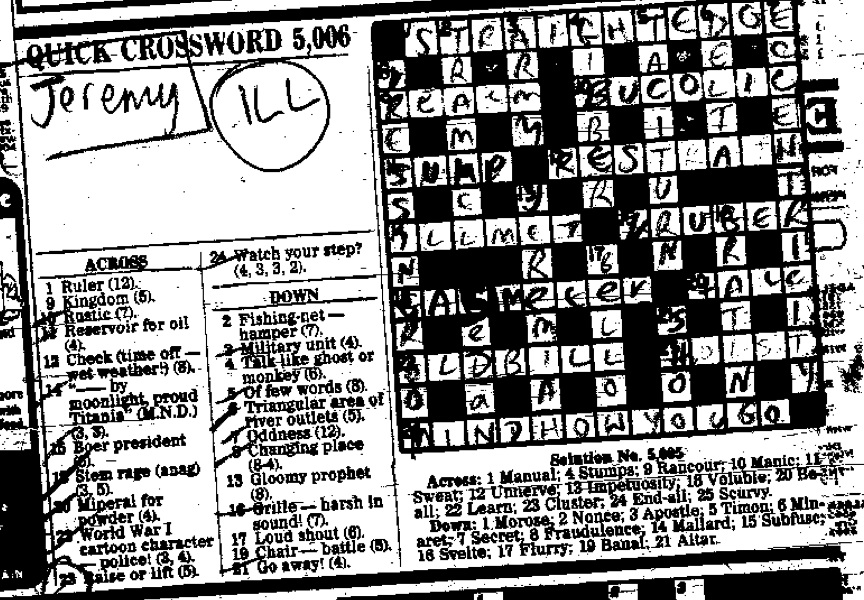
Alongside the LOP’s prior anti-nuclear content, its critical stance and its notable dissemination of accurate scientific information about risks posed by ‘the cloud’ (as the plume of Chernobyl fallout was popularly referred to at the time), and the Guardian’s own extensive coverage of the disaster, I was particularly drawn to the then broadsheet’s back pages, to Steve Bell’s memorable cartoons of radioactive sheep and to the two crosswords, especially the Quick Crossword which I had been fond of doing at the time.

I was mindful of Jane and Louise Wilson’s eloquent deployment in the large-format photographic works comprising Atomgrad (Nature Abhors a Vacuum) of an actual rather than metaphorical yardstick* – a legacy of their work in the Stanley Kubrick archive – and thinking too of the experimental literary strategies and constraints used by the French writer and novelist Georges Perec (1936-1982) and the other members of Oulipo, the Ouvroir de littérature potentielle. During the later years of his life, Perec composed a weekly crossword for the news magazine Le Point. Might the Guardian crosswords themselves, I wondered, synthesise both of these imperitives? Could they be used to provide meter (in a loosely poetic sense) and measure, as well as a useful literary constraint, a mandated vocabulary that might form in effect the tightly controlled variable needed for a literary if not a scientific control? Dicky Star and the garden rule was written to test that proposition.

In following the Chernobyl timeline then, this story is structured as a series of daily chapters running from 26 April to 7 May 1986 (Guardian days only, so excluding Sundays), the course of each of which (including the names of the two main characters) was determined by its own puzzle: that without going ‘off subject’ and as economically as possible it had to incorporate every answer to that day’s Quick Crossword, each of which I completed before beginning to write.

The title is itself adapted from a speculative, crossword-style clue of my own, which also relates to these works of Jane and Louise Wilson and might alternatively be expressed as follows: Dicky Star (anag) – garden rule? (9).

Tony White, Oxford, January 2012

* Even at this resolution, if you look closely at the photograph (above, right) by Jane and Louise Wilson you can see that a yardstick with its alternating black and white pattern has been carefully placed in the upper and right-hand portion of the glassless centre-light (tight up against the ‘hanging stile’ and beneath the ‘top rail’) in the right-hand door.

§

Dicky Star and the garden rule launch, 26 April 2012, 18:30 (Doors 18:00). Freeword Centre, 60 Farringdon Road, London, EC1R 3GA. RSVP essential. Please email Divya Thaker on dt@forma.org.uk or +44 (0)207 456 7820.

For updates and further details about forthcoming exhibitions of Atomgrad (Nature Abhors a Vacuum) by Jane and Louise Wilson follow Forma Arts and Media Ltd.

Launch of Dicky Star and the garden rule

I’m really looking forward to the launch of Dicky Star and the garden rule. Here is the info from the Forma website. Come and join us. All are welcome. RSVP info below.

26 April 2012
18:30 (Doors 18:00)
Freeword Centre
60 Farringdon Road
London, EC1R 3GA

Forma is delighted to announce a launch event to celebrate the publication of a specially commissioned work of fiction by Tony White, author of the novel Foxy-T (Faber and Faber).

Dicky Star and the garden rule follows young couple Laura Morris and her boyfriend Jeremy through the turbulent days at the end of April 1986 when the world’s worst nuclear accident occurred at the Chernobyl nuclear power plant in the Ukrainian Soviet Socialist Republic of the former Soviet Union.

Dicky Star and the garden rule is published to accompany Atomgrad (Nature Abhors a Vacuum) by artists Jane and Louise Wilson, a series of works commissioned by Forma to reflect on the 25th anniversary of the Chernobyl disaster. Novelist Tony White reveals Jeremy and Laura’s story in vivid daily chapters that follow the disaster’s impact in the UK, but are also each determined by their own quixotic puzzle: each daily chapter must be told using all of the answers to the Guardian Quick Crossword from that day in 1986.

Tony White will read excerpts from the book and be joined in conversation by writer and broadcaster Ken Hollings. Followed by drinks reception.

RSVP essential. Please email Divya Thaker on dt@forma.org.uk or +44 (0)207 456 7820.