‘A real reconfiguration’ – an interview with the writer Kate Pullinger

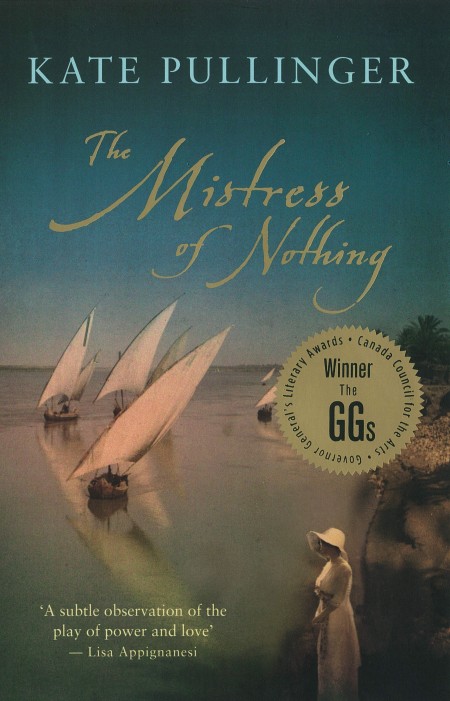
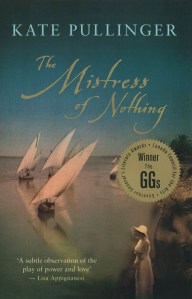
I went to the British Library the other day for a workshop — a small, invited group discussion — about digital transformations in and of literature and the publishing industry. The event was convened by novelist Kate Pullinger (whose 2009 novel, The Mistress of Nothing won the Governor General’s Literary Award in Canada) together with Professor Janis Jefferies and Dr Sarah Kember, both of Goldsmiths. The workshop might lead to further conversations and research, which would be great because while there are currently quite a lot of events discussing these types of issues, the panels are almost always weighted towards publishers and it is not so often that writers are actually invited to speak, something that Kate herself has blogged about recently. This always feels like an oversight because writers can be quite active in exploring the kinds of innovation that new publishing models offer and some are pushing just as hard at boundaries of platform and format and engagements with readers to explore and shape what the futures of storytelling and publishing might be.

Maybe it is my experience of working at the Arts Council which has taught me that it is often artists – in the broadest sense – who lead the way in discovering and exploring the possibilities and implications of new media, and that it is a fundamental challenge for the slower-moving organisations and agencies, whether publishers or funders, to try to keep up. As a writer myself I’ve also been aware that although one might sign over ebook rights in a novel this doesn’t mean a publisher can or will do anything with those rights, and that one needs to use any opportunity to experiment with new ways of reaching readers. You can’t just sit back and wait for the next book to come out and see what a publisher might do for you at that point, as if it is something in which you have no agency yourself.

I met up with Kate Pullinger back in the spring to discuss some of these ideas. We’d both just been to The Story conference at London’s Conway Hall, so I started off by asking what impressions Kate had taken away from the event…

§

‘I guess I came away with that it was a good day, because it goes in so many directions at the same time. And also unlike Book Camp and a huge number of these day-long conferences I go to, it was about story, it wasn’t about publishing, which I suppose they so often are. But also it was a slightly frustrating day, which I suppose is inevitable: there are bits that you want more of and bits that you want less of, and that’s quite subjective. I suppose the two talks that have lingered with me for the longest is the Adam Curtis which wound everybody up, but in an interesting way.’

For the benefit of readers who weren’t at The Story conference, Curtis had been previewing some of the ideas from his then still forthcoming documentary series All Watched Over by Machines of Loving Grace, subsequently broadcast on TV in the UK by BBC 2 in May 2011. His suggestion in Conway Hall, that we’re all unaware of the power structures behind the internet, social media and the web 2.0, or that artists are somehow failing to deal with this, was treated as a revelation by some and as incredibly naïve by others; myself included. Speak for yourself, mate! I’d thought. Where have you been for the past two decades? Haven’t you heard of Heath Bunting?
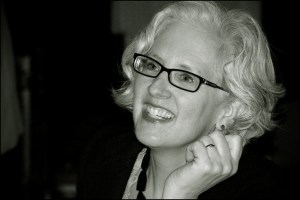
‘It definitely provoked a divided response,’ says Kate. ‘But his work always makes me feel both those things. I always think, “Oh you’re a total lunatic,” but also I think, “Oh you’re absolutely right!” And then the other presentation that I thought was really revealing was Phil Gyford’s talk about his The Diary of Samuel Pepys online project, because of the extraordinary, multi-platform delivery that he’s gone for with that. And I was really interested in the whole business of the tweeting and all these people around the world tweeting back to him in character. Did you hear that one? And it’s been going on for years, and it’s got all these people passionately involved with it, which is extremely difficult to achieve. And I think he has done that in this slow methodical way but also that he’s been very clever in the way he’s added new platforms and new aspects to the project from it’s humble beginnings as a web-site, and he has taken his audience with him and found new audiences at the same time. Because I do think that that is the hardest thing to do. You know, you can attract a lot of attention by making a big splash, but then to actually keep it and keep it growing in a way that isn’t flashy is a real achievement.’

The network of relationships and conversations that have built up around The Diary of Samuel Pepys reflects something that’s also happened in a really big way with Inanimate Alice, a transmedia project, a kind of digital novel, that Kate and co-writer Chris Joseph have written for creator and producer Ian Harper. Kate tells me that the fourth and last episode of Inanimate Alice was published in around 2008, but that since then people have been making their own follow-ups.

‘This is largely pedagogically driven,’ she suggests. ‘Which was not anticipated, but there are the four episodes that we’ve published and then there is this absolute plethora of episode fives that have been created all over the world, usually in educational settings, but those settings range from primary secondary to higher education, as well as lots of people using it with learning disabled kids. So Inanimate Alice has got this very active life of its own which was definitely unanticipated initially, but from fairly early on while we were creating the episodes it became apparent that teachers were using it. And early on, sort of around the episode two stage, Ian commissioned a colleague of mine at De Montfort University to create some lesson plans that could be used in classrooms and were freely available to download, and which turned out to be exactly what teachers wanted. So that little bit of encouragement has led on to this really very large and active pedagogical community growing up around the project. The Facebook page and the twitter feed are just remarkable!’

So apart from that initial small investment in the lesson plans to support the work, this is all happening without additional funding? People are putting their own enthusiasms and passions into it?

‘Yes, exactly! At the moment there’s a librarian in the US called Lara Fleming who is very active in promoting it as a tool for digital literacy, and there are a couple of teachers in Scotland and a couple of educationalists in Australia and they’ve sort of formed a bit of an ad hoc team, and again with no funding, and that’s been very fascinating.’

There is a pause while one of Kate’s children texts her: ‘If they’re asking me a question I’d better answer.’ Then: ‘I wished I’d been at the first Story conference,’ she says, ‘because were there any writers this year?’

Well, there was Graham Linehan talking about his writing process. And Matt Adams of Blast Theory opened with the presentation about Ivy4evr, the interactive SMS drama we’d made for Channel 4 and which I’d written, but no you’re right, last year there was Tim Etchells, Cory Doctorow and myself on stage, so there were fewer writers in that sense.

‘Oh yeah, Matt explained Ivy4evr really well,’ says Kate. ‘The “story ladder” idea – which is a great term for that type of storytelling. He explained it really clearly.’

I always joke that I’m more intelligent when I’m in the same room as Blast Theory, but the collaboration really forced me to look at writing more closely and in a different way than I had before, and actually the kinds of notation that we had to develop to understand and work with the forms of interactivity at the heart of the project really were mind-expanding! Also fascinating were the huge amounts of data and feedback that were generated and we are able to access and draw upon at every stage of every exchange between the players and ‘Ivy’.

‘We were sitting there listening,’ says Kate, ‘Sue Thomas and I, and saying, “There has to be some kind of AI [artificial intelligence] here,” but Matt didn’t really discuss that aspect of the project.’

Maybe you’re right, I say, because thinking about it I noticed that people reviewing the presentation – who hadn’t played Ivy4evr – were saying things like, ‘Ivy4evr looks like it runs on rails‘, and I was thinking NO it doesn’t! It’s so interactive, that’s why it took so bloody long to write. You know, the script was this vast spreadsheet of different fields and fragments and possibilities – all of it completely automated – and what it absolutely was not was simply a succession of decision points that led you down different, branching pathways like those old style, ‘now-turn-to-page-36′, so-called interactive novels. Sometimes the interactivity might come from the engine/’Ivy’, remembering profile data about you, or remembering something that you’d said a few messages back, but mostly it was from the engine reading and parsing and understanding what you were saying back to her! And the script had to be open enough to accommodate the assemblage of messages composed from many different sources but which each still needed to feel like a ‘discrete’ unit of communication. However it was composed, each message had to function and be understood as a single, coherent text message of 160 characters that had been written by one person, by Ivy, in response to the user’s last message.

‘Is that project still “live”?’ Kate asks. ‘Will it have new iterations?’
Well, I would love it if it did, because it was so interesting for me as a writer: having the chance to test every sentence, you know, almost every word, with these ever larger user groups against all kinds of criteria: to test, rewrite, test, rewrite, and also to learn from the kinds of language that the players we were testing with were using. Matt Locke who commissioned Ivy4evr for Channel 4 talks about ‘call and response cycles’ in new kinds of storytelling, and what was amazing with Ivy… or certainly a revelation for me as a writer was that we were able to build that call and response not just into the way the finished work functions, but also into the actual development of the writing. So I think that next time I start a new novel — I’m just finishing a novel at the moment which I started before Ivy4evr — I’m really going to miss, you know, being able to test each paragraph on readers at such an early stage.

But also it’s interesting because Ivy4evr is a text message conversation. This means that each player writes half of their version of the story themselves, with the messages they send to Ivy, which is fascinating in terms of where you think any actual story is located, and as a writer setting up something like that it is not just about laying out tracks.

‘No, no,’ Kate quickly agrees, ‘it’s a much more meaningful form of interactivity.’

It’s about people having a direct engagement that sneaks in under the radar, and producing the work themselves in a way, which is a difficult thing to fit into a traditional idea of what publishing is.

‘Absolutely! It’s not difficult for you and I.’

Or for the people who are playing it!

‘But it is very difficult indeed,’ Kate picks up the thread, ‘for anyone in traditional publishing to get their head around. There are a lot of challenges. I think that when I first started working on digital fiction projects nearly a decade ago I had this assumption that these two worlds that I was inhabiting you know digital fiction and print – for want of a better term for it – were going to merge, and to me that seemed not only possible but desirable. But it’s not happening. It’s not really happening. And the ways in which the publishing industry think that it is happening are in fact false, so the whole business of the digitisation of publishing, from the digitisation of work-flow all the way through to the rapid rise of the ebook, and all the other stuff, you know, the enhanced versions of ebooks etc. that’s all still completely about traditional publishing, even though it’s digital. And the idea that I had, that people who were interested in writing and interested in stories, and interested in finding audiences and readers for stories, would be interested in using these new technologies to explore new ways of telling stories is not true, it’s just not true. And that’s because, there’s a lot of reasons for it I think one of them is that the publishing industry is an old industry and it’s about selling books, and for them to deviate from that in any way is a big thing. But there has been a real reconfiguration of the relationship that writers and readers can have, through social media, through book clubs and online versions of book clubs. I do think that is really happening, I mean you just have to look at someone like Ian Rankin or Margaret Atwood to see how they use those social media tools really effectively to communicate really directly.’

And some publishers, I say, like Faber, who have been quite quick to recognise that all of these other kinds of conversations which happen around the book, things like writing classes and retreats, archives (the courses that novelist Anna Davis is leading for the literary agency Curtis Brown is another example) can be commodified…

‘Curated and utilised in a commercial sense? Absolutely! I think that there are lots of clever things happening like that. I think World Book Night was an example of that. But when it comes to new forms, it is not happening. And whether or not it will I really have no clear idea about. I think I feel more pessimistic about it than I used to. But also I’m questioning whether or not it is actually a desirable thing to bring the two things together! Maybe I’ve just been misguided for the last decade, even thinking that was a good idea.’

So that old distinction between the writer working in print and the writer working in digital media still holds. From what you’re saying that is still very much the situation.

‘Yes and, say, the huge audience that Inanimate Alice has grown and which has remained loyal to it, has no interest to a traditional publisher, and that has continued to baffle me. And I think the other side of the story is that most writers aren’t driving it. Most writers aren’t interested in it either. Most writers in the traditional sense of a writer who writes books, they’re not interested. They’re fearful of it. Don’t you think that’s true?’
Well, a writer friend of mine who is otherwise very very engaged with the web and has been for the past decade, also keeps surprising me by coming out with ideas about piracy which are based on the same old ‘Home taping is killing music‘-type of arguments. But if traditional writers in the main are suspicious of the possibilities or the challenges that digital media presents to their understanding of what writing is and how writing functions and how they can earn their living as a writer and all of those things, then who are the people who are going to be telling the stories that rise to the challenge. Where is innovation coming from, Kate, as far as you see it?

‘I think it’s coming from a number of different directions really. I think there are lots of interesting writers who work in the digital realm who have nothing to do with book publishing. Maybe not lots and lots of them, but it’s definitely an emerging field and with emerging business models as well. Which has been the thing that has lagged but is now happening because of the App Store and things like that. It’s just simpler to sell stuff now than it used to be. And I think these people come from different directions. It’s quite common for them to come from a film background or the art world, with the cross over of net art and digital arts. But I think those people see themselves as entirely separate from the book publishing world. And then of course there’s a whole lot of people who are interesting in trying to get in to that realm who come from games and web design. The most successful are people like Six to Start and Enhanced Editions. And certainly in the UK at the moment there does seem to be a field that’s kind of bubbling at the moment and they seem to either not need writers or simply to find a writer if they need one. Probably using a model like you working with Blast Theory. Those kind of hybrid organisations seem to be doing really interesting things.’

Kate is currently Reader in Creative Writing and New Media at De Montfort University, Leicester, so I ask what she thinks are some of the challenges that young artists, young writers, face with this kind of fragmentation of traditional book publishing, and where the infrastructure that it depends upon is shrinking and changing. You know, the amount of retail space available for books on the high street shrinking so rapidly. How if at all does she see young people, students, responding to the challenge?

‘I do think that it is finding new ways of publishing. I’m using the word publishing in a very broad sense and I’m reluctant to use the term “self-publishing” because of all the connotations that it brings with it, because it is what it is. Because that’s what Inanimate Alice is. Inanimate Alice is self-published, but to use the term “self-published” or even worse, a journalist I did an interview with in Canada last week described it as “fiction for free”!’

Free in a bad way?

‘Yeah, in the worst possible way. So side-stepping the connotations of those phrases, finding ways to publish that are meaningful and that work with what they’re trying to publish. And again I think I’ve been so interested to see for example there’s this poet called Jörg Piringer who has been on the digital poetry scene for a long time and he’s started publishing his work as apps. He recently published this very beautiful kind of poem-game that is called abcdefgall the way to z; one word. And it costs like $1.99 and as of Christmas 2010 he’d sold 30,000 copies. So I think that those kinds of ways of collectively publishing or new ways of publishing are the things that that generation and younger are going to be looking at. Except you can’t just stick it out there, you have to have the networks to support it, don’t you. You have to be part of a complex network of connections in order for it to work. Which is why it worked for Jörg, through his being active in the e-poetry world.’

Which is not new.

‘No, that’s not new, Tony, no. It’s been like that for centuries.’

I tell Kate that I do occasional bits of teaching too, and that I often find students really hung up on the idea that, ‘I will get myself an agent and I will get myself a publisher’ and that’s what being a writer is, you know. That is the only model: novel, agent, publisher. So I’m always saying to them, you know, yes, maybe that will happen, yes maybe it will but don’t wait. If you can find a community now by doing open mic nights, live literature events, getting a short story published in a magazine, or selling a pamphlet or giving a pamphlet away or whatever suits your work, finding or building a community of interest around what you do, then you’re beginning to build a relationship with readers and that’s the key thing, to create spaces for those kinds of engagements.

‘Absolutely, and as you say there’s nothing new about it at all. I also think there’s something I often used to say that the book was an obstacle that prevented people thinking about the future of storytelling because people are so in love with the book, but I think that’s changing. But I also think that people are in love with the idea of the solitary author, the lone author in ‘his’ garret, and that all these kinds of projects that we’re talking about don’t fit with that model at all. They’re much more to do with collaborative networks and communities and it’s a kind of psychological barrier in a way you’ve got this object of the book and the person alone in there.’

So how do you see that changing, Kate, or do you think that’s too deeply ingrained?

‘I don’t know. I’ve just been trying to think about that lately but I haven’t come to any conclusions, because it does still exist as well: the lone artist in their garret who produces their first book and it turns out to be a huge best seller. It happens!’

Yeah, and that’s a great story in itself! People never get tired of hearing that… Zooming out slightly now: for a short story commission I’m working on at the moment I’ve been looking at photos that the artists Jane and Louise Wilson have been taking in Pripyat, the deserted town in the exclusion zone around the Chernobyl nuclear power station in Ukraine. One interesting thing, to me, is that in these photos everything of any value, whether it’s floor boards, wiring, everything, has been stripped out of every building, everything with any scrap value, apart from books. So all the school rooms still have all the books on the shelves that were there when the town was evacuated. And I love this this idea of books being the things that have lasted there and the ambivalence of that. Does it say something about the persistence of books or does it say that they have absolutely no value? Or both things at once? Is that a useful metaphor?

‘I saw or read yesterday, someone was re-tweeting this story about one of the towns on the northern coast of Japan, a town that following the earth quake and the tsunami and the nuclear disaster at Fukushima has absolutely no infrastructure left, and how the local newspaper has been creating hand-written, hand-made copies of the paper, like four or five handmade copies that are posted in strategic places in the town.’

That sounds familiar. I just wrote a story for the Russian Club Gallery and while I was there I found a discarded copy of a one-page broadside edition of the Daily Express from the third day of the UK General Strike in 1926. And it is such a reduced idea of what a newspaper is — simply one foolscap page, printed on one side — and yet it still functioned. This one was printed on card, I guess so that it could be stuck on the wall in a pub. Similarly a few months ago I was writing about the Cartonera publishers, the really innovative street publishing movement that started during the economic crash in Argentina of 2003 and which has now spread to almost every major South American city. These are all developments in publishing that have nothing to do with technology but everything to do with the future.

‘Yeah, well, that’s why I was so interested and it was so appropriate that that tweet about the newspaper in Japan had come from Margaret Atwood, because that’s one of the things that she bangs on about, you know, that digital is completely fine with her, but what happens when the grid fails? — being the dystopian writer that she is. And so the Cartonera movement, or this example of these hand-written newspapers in Japan, is absolutely an example of just that: publishing when the grid fails.’

Actually I think that is a really optimistic note to end on!

§

Kate Pullinger, The Mistress of Nothing, is published by Serpent’s Tail, £7.99

Ksenija Bilbija and Paloma Celis Carbajal (eds), Akademia Cartonera: A Primer of Latin American Cartonera Publishers, is published by Parallel Press/University of Wisconsin-Madison Libraries, $40.00

As in free speech

Just back from a very enjoyable weekend of performing and compering at the Free University of Glastonbury. Here are a few photos…

On Friday I read from the satirical stream of filth consciousness sentience that is my novel CHARLIEUNCLENORFOLKTANGO.


Compering on Saturday I had a very interesting conversation with Dorian Lynskey about 33 Revolutions per Minute, his fascinating history of protest songs.


Also on the Saturday programme were Bad Science author Ben Goldacre, comedy writer Emma Kennedy, as well as comedian Marcus Brigstocke who spoke about his new book, but the highlight was interviewing the one and only Suggs for a heaving tentful of Madness fans.

Suggs is a lovely bloke and a great raconteur, so his forthcoming one-man show should be a blast. Keep your ears open for news of this in the autumn. Like me he is also a big fan of Resonance 104.4 fm and gave it a plug or two during our chat.

What I’d been looking forward to the most was performing my recently published short story ‘A Porky Prime Cut’, with live accompaniment from UK acid house pioneer Richard Norris on the Saturday evening. We didn’t get any photos of that, sadly, but it went so well that we’re going to do a studio version at some point very soon. More news on that as and when. In the meantime…

…to underline the Free University of Glastonbury’s belief in both freedom of speech AND free beer, we also gave away copies of a strictly limited print edition of ‘A Porky Prime Cut’. I’ve got a few spares of this to give away, so message me if you would like to lay your hands on one.

Free University of Glastonbury 2011

Lots of last minute preparations for this year’s Free University of Glastonbury which is the name of the festival’s literary strand (not quite as described by the Observer). I did an event for the Free University of Glastonbury for the first time last year and really enjoyed it, so I was delighted to be asked back. All of the Free University events take place in the hula-styled environs of the HMS Sweet Charity stage, in The Park area of the festival site. There are some great people involved this year, see the full programme just received from FUOG instigator Mathew Clayton below (which was definitive as of last night and which differs slightly from the info on the festival website).

I’m performing on Friday lunchtime around 12:15, compering the Saturday lunchtime session, and then in a special late addition to the bill I’m performing with UK acid house legend Richard Norris on Saturday afternoon at 17.30.

I’m really excited about this. Richard has composed a new backing track which he’ll be mixing live as an accompaniment to my story ‘A Porky Prime Cut’, which I first performed at my National Portrait Gallery gig (with bass player Simon Edwards) a month or two back.

In as much as it is about anything, ‘A Porky Prime Cut’ is a kind of collision between Throbbing Gristle’s design aesthetic and the Bournemouth funk, soul and zine scenes of the early ’80s – via vinyl obsession, the history of acid house, art school and the cryptic etched messages of UK record pressing maestro George Peckham a.k.a. the ‘Porky’ of the title. It’s fantastic to be doing this gig with Richard, not least because he is a real pioneer of the British acid house scene: as part of Psychic TV he co-produced their Jack the Tab ‘compilations’ in 1988.

To celebrate the Free University of Glastonbury gig with Richard, a strictly limited edition print version of ‘A Porky Prime Cut’ will be available free on the night while stocks last.

§

For the Friday gig I’m probably going to be rambling about various things like this,

and this,

as a kind of preamble to talking about this,

and reading from my novel CHARLIEUNCLENORFOLKTANGO (which I’ve blogged about here and here).

I’ve barely taken in the rest of the festival programme, although my friend Tim Etchells has just posted some amazing photos of his illuminated sign which was installed in the Shangri-La area last weekend (note the moody-looking sky).

§

The 2011 Free University of Glastonbury programme (in order of appearance) :

Friday:

12:15 Tony White

13:00 Jon Ronson

14:00 Mark Thomas

Saturday

11:30 Dorian Lynskey

12:15 Suggs

13:00 Emma Kennedy

13:45 Ben Goldacre

Intermission

16:40 Marcus Brigstocke

17:30 Richard Norris/Tony White

Sunday

11:30 Gavin Knight

12:15 Richard King

13:00 Matthew De Abaitua

13:45 Edwyn Collins and Grace Maxwell

Back to top

Art in Ruins*

A couple of months ago I posted on here around the publication by the Russian Club Gallery of my short story ‘Auto-destructive Arts Policy’ which was written to accompany the exhibition there by artists Rupert Ackroyd and Alison Turnbull. I was very pleased to see that their collaboration has just been reviewed in the current issue of Frieze, though also amused by the over-earnest reviewer taking me to task for trying (he says), ‘to reposition the show […] within the grubbier context of Arts Council funding cuts,’ and apparently dragging it needlessly, ‘into the UK’s somewhat fraught cultural-political landscape.’

Hilarious! As if that is not where it already is!

Anyone wanting to get an idea of what the UK’s cultural-political landscape might look like ‘in real terms’ (as the poets politicians say), when more and more arts organisations lose their funding, whether that comes from local authorities or from national agencies such as the Arts Council, and what kind of impact this might have on communities and the urban environment should visit Farnham in Surrey where such a scenario has been playing out for quite a few years now and the former Redgrave Theatre seems finally about to be demolished.

I grew up in Farnham so know these buildings well. The Redgrave Theatre opened in 1974 and closed down in 1998. There is (much, much) more on the history of the building and of theatre in Farnham here, here and here. It is enough to say here that the Redgrave was built — following a public fundraising campaign — as a red-brick and concrete addition to a listed building called Brightwells House, the grounds and surroundings of which had become from its public acquisition in the 1920s onwards the site of a number of other local civic and recreational facilities: a health centre, a swimming pool, tennis courts, a bowling club and gardens. In other words, it was a space dedicated to the public good.

However at some point Brightwells gardens also became known at local government level as ‘the East Street area of opportunity’. The opportunity in question, it would seem, no longer being for the furtherance of public health, leisure and education but for redevelopment. I was shocked when I visited the town recently for a friend’s wedding to see the widespread and cultivated dereliction of the whole site which this earmarking for redevelopment has created. Meticulous and sustained campaigns by the likes of the Farnham Theatre Association and the Farnham Society seem to have come to nothing or won only the most superficial concessions, so before too long it will be replaced by 239(!) homes in a high-density housing complex, a multiplex, an underground car park, shops and a simulated ‘town square’ — a piece of urban theatre in its own right. Located where it is or was, right in the middle of an ‘area of opportunity’ like this, something as awkward and unremunerative as a theatre would have never stood a chance. The listed part of the actual Redgrave Theatre — the former Brightwells House — will be turned into two restaurants.

The theatre was of course named after the acting family (I blogged about the Vanessa Redgrave film Wetherby (dir. David Hare, 1985) here) and there was a bust of Michael Redgrave in the foyer. Seeing all of this gone to waste, I was reminded that when I was at secondary school a group of us used to hang out there on Sundays, probably more for the fact that we got served at the bar than for the regular Sunday lunchtime jazz concerts in that same foyer, where I’m pretty sure I remember the likes of George Melly performing. There is a whole universe to be explored in the development of the UK Trad Jazz scene, which must have been nurtured by hundreds of such regular small gigs around the country. I was surprised to find that our local pub in Barnes, the Halfway House, hosted weekly gigs until only very recently by Brenda’s Boyfriends, one of the Trad bands founded by none other than artist and writer Jeff Nuttall. (There’s more on Nuttall including some audio here.)

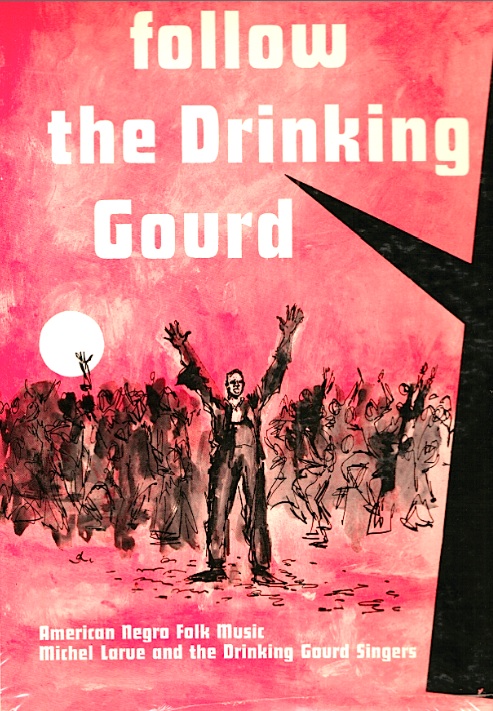
Those Sunday lunchtime concerts at the Redgrave were made more interesting by the fact that our English teacher often sang with one of the regular bands. Her name was Eiri Thrasher and in the late 60s she had been in a band on the Welsh folk scene called Y Triban (that’s her in the centre on the cover of their 1969 ‘Dai Corduroy’ EP for the Welsh language label Cambrian). I don’t know how she ended up in Farnham, but I’m glad she did because she was a good teacher. She brought some of her singles into school one end of term — maybe the Triban stuff, certainly some later ones — and played them on the record player in class.

I met Eiri by chance on a train in the midlands a decade or so (and a lifetime) later by which time I was at art school in Sheffield. She’d left teaching and was working in the music industry again at the time.

Maybe it is not much of a story: theatre closes down! It happens all the time. But for me growing up, the town’s few cultural institutions even if they turned out to be as relatively short-lived as the Redgrave were a life saver, a way out; the route to an education and a livelihood. Places like the art school, the library, or The Maltings where as a hungry O or A Level student I sought out screenings organised by the Film Society or CND.

The importance of a place like the Redgrave, even if only for those half-seen Sunday lunchtime jazz gigs, was not least that it provided access to what now seems an increasingly radical idea, and certainly one that flies in the face of a commercial opportunity such as that offered by the East Street redevelopment area: that culture is something that you can make and not just something that you buy.

§

P.S. I’m pleased to discover that some of Eiri Thrasher’s stuff, with Y Triban at least, is now on Youtube. Their version of Joni Mitchell’s ‘Night in the City’ was licensed to the recent-ish folk revival compilation Folk is not a Four Letter Word, Volume 2 (Delay 68 Records, 2006). It’s good.

* With apologies to Glynn Banks and Hannah Vowles.

In the BRUTE! style – OFFICIAL!

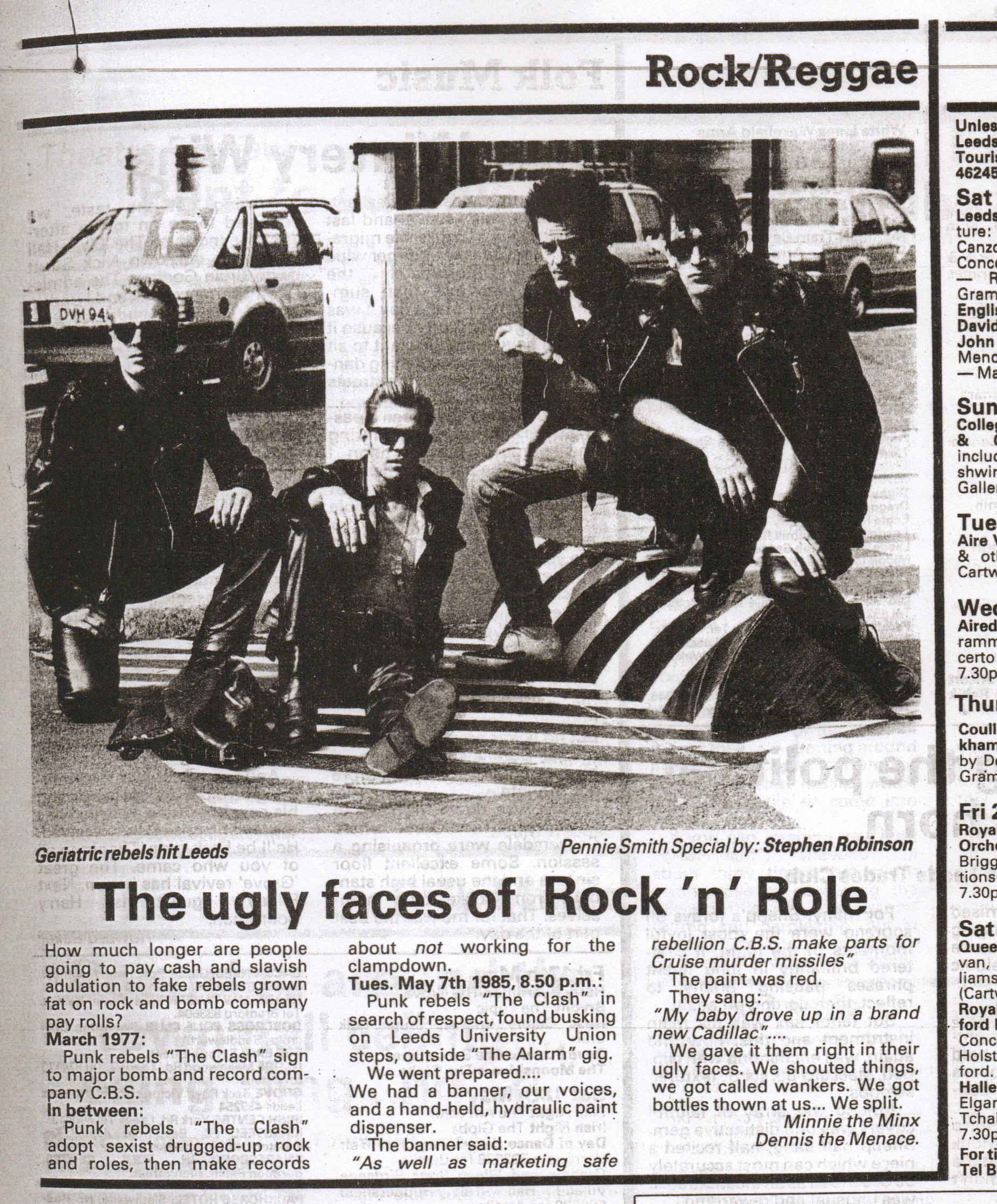
I’m looking forward to doing another reading with the mighty Malcolm Bennett of BRUTE! fame, and Melissa Mann, on Wednesday 25 May at The Gladstone Arms, off Borough High Street, London SE1. One of the perks of doing a gig with Malcolm — aside from the fact that he’s a great performer — is that I get an updated version of my flyer ‘in the BRUTE! style’ (right).

There is more on the ‘shocking’ early history of BRUTE! on Mally’s website, as well as information about more recent projects including his new book, I,BRUTE! 

I remember the original BRUTE! paperbacks well, but only met Malcolm relatively recently, via another great spoken word act of the early-1980s, the late great Steven Wells, a.k.a. Swells, a.k.a. Seething Wells, although sadly not until after Swells’s untimely death in June 2009.

BRUTE! had been a big influence on Swells’s ATTACK! Books project of the late 1990s and that’s… OFFICIAL!

(I’m not completely sure which of them first used this parodic exclamation of verbal authoritativeness. I associate ‘the O word’ with Swells’s pronouncements, but I would guess that it was originally part of Bennett’s brutal, tabloid-inspired lexicon.)

I think it is fair to say, too, that the exclamation mark on the title of my debut novel Road Rage! can probably be traced back to BRUTE!’s hard-boiled pulp appropriations.

For Swells, ‘Road Rage’ became my nickname. I could be walking down the street anywhere in London and hear: ‘Oi, Road Rage!’ It would be Swells — no-one else ever called me that — who would then moan about how many boxes of ATTACK! books he still had under his bed. In return I would probably have told him a line that Michael Moorcock once told me: that he hadn’t felt like a real writer until some of his books were available in remainder shops, ‘where real people could buy them.’

Buy Road Rage from the Piece of Paper Press shop using my verified PayPal account‘Oi, Road Rage!’ — the last time I saw him, down by Strutton Ground market in Westminster he was trying not to beam from ear to there with the news that he was moving to the US and getting married (and asking me if I wanted any more books).

Following the terrible news of Swells’s untimely death in June 2009, I was honoured to give brief presentations and readings at a couple of events that were held to celebrate his life and work. First was an ATTACK! Books tribute night organised by 3:am Magazine, where I read alongside fellow novelist and ATTACK! author Stewart Home (who had first switched Swells on to Road Rage! when it came out). Secondly at a much larger celebratory event put together by David Quantick and NME colleagues, at the Monarch Tavern, Chalk Farm Road, London NW1. Here’s a jpeg of the invite (left).

There were many, moving tributes from Swells’s friends and colleagues at the Monarch that night, including Atilla the Stockbroker and photographer Kevin Cummins, who told (via Quantick) how he’d flown to Miami to do the pictures on an interview with the lead singer of Deicide, but also to hire the car as Swells couldn’t drive. Cummins’ description of the ensuing road trip included, hilariously, the arsenal of imaginary heavy weapons — machine guns, bazookas and grenades — that Swells would fire in the direction of neighbouring cars at every stop light they hit during the 600 mile round trip.

I’ve scanned in the scribbled notes I used for those events below. At the Monarch I didn’t read from Satan! Satan! Satan!, my novel for ATTACK! Books, which Swells once gleefully described as ‘the worst-researched music book ever – OFFICIAL!’, but from a gloriously gratuitous motorway pile-up rant on p.38 of Swells’s own Tits Out Teenage Terror Totty. It’s a typical Swells piece, complete with jibes at everyone from New Labour to Loaded magazine and jingly-jangly indy bands. In that context it felt appropriate to hear Swells’s words spoken aloud — even though I had to apologise for reading his blistering prose at 33 and 1/3 rather than the original 45 RPM. My excuse was that I took breaths.

Actually, this was when I met Malcolm Bennett. At the Monarch. He came and introduced himself after I’d come off stage. It turned out that back when Swells had been raving about BRUTE! to me, he’d sent Mally Road Rage! and his manuscript copy of the opening chapter of my novel CHARLIEUNCLENORFOLKTANGO. It was remembering Swells’s enthusiasm and the prospect of doing a gig with Mally last year that made me look again at CHARLIEUNCLE… (see posts here, here and here). The novel has been out of print for a decade, so I’d stopped including it in any of my reading gigs.

Until now.

It is a measure of the very high regard in which Swells was held that when he was setting up ATTACK! he was granted access to the very highest echelons of the UK publishing industry to present his vision for ‘a NEW literature — writing that apes, matches, parodies and supercedes the flickeringly fast 900 MPH ATTACK! ATTACK! ATTACK! velocity of early 21st century popular culture at its most mEnTaL!’

It would have been great to have been a fly on the wall as Swells preached the destruction of what he called the ‘self-perpetuating ponce-mafia oligarchy of effete bourgeois wankers who run the “literary scene”‘, to those self-same chief executives and publishing industry grandees.

He was calling for, ‘rock stars who think they’re writers,’ and promising that ATTACK! would, ‘make supernovas of […] stuttering, wild-eyed, slack-jawed, drooling idiot-geek geniuses,’ but didn’t get very far. Or so it seemed at the time.

But looking now at the ghosted, celebrity garbage by a legion of slack-jawed idiots that has dominated publishing for the past decade, I think maybe some of them were listening after all.

§

Malcolm Bennett, Melissa Mann and Tony White

The Gladstone Arms, Lant Street, London SE1.

Wednesday 25 May 2011, 19:00 – 22:30 — Admission free.

New feature – short story bibliography

I’ve added a new feature/page to the blog: a short story bibliography (click here or find it via the navigation bar above). The list begins with a story called ‘Title Track’ from 1994, and runs to what at time of writing is my most recent short, ‘Auto-destructive Arts Policy’, which was published a month or so ago. This bibliography is very much a work in progress and it will be tweaked and updated as needed. I’ve added a brief explanatory note (or list of excuses):

…basic bibliographical information about forty-odd editions of I think twenty-seven short stories published since 1994 […] in roughly chronological order. It does not yet include ISBNs (where these exist), links to publishers’ websites or places where the stories can be purchased, watched or listened to, nor (quite) every online or print edition of some stories. [Where] I can’t lay my hands on a particular physical edition I have been unable to provide page numbers. Asterisks denote that to the best of my knowledge a particular story or edition is definitely out of print.

I’ve been meaning to do this for a while, but the information was so dispersed, the stories published in such varying editions and formats by numerous publishers, art galleries and museums, magazines and journals etc., that it has taken much longer than I thought to get to this stage.

More info as I find it…

There’s a place called London SW14

I went out to buy coffee this morning and found this, propped up against a wall in the Barnes/Mortlake area:

Initially I wondered if it might be a piece of folk art (a relic from a former community centre perhaps, or the conscious work of some Blackheart Man here in White Hart Lane), but while I was photographing it I had a short conversation with the person who lived there and they told me that the map had been a prop for some animation sequences in the 2010 feature film Africa United. But actually what it made me think of was that great Junior Byles song for Lee Perry, ‘A Place Called Africa’, which is featured in numerous reggae compilations including volume 3 of Trojan’s great old Creation Rockers series. The song is also very easy to find online, as is the version featuring toasting from Winston Prince, a.k.a. Dr Alimantado.

Auto-destructive Arts Policy #2 – Metzgervaizeymashup

I was surprised and honoured — and in the event, not a little moved — to be asked to speak at the 85th birthday celebration of the artist Gustav Metzger, which I attended in London recently.

Among the many other friends and colleagues who had gathered to celebrate this important day were Bruce Gilchrist and Jo Joelson of London Fieldworks, Alastair Brotchie of Atlas Press, Alan Sutcliffe of the pioneering Computer Arts Society, composer Kaffe Matthews, The Arts Catalyst curator (and Performance Magazine founder) Rob La Frenais, Andrew Wilson, Curator of Modern & Contemporary British Art at Tate, Ingrid Swenson of Peer, and my former Arts Council colleague Bronac Ferran.

Following a short and eloquent speech (reminding us of absent friends) and toast by Andrew Wilson, it seemed apt that I should read an excerpt from my new short story, ‘Auto-destructive Arts Policy’, which is dedicated to Gustav Metzger. The title refers of course to Metzger’s 1st and 2nd Manifestos: Auto Destructive Art, 1959, and Manifesto Auto-Destructive Art, 1960.

As discussed in the previous post, this story was written partly to test the satirical potential of applying the ‘cut-up technique’ to two source texts: Metzger’s own 1974 call for an ‘art strike’ and the ‘Creative Ecologies’ speech made at the State of the Arts conference in February 2011 by the Right Honourable Ed Vaizey MP, Minister for Culture, Communications and Creative Industries. I had wondered what kind of new text might be created by remixing these two originals, and whether that new text might reflect back critically on both sources as well as forming the basis of some sort of critical response to the work of artists Rupert Ackroyd and Alison Turnbull.

As well as being, you know, a good story… You can judge that for yourself, as the full text of ‘Auto-destructive Arts Policy’ is reproduced in the previous post, but the cut-up sequence at the centre of the story ends with a couple of sentences that I found much more difficult to read aloud, in public, than I had expected. The words really caught in my throat:

The government is passionately committed to smothering art and the denial of labour is our chief weapon. To bring down the art system it is necessary that people who once practised art never regain their creative spirit; to eradicate it in every corner of the country.

‘Auto-destructive Arts Policy’ was commissioned by the Russian Club Gallery and published on 30 March 2011 to accompany the current exhibition by Rupert Ackroyd and Alison Turnbull, which runs until 7 May. The story is published as an A3 folded pamphlet which is available free to gallery visitors while stocks last.

§


Rupert Ackroyd / Alison Turnbull, Russian Club Gallery, 340-344 Kingsland Road, London E8 until 7 May. Opening times: Tuesday to Saturday, midday to 5pm.

A barricade in all but name

The Russian Club Gallery just published my new short story, ‘Auto-destructive Arts Policy’, as a folded A3 pamphlet to accompany the exhibition/project by Rupert Ackroyd and Alison Turnbull, which opened on 30 March. The pamphlet is free and is available from the gallery until the show closes on 7 May, or while stocks last. I am reproducing the full text of my story below, but of course the pamphlet is the real thing. I’ve given away the few spare copies that I had, so I would recommend getting to the Russian Club asap to see the great show by Rupert and Alison and to obtain your free copy.

I’ve worked with Alison Turnbull before, contributing a short work of fiction to her artist’s book Spring Snow: A Translation, and publishing her Black Borders: 1994 – 2006 on Piece of Paper Press. I wrote a little about Spring Snow here. The opportunity to write another piece of fiction in relation to Alison’s work seemed too good to miss, so I visited both Rupert Ackroyd’s and her studios on 10 February 2011 to discuss the collaborative project that they were making for the Russian Club show. This was the day of the State of the Arts conference, which was taking place at the RSA on the Strand and which I’d been following on Twitter. Visiting the Russian Club gallery at the end of the day, I noticed what looked like a page of yellowing newsprint among some rubbish — faded prints, cardboard backings and mountings — that had been extracted from junk shop picture frames by the artist and Russian Club gallery director Matt Golden. Looking more closely I discovered that it was an original news broadside published by the Daily Express during the General Strike on 12 May 1926. At the bottom right of the page is a story bearing the headline ‘False News’:

Three men have each been sentenced to 21 days’ hard labour for selling a leaflet called “The Fulham Worker” which stated that the Welsh Guards had been confined to barracks for intimidation.

‘Auto-destructive Arts Policy’ is dedicated to the artist Gustav Metzger and at the heart of the story – as noted also in the story – is a short text produced for satirical purposes by cutting-up his statement, ‘Art Strike 1977-1980′, in Art in Society / Society into Art: Seven German Artists (London: Institute of Contemporary Art, 1974) and Ed Vaizey’s speech at the RSA, ‘The Creative Ecology – Speech at State of the Arts’ (London: DCMS, 2011). The story’s title is of course after Gustav Metzger’s 1st Manifesto: Auto Destructive Art, (single printed sheet) London: the artist, 1959, etc

§

Auto-destructive Arts Policy

For Gustav Metzger

*

Three men and a woman have appeared at Westminster Magistrates Court, Horseferry Road, London, charged under the new legislation with Conspiracy to Exhibit and for distributing a satirical broadside entitled Auto-destructive Arts Policy . This publication includes a text that one of the accused, the author Tony White, allegedly produced by ‘cutting-up’ and ‘re-mixing’ (‘for satirical purposes’, he claims) artist Gustav Metzger’s 1974 call for an ‘Art Strike’ with a speech made at the State of the Arts Conference at the RSA London on 10th February 2011 by the Right Honourable Ed Vaizey MP, Minister for Culture, Communications and Creative Industries.

By such ‘literary’ contrivance was the Minister made to appear to have said that he wanted, ‘to make a case for the use of art for direct social change.’ (Our italics.)

An editorial standfirst asks whether Vaizey and Secretary of State for Culture, Olympics, Media and Sport Jeremy Hunt might not themselves yet succeed where Metzger failed, by actually creating the ‘years without art’.

Tony White’s disputed text continues:

The art world uses art to confuse and divert us. The only way through this horrifying reality is to face the fact that the arts are currently deployed against the interests of the state. That art, the voluntary arts and the amateur arts should be in the service of revolution against the state and capitalism is unsatisfactory. Nevertheless much of the debate about the arts focuses on fighting the system.

Artists can use the same methods of production and distribution as me to talk about lack of money, but I call for a lack of art, for years without art, a period of three years – 2011 to 2014 – when artists will not work, sell work, or permit work to be supported by grant funding. It’s worth reminding people – and some still seem oblivious to this fact – that last year’s settlement took place against the background of the publicity machinery of the art world. Art pretends that it would have been possible for the dealer/museum/publicity complex to continue juggling artists, finance, works and patronage systems.

My view is that our cup is still plentiful but we should refuse collaboration with any part of the art world. National and local government is at best disingenuous: the years without art will see the collapse of many local libraries, local theatres and theatre companies or local arts centres, dance companies as well as diverse arts events and organisations. Institutions handling contemporary art will be severely hit and will have to reduce their staff. Magazines will fold.

Yet the ramifications of inaction would be tough. The last thing a Whitehall Minister needs is the arts demanding changes to every decision they disagree with. I believe that three years is the minimum period required to cripple the Arts Council and create difficulties for artists. Artists should be sufficiently wealthy to live on their own capital. It will be necessary to prevent not just the local library or the local theatre or the local arts centre from exhibiting and publicising art in the future but the entire community. The government is passionately committed to smothering art and the denial of labour is our chief weapon. To bring down the art system it is necessary that people who once practised art never regain their creative spirit; to eradicate it in every corner of the country.

*

The accused are (in alphabetical order): Rupert Ackroyd, a sculptor working from Myddleton Square, Islington; Matt Golden, Gallery Director of the Russian Club Gallery, named after a snooker club that previously occupied the premises on Kingsland Road in London’s East End; Alison Turnbull, a highly-regarded painter latterly of Kentish Town but born Bogotá, Colombia, and; the above-named Tony White, best known for penning a novel set in the contemporary East End but now living in south west London.

Ghoulish Ackroyd – a church crypt is his studio – has exhibited widely in recent years. A typical ‘work’ might be his ‘Large Assemblage’ (2010) which comprised a replica Victorian Gothic church door stood horizontally against a transparent glass or perspex column filled with coffee beans. A hollowed-out, fake oak beam contained a number of cardboard boxes themselves containing multiple ‘stash tins’ – standard tobacco tins painted black and adorned with glittery stickers bearing black and white likenesses of late folk-rock legend Nick Drake, the whole then distressed as by some mechanical sander. This apparent drug-culture reference prompted one elderly gallery visitor to remark, ‘My 59 year old son with a chain of “head shops” and a couple of stalls at Camden Market could have done that.’

Turnbull too, has exhibited extensively in the UK and around the world, most recently at Matt’s Gallery, Copperfield Road, where her installation, Observatory (2010) took as its starting point the ground plans of one such astronomical edifice built by Thomas Jefferson, third President of the United States.

Chief Crown Prosecutor Astbury asked that twenty pages of notes produced by White during apparent ‘studio visits’ to premises rented by Ackroyd and Turnbull respectively be considered for disclosure. These notes, she claimed, recorded heavily coded conversations – also held on Thursday 10 February 2011 – in which Ackroyd talks for example of ‘English vernacular’, of craft, architecture and the ‘heavy, conservative nature of the built world’. He describes journeyman carpenters, air-dried European oak and mortice and tenon joints. Turnbull also speaks of domestic vernaculars; particularly those found in 1960s wallpapers. She talks of lozenge motifs and counterintuitive perceptions of size such as might be created by distance or proximity. White questions whether this might produce a kind of domestic ‘dazzle’. Turnbull repeatedly mentions the Japanese architectural concept of kirei sabi or ‘gorgeous humbleness’.

The Crown Prosecution Service suggested such statements were far from the innocent discussions of art that the accused claim, and attempted to show that the so-called ‘collaborative artwork’ produced by Ackroyd and Turnbull to Golden’s commission is in fact a barricade in all but name. Documents were shown to the court in which art historian Dr Ed Krčma specifically uses the language of class struggle when describing Turnbull’s work as, ‘the result of disciplined labour.’ (Our italics.) He talks of her using ‘…the tools of technical draftsmanship,’ of her ceding to, ‘the painting’s demands,’ through, ‘the jostle and poise of colours [and] incident,’ before concluding that, ‘This disciplined aesthetic constitutes an effective barrier to […] vague poetics.’

The CPS pointed out the current proliferation in the art world of ‘agit-prop’ ‘installations’ comprising sit-ins, workshops and teach-ins, as well as materials including barrels, chains, carts, paving slabs, stones, cobbles, bricks, planks, scaffolding, earth, sandbags, tables, doors, Molotov cocktails, gas masks, motorcycle helmets, fireworks, signs, posters, placards and sundry items that might be instantly repurposed to create a protest or to produce an impromptu barrier to blockade for example a street or public square, or to defend such a barricade.

Expert witness Professor Mark Traugott of the University of California Santa Cruz and author of a new book The Insurgent Barricade (University of California Press) spoke of a ‘barricade consciousness’ when called to explain his ‘preoccupation’. Citing historian and political scientist Charles Tilly, Traugott described a ‘repertoire of collective action’: the spectrum of contemporary approaches, methods and tactics available to protesters.

Structures that were not constructed and defended by civilian insurgents, although perhaps identical in all other respects, are considered here only as a point of contrast with the revolutionary barricade proper. Even one and the same structure, built by insurgents but captured and turned to account by a military force attempting to quell their rebellion, will, from the moment it changes hands, cease to be treated as a barricade under the definition adopted in this study.

In her concluding remarks, Chief Crown Prosecutor Astbury questioned whether given the volatile social and economic situation, all artworks might not be seen as insurrectionary: ‘Might we not,’ she asked the Court, ‘add to Tilly’s “repertoire of collective action” the massive civil disobedience of making things?’

All four were released on bail and will appear at Southwark Crown Court for a plea and case management hearing on 7th May. Father of one Golden was ordered that the Russian Club Gallery premises should remain open to the public until then, from Tuesday to Saturday each week, midday to 5pm.

Daily Express, Wednesday 30 March 2011

© Tony White, 2011
Creative Commons Licence
This work is licensed under a Creative Commons Attribution-NonCommercial-NoDerivs 2.0 UK: England & Wales License.

§

Pioneers in Art and Science: Metzger, (DVD) dir. Ken McMullen, published London: Arts Council England, 2005. Available from Concorde Media.

Mark Traugott, The Insurgent Barricade, Berkeley: University of California Press, 2010.

Alison Turnbull, Spring Snow: A Translation, London: Book Works, 2002.

Tony White, ‘Auto-destructive Arts Policy’, in Rupert Ackroyd/Alison Turnbull, London: Russian Club, 2011. Available free from the Russian Club Gallery, 340-344 Kingsland Road, London E8 4DA.

Free MP3 of A Porky Prime Cut live at the NPG

Thanks to Gabriel Thorp at the National Portrait Gallery, London, who grabbed a digital recording off the desk during my Dirty Literature gig with Tim Etchells on 18 March 2011.

Creative Commons Licence
A Porky Prime Cut © Tony White, 2011; Music © Simon Edwards, 2011. This work is licensed under a Creative Commons Attribution-NonCommercial-NoDerivs 2.0 UK: England & Wales License.

Feel free to extract the MP3 from this player (e.g. using the Firefox add-on ‘Download Helper’) if you prefer to listen using your own MP3 software or device.

Electra who put the event together will be putting the recording of the whole gig on their site very soon. Regular readers will know that I’ve been very excited to work with bassist Simon Edwards on this, so I wanted to make the live recording of ‘A Porky Prime Cut’ with Simon’s funk bass accompaniment available as a standalone piece of audio in its own right too. This is also a chance to test out the WordPress audio player for the first time, so as ever feedback is welcome.

You can download ‘A Porky Prime Cut’ as a free ebook courtesy of James Bridle’s excellent Artists’ eBooks site. We’re also hoping to put this recording on to the EPUB file as an extra.

I hope you enjoy it.

§

Acknowledgements: ‘A Porky Prime Cut’ by Tony White is part of Digital Transformations, an arts project using photography, film, sound, mapping, creative writing, web design and exhibition to raise the profile of the communities of Kinson, Townsend and West Howe in Bournemouth. Digital Transformations is coordinated and curated by SCAN with Bournemouth Libraries and Arts, and Bournemouth Adult Learning. It is funded and supported by The Learning Revolution Transformation Fund, Bournemouth Borough Council, SCAN, Bournemouth University, and The National Institute of Adult Continuing Education (NIACE). The collaboration with Simon Edwards was supported by Electra as part of their Dirty Literature programme for the National Portrait Gallery, London.