I spent an interesting day at the British Library, where I was speaking at Reading and Being Read: Readers, Writers, Publishers, an event put together by the BL in association with the Insitute for Modern and Contemporary Culture at the University of Westminster.
I was the final speaker and opened my presentation with a reading of my short story ‘The Holborn Cenotaph’, before speaking in more detail about Piece of Paper Press, the artists’ book project that I started in 1994. It felt a great honour to have been able to take ‘The Holborn Cenotaph’—and the people that it calls upon readers and audiences to remember—into an institution as august as the British Library, to have been able to present it under their aegis, as it were. I am grateful to the many audience members who took photographs during the reading— including this one from my book trade colleague Sheila Bounford—and to those who tweeted during and after the reading. Here are a couple of those (more tweeted reviews of the story are collected here):
My presentation followed what had been a number of fascinating presentations, by author Susie Nott-Bower and publisher Lynn Michell of Linen Press, by author Alex Pheby and publisher Sam Jordison of Galley Beggar. There were also some very well-handled demonstrations of innovative publishing projects from students of the London College of Communication, who were introduced by Frania Hall of LCC.
As well as being asked to speak about Piece of Paper Press, I was invited to wrap up the day. There was even the suggestion that in so doing it might be possible to engage the audience in some sort of collaborative act of publication. Unsure if that was even possible in fifteen minutes, I suggested that if so it would need to be quick and punky; about ideas rather than craft.
A quick survey of the audience at the British Library revealed that a number had been making notes. Had anyone, I asked, underlined something, or put a ring around it? Had anyone made a special note of something that had been said? I was grateful to Sally Willow of the University of Westminster for acting as a note-taker herself during this session. We gathered the audience’s choicest notes and quotes, and held a quick vote to select the four most memorable lines. Sally then rendered these in the style of newspaper hoardings, which were immediately run off in editions of fifty for people to take home. Here are my copies.
If you don’t already receive invites from me and/or my publishers and producers to my book and project launches, special gigs and events, but you would like to, then please consider signing up to my mailing list.It doesn’t cost a thing.
There are some exciting projects and titles coming up through 2016, so now might be a good time ;)
I recently interviewed the poet Paul Hawkins for The Quietus about Place Waste Dissent, his new book for Influx Press. Place Waste Dissent is a fascinating and visually striking new book of poetry collage documenting the squat culture and M11 protests of the early 1990s that centred on Claremont Road in Leytonstone, East London. I knew several people who lived on Claremont Road. One such resident was the pioneering UK video artist and filmmaker Ian Bourn, who I knew through his friend and one-time collaborator the late Helen Chadwick who was a friend and neighbour of mine in Beck Road—another community of artists living in ‘Acme houses’, as they were known—where I lived at the time.
I loved Hawkins’ book. The lo-fi, analogue, cut and paste of word and image is richly redolent of that early ’90s squat and crusty culture. As I mention in the article, this was a scene that I also quickly turned around in my own fiction, writing a deliberately loose and libidinised version of the M11 protests in what became my debut novel, the ‘avant-pulp’ Road Rage! which was published in 1997. Paul Hawkins has taken rather longer in reporting from Claremont Road, but in doing so he has perhaps been truer to the troubled textures of the time, and both more generous and more critical than I had cared to be with my own more immediate fictional responses.
The interview is now up. Here’s a taster:
TW: Among the extensive and very evocative contemporary documents and ephemera that you’ve used in PLACE WASTE DISSENT … is a very interesting photocopied who’s who, an updated list of occupants and state of repair of all the Claremont Road houses: ‘15: Mick, squatted … 32: Dolly’, etc. Some of the houses had evidently gone through this cycle of destruction several times. Number 16, for example, reads: ‘TRASHED SQUATTED TRASHED SQUATTED’. It’s only a matter of time, you get the feeling, before that would have been crossed out again. A lot of these papers are from your own collection. How on earth did you keep hold of all this stuff?
PH: Whenever anybody got served legal papers, eviction papers, they would be photocopied and circulated. There was a solicitor involved who had people looking at these materials, and everyone passed the papers around. I started keeping a folder, a big ring-binder with all these plastic sleeves full of magazine articles, notes, posters from benefit gigs, letters, everything. It seems bizarre because at that time in my life things were getting a bit messy around the edges, but somehow whatever else happened I managed to keep it all safe.
Years later, when I was putting the book together, I was also able to refer to a huge archive of No M11 Campaign materials held at the Museum of London which included local, national and international newspaper coverage. A curator there called Beverley Cook was very helpful. I made an appointment to view this, taking copious notes. There were all these ’zines and magazines, a local broadsheet called The East Ender. Around the late ’80s and early ’90s there were a lot of crusty, traveller, eco-campaigners. There were squat bands, anarchist bands. This was the tail-end of the rave scene and the beginning of things like Reclaim the Streets.
TW: This really was a kind of front line at the time.
PH: Yes, and with other protest groups, other proposed motorways, at Newbury, the Dongas at Twyford Down, the M77 and Pollok Free State and the Anti-Criminal Justice Bill protests.These and other groups were not cohesive but there were means of contact, which grew in strength. The increasing media awareness both helped and hindered. [READ MORE …]
I was pleased to see my old friend the artist Ian Bourn making an appearance in Place Waste Dissent, too. At one point, Hawkins reports standing out in the cold one night to see HOUSEWATCH, a cinematic public art spectacular projected onto the windows of number 8 Claremont Road, from the inside:
‘we blink / stars around the sky / as window cine-film / loops the world … breath steaming to frost.’
This idea of projecting onto windows from the inside, for the benefit of passing pedestrians, has been taken up by new generations of artists and curators. A couple of years ago, for example, Peer and Animate Projects commissioned four animators to make works for Peer’s windows on Hoxton Street for the Out of Site project. (You can download a PDF pamphlet edition of my short story ‘Animate Me’—which was commissioned as part of Out of Site—here.) And I recently bumped into Ian Bourn and others on Essex Road in Islington, North London, where a crowd had gathered for a programme of film screenings called Essex Road II that also perhaps owed much to Housewatch. These screenings had been put on by the gallery Tintype, who had commissioned eight artists—Jordan Baseman, Helen Benigson, Sebastian Buerkner, Jem Cohen, Ruth Maclennan, Melanie Manchot, Uriel Orlow, John Smith—to make ‘short films in response to the mile-long road. The gallery’s large window becomes a public screen for six weeks over Christmas and New Year.’
Essex Road II – opening event 1, 2015. Photo: Tintype
Among the artists projecting new film works onto Tintype’s windows in December 2015 was John Smith, another Claremont Road veteran. On the Place Waste Dissent website, Paul Hawkins links to Smith’s film Blight, which was made in collaboration with composer Jocelyn Pook for a short-lived BBC2 commissioning strand called Sound on Film in 1997. Blight is an apt title, and like Hawkins’ book, Smith and Pook’s collaboration is another evocative document of the Claremont Road demolitions.
Fellow speakers at the British Library on 20 February include Sam Jordison of the celebrated Galley Beggar Press and the Guardian, authors Susie Nott-Bower and Alex Pheby, and Lynn Michell of the Linen Press. It promises to be a really good day.
N.B. If you are interested in coming along, the advice from the British Library is to book early, as these events are marketed across their lists and tend to sell out rather quickly.
I’ve loved Gibby Haynes’s work with Butthole Surfers over the years, so I was thrilled to be involved in a project with him. The way that his music seems to synchronise with—even to illustrate—the text is all the more incredible since Gibby has said that he ‘intentionally did not read the story then was shocked to find out how much the writing inspired the sounds.’
The story vocal was recorded in one continuous take on an Edirol R09—here’s the high-tech set up ;)
‘Apocryphal Fragment from the Lives of the Conquistadors’ was first published in print and audio (with sounds by Steven Hull) on the gatefold vinyl LP A Puppet Show, by Steven Hull, together with an instrumental version of Haynes’s track, and music by the great Petra Haden, Tanya Haden and Anna Huff.
Steven Hull’s forthcoming book CARNEVIL will be the 30th title from Piece of Paper Press, and is due for publication in early 2016.
Have a great (non-ordinary) Christmas, and I look forward to seeing you in 2016.
I love it when a plan comes together—as the, um, poets say. (There’s more about those poets below*).
But seriously, I am really thrilled that a conversation I have been involved in behind the scenes over the past year or so has resulted in three new and innovative—and well funded—artists’ residencies in the field of climate change, which have been announced this week at COP21.
Back in 2014 I published a provocation entitled ‘Wanted: A New Kind of War Artist’, building on the research I had undertaken in writing my climate change novel Shackleton’s Man Goes South, and the ongoing discussions with scientists and others that writing the novel had both required and engendered. Here is a short extract:
… right now, the climate science and policy communities actually need artists, writers, composers, film directors more than ever: people who know how to tell stories, and how to reach new audiences with new ideas. Models and expertise already exist for artistic intervention within the international scientific arena, models which might relatively simply be adapted and used to create not just ‘flying visits’, but deep and long-term engagements. One ready example is the artists’ residency programme at CERN. Why not artists and writers in residence at the IPCC (or across its operations)? … At the outbreak of WWII (following the work that had been done by artists including Eric Ravilious, Wyndham Lewis and many others during the First World War), a new War Artists’ Advisory Committee oversaw the appointment of artists who were charged not only with documenting the conflict at home and internationally, but—given its scale and complexity—with interpreting it too.
Could it be that the ‘climate crunch’ and the next phase of mobilisation against climate change demand the creation of a new kind of War Artist?
A month or two later, a few of us gathered in a breakout session at TippingPoint Oxford called by the Culture and Climate Change programme of the OU’s Mediating Change partnership. I reprised the ‘War Artist’ analogy, and pointed out that the word ‘scenario’—so prevalent in climate change policy—comes from the arts, from the early days of opera, rather than from military planning. Quickly putting two and two together, Joe Smith and Renata Tyszczuk of Culture and Climate Change wondered whether scenarios might provide a useful focus for some new artists’ residencies. Judith Knight of Artsadmin, Rose Fenton of Free Word Centre and I pooled our knowledge and experience of residencies and—at the invitation of Culture and Climate Change—and together with Robert Butler of The Ashden Trust, we formed an advisory group in order to support them in developing such a programme.
Now, with generous support from the Jerwood Charitable Foundation, in addition to that provided by The Ashden Trust, The Open University and the University of Sheffield, this networked residency idea has been announced, to tie in with COP21. Here is the press release (opens as PDF) and here is the blurb:
We’re delighted to launch the Climate Change in Residence: Future Scenarios Project.
We are seeking three artists to take part in a new form of arts residency, offering access to a network of climate change researchers across the UK. Each residency includes an award of £10,000. We welcome applications from individuals and collectives from any artform to work on new creative projects engaging with scenarios of climate change. The closing date for applications is Monday 15 February, 5pm GMT. This project, sets out to test the idea of ‘networked residencies’. Climate research has long relied on networked collaborations rather than individual, geographically-located centres. Through these residencies, you will be able to research the issue of climate and spend time exploring and developing your own artistic practice. In this way we hope you will introduce a new cultural depth to public conversations around future scenarios.
This project has been developed as part of the Culture and Climate Change programme of work which began in 2009 as a series of discussions, events, podcasts and publications organised by the Mediating Change group. The group is based in the Open University’s Open Space Research Centre, and is rooted in a partnership between the Open University Geography Department and the University of Sheffield School of Architecture.
Hold the date
We will be hosting an evening at ArtsAdmin on Wednesday 27 January, 2016. The event will explore why scenarios are such a key element of climate change research and politics, and also why it is important to invite a wider range of perspectives on these themes. It will also be an opportunity for those wishing to apply for the residency programme to find out more.
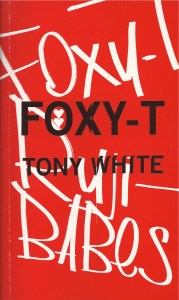
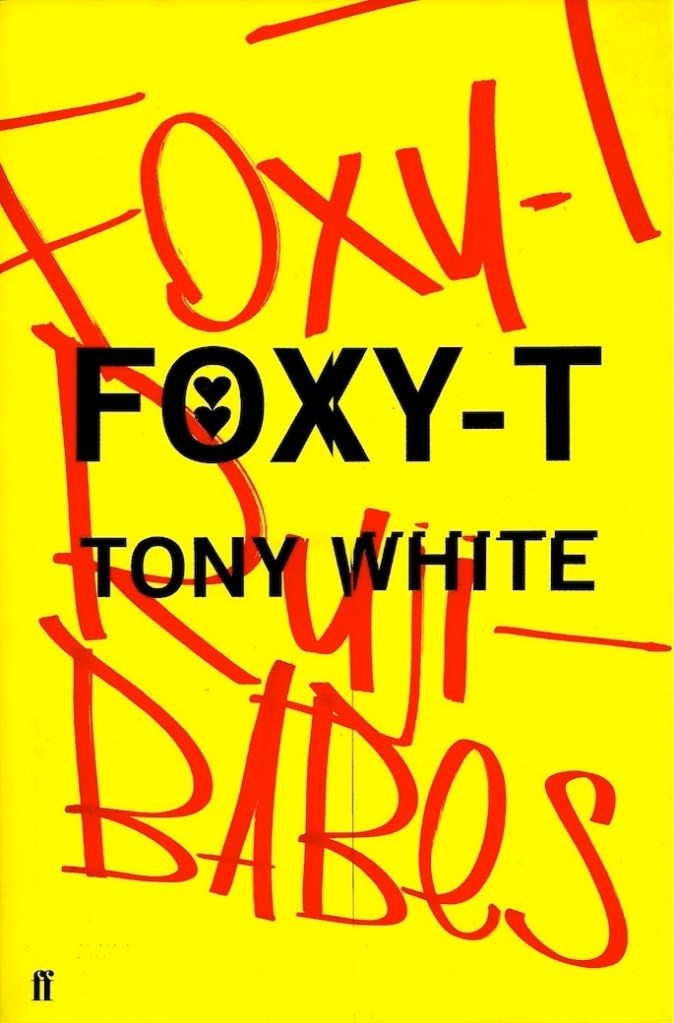
A timely and unmissable evening of satire in poetry and prose at The Room, a space for the arts in Tottenham, featuring leading black British novelist Courttia Newland (pictured)—author of The Scholar, Society Within, The Gospel According to Cane, etc.—‘a truly gifted storyteller’ (Time Out)—and the 2011 Eric Gregory Award and 2014 Poetry Business Pamphlet Competition-winning poet Holly Hopkins, who contributed to The Emma Press’s powerful Campaign in Poetry anthology earlier this year. Joining them are London author Tony White, best known for his novel Foxy-T—‘One of the best London novels you’ll ever get to read’ (Sunday Herald)—who will be reading satirical short The Holborn Cenotaph; and Theatre of Mistakes founder, the poet and novelist Anthony Howell, whose performance Table Moves at The Tate was described by Stewart Lee in the Observer as ‘The best performance I have ever seen’. Howell’s first collection of poems, Inside the Castle was published in 1969 and his latest, Silent Highway, is published by Anvil.
Anthony and I first discussed this event earlier in the year, after I read a piece of his—a satirical poem and accompanying note on the current unfashionableness of satire in poetry—on the Fortnightly Review.
Around the time of the Kings College event at which I launched ‘The Holborn Cenotaph’—perhaps earlier that same day—I saw actor and comedian Mark Gatiss on Twitter, bemoaning the ‘satire gap’ on TV. True enough, perhaps, although I disagree with the implicit suggestion that satire and TV impressionists are somehow synonymous. You’re looking in the wrong place, I thought to myself. Instead of looking for the new Mike Yarwood, look at Cassetteboy, whose satirical cut-up of David Cameron’s conference speech has had nearly 6.2m views on Youtube (not so different to the ratings for Coronation Street or EastEnders), or the incisive, screaming incredulity of The Artist Taxi Driver, here with yesterday’s brilliant Let’s Bomb Let’s Degrade Let’s Destroy Jeremy Corbyn:
More recently, discussing satire on BBC Radio 4’s Start the Week, and rather more on point than Gatiss, was novelist Jonathan Coe, who said:
I think there’s an important difference which tends to get blurred between satire and political comedy […] we’d become, already we’d become too accustomed to just having a cosy giggle with our political masters in a way that was almost complicit. So, you know, I don’t have a problem with laughter, but there are different kinds of laughter: there is angry laughter and uncomfortable laughter, and I think that’s what satire is about.
Coe was on the show to plug his latest novel Number 11, which according to the discussion includes a satirical jab at the current London craze for lavishly extended basements. This proved not to be such a stretch, when a lovely Georgian house in South West London collapsed mid-renovation, with most news sources (and tweeters) citing a basement excavation as the likely cause. I think Coe could quite justifiably say, ‘I told you so.’
I’m really pleased that joining us for A Beast in View, will be 2011 Eric Gregory Award winner the poet Holly Hopkins, whose work I first came across in The Emma Press’s Campaign in Poetry anthology earlier this year. Holly’s contribution to the anthology got a good mention in Sabotage Reviews, who write:
Satire and animal allegory has long been associated with writing about politics; one only has to glance at a basic literary shelf housing Orwell or Swift. It is therefore apt that Campaign in Poetry opens with Holly Hopkins’ poem about bees. Only it is not about bees. It is titled ‘The General Election’, and it stings.
Also joining us is the brilliant Courttia Newland, whose work I have admired for some time now. We have been talking for a while about trying to do some gigs together. I get the impression that Courttia is as much an advocate of, and an enthusiast for the live reading as I am, although we haven’t appeared on a bill together for more than a decade.
It should be a good one. Do come along if you can.
I’ll be reading ‘The Holborn Cenotaph’ again on Saturday, and as is usual with readings of this story, I shall be giving away a small pamphlet edition of the full text. This emerged as a format at that first King’s College, London event, which was a panel discussion with the artists Stuart Brisley and Maya Balcioglu and the academic Dr Sanja Perovic, staged as part of King’s Arts & Humanities Festival 2014: Underground. ‘The Holborn Cenotaph’ is partly inspired by a work of Brisley and Balcioglu’s from the 1980s entitled The Cenotaph Project, and Stuart Brisley was a supporter of Piece of Paper Press in its earliest days in the mid-1990s. So when we came to plan that event together it seemed obvious that we should use the format to give away a text on the night. I have tried to maintain this ethos at all subsequent readings of the story. As a result, the Piece of Paper Press edition of ‘The Holborn Cenotaph’ is now in its fourth impression.
The title of our evening of satire in poetry and prose on Saturday comes from the poet Dryden, whom Anthony quotes in that Fortnightly Review article:
Since its heyday in the seventeenth and eighteenth centuries, satire as a poetic form seems to have fallen out of fashion. Of course, in other fields, there are still plenty of satirists. The satirical vein is still very much in circulation. But poetry itself, the principle organ of mockery in Roman times, appears to have lost sight of this cutting tool. While ranting has come into its own, there is not much in the way of satire. Dryden’s Absalom and Achitophel is a satirical masterpiece in which the poet develops an extended metaphor replacing the events of his own time with an incident drawn from biblical history that comes alive thanks to his brilliant gift for portraiture. But imitating the achievements of the seventeenth century now would come over as a cliché. What does seem important to retain though is a sense of one’s subject. With satire, there is a beast in view …
§
A BEAST IN VIEW: AN EVENING OF SATIRE IN POETRY & PROSE
with authors Holly Hopkins, Anthony Howell, Courttia Newland, Tony White
Poetry at The Room, 33 Holcombe Road, Tottenham Hale, N17 9AS
Saturday 5 December 2015
Starts: 7.30
£5 entry plus donation for refreshment
Forget ‘Black Friday’, Black November is the name of the climate change refugees’ liberation movement in my 2013 novelShackleton’s Man Goes South.
Image: Royal Moroccan Police, courtesy of Ursula Biemann and Charles Heller, The Magheb Connection, 2006.
The novel follows Emily and daughter Jenny, climate change refugees who arrive in South Georgia with trafficker Browning, en route to Antarctica and a reunion with husband John who has gone ahead to find work. Emily learns about Black November in a letter from John that has been smuggled from Antarctica back along the trafficking routes. ‘Sweetness, they force us to work every day,’ John writes,
They blackmail us with your lives. They think they can crush us, but we’re organised too. I know we’ll prevail by and by. Oh, Lord. I promise we’ll prevail by and by.
My darling, I have to write this quickly . . . Sweetheart, I think they may suspect . . . My darling, we’re going to proclaim a Jubilee! Remember Shackleton and his struggle to be free, and Isaiah 61 proclaiming liberty? A day of vengeance!
Patience Camp will be patient no more … Black November’s gonna be our Jubilee! Black November’s what we’ll call our Jubilee.
You must be logged in to post a comment.