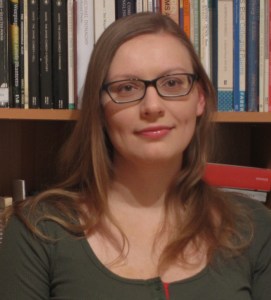
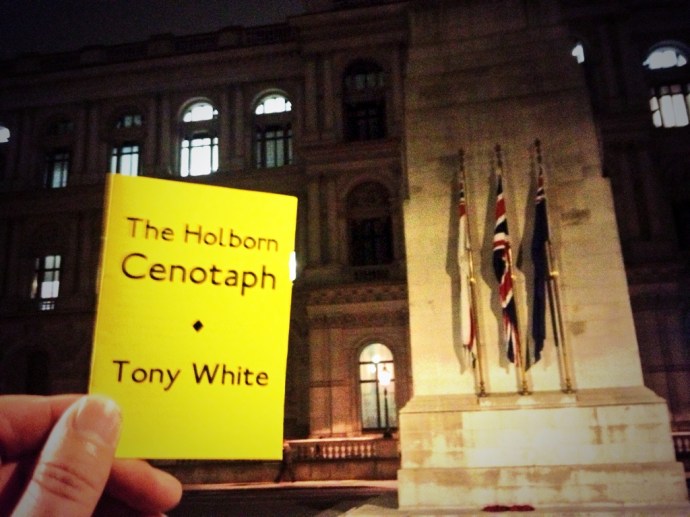
The Holborn Cenotaph: Speakers’ Corner selfie*

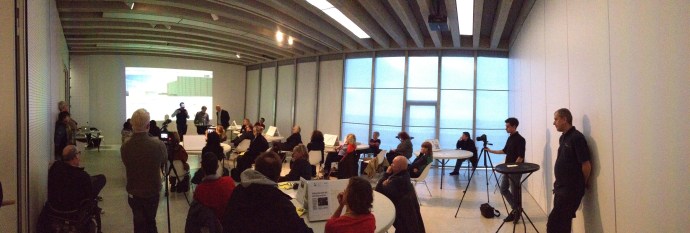
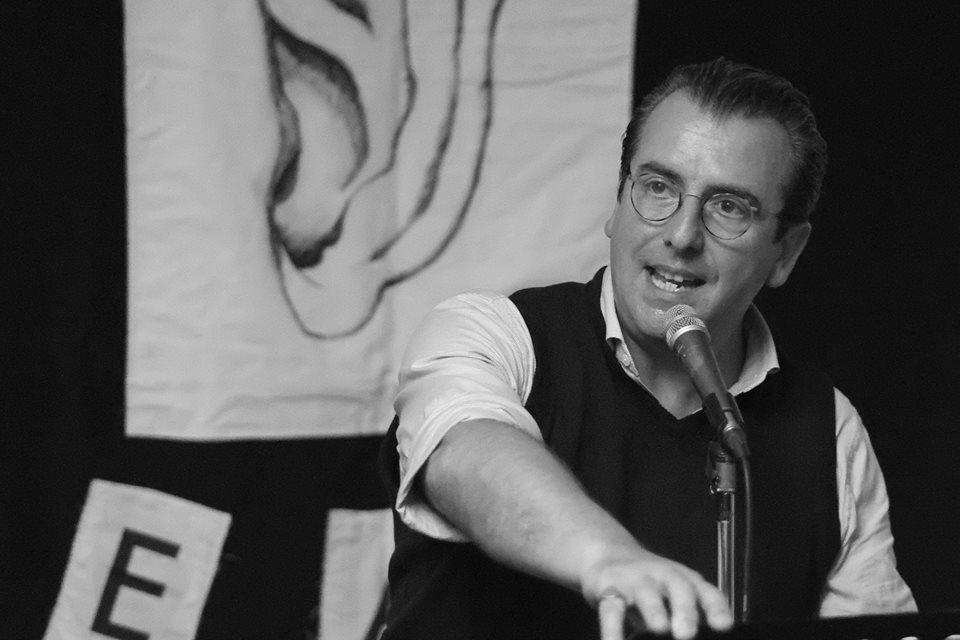
Thanks to Chris Dorley-Brown for sending through this great photo from my gig at Takeover 2015, the London Radical Bookfair, on Saturday 9 May.

TW_LRBF1_ChrisDB

I was reading my short story The Holborn Cenotaph—channelling Swift, the story is a Juvenalian satire—and was as always very pleased and surprised by the response to my ‘modest proposal’. Plenty of people came to chat afterwards and to get their free copies of the small edition of the story text that was produced to give away at recent gigs with Stuart Brisley et al in the chapel at King’s College London and at The MAC in Belfast, and whenever else I read from the story, at least while stocks last.

-1Takeover 2015 was a useful and positive day, so thank you to all at London Radical Bookfair, the Alliance of Radical Booksellers, Vicky who put the Speakers’ Corner programme together, and Nik at Housmans.

I hope to do more readings of The Holborn Cenotaph in the coming weeks and months. Check back on my events page for listings or sign up for my occasional newsletter for news of gigs and invites to book launches etc.

§

Read more about The Holborn Cenotaph here, here and here.

* P.S. She may not actually be taking a selfie.

Taking Part in Takeover 2015

I am pleased to be taking part in Takeover 2015 on Saturday 9 May 2015. I will be reading my short story The Holborn Cenotaph at 1:30pm, as part of their speakers’ corner programme of talks and readings. Do come along if you are in the area. It would be great to see some friends there.

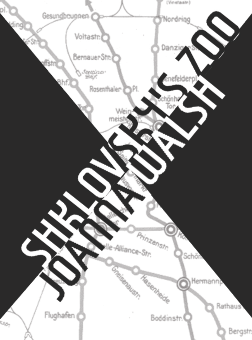
Takeover 2015 is a collaboration between Alternative Press and London Radical Bookfair. Here is the flyer, and a map of how to get there!

takoverflyer2015

§

Takeover 2015
47-49 Tanner Street
London SE1 3PL
Noon-7pm

Subscribe to my occasional newsletter for invites and news about forthcoming books and events

Essex Indexicals: a short story about growing up

Screen Shot 2015-04-29 at 13.26.01Two projects by the artist Chris Dorley-Brown have launched this month. One is a major digital commission from The Wellcome Collection, entitled 15 SECONDS Part 3. The other is a new book called Drivers in the 1980s, which is published by Hoxton Mini Press as the sixth in their series of collectable books about East London:

[He] spent two summers in the mid 1980s photographing drivers stuck in traffic jams in and around East London. This series was his first on colour film and was created when he intended to document the privitisation of Rolls Royce but instead became fascinated by the faces in the traffic caused by the sell-off in the city. The cars, colours, haircuts and expressions of frustration capture the mood and tone of a unique era in Thatcher’s Britain.

You may have seen Drivers in the 1980s reviewed here and there!

Twenty years ago, Dorley-Brown was engaged on education and outreach work at the Minories (now First Site) in Colchester, Essex. In those early days of the web, and having only recently seen for the first time ‘a row of Macs hooked up to the internet’, Chris began to think about personal online presence, and what the internet might mean for online identity. He devised a project that could work with local schools to create a 15-second video portrait of each of 1,000 Essex schoolchildren. The portraits would initially be shown on public TV screens or as ‘video art’.

Here is the flyer that was sent to schools:

front

rear

Taking a Sony Beta SP video camera and one of several rolls of flourescent card for a backdrop, Chris set up in a number of school halls and filmed approximately 1,000 video portraits.

In 2004, the Science Museum commissioned Chris to revisit the project as part of their Future Face exhibition. Contacting the schools that had participated, Chris managed to make contact with some thirty-five of the original school children, who by then would have been between the ages of 18 and 21. He invited them to sit for another video portrait, but this time they were also able to watch the footage of their younger selves. A video diptych of these 1994-2004 portraits is now on permanent display in the Medicine Now exhibition at the Wellcome Collection.

In 2014, Wellcome commissioned Chris Dorley-Brown to visit the group a third time. The result is 15 SECONDS Part 3, which is now published online. Here is the blurb:

Chris Dorley Brown’s 15 SECONDS Part 3 is a tantalising glimpse into lives of 26 millennials born in the 1980s, and the ways in which their lives have changed between childhood and adulthood. In 1994, several hundred Colchester schoolchildren aged 8-11 were invited to make a video portrait of themselves and experience their ‘fifteen seconds of fame’. Ten years later, Dorley-Brown tracked down some of the individual participants to find out how their lives had progressed; and in 2014 he made a third series of video portraits. Brought together as a digital online artwork, the participants’ three selves now enter into a dialogue with each other. The first set of video portraits were made in an era before the internet became a part of everyday life; the last set were made in the era when self-presentation through social media is ubiquitous. In between are a poignant series of moving portraits that address growing up, thwarted ambition and finding out what makes you happy in life.

15SecondsLandingPage

Alongside the launch of 15 SECONDS Part 3, I have been commissioned to write a short critical text about the project. I visited Chris in his studio while the work was being edited, and had an opportunity to watch the first cuts of 15 SECONDS in their individual triptych form. The blurb is right, these are ‘moving portraits’, in more ways than one. With the material shot in 2004 and 2014, there has also been an added dimension. Where the very first portraits were shot without sound, the second and third visits have enabled the sitters, who are now in their late twenties and early thirties, to comment upon their younger selves. Chris tells me that he offered only the simple instruction not to offer up any personal detail: ‘keep it general’ were his words.

Watching all of this come together in Chris’s studio, I found myself drawn to the speech patterns and the phrasing being used by the now twenty-nine participants; particular verbal constructions that echoed across the lives and decades. ‘Essex Indexicals’ is the result. It is a short story about growing up.

The word ‘indexical’ can simply mean functioning like—or displaying the properties of—an index, as with my story, which is created from an alphabetised re-ordering of certain utterances made by the subjects of Chris Dorley-Brown’s 15 SECONDS Part 3, during filming in 2004 and 2014. However, ‘indexical’ has a second meaning which is also relevant here. In philosophy, as David Braun explains:

An indexical is, roughly speaking, a linguistic expression whose reference can shift from context to context. For example, the indexical ‘you’ may refer to one person in one context and to another person in another context. Other paradigmatic examples of indexicals are ‘I’, ‘here’, ‘today’, ‘yesterday’, ‘he’, ‘she’, and ‘that’. Two speakers who utter a single sentence that contains an indexical may say different things. For instance, when both John and Mary utter ‘I am hungry’, Mary says that she is hungry, whereas John says that he is hungry.

§

Watch 15 SECONDS Part 3

Read ‘Essex Indexicals’ by Tony White

Drivers In The 1980s by Chris Dorley-Brown. 96pp hardcover, gold foiled,145 x 205mm. Hoxton Mini Press, £12.95

Subscribe to my occasional newsletter for invites and news about forthcoming books and events
The Shackletons of our day

The last sentence of my explanatory text on the museum display card (#2 of 4) at the left of this image—a detail from the exhibition about my novel Shackleton’s Man Goes South at the Science Museum—reads: ‘I’m struck by the similarities between Shackleton’s desperate boat journeys and those of contemporary migrants.’

Image: Science Museum

Image: Science Museum

Here is the cover blurb from Shackleton’s Man Goes South:

There are zeppelins over South Kensington and boat people in the South Atlantic. Among them are Emily and daughter Jenny, travelling south to safety and a reunion with John, who has gone ahead to find work. They travel with Browning, a sailor who has already saved their lives more than once. In the slang of their post-melt world, Emily and Jenny are refugees known as ‘mangoes’, a corruption of the saying ‘man go south’.

If maritime refugees, the people setting off on desperate and heroic journeys across the Mediterranean or the Indian Ocean in their tiny boats, are the Ernest Shackletons of our day, then what they are exploring is the future.

The image of the burning migrant’s boats at centre is exhibited courtesy of the artist Ursula Biemann who had been given the photo by the Royal Moroccan Police. Here is a larger version of the photo.

Image: Royal Moroccan Police, courtesy of Ursula Biemann and Charles Heller, The Maghreb Connection, 2006.

Image: Royal Moroccan Police, courtesy of Ursula Biemann and Charles Heller, The Maghreb Connection, 2006.

The books at right of the installation shot are: The Many-Headed Hydra: Sailors, Slaves, Commoners, and the Hidden History of the Revolutionary Atlantic by Peter Linebaugh and Marcus Rediker, W, or the Memory of Childhood by Georges Perec, and
The Warlord of the Air by Michael Moorcock; three incredible and transformational works of literature that acted as navigational beacons in the writing of my novel.

Shackleton’s Man Goes South, square thumbnailAfter an amazing two-year run, the Shackleton’s Man Goes South exhibition closes at the end of the day on Monday 27 April 2015, which means that the unique, ‘touchscreen ebook dispenser’ that is part of the display and was specially developed for the exhibition will be decommissioned also. I will miss it! Being published by the Science Museum was a chance to use the incredible platform and footfall of the Museum to experiment with new forms of publication. With the physical square footage of the traditional booktrade diminishing all the time it seems vital to collaborate alongside the trade to find new ways to go where readers are. Using a robust, museum grade, networked touchscreen kiosk unit, our ebook dispenser was at the heart of this. Visitors have been able to use the touchscreen to find out more about the book, listen to an ebook extract, or to send an ebook to their smartphone or tablet. Apart from one short interruption of service, when the Museum migrated all of their servers, the ebook dispenser has been chugging out free and DRM-free ebooks to Science Museum visitors on demand for two years, and is still going strong.

If you want to see the Shackleton’s Man Goes South exhibition, or indeed the to see this ebook dispenser in action, there are only a few days left to do so. The novel is still available direct from the Museum’s website, and there are some copies of the limited edition paperback still for sale in the Science Museum shop.

§

Shackleton’s Man Goes South, Science Museum, London, until 27 April 2015

Get a free and DRM-free ebook of Shackleton’s Man Goes South

Subscribe to my irregular newsletter for invites and news about forthcoming books and events

On the (old) bill at Cabaret Futura

I am delighted to be on the bill at the legendary Cabaret Futura on 20 April. If you don’t know, Cabaret Futura is a series of ‘uncategorisable entertainments’ that have been put together by musician, writer, performer and bohemian extraordinaire Richard Strange, on and off, since the early 1980s. -1I have no idea who else will be on. That is part of the charm and the thrill of Cabaret Futura. All I know is that there are bound to be some surprises and wonders among them. As for the audience, that is up to you! It would be great to see some friends there, so do book a ticket and come along if you fancy ;)

The piece that I’ll be reading for Cabaret Futura is new short story The Holborn Cenotaph, which comes out of my current ‘loose collaboration’ with the artist Stuart Brisley, Maya Balcioglu and Sanja Perovic. The Holborn Cenotaph is a satirical short, a Swiftian ‘modest proposal’. Spoiler-wise, I’m reluctant to say more. I first performed the story at an event that we did in the chapel at King’s College London as part of their Arts & Humanities Festival. Since Stuart Brisley has been a supporter of my samizdat publishing project Piece of Paper Press since the mid-1990s, it seemed apt to produce an edition of the The Holborn Cenotaph that could be given away at the end of our event. This is something that I have been trying to repeat at subsequent readings where possible. While I was in Belfast I was asked to give a lecture as part of the 'artists' talks' series at University of Belfast!

I recently performed The Holborn Cenotaph at The MAC in Belfast (as part of this) and afterwards something quite extraordinary happened. I know that sounds like clickbait, but in this case it’s true. A student at Belfast School of Art who had attended the event at The MAC, and taken a copy of the publication, then took it upon themselves to perform my text in full to a new audience of fellow students at the art college the next day. Artist and friend Shirley MacWilliam who is an Associate Lecturer in Fine Art at the university takes up the story:

One of the students, Zara Lyness—to whom I think you spoke during the evening—read the whole thing. Very well. And brought the listeners to silence the way you did. Certainly it is a performance text—like a saprophyte that attaches itself to its host in time and space.

I find this very exciting as well as highly unusual. In my twenty-odd years of giving readings and performing my fiction in all kinds of venues and contexts, I have never known someone to then spontaneously re-perform one of my stories like this. In fact I don’t think I’ve ever heard of it happening to any writer colleagues either. (If you can think of another example of this, do please email me, as I would love to hear about it.)

This kind of response to The Holborn Cenotaph has spurred me on to consider doing more readings of the story, so I am particularly thrilled to be able to present it at Cabaret Futura on 20 April. Do please come along if you can.

§

That reminds me, when I got back from Belfast, I included The Holborn Cenotaph in my set for lively London literary line-up In Yer Ear. 11150270_10152893904632017_2864571142096627259_n I also included a reading of the opening chapter of my 1999 novel CHARLIEUNCLENORFOLKTANGO (in honour of my late friend the author and poet Malcolm Bennett ((1958-2015)) whose favourite it had been, and whose funeral was being held the next day). Reading from CHARLIEUNCLE… is quite involving for various reasons, as you will know if you’ve seen me reading, so I wasn’t able to stop and turn around when someone shouted out a panto-style, ‘Behind you!’, but luckily In Yer Ear’s regular photographer Peter Clark was able to get a shot of this visitation (above), which was unscheduled, but right on cue.

Now, London gallerist Domo Baal (who had been in the audience at In Yer Ear) sends another photo, this time wondering if The Holborn Cenotaph is actually being built. ‘Do you think,’ she asks, ‘someone was listening?’

© Domo Baal, 2015

© Domo Baal, 2015

§

Cabaret Futura, 20 April, 8:00pm—£10.00 booking essential

Paradise by way of Kensal Green 19, Kilburn Lane Kensal Rise W10 4AE

Subscribe to my irregular newsletter for invites and news about forthcoming books and events

In Yer Ear #11 will be on April 28

Malcolm Bennett (1958—2015)

11037259_10155304221805537_6979467799283668912_nI was shocked and deeply saddened to hear of the sudden and premature death of my friend the writer Malcolm Bennett. Normally I would be pleased to receive an email from Mally’s friend and manager Nigel Proktor. It might contain the offer of doing a London warm-up with Mally before he went off on tour, or—as I had been hoping—to take part in an event or two around publication of the promised new book, but not this time. Instead I shall be joining Mally’s family and his many friends at Honor Oak Crematorium in South London, to give him a send-off, and to celebrate his life and work.

Photo: Gaynor Perry

Photo: Gaynor Perry

Sadly it took the death in 2009 of journalist and poet Steven Wells (a.k.a. Swells or Seething Wells), another larger-than-life veteran of the 1980s spoken word scene, for me to meet Mally in the first place. I had just come off the stage at the Monarch in Camden, where I was reading at a memorial event for Swells when Mally came over and introduced himself. Dressed in full ‘man in black’ mode—with wide-brimmed gaucho hat and silver-topped cane—he cut quite a dash, but I knew exactly who he was.

+Book_Brute!_300dpi_CMYK2Bennett and Aidan Hughes’s Brute! had been a real gem in the 1980s. Whether in the style press or the Sphere paperback (the two incarnations that I knew of at the time) Brute! was immediately visually arresting. Aidan Hughes’s art work combined comic strip and expressionist illustration styles with film noir schlock and social realist triumphalism. Bennett’s prototypical flash fictions are written in a style (‘wood speak’) that combines tabloid hyperbole and pulp cliché to create precise and witty haiku—figuratively speaking—of violence and double-entendre.

+Job_Blitz_300dpi_RGBBrute! created a new kind of self-conscious pulp aesthetic that was as original as it was influential.

Looking back, Brute! was also clearly a harbinger of the 1990s “avant-pulp” scene, to use author Jeff Noon’s term (in turn enthusiastically adopted by Steven Wells), which manifested first in the early novels of Stewart Home and Victor Headley, and which also had roots, like Brute!, in the energy of live literature. It is a small point (literally), but the exclamation mark on the title of my debut novel Road Rage! from that period is directly traceable to Bennett’s “classified pulp nasties”—OFFICIAL!

Malcolm Bennett (R), Aidan Hughes (L) at the Brute! launch, Cafe Munchen 1987. Photo: Richard Watt.

Malcolm Bennett (R), Aidan Hughes (L) at the Brute! launch, Cafe Munchen 1987. Photo: Richard Watt.

Incidentally, I was never completely sure at the time whether it was Swells or Malcom Bennett who first used this parodic exclamation of verbal authoritativeness. I had come to associate ‘the O word’—OFFICIAL!—with Swells’s pronouncements, but looking back I think that it was only used by him in homage to Malcolm and to Brute!

When Steven Wells was planning his own Attack Books! project—a roster of new and strikingly designed avant-pulp novels published under his imprint in 1999—he would frequently cite Brute! and Bennett as formative influences. Bennett was in prison at this time, and Swells visited him, at least partly, as I understood it, to see if he would be interested in writing a novel for Attack. In those days when it was not yet forbidden to send books to prisoners in the UK, Swells had also taken it upon himself to supply Mally with reading-matter. I was really honoured when Mally told me at the Monarch that night that he had particularly loved the opening chapter of a novel of mine—a police satire entitled CHARLIEUNCLENORFOLKTANGO—that Swells had given him in manuscript, pre-publication form.

Mally_flyerMally and I stayed in touch after our meeting at Swells’s memorial gig, and we quickly hatched plans to do some events together. First off was a London warm-up in Shoreditch’s tiny Three Blind Mice bar, before he went off to do a festival in Ireland. It was a great night; the best fun. Mally was reading from a new collection I,BRUTE! and he was on brilliant, deadpan form, hilarious and charismatic, and he had the audience eating out of his hand before, during and after the gig. What a charmer! THE END.

BennettI have another reason to be grateful to Mally, because in the run up to that gig he asked if I would include a reading from CHARLIEUNCLENORFOLKTANGO in my set. I demurred. Here was a novel that had originally been written to satirise the institutionally racist convulsions of an alienated, pre-Macpherson Report Metropolitan Police force, but I hadn’t read from CHARLIEUNCLE… live since it had gone out of print when publisher Codex had closed down nearly a decade before. But Mally wasn’t taking no for an answer. At a subsequent gig we did at the Gladstone in Borough he warmly and candidly introduced CHARLIEUNCLE… as something that had meant a great deal to him when he was locked up. It was the best, most heart-felt intro I have ever had. What higher praise could there be?

After that, whenever Mally came to one of my book launches or readings, he’d always say, more or less, Yeah yeah, love it, Tone, but it’s not CHARLIEUNCLENORFOLKTANGO! When are you gonna do CHARLIEUNCLENORFOLK-fucking-TANGO again?

Photo: Gaynor Perry

Photo: Gaynor Perry

I emailed Mally just a month or two ago to see if we could line up anything for this year, and to let him know that I’d be reading from CHARLIEUNCLENORFOLKTANGO again at the October Gallery, for the events programme that was running alongside their then William S. Burroughs exhibition.

“I’ll be there, Tone,” he replied. “Can’t wait!” Then, recalling a notorious incident at the One World International Poetry Festival in Amsterdam in the early 1980s, he asked,

How come I never do this stuff? Y’know, I BLEW Burroughs off the stage at One World. So much so that he tried to stop the after show party because everyone was ignoring him to talk to me. And then Gregory Corso [said] I’d ‘upset’ Bill by being ‘better’ than him and therefore had no respect. But am I invited to be a part of a Burroughs thing? NO!

The story is typical Malcolm Bennett, a reminder both of his swagger and his vulnerability.

My thoughts and sympathies at this sad time are with Mally’s family, and his nearest and dearest. For myself, I will miss Mally’s vivid presence and his occasional rants, bumping into him on Borough High Street, his friendship and support.

I am gutted that we cannot perform together again. Life certainly is a BRUTE, and that’s OFFICIAL! (And with Steven Wells and Malcolm Bennett both gone, who, now, is left to say that?)

Photo: Gaynor Perry

Photo: Gaynor Perry

Panel Beating #7 — The Cenotaph Project and the public sphere, in Belfast

Stuart Brisley, The Cenotaph Project, 1987-91, Installation (with Maya Balcioglu). Image: Maya Balcioglu.

Stuart Brisley, The Cenotaph Project, 1987-91, Installation (with Maya Balcioglu). Image: Maya Balcioglu.

On 26 March I will be in Belfast to take part in a panel discussion revisiting Stuart Brisley and Maya Balcioglu’s Cenotaph Project (1987-91). I will be speaking and reading alongside Brisley and Balcioglu, Dr Sanja Perovic of King’s College London, and Dr Colin Darke. A previous event on this theme was held at King’s in London as part of their Arts & Humanities Festival 2014. This time we are speaking at The MAC Live in Belfast, where Stuart Brisley is currently exhibiting. Here is the blurb for the MAC event:

The British painter, sculptor and performance artist Stuart Brisley is widely regarded as a key figure in British art. Along with his frequent collaborator, Maya Balcioglu, he has unflinchingly probed the political, cultural and social mores of his time in a career now spanning six decades.

The word ‘cenotaph’ literally means an ‘empty tomb’ (from the Greek ‘kenos’, empty and ‘taphos’, tomb). It both conceals remains that are lost or buried elsewhere and serves as a powerful signifier of military and state power. It thus raises questions about the relation between what is ‘above ground’, state-sanctioned, revealed and what remains underground, buried and concealed.

For this project the artists exhibited models of the Whitehall Cenotaph, scaled down to match the typical height of a council flat ceiling, in six locations across the UK. From a mute signifier of ‘official history’ the various, smaller cenotaphs opened a space for a critique of history and the possibility of change.

-1This event will include presentations from the artists Stuart Brisley and Maya Balcioglu, writer and academic Dr Sanja Perovic, and Belfast-based artist and writer Dr Colin Darke, followed by an open discussion amongst the speakers and audience.

The event will conclude with a reading by London-based author Tony White, of a satirical short story entitled The Holborn Cenotaph, written in response to Brisley and Balcioglu’s project, in the tradition of Jonathan Swift’s A Modest Proposal.

Additionally, I hear from the MAC that a new bookwork, Stuart Brisley – Performing the Political Body and Eating Shit, commissioned by the MAC on the occasion of the exhibition Stuart Brisley: Headwinds will also be launched during this evening. The author of this comprehensive text on Brisley’s performance practice, Michael Newman, will be in attendance.

§

The Cenotaph Project and the public sphere — Stuart Brisley, Maya Balcioglu, Dr Sanja Perovic, Dr Colin Darke and Tony White

19.30, Thursday 26 March 2015, The MAC Live, Belfast

Free but booking essential


Panel Beating #6 — Free Word presents Weather Stations: Climate Change – The Stories We Tell

I am looking forward to taking part in a panel discussion about climate change and literature with Mirko Bonné and Chris Rapley. The event is on 17 March at the Goethe-Institut, London and is organised by the Free Word Centre and the Goethe-Institut. Here is the blurb:

Assessing the current political temperature and social climate, Weather Stations is an international project that places literature and storytelling at the heart of conversations about climate change. As the debate around communicating the issue of climate science rages, and the imperative of alerting the world to the impact of our changing climate becomes even more urgent, Chris Rapley, Professor of Climate Science at UCL, reminds us, ‘The whole point about climate change is that it is not really about the science. It is about the sort of world we want to live in and what kind of future we want to create.’

Shackleton’s Man Goes South, cover jpegHear Weather Stations Writer-in-Residence Mirko Bonné in discussion with Tony White, author and former writer-in-residence at the Science Museum, and Chris Rapley, Professor of Climate Science at University College London, previously Director of the Science Museum. The evening will be chaired by Jay Griffiths, the author of A Love Letter from a Stray Moon, and takes place at the Goethe-Institut.

§

Tuesday, 17 March 2015, 6.30pm doors open, 7pm Event starts
Goethe-Institut London
Admission free, booking essential
Registration: +44 20 75964000

info@london.goethe.org