Testing, testing, 1, 2, 3

Some other bloke called Tony White

Some other bloke called Tony White

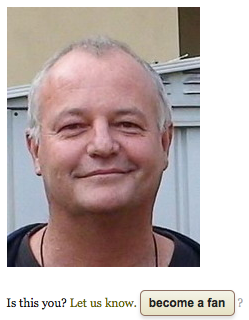
Now that all but one of my books on Goodreads are correctly attributed to me I have updated my Goodreads author page. Due to some glitch, most of my books had been listed under THIS bloke (right)! My recent novella Missorts Volume II still is.

I have also been testing out the Goodreads widgets by including ‘Add this book’-buttons on the books page of my website, like this one for my novel Shackleton’s Man Goes South.

Shackleton's Man Goes South

WordPress doesn’t seem to like the buttons very much, to use the technical term. Mouse-over them and nothing much happens. It allows you to click-through to find the book on the Goodreads site itself, but doesn’t seem to let you rate the book remotely. Anyway I’m going to try them out for a bit. But at least now that my worst problems with Goodreads seem to have been sorted out, I have updated the profile and added blog and video content on my Goodreads author page.

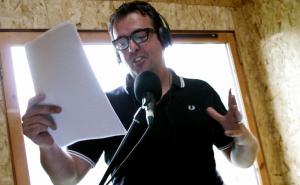
Tony White, DICKY STAR AND THE GARDEN RULE, publication date 26 April 2012, Forma Arts and Media Ltd.I was going to post Forma’s video of me reading from my novella Dicky Star and the Garden Rule at the Free Word Centre on there, but Vimeo and Goodreads don’t speak to each other at all — to use another technical term ;-) — so instead I’ve posted one of the mini-readings from my novella Missorts Volume II that publisher Situations filmed and have put up on Youtube (see the whole playlist here).

Those Missorts Volume II videos were something of a test themselves, too. I thought it would be interesting to see if there were sections of the novella that might have enough depth and velocity to work as one- or two-minute readings, with enough of a narrative transformation for the clip to be worth watching.

These thoughts about brevity and speed, narrative transformation, remind me of a conversation that I had with poet Tim Wells at the launch of pal Stewart Home’s brilliant latest novel, The 9 Lives of Ray The Cat Jones the other day. Tim Wells is currently doing some great research on the ranting poetry scene of the 1980s, and publishing much of it on his excellent Stand Up And Spit blog. Tim was part of that scene, and like many poets he still gigs regularly. Chatting to him the other night, I wondered if the live readings scene for fiction had petered out a little in recent years. Tim’s suggestion was that readings from poetry can have the energy of a 7″ single, while those from fiction can often feel like listening to an LP; that the energy of a 7″ single (by extension) can be more appealing live.

Q. Does he have a point?

New: audiobook playlist for Shackleton’s Man Goes South

There is now an audiobook playlist for all three of my readings from my Science Museum novel Shackleton’s Man Goes South.

The readings were all recorded in the studio of my occasional, long-time collaborator, the composer Jamie Telford. Pals will recall that Jamie used to play live keyboard accompaniment to my readings from the novel CHARLIEUNCLENORFOLKTANGO, and that he composed the Portwall Preludes (a series of works written specifically for St Mary Redcliffe’s church organ) that provide the compelling musical soundscape for Missorts,

For Shackleton’s Man Goes South, Jamie Telford composed the sea shanty-ish ‘Going South Theme’, which bookends and punctuates these audiobook extracts.

§

Download the FREE ebook of Shackleton’s Man Goes South direct from the Science Museum website.

Shackleton’s Man Goes South is the Science Museum’s Atmosphere Gallery commission for 2013, published exclusively as part of the Contemporary Arts Programme.

© Tony White, 2013. All music © Jamie Telford, 2013. Recording engineer Andrew Phillis.

A display charting the literary and scientific inspirations behind Shackleton’s Man Goes South in the Science Museum’s Atmosphere Gallery runs for two years, from April 2013 to April 2015.

Shackleton's Man Goes South

Making Conversations

I am pleased to be talking to Dr Sanja Perovic of King’s College London, Chris Shaw and Bronac Ferran for Bronac’s Making Conversations programme on Resonance 104.4fm, 12 noon Tuesday 4 November. Pals will know that I chair the board of Resonance 104.4fm, so it makes a nice change to be on the other side of the microphone, as it were.

Michael Moorcock, ‘A Twist in the Lines’, POPP.027Among the things that we may discuss are my artists’ book project Piece of Paper Press, which gives this website its name, and which I began twenty years ago in 1994. You can read posts about recent Piece of Paper Press editions by Michael Moorcock (left) and Liliane Lijn elsewhere on this site.

We will also discuss the ‘loose collaboration’ that Perovic and I have been conducting with the artists Stuart Brisley and Maya Balcioglu over the past year or so. One output of which is ‘Into Day One of the Revolutionary Period’ [Opens as PDF], an edited and annotated transcript of a conversation between the four of us, which was published as a pamphlet by DOMOBAAL to accompany Brisley’s November 2013 performance work Before the Mast.

As well as discussing Sanja and Chris’s respective current projects, conversation will touch upon artists’ residencies, stories about climate change — including my recent article ‘Wanted: A New Kind of War Artist’ — and a thread of experimental publication that runs through my work, including my most recent novel Shackleton’s Man Goes South, which was published by the Science Museum, and can be downloaded free in all ebook formats from their website, or via the specially developed touch-screen ‘ebook dispenser’ that is part of the display about the novel in the Museum’s Atmosphere Gallery.

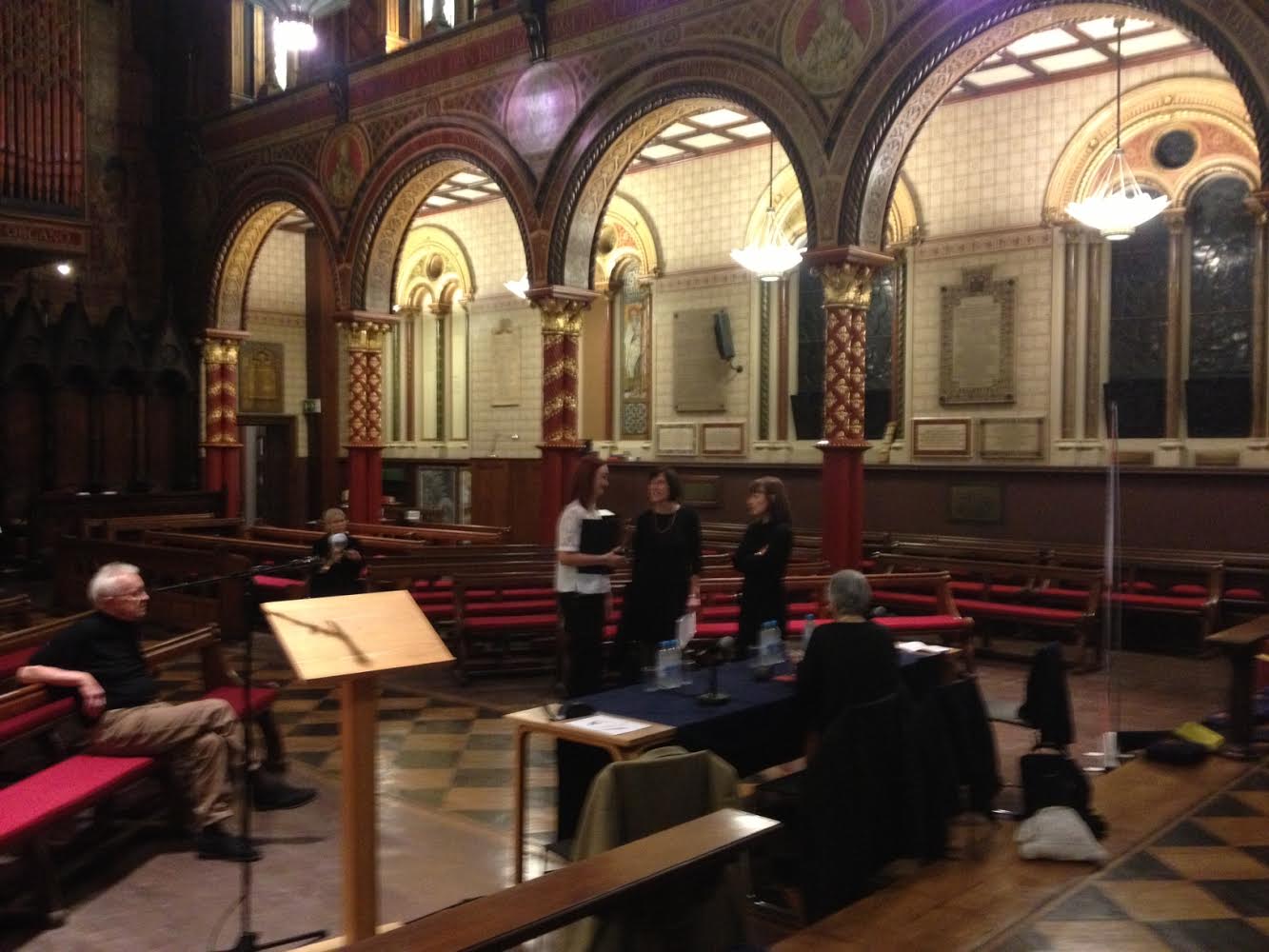
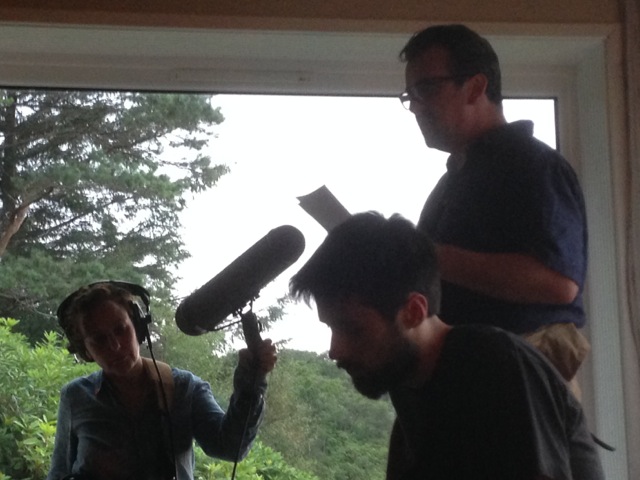
Listeners will be invited to send in a stamped-addressed-envelope in order to receive a copy of The Holborn Cenotaph, a new short story of mine that was first performed as a public reading as part of (and is being published to mark) The Cenotaph and the Public Sphere, an event by Balcioglu, Brisley, Perovic and I that was held in the Sir Gilbert Scott-designed chapel at King’s College London as part of their recent Arts & Humanities Festival 2014 (seen here in preparation, with Stuart Brisley at left).

-1

§

resonance web logoMaking Conversations, 12 noon, Tuesday 4 November 2014, Resonance 104.4fm across London, or via the Resonance webstream.

To receive a copy of the forthcoming Piece of Paper Press edition of The Holborn Cenotaph, please send a stamped, self-addressed envelope (standard first- or second-class postage) to:

Tony White, c/o DEPARTMENT OF FRENCH, KING’S COLLEGE LONDON, VIRGINIA WOOLF BUILDING, 22 KINGSWAY, LONDON WC2B 6NR

Stormbringer — for Jack Bruce (14 May 1943 – 25 October 2014)

Image © 2014, Jo Joelson, London Fieldworks

Image © 2014, Jo Joelson, London Fieldworks

My short story ‘Stormbringer’ will be broadcast on Resonance 104.4fm at 4pm today, 28 October 2014. Here’s what it says in the Resonance 104.4fm schedule:

By way of tribute to the late Jack Bruce, a special broadcast of Tony White’s short story first broadcast as part of Remote Performances in August 2014. ‘Stormbringer’ was inspired by talk of a period in Jack Bruce’s life when it seems he was entitled to be formally addressed as The Much Honoured Laird of Sanda. Voice: Tony White. Guitar: Peter Lanceley.

Tony White, explains:

© Anthony Oliver, 1999

© Anthony Oliver, 1999

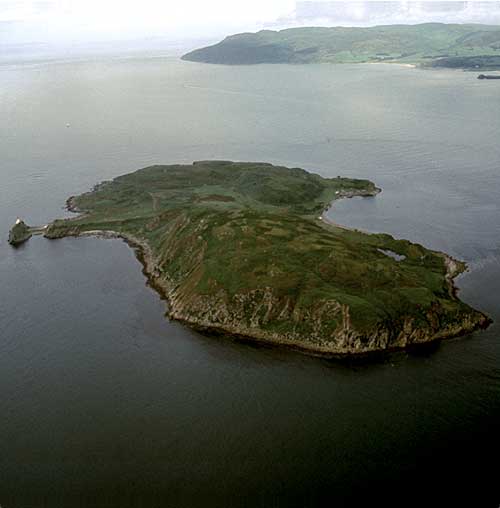
In 1999 I had been invited to be part of an art project that was to take place on the remote Scottish island of Sanda, off the southern tip of the Mull of Kintyre. Bruce Gilchrist and Jo Joelson of London Fieldworks had invited a group of artists — including composer Kaffe Matthews, writers Steve Beard, Jenni Walwin and myself — with former members of Airkraft, the then world champion stunt kite team, to collaborate and explore connections between mind and weather. The kite team would be bolting themselves to the mountain and sending up stacks of kites that dangled meteorological kit, and both Kaffe and Steve ended up using those data streams to drive their respective compositions. I was to contribute by exploring these ideas in a work of fiction and had been casting around for some sort of visionary voice with which to explore the place, but had drawn a blank. Luckily, on the boat from Campbelltown, it was mentioned in passing that a previous Laird of Sanda had been Jack Bruce. That’s Jack’s tractor that you’ll see, Dick told me, still stuck in the marsh.

Well, here was a true visionary, and musical colossus: the mighty Jack Bruce. But what, I wondered, would a rock star in self-imposed exile from the fallout of that first-generation London R&B scene on a tiny island at the gateway to the Atlantic do all day? This was the music of the Black Atlantic, after all. So how might he assuage the ‘postcolonial melancholia’ (to borrow another of Paul Gilroy’s phrases)?

On Sanda Island © Bruce Gilchrist/London Fieldworks, 1999In my story (which is called ‘Stormbringer’, after the Michael Moorcock novel of that name) my fictional bass player makes a cloak out of curtains and plays psychedelic games whilst pretending to be a character from a Michael Moorcock novel; and not just any character, but Elric of Melniboné, the Eternal Champion. Within hours of arriving on Sanda I found the skull of a small cetacean washed up on the rocky beach and made a ‘moon staff’ by lashing it to a tall, straight stick, then I set out to explore the island, perhaps to devise some lysergic ritual to tune in to those old Atlantic frequencies.

Strangely, the ‘moon staff’ — or its bony head, at least — became the focus of a real superstition, and turned me into a sort of Jonah. It was a wind curse! Whenever it and I appeared, the kites would come tumbling out of the sky. Don’t bring that thing near us, the kite team pleaded. By the end of the stay I was starting to believe it myself, and was relieved to return both staff and skull into a decidedly choppy sea rather than risk taking them on the already perilous boat journey back to Campbelltown.

Image © 2014, Jo Joelson, London Fieldworks

Image © 2014, Jo Joelson, London Fieldworks

Back on the mainland, I immediately made contact with Michael Moorcock, who very graciously granted me permission to use Elric and elements of the Eternal Champion cycle of novels in the story, and I acknowledge that support again now. Chatting about the period, Mike wondered whether it hadn’t in fact been Ginger Baker rather than Jack Bruce who was the Elric fan.

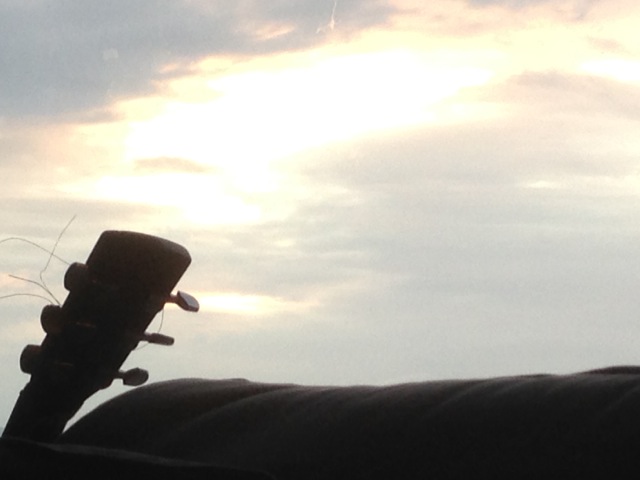
‘Stormbringer’ appeared in the Idler magazine and then was published by London Fieldworks a couple of years later, but has never been performed in full, and certainly never in Scotland. So when I returned to the Highlands this summer with London Fieldworks and Resonance 104.4fm for Remote Performances, we decided to correct that. ‘Stormbringer’ is here performed as a live reading with musical accompaniment from Peter Lanceley of the Resonance Radio Orchestra on guitar and effects, in front of a small audience gathered in a Roshven living room that looked out over the peaceful waters of the Sound of Arisaig at sunset.

§

‘Stormbringer’, will be broadcast on Resonance 104.4fm, 4:00pm, Tuesday 28 October 2014. Listen at 104.4fm in London, on the Radio Player app or via the Resonance 104.4fm webstream.

Update, 15 July 2021 — archive audio of the Remote Performances recording of ‘Stormbringer’ at Roshven is on the project’s Mixcloud archive. Music: Peter Lanceley, Sound recording: Sarah Nicol for Resonance FM

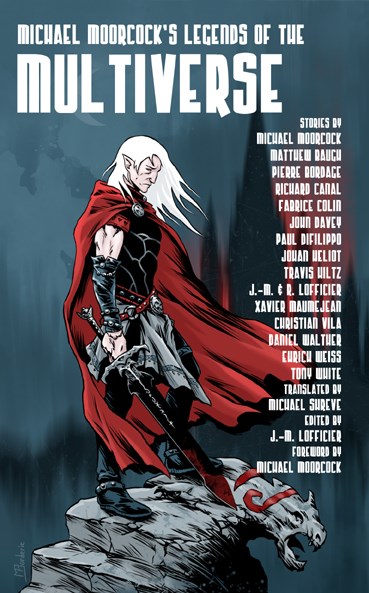
‘Stormbringer’ by Tony White was also recently republished in 2017 anthology Michael Moorcock’s Legends of the Multiverse, edited by Jean-Marc Lofficier

Talk with Stuart Brisley et al

BRISLEY_Cenotaph_eflyerThis Friday I am taking part in a panel discussion in the beautiful George Gilbert Scott-designed chapel at King’s College London, with Stuart Brisley and Maya Balcioglu and Dr Sanja Perovic. The event is part of the King’s College London Arts & Humanities Festival 2014: Underground, and is a rare opportunity to hear Brisley and Balcioglu in conversation, and to hear about The Cenotaph Project.

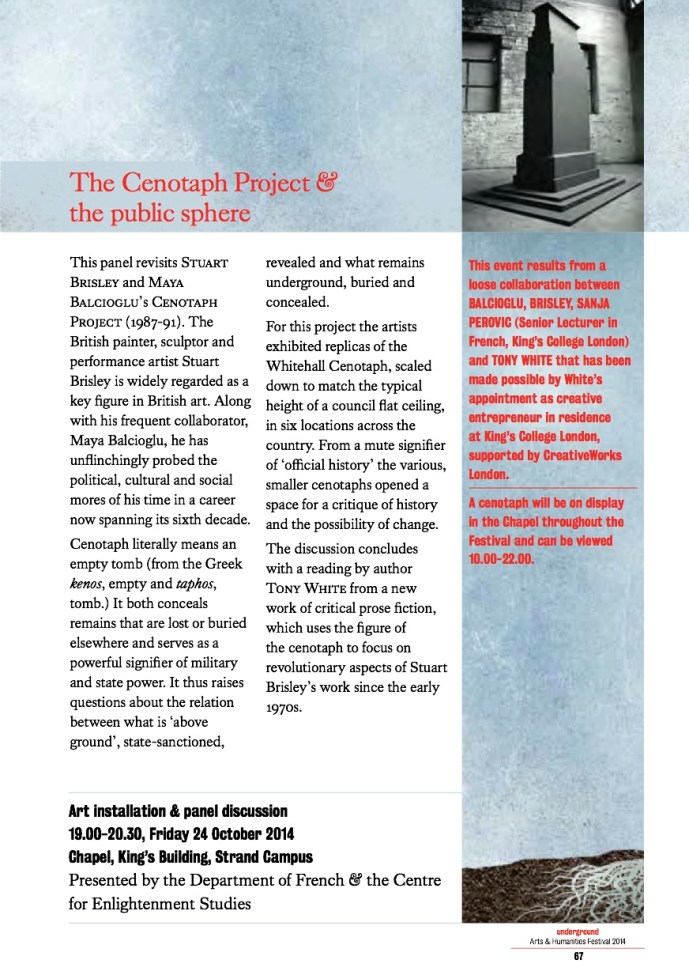
In addition, as part of the proceedings I shall be reading a new short story published to mark the event, entitled ‘The Holborn Cenotaph’. A limited edition of fifty signed proofs will be published by Piece of Paper Press to mark the event. Here is the information taken from the A&H Festival brochure. Please click-through for the Eventbrite bookings page.

Cenotaph_page_A&Hbrochure


Sliding Away — Digital London

Here are the slides (only) for a talk that I gave to MA creative writing students who are studying a module called ‘Digital London’, in the department of English, Linguistics and Cultural Studies (ELCS) at the University of Westminster.

Speaking at the invitation of the brilliant Rachel Lichtenstein, my talk needed a starting point, so I traced the idea of ‘digital london’ back to Cyberia, which in 1994 was certainly the UK’s (and possibly the world’s) first internet cafe. Shifting forward to the turn of the century I discussed my 2003 novel Foxy-T (Faber and Faber), which is set in the East End of London, in a fictional version of what was by then the globally ubiquitous ‘internet shop’.

Then I looked in detail at three of my large-scale digital literature projects: Ivy4evr a week-long, real-time interactive drama pilot for mobile phones that I wrote for Blast Theory and Channel 4 in 2010; Missorts, a permanent GPS-triggered soundwork and public work of fiction for the city of Bristol, and; Shackleton’s Man Goes South (Science Museum), discussing the innovative publishing model that was developed for my most recent novel, the first that the Science Museum had ever published.

I’m sorry that there are no notes — I delivered the talk with just a few headings on index cards to prompt, and answering questions and clarifications as they arose — but in talking about these three digital projects, among the aspects that I discussed in depth were audience/user research and testing, access to data (before and after), that the digital (work) is not bounded by the device, and the need to collaborate and to find new ways to go where readers are, at a time when the physical square-footage of the traditional booktrade is diminishing. I also discussed language, and interaction design, including some impacts of these ways of working on my more traditionally published prose fiction.

§

Press coverage and reviews of Foxy-T by Tony White

More events and appearances.

From the underground to the public sphere

TonyWhite©ChrisDorleyBrown2012From the underground to the public sphere, from Santa Monica Beach to the High-Lands, from Castañeda to the academy: news of some current and forthcoming events, publications and releases. I’m really excited about these various events and collaborations, so I hope that they are of interest. Do please come along, and do feel free to help spread the word, or to share this with anyone to whom it may be of interest.

ARTISTS IN THE ACADEMY. I’ll be joining chair Deborah Bull, choreographer Jasmin Vardimon, artist Di Mainstone, Professor Philip Crang and Dr Dominic Johnson to discuss the role of artists in the academy, in an event that is presented by The Culture Capital Exchange in partnership with the British Academy as part of this year’s Inside Out Festival. Read more …

Monday 20 October, The British Academy, 10-11 Carlton House Terrace, London SW1Y 5AH, 6.00pm—7.30pm. FREE. BOOKING ON THE BRITISH ACADEMY WEBSITE ESSENTIAL (REGISTRATION NEEDED).

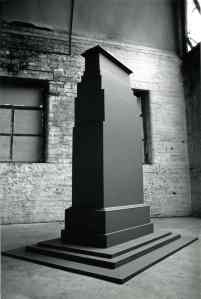
Stuart Brisley, The Cenotaph Project, 1987-91, Installation (with Maya Balcioglu). Image: Maya Balcioglu.

Stuart Brisley, The Cenotaph Project, 1987-91, Installation (with Maya Balcioglu). Image: Maya Balcioglu.

THE CENOTAPH PROJECT AND THE PUBLIC SPHERE. I’ll be giving a live reading following participation in a panel discussion revisiting Stuart Brisley and Maya Balcioglu’s Cenotaph Project (1987-91) with Stuart Brisley, Maya Balcioglu and Dr Sanja Perovic (Senior Lecturer in French, King’s College London), chaired by Dr Johanna Malt, in King’s College London’s George Gilbert Scott-designed Chapel, as part of Underground, the King’s College London Arts & Humanities Festival 2014. This event results from a loose collaboration between Balcioglu, Brisley, Perovic and myself that has been made possible by my appointment as creative entrepreneur in residence at King’s College London, supported by CreativeWorks London. Read more …

Friday 24 October, Chapel, King’s Building, Strand Campus, London WC2R 2LS, 7:00pm—8:30pm. FREE. EVENTBRITE BOOKING ESSENTIAL.

Full brochure (PDF) for Arts & Humanities Festival 2014: Underground.

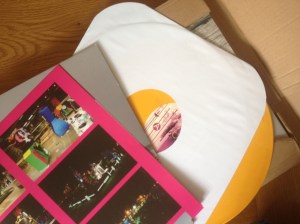
-5A FRAGMENT FROM THE LIVES OF THE CONQUISTADORS. A psychedelic parable about Cortés presented as a piece of Castañeda apocrypha. This new short story was commissioned for LA artist Steven Hull’s huge Puppet Show performance at last year’s Glow (a triennial, all-nighter arts festival on Santa Monica Beach). The story is now available on a beautiful, yellow vinyl, gatefold LP from Nothing Moments, featuring audio of the story with sounds and music by Petra Haden, Tanya Haden and Anna Huff, Steven Hull and the legendary Gibby Haynes of Butthole Surfers. A two-fold, full colour pamphlet insert features the full text of my story, plus photos of A Puppet Show at Glow and an interview-essay with all participants by Christopher Schnieders.

Listen to a preview of ‘A Fragment from the Lives of the Conquistadors’ on SoundCloud (12:50)

A Puppet Show LP is now available to buy direct from Rosamund Felsen Gallery, LA, for $25.00 + international postage.

Video still © Inga Tillere, 2014

Video still © Inga Tillere, 2014

HIGH-LANDS. A new short story that was originally commissioned for radio as part of Remote Performances, a groundbreaking radio project by London Fieldworks and Resonance 104.4fm in August 2014. ‘High-Lands’ was broadcast live from Outlandia, London Fieldworks’ amazing artists’ field station high above Glen Nevis in the Highlands of Scotland. The story also draws substantially on research with artist Stuart Brisley, made possible with support from CreativeWorks London. ‘High-Lands’ was performed with live soundscape accompaniment by Johny Brown of the legendary Band of Holy Joy.

Listen to ‘High-Lands’, live from Outlandia (feat. Johny Brown), on my SoundCloud page.

 Image: Science Museum

Image: Science Museum

SHACKLETON’S MAN GOES SOUTH. The Science Museum’s giveaway of my latest novel, and the accompanying display in the Atmosphere Gallery, charting the literary and scientific inspiration behind the book, was re-optioned earlier this year by the Museum, and now continues for at least another full year until April 2015. You can obtain the book free in all ebook formats from the Science Museum website, or from a specially developed, touch-screen ‘ebook dispenser’ that is part of the display in the Atmosphere Gallery.

Press about Shackleton’s Man Goes South

-6MISSORTS. Visitors to Bristol will find that the new edition of the free Bristol walking map — Bristol City Council’s official tear-off guide to getting around, which is available from outlets all over the city — has been updated to prominently feature Missorts, my permanent, GPS-triggered soundwork for the city.

Visit the Missorts website.

A limited edition paperback of the companion novella Missorts Volume II is available direct from Situations.

Wanted: A New Kind of War Artist. My short argument for Huffington Post back in the summer, on the need for new approaches to talking about climate change and a role for artists and writers within IPCC and climate science sectors in face of the current policy impasse, continues to gather interest and comment. Do please read and share, and watch for developments.

Forthcoming gigs, readings, festival appearances and events are regularly updated on my events page. For review copies, press queries, or if you want to talk to me about doing a reading, a lecture or taking part in an event of some kind please feel free to email me.

Unsafe Passage

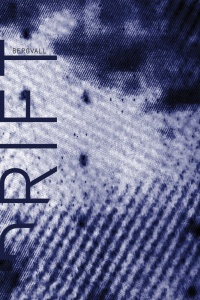
CB-DRIFT-cover_2I am pleased to be taking part in Drift: Collective Reading & Forensics a live reading at the Whitechapel Gallery this evening as part of a dual launch both of Caroline Bergvall’s new book, Drift (Nightboat Books), and her forthcoming residency at the gallery. Caroline has been touring a live production of Drift, which was first commissioned for the festival lost.las.gru by Gru/Transtheatre in Geneva, and is produced by Penned in the Margins and Sound and Music. From Southend to The Southbank, with dates in Bournemouth, Milton Keynes, Liverpool and London, the tour is now finished. This was the blurb:

a journey through time and space, where languages mix, where live percussion meets live voice, where the ancient cohabits with the present. Ancient tales of exile and love re-emerge to shadow today’s lives and losses. Internationally renowned performer Caroline Bergvall teams up with experimental Norwegian percussionist Ingar Zach and Swiss visual artist Thomas Köppel and together they invent a language of extremes: from the ancient pool of English and Nordic poetry to the lyrics of pop songs and damning human rights reports into contemporary sea migrants’ disaster.

For this evening’s performance, Caroline Bergvall has mustered a mob of writers and performers, friends and colleagues, for a collective reading. I won’t give anything away, but I am just looking at the script now, and as Caroline says in her accompanying notes: ‘It looks complicated on paper but should remain v organic and easy and going w the flow of the narration.’

imgsizeI have been following Caroline’s work for a while. In 2010 I took part in Middling English an event accompanying her then current exhibition at the John Hansard Gallery, Southampton. Going back a bit further — twenty-odd years ago — between 1991 and 1994 I set up and directed a programme of live art commissions, screenings and readings at The Showroom gallery, then in Bethnal Green, which enabled me to work with artists and writers including Oreet Ashery, Anne Bean, Tim Brennan, Stuart Brisley, Tim Etchells, Anthony Howell, Richard Layzell, Deborah Levy, Sharon Morris, Gordana Stanisic, Aaron Williamson and many others. As part of that project, I commissioned an earlier ‘multivocal’ piece by Bergvall. Strange Passage was The Showroom Live Art commission 1993, supported by the then Arts Council of Great Britain. It was a great piece of work. The voices of Bergvall and others filled the Showroom’s idiosyncratic linked spaces, while Christopher Hewitt performed lighting miracles using a Heath Robinson rig that he had made from multiple household dimmer switches. The text was published as a chapbook by Cambridge poetry publisher Equipage. What I hadn’t realised until Caroline mentioned it recently, was that it had been her first major commission.

hold-everything-frontcover-max_221-061b049a927f7dfe2cf54a57fbdca4e2It is an interesting coincidence that with my novel Shackleton’s Man Goes South, and with publication of Bergvall’s Drift we will now each have recently and independently published books that explore from differing literary perspectives what I think may prove to be one of the defining movements of our time: the mulitudinous epic, and the great unfolding tragedy that is contemporary maritime migration. Perhaps, as John Berger puts it in his 2007 essay collection Hold Everything Dear, we are each in our own way simply ‘choosing the voices [that we wish] to join.’

Often branded incorrectly as ‘illegals’ or referred to as ‘Irregular Maritime Arrivals’, tens of thousands of people are being killed at the Global Frontier. In Australia, the Border Crossing Observatory project whose Australian Border Deaths Database maintains a record of all known deaths associated with Australia’s borders since 1 January 2000, estimate that at least 1,495 people have died (a figure that ‘Includes those who are missing, who have not been rescued or recovered and are therefore feared drowned’). Border Crossing Observatory writes:

Controlling border crossing has become a prime concern under conditions of late modernity, leading western governments to introduce increasingly coercive control measures, ranging from visa regimes to military fortification. Far from eradicating spontaneous border crossing, this ‘defensive geography’ has fuelled illicit people smuggling markets, and forced asylum seekers and illegalized travellers into increasingly hazardous journeys. In seeking to account for, rather than merely count, border-related deaths this project by Dr Leanne Weber and Professor Sharon Pickering intended to shift the debate about contemporary border controls towards the acceptance of a more mobility-tolerant future.

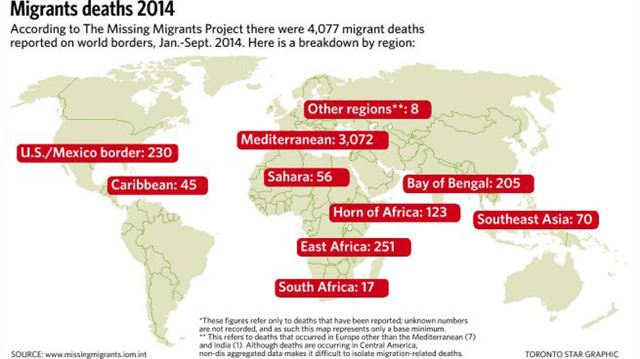
01_fomigrantstalaga29_0d4a4___GalleryIn the same period it is thought that 22,000 (twenty-two-thousand) people may have died trying to reach Europe by crossing the Mediterranean Sea — more than 3,000 this year alone. It makes grim reading, but Tara Brian and Frank Laczko’s report Fatal Journeys: Tracking Lives Lost During Migration (International Organisation for Migration) is a useful primer on the subject.

Bergvall’s Drift uses ‘a medieval sea poem a forensic report an aircraft surveillance image a runic sign’ to lament — and ‘to account for’ — the so-called ‘Left-to-die-boat’ which left Tripoli in March 2011 with seventy-seven people on board. After drifting for fourteen days all but eleven passengers were dead, two more died shortly thereafter, and this at a time when ‘NATO was enforcing an arms embargo in the central Mediterranean Sea, meaning that during that period it was the most highly surveilled section of sea in the entire world’.

It is a great book, and Caroline is a unique performer.

I hope to see you there.

§

Caroline Bergvall (et al), Drift: Collective Reading & Forensics

Creative Studio, Whitechapel Gallery, E1 7QX

Thursday 9 October, 7pm – 9pm

Booking essential. NB Advance online bookings have closed. Please call the Information Desk 020 7522 7888 to check ticket availability and to book with a debit or credit card. £8.50/£6.50 concession (£4.25 Whitechapel Gallery Members).

Shackleton’s Man Goes South, square thumbnailTony White’s latest novel Shackleton’s Man Goes South is published by the Science Museum — the first novel they have ever published — with an accompanying display in the Museum’s Atmosphere Gallery. The novel is available free from the Science Museum website and from a specially-developed, touch-screen ebook dispenser in the Atmosphere Gallery. The novel giveaway and exhibition run have been extended by the Museum and now continue until at least April 2015.

Power-tripping at the energy conference

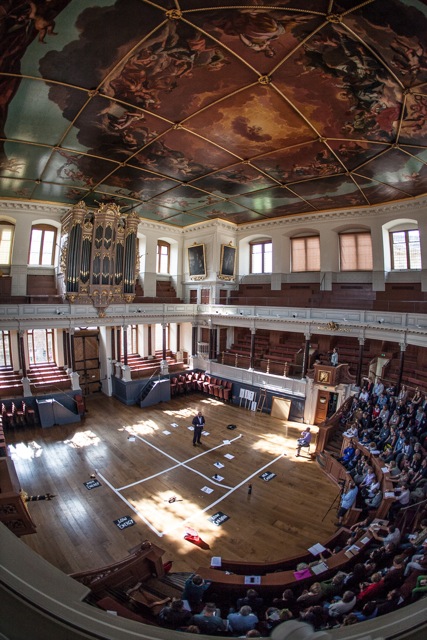
Stephen Peake opening the TippingPoint: Stories of Change conference, Sheldonian Theatre, Oxford. Photo: Gorm Ashurst

Stephen Peake opening the TippingPoint: Stories for Change conference, Sheldonian Theatre, Oxford. Photo: Gorm Ashurst

I spent an interesting couple of days at the latest TippingPoint arts and climate science conference in Oxford, which was held in association with Stories of Change, a new AHRC-funded research project that aims

to help to revive stalled public and political conversations about energy by looking in a fresh way at its past, present and future. The project draws on history, literature, social and policy research and the arts to encourage a more imaginative approach to current and future energy choices. The project is shaped around the cross-party commitments to decarbonisation that sit at the heart of the UK Government’s Climate Change Act. Research has shown that many people feel disengaged, disempowered or actively hostile to the changes to the UK’s energy system required to meet the targets embedded in the Act.

Highlights of the two days included Stephen Peake’s opening presentation (captured in Gorm Ashurst’s photo above): an entertaining and highly-animated demo of changing energy uses and outputs on a high and low-carbon/energy grid that he had mapped out with loo rolls on the floor of the Sheldonian Theatre.

Split into random groups of six during the introductions on day one, participants were asked to write a fifty-word story, something that would take less than two-minutes to speak or read aloud. Looking for shortcuts to aid the non-writers among our group, I wondered if we could each try and come up with a limerick. I thought that the simple, rhythmic form and rhyme scheme, the nonsensical impulse, might make the task easier; more playful and enjoyable. That was the theory.

Day two started with very inspiring presentations from some remarkable women including Julia Hawkins of Ashden, scientist and IPCC author Karen O’Brien, Julia Davenport of Good Energy Group PLC, and Gunjan Parik of the C40 Cities: Climate Leadership Group.

Funnily enough, given this progressive context, and an impressive gender balance overall, both of speakers and participants, I also gained the tiniest of insights into what being mansplained (or mansplained to?) might feel like, although obviously since I too am a man, this had not been reinforced by a lifetime of gender-based discrimination, harrassment, oppression and/or violence. Still, an observation I had offered in an open conversation with some fellow delegates got casually shot down repeatedly and authoritatively by a man who (and this is the clincher) was in fact wrong himself ;-)
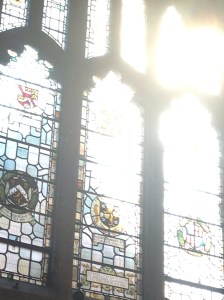
Stained glass in the Hall of Exeter College, Oxford.

Stained glass in the Hall of Exeter College, Oxford.

A group of us was chatting over lunch, in the rather ostentatiously class-bound — if not to say highly stratified and ossified — surroundings of the Hall at Exeter College. We were talking as so often at such events in recent monts about the need for new kinds of stories about climate change, and new kinds of storytellers. In my recent article ‘Wanted: A New Kind of War Artist’ I argued that the IPCC and the climate science community seem over-reliant on their primary, policy audience and on the news media, where they could be finding new ways (including by working with artists of all kinds) to address wider, public audiences; electorates, even. To illustrate the point here, I raised the obvious recent example of how badly the IPCC’s publication on 31 March of this year of their Working Group II report on impacts of climate change had fared in gaining news coverage; how this most important and unequivocal of reports had immediately been bumped down the news schedules, e.g. on the BBC TV news flagship Newsnight, where UK Chancellor George Osborne’s same-day announcement on the (rather woolly, as it turned out) subject of ‘full employment’ had seemed like a deliberate spoiler, as indeed for US audiences had Exxon/Mobil’s report on climate change risks, also released on that same day; 31 March 2014.

A journalist at our table corrected me. No, he said, the Exxon report hadn’t been published on 31 March but some weeks later, on the same day as the IPCC’s Working Group III report on Mitigation of Climate Change, which had moreover, he said, been rather weak, and that was why any coverage had been bumped. Furthermore, he added — bringing in invisible reinforcements — that he knew for certain that this was the case, because some friend or relative (his brother? I can’t remember!) had been personally involved with the publication of Working Group III.
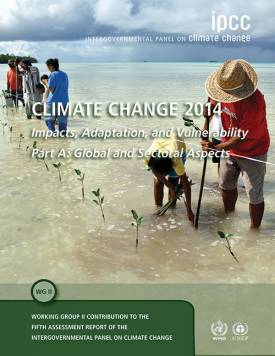
AR5cover1_275_356_70Having written about both the IPCC AR5 Working Group II report on climate impacts and the Exxon report in the days immediately following their respective publications on 31 March, (and, separately, about Osborne’s seeming IPCC spoiler of the same day) I was pretty sure of my ground, and said so, but there was no getting around the confident assurance of my interlocutor, who by now (as Solnit so eloquently puts it in her influential essay) had his ‘eyes fixed on the fuzzy far horizon of his own authority.

Within what was otherwise a broadly and generously interdisciplinary gathering, such pulling of rank — power-tripping at the energy conference? — struck a strange, isolated note. It is a timely and useful reminder that interdisciplinary working brings together people from many professional domains or ‘communities of practice’, as Scott deLahunta writes in the special section of Leonardo (volume 39, number 5) that I co-guest-edited with Bronac Ferran and James Leach:

In face-to-face meetings in the context of a project, it is professional borders that drift and open as collaborators search for the best means of relating to one another and stimulating creative and lateral thinking. However, these borders will constantly reassert themselves…

In his article’s abstract, deLahunta outlines his argument

that the role of facilitation within art and science collaboration projects is perhaps best described not as a function or position, that of the facilitator, but as a framework for thinking about relations and how to encourage a certain quality of exchange. The article reflects on how the themes of willingness, inter-profession, conversations and wording, empathy, and collaborative writing relate to the conditions for interdisciplinary collaboration.
Leo395_cover-175TippingPoint events seem to be about precisely such a process: creating a framework and encouraging ‘a certain quality of exchange’. And this latest event in Oxford was no exception. Indeed some of the conversations that began at this and their previous conference at the Free Word Centre earlier this year are continuing to develop as I write. I’ll keep you posted.

In the meantime, so much for making the task easier, I don’t think anyone else managed to write a limerick. I had to leave before the final session of the conference, so sadly I didn’t get to hear any other groups’ fifty-word stories either. However, after a few false starts (‘Lord Lawson, that arrogant peer…’, anyone?) I had managed to come up with one limerick as I walked along St Giles on the way to the conference on the Sunday morning.

There once was a climate denier

Who sat very close to the fire.

Asked if he was hot,

He said, ‘I am not!’

And denied that his socks were on fire.

§
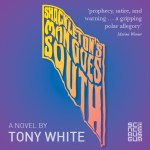
Shackleton’s Man Goes South, square thumbnailTony White’s latest novel Shackleton’s Man Goes South is published by the Science Museum — the first novel they have ever published — with an accompanying display in the Museum’s Atmosphere Gallery. The novel is available free from the Science Museum website and from a specially-developed, touch-screen ebook dispenser in the Atmosphere Gallery. The novel giveaway and exhibition run have been extended by the Museum and now continue until at least April 2015.