Conquistadorable

Friends in the Los Angeles area will be able to get their hands on a new record featuring my short story ‘A Fragment from the Lives of the Conquistadors’ and music from Butthole Surfers’ Gibby Haynes, which launches on 12 July.

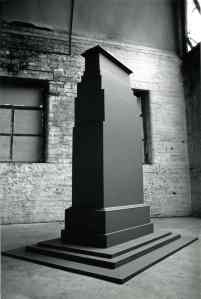
Grant Mudford

Grant Mudford


That’s when a new exhibition called “My Little Boat of Sorrow” and curated by artist Steven Hull opens at Rosamund Felsen Gallery in LA. The exhibition includes artworks by Tami Demaree, Alex Evans, Tanya Haden, Gibby Haynes, Allison Schulnik, Jim Shaw and Marnie Weber, and will feature large scale sculptures, drawings, video, sound and paintings — a sinking boat, an army of skeletons, and sculptures of masked heads. During the opening there will be a special marionette performance by Alex Evans and a musical performance by Tanya Haden, Petra Haden and Anna Huff.

The launch is also a record release party for a puppet show, a gatefold vinyl record that documents Steven Hull’s installation at Glow on Santa Monica Beach in September 2013. The record features music by Gibby Haynes (FYI, Butthole Surfers fans), Steven Hull, Tanya Haden, Petra Haden and Anna Huff, and audio of my new short story ‘A fragment from the Lives of the Conquistadors’ — a fictional piece of Carlos Castañeda apocrypha that formed the basis of Hull’s amazing puppet show.

Carlos Castañeda once told this parable about the Conquistador Hernán Cortés. He didn’t write it down, so you won’t find it in any of his books or among his papers, but in any case I heard that Castañeda once spoke of a legend about Cortés, one that he in turn perhaps had heard from his own teacher, don Juan Matus. The legend tells that late in his life – but before his final fall from grace – Cortés and his closest allies, maybe his generals and one or two of their mistresses or companions, stopped on the beach in what is now Santa Monica and stayed there for a short time. Their tangled hair and beards would have been bleached by sun and salt, and their breast plates and helmets ‘battle forged,’ which is to say rusting and dinted; misshapen by innumerable blows.

10409551_10152557177793447_2884448099285032872_nThe record includes images from the marionette performance by Alex Evans and Eric de la Cruz, and Steven Hull’s a puppet show as installed on stage (right). The record was designed by Tami Demaree and Steven Hull with an introduction by Christopher Schneiders. The order and titles of tracks on the record may have varied in production, but this was the tracklisting from an early proof.

A Side:
#1 “A Fragment from the Lives of the Conquistadors” Story by Tony White and sound by Steven Hull, 12:50 min.
#2 “Horse Parade” by Petra Haden, Tanya Haden and Anna Huff, 3:47 min.

B Side:
#1 “Maigizo ya Bandia” by Gibby Haynes, 10:12 min.
#2 “Conquistadorable” by Petra Haden, Tanya Haden and Anna Huff, 4:51 min.

§

‘My Little Boat of Sorrow’, curated by Steven Hull. Exhibition opening reception and record launch party: Saturday 12 July, 5-7PM. Watch this space or follow me on twitter for information about purchasing the record.

Rosamund Felsen Gallery, 2525 Michigan Ave. B4, Santa Monica, CA 90404

JULY 12 – AUGUST 9, 2014 — Gallery Hours: Tue–Sat, 10AM–5:30PM

Putting Missorts on the map

The new, free ‘Welcome to Bristol’ walking map of the city is now out. Published by Bristol City Council, this A3-sized map is available on the counters of numerous shops, amenities, tourist attractions and cultural centres all over the city — you simply tear it off a pad.

bristol-legible-city-wayfinding-design-print-map-city-id-walking-visitors-tourism-touristsCommissioned with the simple aim to provide the visitor with a free walking map of the centre of Bristol. The look, feel and information relate directly to the pedestrian signing system and the user is given more information on how to move around the city. The map includes details of railway and bus terminals, waterways and ferries, taxi locations, car parks, hospitals and neighbourhoods. In addition, on the reverse, the central area is extended to include Clifton, and there is written information about travelling by foot, bike or ferry, as well as by bus, train or car. Useful numbers, tourist information advice are also included. The map is created using all of the elements of the Bristol Legible City graphic identity.

The 2014 edition of the map features Missorts, my permanent soundwork for Bristol. The Missorts ‘app area’ is marked, and little red ‘M’ icons show where each of the ten, interconnected stories are triggered (by GPS). A large centre panel on the reverse of the map gives more information about the project.

-6

I am extremely proud of Missorts and the many great people that I worked with to make it happen — from producer Situations, to developer Calvium, the ten writers (Sara Bowler, Holly Corfield-Carr, Thomas Darby, Jack Ewing, Katrina Plumb, Jess Rotas, Hannah Still, Helen Thornhill, Isabel de Vasconcellos and Sacha Waldron), composer Jamie Telford, and the community of St Mary Redcliffe — and I hope that this extraordinary level of support from Bristol City Council encourages more people to experience the city (and literature) in a new way, by downloading the app (free from the iTunes store or Googleplay) or borrowing a pre-loaded smartphone from either Bristol Central or Bedminster Library, putting their headphones on and going for a walk in the Redcliffe area of Bristol.

Outlandia #2

outlandia_570_380I am delighted to be part of Remote Performances, a forthcoming collaboration between artists London Fieldworks and Resonance 104.4fm (the world’s first art radio station). A number of new artworks will be made for radio and broadcast live from Outlandia: August 4 -9 2014

I will be travelling to Glen Nevis in the Scottish Highlands and will have an opportunity to work in this amazing tree house studio. Other participating artists include Bram Arnold, Atlas Arts, Ruth Barker, Ed Baxter (with Resonance Radio Orchestra), Johny Brown (with Inga Tillere and James Stephen Finn), Clair Chinnery, Adam Dant, Tam Dean Burn, Benedict Drew, Alec Finlay (with Ken Cockburn), Bruce Gilchrist & Jo Joelson, Kirsteen Davidson Kelly, Parl Kristian Bjorn Vester (aka Goodiepal), Sarah Kenchington, Lee Patterson, Michael Pedersen (with Ziggy Campbell), Geoff Sample, Mark Vernon, and Tracey Warr.

London Fieldworks: Syzygy/Polaria
I have worked with London Fieldworks before. Back in 1999, a group of us travelled to a similarly remote location, the uninhabited Southern Hebridean island of Sanda, to conduct creative experiments into the relationships between mind and weather. I blogged about the experience a decade or so later, when Outlandia first opened.

A book from London Fieldworks entitled Syzygy/Polaria, documents that project on Sanda Island, and includes my short story ‘Stormbringer’.

Here is the announcement about London Fieldworks’ new project Remote Pefrormances:

For one week in August 2014, 20 specially commissioned artist performances and programmes created with local residents will be broadcast live from Outlandia, a unique artists’ field-station in Glen Nevis, Lochaber, Scotland.

With Resonance 104.4fm’s mobile studio ‘in residence’, Outlandia will become a portal between Lochaber and the rest of the world, a context in which participants can transmit experience of place to diverse audiences through art, music and performance.

Artists from England, Scotland and beyond will respond to Outlandia’s distinctive and remote geographical forest location overlooked by the UK’s highest mountain, Ben Nevis, in the Scottish Highlands. Taking place at the moment when Scotland votes on the continuance or dissolution of the 300 year old Acts of Union the week-long series of broadcasts and blogposts will be a timely reflection on contemporary ideas of remoteness, capturing and transmitting creative interactions with the land, its history and people and the tensions between nature, industry, tourism and heritage.

More programme information shortly.

The Auto-levellers Standard Advanced

News coverage in the aftermath of a rave that was held in the former Royal Mail sorting office on Addiscombe Road, Croydon, has increasingly and understandably focused on the tragic death of 15-year-old student Rio Andrew, who had been attending the rave, and the subsequent police investigation into his death.

autoPrior to these awful events, the former Croydon sorting office had not been standing empty for long. The go-ahead for the closure of the building and the transfer of its operations to a new site on a hard-to-get-to, out-of-town industrial estate, together with a plan to redevelop the Addiscombe Road site into flats was announced at the beginning of 2014, and this amid wider claims that the Royal Mail’s entire property portfolio may have been undervalued at the time of privatisation. According to the UK’s National Audit Office and others, undervaluation seems to have been a characteristic of the Royal Mail privatisation as a whole, although Business Secretary Vince Cable suggested that the rapid rise in the value of shares did not show that they had been undervalued, but was merely ‘froth’.

In the words of the Telegraph‘s Steve Swinford,

Mr Cable denied that the government has under-valued Royal Mail, and insisted that the prices will “settle” at a lower level.

‘Other interesting models are the “Self Levelling Cart” or “Auto Leveller”’

‘Other interesting models are the “Self Levelling Cart” or “Auto Leveller”’

On the eve of privatisation, the Labour Party’s Shadow Business, Innovation and Skills Team had said:

The prospectus for Royal Mail’s privatisation published last week outlines that it currently operates from 2,000 sites across Britain including delivery offices and mail centres. There are fears that once the privatisation is complete these assets — many in prime locations — will be flogged off giving a large windfall to investors, while the taxpayer is short changed by the low sale price for the company and customers could be left having to trek miles to inconveniently-sited delivery offices. The prospectus highlights three sites within London at Mount Pleasant, Nine Elms and Paddington as being “surplus”. Some reports attach a value of more than £500 million to the Nine Elms site, and a value of £1 billion to the Mount Pleasant site. But the document fails to specify which of Royal Mail’s other sites across Britain could be sold off and how much money this would raise. A disposal plan could see delivery offices — pick up points for parcels and mail — closed and moved to out-of-town locations, where land values are cheaper but which are inconvenient for customers.

This seems to be exactly what has happened in Croydon, and the pattern is likely to be repeated at sorting and delivery offices around the country.

Speaking of things supposedly finding their own levels, anyone watching the BBC London News report on the rave, and who has worked in a Royal Mail sorting office — as I did during the early 1990s, at London’s former St. Pancras Way (NW1) and Upper St (N1) depots — might have been surprised  to see news footage of a fully-loaded auto-level trolley (at left in the photo below) being used by people leaving the building.

Screen Shot 2014-06-18 at 10.43.00

I don’t know to what extent auto-levels — ‘autos’ for short — are still used in contemporary Royal Mail processing (the British Postal Museum and Archive holds a number of them, which they list as being in use until 2001) but in the 1990s they were ubiquitous. Whether empty, or full of packets, one was forever ‘tipping’ i.e. emptying mailbags into them, pushing them from one place to another, or ‘throwing off’ (i.e. sorting) their contents. The name comes from the sprung, wooden base which lifts as the load lightens, allowing the contents to be accessible at a constant level, and thus reducing potential for back strain that might otherwise be caused by postal workers repeatedly bending to retrieve items from the bottom of a trolley with a fixed base.

My postal-themed, Bristol novella Missorts Volume II, is set in and around another vast, derelict former Royal Mail sorting office, this one at Bristol Temple Meads, to which I was granted unique access during 2008-9. The site was littered with broken and abandoned equipment.

AUTOLEVEL JPEG


Bristol-based art producers Situations, who published Missorts Volume II (as a companion volume to my permanent public soundwork Missorts), filmed a series of short, one- or two-minute readings from the novella, to promote a limited edition paperback that they brought out at the end of 2013. Here is one of the films. It is entitled, of course, ‘A Broken Auto-level Trolley’.

§

Find out more about the limited edition paperback of Missorts Volume II.

Letters of not*: Steven Wells

Swells_letter

Undated letter from the late, great Steven Wells (10 May 1960—24 June 2009), written in a loose parody of my then soon-to-be-published novel CHARLIEUNCLENORFOLKTANGO. Swells had been a big fan of CHARLIEUNCLE…, having seen some of the many spoken-word outings that I was doing with the material at the time. ‘Roadrage’ — from the title of my 1997 novel — was the nickname that only he used, whenever we spoke.

This letter dates from autumn 1999, during the run-up to the launch of Swells’s Attack Books imprint.

ROADRAGE!

HERE’S SOME BASTARD POSTCARDS, YOU FUCKER!

DO YOU BLEEDIN’ WANT SOME BLOODY MORE, YOU TART? I’M FLAMING TRYING TO SHITTING SET UP SOME WANKING STUDENT GIGS, YOU TOSSER.

CUNTING WELL SPEAK TO YOU SODDING SOON,

SWELLS

As well as Swells’s own debut novel Tits-Out Teenage Terror Totty, and Stanley Manly’s Raiders of the Low Forehead, the Attack launch list included my novel Satan! Satan! Satan! — the title of which is of course a quotation of the opening vocal loop (at 00:57 in the Youtube video below) of ‘Sweat Loaf’ by Butthole Surfers (whom we both admired) from their 1987 LP Locust Abortion Technician, though it is possibly more well-known in the UK because of Orbital’s 1991 sample.

§

* with apologies to Shaun Usher’s great Letters of Note project.

Other posts about Swells on Tony White’s pieceofpaperpress.com.

Writing the Balkans — Zoran Živković reviewed

78_cover_250I was delighted to have been invited to contribute to the ‘Writing the Balkans’ issue of Wasafiri magazine (Issue 78, summer 2014), edited by Vesna Goldsworthy, author of the brilliant Inventing Ruritania: The Imperialism of the Imagination, and the more recent memoir Chernobyl Strawberries.

The magazine is now out, and it really is an excellent issue. There are contributions from many friends and colleagues from the region and the Balkan studies sphere, including Wendy Bracewell, Alex Drace-Francis, Kapka Kassabova, Andrea Pisac, Danilo Kiš biographer Mark Thompson, and many more. There are also some poems in translation from Milena Marković — whose work I had the pleasure of introducing in London at an event I chaired a decade or more ago when she was part of a panel of visiting writers that also included Vladimir Arsenijević and Saša Rakezić a.k.a. comic artist Zograf, who lives near Belgrade in the town of Pancevo.

All three — Arsenijević, Marković and Zograf — are interviewed in my 2006 non-fiction work Another Fool in the Balkans, (currently out of print, but some copies available from abebooks).

Milena Markovic reading in London, with (L-R, seated at rear Sasa Zograf, Vladimir Arsenijevic)

Milena Markovic reading in London, with (L-R, seated at rear Sasa Zograf, Vladimir Arsenijevic)

This special issue of Wasfiri is being launched with a day-long conference at the British Library today entitled Balkan Day – A Celebration of Creativity and Identity. Here is the blurb:

This event promotes the Balkan region from the perspective of its literary and cultural achievements, and widens the knowledge of our shared European heritage, especially in the centenary year of the start of World War One. By bringing together some of most prominent Balkan writers, as well as British academics and commentators who have a long-standing relationship with the region, we hope to stimulate discussion and interest, as well as provide a counter-balance to the negative perceptions sometimes promoted in the UK media. Featuring: Dubravka Ugrešić, Vladislav Bajac, Igor Štiks, Andrej Nikolaidis, Muharem Bazdulj, Dragan Kujundžić, Christina Pribicevic-Zoric and Alex Drace-Francis. With special literary afternoon events: ‘Balkanisation: the pick of recent Balkan fiction in English’ with Rosie Goldsmith and the UK launch of the Wasafiri Literary Magazine special Balkan edition, with guest editor Professor Vesna Goldsworthy.

Demand for the event is high, so I gather that it has been moved to the British Library’s largest auditorium. More info and booking details here.

My contribution to the Writing the Balkans issue of Wasafiri is a review of The Library by Zoran Živković, an interview with whom is also included in Another Fool in the Balkans. Here is a taster of the review:

First published in Serbian as Biblioteka, The Library is the fourth in a series of ten vivid and elegantly constructed ‘mosaic’ novels by Serbian author Zoran Živković. These began with 1997’s Time Gifts, and continue through Impossible Encounters (2000), Seven Touches of Music (2001), The Library (2002), Steps Through the Mist (2003), Four Stories till the End (2004), Twelve Collections (2005), The Bridge (2006), Miss Tamara, the Reader (2006), and Amarcord (2007).

RS0004L29‘Mosaic’ in this sense means that the novels in the series are each comprised of a number of short stories that could equally function as stand-alone pieces, but when read together tell a larger story; one in which theme and motif are refracted through a diversity perhaps of time, place, character and voice. Furthermore, all ten of these short novels bear the collective title Impossible Stories, and as well as new editions of some of the individual novels – including the one under review here – a complete edition of the series has now been published in Belgrade in both Serbian and English languages.

[…] The Library, then, is a mosaic novel told in – or comprising – six parts: ‘Virtual Library’, ‘Home Library’, ‘Night Library’, ‘Infernal Library’, ‘Smallest Library’ and ‘Noble Library’. All six stories are set in a kind of universal twentieth century, whose familiarity serves to emphasise the single uncanny, surreal or supernatural element that will disrupt it: a municipal library which changes nature after dark, a single volume that contains an infinity of unpublished books, or a writer’s possible futures glimpsed in a spam email. Of course, libraries are a familiar trope in literature, and the ones conjured here have neither the lightness and agility of a story by Jorge Luis Borges, nor the ethical complexity and historical velocity of the work of his compatriot Danilo Kiš, but Živković the master craftsman is creating something of intrinsic value.

To read more, of course, and to access the many brilliant contributions that make up this excellent issue of Wasafiri, you will have to buy the magazine. Vesna Goldsworthy reported a couple of days ago that single copies of issue 78: Writing the Balkans can be purchased directly from Wasafiri.

§

To obtain a copy please email wasafiri@open.ac.uk with your request. Additionally there is a special discount until the end of July 2014 for the purchase of issue 78 Writing the Balkans, pricing as follows:

  • GBP £6.50 each issue including post and packaging for UK delivery
  • GBP £7.50 each issue including post and packaging for international delivery
  • Special offer of GBP £11 for two issues (both UK and international delivery)

International and domestic payments are most easily carried out by paypal to wasafiri@open.ac.uk but please email the magazine if this isn’t possible for alternative arrangements.

This is London Calling – Shackleton’s Man Goes South

Screen Shot 2014-06-04 at 16.24.41

This is London calling, on Resonance 104.4fm.

I’m Tony White and my novel Shackleton’s Man Goes South, which is published by the Science Museum, was inspired by a forgotten science fiction story about climate change that was written in Antarctica in 1911 by Captain Scott’s meteorologist George Clarke Simpson. He wrote it for the South Polar Times, a shipboard scrapbook journal founded by Sir Ernest Shackleton. A kind of one-off zine, that was passed from reader to reader.

Sir George C. Simpson. Photo: K.E. Woodley, courtesy the Met Office.

Sir George C. Simpson.
Photo: K.E. Woodley, courtesy the Met Office.

Shackleton’s Man Goes South flips the polarity of the Shackleton myth: and sees people fleeing to Antarctica instead of from it, in a hot world instead of a cold one. The novel explores the implications of Simpson’s science fiction short story of 1911, both through this satirical reversal — which sees migrants known as ‘mangoes’ (a corruption of the saying ‘man go south’) fleeing to the safety of Antarctica — and through a series of interviews with contemporary climate scientists at the Met Office Hadley Centre, the Open University and the British Antarctic Survey.

Shackleton’s Man Goes South, cover jpegThese two worlds, the fictional and the non-fictional, eventually collide in my novel, to create a proposition for a new way to imagine climate change.

Shackleton’s Man Goes South is the first novel the Science Museum has ever published, and publication is accompanied by an exhibition in the Museum’s atmosphere gallery that runs until April 2015, charting the scientific and literary inspirations behind my book.

Importantly, publication of my novel continues the sharing ethos of Shackleton’s South Polar Times. The novel is free. You can download it as a free ebook in formats compatible with most devices, from the Science Museum’s website. Simply google “shackleton’s man goes south”. Or you can email it to yourself via a specially developed touchscreen ebook dispenser that is part of my display in the Atmosphere Gallery.

The reading you are about to hear finds a group of migrants en route to Antarctica. Emily and her daughter Jenny, and the sailor Browning, are in Patience Camp, a vast refugee camp on the island of South Georgia. The audio was produced by composer Jamie Telford and sound engineer Andrew Phillis, and it opens with the specially commissioned theme, ‘Going South’, a kind of seasick sea shanty composed by Jamie Telford.

Thank you.

§

Text to introduce a reading from Shackleton’s Man Goes South as a half-hour show broadcast 3:00pm on Wednesday 11 June in the Science Museum’s Virgin Media Space, over a huge vintage loudspeaker called the Denman Horn, and simultaneously broadcast on Resonance 104.4fm.

Listen to audiobook extracts of Shackleton’s Man Goes South on Tony White’s Soundcloud page.

You can no longer download Shackleton’s Man Goes South free and DRM-free from the Science Museum website, but the PDF is available here.

Press about Shackleton’s Man Goes South

Shackleton’s Man Goes to South Ken, again

Shackleton’s Man Goes South, square thumbnailI shall be talking about — and reading from — my Science Museum novel Shackleton’s Man Goes South in a half-hour show to be aired at 3:00pm on Wednesday 11 June in the Science Museum’s Virgin Media Space, over a huge vintage loudspeaker called the Denman Horn, and simultaneously broadcast on Resonance 104.4fm.

Science Museum sound artist in residence Aleks Kolkowski has worked with Science Museum workshops staff to restore the vintage speaker — which is the size of a double-decker bus — and has curated a programme of events and broadcasts over the past few weeks.

Regular readers will know that I chair the board of directors of Resonance 104.4fm, which means that I don’t seek broadcast opportunities on what New York’s Village Voice newspaper called ‘the best radio station in the world’, but Aleks’s invitation to do something with ‘the exponential horn’ was one that I couldn’t turn down, particularly when the Science Museum have published Shackleton’s Man Goes South so beautifully.

The excerpt of Shackleton’s Man Goes South that we’ll be broadcasting includes composer Jamie Telford’s specially commissioned musical theme. I have worked with Jamie before, including on my Missorts soundwork for Bristol, for which he composed the Portwall Preludes, a series of organ works for the century old Harrison and Harrison pipe organ in St Mary Redcliffe, Bristol.

Other upcoming events in Aleks Kolkowski’s series for the Science Museum include a Grand Futurist Concert of Noises on 15 June. This concert

brings together musicians, writers and instrument makers to mark the centenary of Luigi Russolo’s and Ugo Piatti’s performance of the Art of Noises at the London Coliseum on June 15, 1914. This futurist concert celebrated the noise of the industrial machine and city and featured Russolo’s invented noise generators, ‘intonarumori’, producing sounds of hissing, screeching, buzzing and exploding. This event includes demonstrations of ‘intonarumori’ based on Russolo’s original designs, with the opportunity try out the instruments at the end. It features Sarah Angliss, Adam Bushell, Peter McKerrow, Daniel Wilson and is directed by Ed Baxter, CEO of Resonance FM.

§

Shackleton’s Man Goes South is published by the Science Museum — the first novel they have ever published. The novel is available free and DRM-free from the Museum’s website, as well as from a specially designed touchscreen ebook dispenser that is part of a display in the Museum’s Atmosphere Gallery charting some of the literary and scientific inspirations behind the book. The Museum have just extended the run of Shackleton’s Man Goes South, so both their giveaway of the novel and the accompanying exhibition will now run until at least April 2015.

Listen to Resonance 104.4fm on FM radio across central London. Those outside London can listen to Resonance 104.4fm’s live webstream or via the Radio Player app.

Support Resonance 104.4fm.

Screen Shot 2014-06-04 at 16.24.41

#myindiebookshop reviewed

Screen Shot 2014-05-09 at 09.41.45


My Independent Bookshop is the new bookselling social network that was launched on 8 May by Penguin Random House. I was grateful to have had an opportunity to play with the project in its beta stage, and to set up a ‘shop’ in advance of the launch. I’m an author, and as such I am also interested in using technology to take books and literature to new places, or to the places where people are, so I was naturally interested in what My Independent Bookshop might have to offer.

You can go to my shop — I’ve called it Pick ’n’ Mix — directly, or find me on ‘Author Street’, with other verified author accounts (denoted by a similar ‘tick’ to that used for verified accounts on Twitter).

Setting up a profile, i.e. a shop, is straightforward. It is analogous to setting up a Facebook page, say, or a Tumblr, although with fewer options. You load your own profile picture, for example, but backgrounds must be chosen from a limited gallery of soft-focus images. Another of these first steps requests (or rather insists) that you select between one and three genres. Unable to get out of this, I opted for Art, Modern Classics and Literary Fiction, but I’m not sure how helpful those will be in relation to the (maximum) twelve books that I’ve chosen, or rather, that I am selling. This is, after all, ‘my very own bookshop’ as the auto-composed Tweet generated by ‘Promote your shop’, rather gratingly puts it.

Selling books. Each ‘shop’ has a ‘Stockroom’ where you go to choose or to arrange your books — the real back end of My Independent Bookshop is provided by Gardeners/Hive. Much of the public-facing language here is gentler, and to do with ‘recommendations’ rather than sales talk — press coverage included the quote ‘a desert island discs for books’.

My set-up was not without minor glitches, but I saw this as part of the fun of the early invite. This is the point of a beta stage, after all: to test the product. I’m used to it. I got stuck at page one, which turned out to have been caused by my using an unsupported character (an ellipsis) in the first draft of my blurb. The pleasingly simple, unencumbered design of the set-up screens is obviously partly a product of not wanting to bog users down in lots of detail, but here such detail would have been useful, and familiar from most new online forms these days. I also floundered a bit looking for a ‘help’ button or email address. Then when I ‘opened’ my shop a phantom title appeared on my shelf. A sci-fi novel called 9 Shall Rise, written by Chip Strohs and Tony Ferreira of time-travelling metal band(!) Phoenix on the Fault Line: not the carefully selected Oulipian classic by Georges Perec that I had hoped to see! I wasn’t able to delete 9 Shall Rise, so had to hide it in my stockroom (sorry guys) and then search for the Perec all over again.

Interaction design-wise, from the initial cue (just a book jacket in a virtual shop window), the user has to then cross three further thresholds (by clicking into the shop, clicking through the book cover, and clicking a ‘Tell me more’ button) before there is a clear option to initiate a purchase — or to find out that something is out of stock. If a title is designated out of stock, there is not yet an option for a potential customer to order it. As a shopkeeper, the fact that something is in your ‘stockroom’, does not mean that it is really in stock. I don’t see why some of the more familiar sales info that is available on Hive should not be switched on, or pulled across to My Independent Bookshop. Better to know that something might be available in 10-14 days, let’s say, than simply being faced with an unresponsive greyed-out switch. Since these are all titles that Gardeners list, then why not say ‘awaiting stock’ — as it does on their main Hive website — instead?

WWLTD_PGW-copyNotwithstanding this, in selecting my twelve books for sale, I have chosen some old favourites, and some harder to get recent editions. One is a substitute: Red Lemonade’s new Lynne Tillman collection, What Would Lynne Tillman Do? is not yet available in the UK, so I had to choose her brilliant recent novel American Genius, A Comedy instead. I also selected one UK novel that is not out yet, but will be soon — Vulgar Things, by Lee Rourke — since I am looking forward to reading it and assume that others might be also. Maybe I could get a sale or two! Well, that may not be as simple as it sounds. Over and above the downer that is the un-nuanced ‘out of stock’ message, I was surprised to find that a user arriving at the site  cannot search for a book by title or author name, rather they need to know who has chosen it. Perhaps as the site grows, and more books are added, additional search functions will be revealed.

Or maybe they won’t. It was interesting to contrast headlines such as the Guardian’s (rather excitably) comparing My Independent Bookshop with Amazon, with Penguin Random House’s careful assurances in the same article that MIB is

not intended to rival Amazon. “Amazon is a partner of ours and it is in our interest to support what they do.” The publisher has decided against using “intrusive” algorithms – favoured by Amazon – to suggest books readers might like. Instead recommendations will come from the site’s users with the aim of creating a “serendipitous way of discovering books”.

Screen Shot 2014-05-09 at 09.18.54Perhaps you can have too much serendipity.

Some of the verified author accounts leading the launch iteration of My Independent Bookshop are household names, including Terry Pratchett and Irvine Welsh. Others — like me — are less well-known. So will authors use the site to try and sell — or at least promote — their own books? Well, perhaps Pratchett and Welsh don’t need to. Elsewhere, writer and digital publisher at Profile Books Michael Bhaskar, for example, asked on Twitter if it was ‘bad etiquette to include one’s own.’

Buy Dicky Star and the Garden Rule Direct from CornerhouseHe obviously decided that it wasn’t, or that that was the wrong question. I did too, and that was only partly because I knew that most people visiting the site on launch day, and scrolling along ‘Author Street’, would not have read any of my books. That little ‘verified author’ tick might be important to the casual visitor, for whom such gentle signs of curatorial approval might provide a useful confidence boost. In the end I decided to put up two of my own titles. I chose one of these (my Faber and Faber novel Foxy-T) because it is my best known book (those two little Fs are also a sign of curatorial approval, from another trusted gatekeeper after all). I also included my nuclear novella Dicky Star and the Garden Rule, because it is harder to find, and because I know that a small number of publisher Forma’s beautiful zine-style first edition are still available.

In the spirit of beta-testing, I felt that it would be useful to see what feedback might come from listing one’s own books. Whether directly through comments, or even sales, or indirectly via the stats which My Independent Bookshop generates for each user. Bad etiquette? I don’t think so. As well as a forum for continuing the kinds of conversations that we are all variously using social media for already, My Independent Bookshop could also be another venue for extending the low-level sales potential that many authors are already trying out elsewhere.

I’ve enjoyed playing around with My Independent Bookshop — getting a feel for it, so I am looking forward to seeing how it develops. It will be interesting to see if it sticks, and people really start using it.

FWIW, and based on my brief experiences, here are a few thoughts/tweaks:

  • Automating feedback if a form field is filled in incorrectly during set-up, so it is easier to correct. (And more prominent ‘help’ button during set-up.)
  • Allowing users to also upload their own background photo, just as we can and do all the time on Facebook, Twitter and Tumblr and on our phones.
  • Pushing the one liner recommendation blurb further forward in the experience. Perhaps on/around the bookshelf or as a halo above the book, (i.e. so they are visible sooner, like the kind of ‘shelf talker’ used for a ‘staff picks’ promotion in a physical bookshop).
  • If possible, reducing the number of steps, or thresholds to be crossed, between seeing a book cover and being able to buy.
  • Using/showing more of Hive’s sales/availability data on each title, enabling orders whether or not an item is showing as ‘out of stock’ — just as happens on Hive itself.
  • Adding title/author search to the existing ‘Find a shop owner’ search.

§

Visit Tony’s shop on My Independent Bookshop


Chernobyl, day 7: Friday 2 May 1986

2Crossword_Fri_May_2nd


My novella Dicky Star and the Garden Rule was commissioned alongside Atomgrad (Nature Abhors a Vacuum), a series of works by the artists Jane and Louise Wilson, to reflect upon the anniversary of the Chernobyl disaster. The novella was beautifully published by Forma as a zine-style paperback in April 2012.

Here is the blurb:

Dicky Star and the Garden Rule follows young couple Laura Morris and her boyfriend Jeremy through the turbulent days at the end of April 1986 when the world’s worst nuclear accident occurred at the Chernobyl nuclear power plant in the Ukrainian Soviet Socialist Republic of the former Soviet Union.

Jeremy and Laura’s story is told in vivid daily chapters that follow the unfolding disaster’s impact in the UK, but are also determined by their own quixotic puzzle: each chapter must be told using all of the answers to the Guardian Quick Crossword from that day in 1986.

There is more background to Dicky Star… here, here and here, and a great non-review by Phil Kirby on the Leeds-based Culture Vultures website.

Dicky Star… was launched with an event at the Free Word Centre, London, on the twenty-sixth anniversary of the disaster: 26 April 2012.

Here is a short video of my reading of the chapter that was written using the solutions to Guardian Quick Crossword No. 5,008 (above), from Friday 2 May 1986; day 7 of the disaster.

Tony White reads from Dicky Star and the garden rule at the Free Word Centre, London. from Forma on Vimeo.

§

BUY Dicky Star and the Garden Rule direct from distributors Cornerhouse