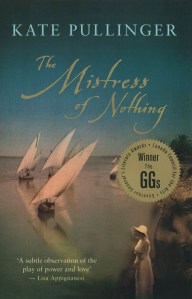
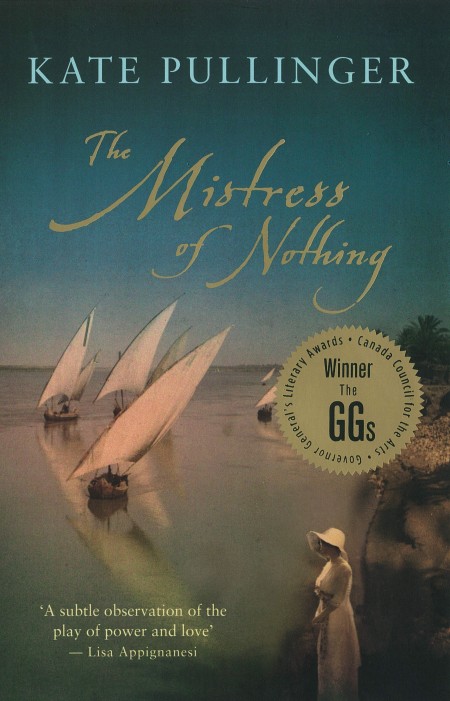
 I went to the British Library the other day for a workshop — a small, invited group discussion — about digital transformations in and of literature and the publishing industry. The event was convened by novelist Kate Pullinger (whose 2009 novel, The Mistress of Nothing won the Governor General’s Literary Award in Canada) together with Professor Janis Jefferies and Dr Sarah Kember, both of Goldsmiths. The workshop might lead to further conversations and research, which would be great because while there are currently quite a lot of events discussing these types of issues, the panels are almost always weighted towards publishers and it is not so often that writers are actually invited to speak, something that Kate herself has blogged about recently. This always feels like an oversight because writers can be quite active in exploring the kinds of innovation that new publishing models offer and some are pushing just as hard at boundaries of platform and format and engagements with readers to explore and shape what the futures of storytelling and publishing might be.
Maybe it is my experience of working at the Arts Council which has taught me that it is often artists – in the broadest sense – who lead the way in discovering and exploring the possibilities and implications of new media, and that it is a fundamental challenge for the slower-moving organisations and agencies, whether publishers or funders, to try to keep up. As a writer myself I’ve also been aware that although one might sign over ebook rights in a novel this doesn’t mean a publisher can or will do anything with those rights, and that one needs to use any opportunity to experiment with new ways of reaching readers. You can’t just sit back and wait for the next book to come out and see what a publisher might do for you at that point, as if it is something in which you have no agency yourself.
I met up with Kate Pullinger back in the spring to discuss some of these ideas. We’d both just been to The Story conference at London’s Conway Hall, so I started off by asking what impressions Kate had taken away from the event…
§
‘I guess I came away with that it was a good day, because it goes in so many directions at the same time. And also unlike Book Camp and a huge number of these day-long conferences I go to, it was about story, it wasn’t about publishing, which I suppose they so often are. But also it was a slightly frustrating day, which I suppose is inevitable: there are bits that you want more of and bits that you want less of, and that’s quite subjective. I suppose the two talks that have lingered with me for the longest is the Adam Curtis which wound everybody up, but in an interesting way.’
For the benefit of readers who weren’t at The Story conference, Curtis had been previewing some of the ideas from his then still forthcoming documentary series All Watched Over by Machines of Loving Grace, subsequently broadcast on TV in the UK by BBC 2 in May 2011. His suggestion in Conway Hall, that we’re all unaware of the power structures behind the internet, social media and the web 2.0, or that artists are somehow failing to deal with this, was treated as a revelation by some and as incredibly naïve by others; myself included. Speak for yourself, mate! I’d thought. Where have you been for the past two decades? Haven’t you heard of Heath Bunting?
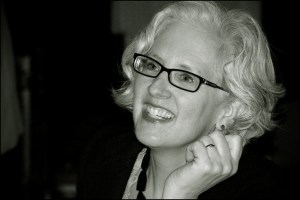 ‘It definitely provoked a divided response,’ says Kate. ‘But his work always makes me feel both those things. I always think, “Oh you’re a total lunatic,” but also I think, “Oh you’re absolutely right!” And then the other presentation that I thought was really revealing was Phil Gyford’s talk about his The Diary of Samuel Pepys online project, because of the extraordinary, multi-platform delivery that he’s gone for with that. And I was really interested in the whole business of the tweeting and all these people around the world tweeting back to him in character. Did you hear that one? And it’s been going on for years, and it’s got all these people passionately involved with it, which is extremely difficult to achieve. And I think he has done that in this slow methodical way but also that he’s been very clever in the way he’s added new platforms and new aspects to the project from it’s humble beginnings as a web-site, and he has taken his audience with him and found new audiences at the same time. Because I do think that that is the hardest thing to do. You know, you can attract a lot of attention by making a big splash, but then to actually keep it and keep it growing in a way that isn’t flashy is a real achievement.’
The network of relationships and conversations that have built up around The Diary of Samuel Pepys reflects something that’s also happened in a really big way with Inanimate Alice, a transmedia project, a kind of digital novel, that Kate and co-writer Chris Joseph have written for creator and producer Ian Harper. Kate tells me that the fourth and last episode of Inanimate Alice was published in around 2008, but that since then people have been making their own follow-ups.
‘This is largely pedagogically driven,’ she suggests. ‘Which was not anticipated, but there are the four episodes that we’ve published and then there is this absolute plethora of episode fives that have been created all over the world, usually in educational settings, but those settings range from primary secondary to higher education, as well as lots of people using it with learning disabled kids. So Inanimate Alice has got this very active life of its own which was definitely unanticipated initially, but from fairly early on while we were creating the episodes it became apparent that teachers were using it. And early on, sort of around the episode two stage, Ian commissioned a colleague of mine at De Montfort University to create some lesson plans that could be used in classrooms and were freely available to download, and which turned out to be exactly what teachers wanted. So that little bit of encouragement has led on to this really very large and active pedagogical community growing up around the project. The Facebook page and the twitter feed are just remarkable!’
So apart from that initial small investment in the lesson plans to support the work, this is all happening without additional funding? People are putting their own enthusiasms and passions into it?
‘Yes, exactly! At the moment there’s a librarian in the US called Lara Fleming who is very active in promoting it as a tool for digital literacy, and there are a couple of teachers in Scotland and a couple of educationalists in Australia and they’ve sort of formed a bit of an ad hoc team, and again with no funding, and that’s been very fascinating.’
There is a pause while one of Kate’s children texts her: ‘If they’re asking me a question I’d better answer.’ Then: ‘I wished I’d been at the first Story conference,’ she says, ‘because were there any writers this year?’
Well, there was Graham Linehan talking about his writing process. And Matt Adams of Blast Theory opened with the presentation about Ivy4evr, the interactive SMS drama we’d made for Channel 4 and which I’d written, but no you’re right, last year there was Tim Etchells, Cory Doctorow and myself on stage, so there were fewer writers in that sense.
 ‘Oh yeah, Matt explained Ivy4evr really well,’ says Kate. ‘The “story ladder” idea – which is a great term for that type of storytelling. He explained it really clearly.’
I always joke that I’m more intelligent when I’m in the same room as Blast Theory, but the collaboration really forced me to look at writing more closely and in a different way than I had before, and actually the kinds of notation that we had to develop to understand and work with the forms of interactivity at the heart of the project really were mind-expanding! Also fascinating were the huge amounts of data and feedback that were generated and we are able to access and draw upon at every stage of every exchange between the players and ‘Ivy’.
‘We were sitting there listening,’ says Kate, ‘Sue Thomas and I, and saying, “There has to be some kind of AI [artificial intelligence] here,” but Matt didn’t really discuss that aspect of the project.’
Maybe you’re right, I say, because thinking about it I noticed that people reviewing the presentation – who hadn’t played Ivy4evr – were saying things like, ‘Ivy4evr looks like it runs on rails‘, and I was thinking NO it doesn’t! It’s so interactive, that’s why it took so bloody long to write. You know, the script was this vast spreadsheet of different fields and fragments and possibilities – all of it completely automated – and what it absolutely was not was simply a succession of decision points that led you down different, branching pathways like those old style, ‘now-turn-to-page-36′, so-called interactive novels. Sometimes the interactivity might come from the engine/’Ivy’, remembering profile data about you, or remembering something that you’d said a few messages back, but mostly it was from the engine reading and parsing and understanding what you were saying back to her! And the script had to be open enough to accommodate the assemblage of messages composed from many different sources but which each still needed to feel like a ‘discrete’ unit of communication. However it was composed, each message had to function and be understood as a single, coherent text message of 160 characters that had been written by one person, by Ivy, in response to the user’s last message.
‘Is that project still “live”?’ Kate asks. ‘Will it have new iterations?’
Well, I would love it if it did, because it was so interesting for me as a writer: having the chance to test every sentence, you know, almost every word, with these ever larger user groups against all kinds of criteria: to test, rewrite, test, rewrite, and also to learn from the kinds of language that the players we were testing with were using. Matt Locke who commissioned Ivy4evr for Channel 4 talks about ‘call and response cycles’ in new kinds of storytelling, and what was amazing with Ivy… or certainly a revelation for me as a writer was that we were able to build that call and response not just into the way the finished work functions, but also into the actual development of the writing. So I think that next time I start a new novel — I’m just finishing a novel at the moment which I started before Ivy4evr — I’m really going to miss, you know, being able to test each paragraph on readers at such an early stage.
But also it’s interesting because Ivy4evr is a text message conversation. This means that each player writes half of their version of the story themselves, with the messages they send to Ivy, which is fascinating in terms of where you think any actual story is located, and as a writer setting up something like that it is not just about laying out tracks.
‘No, no,’ Kate quickly agrees, ‘it’s a much more meaningful form of interactivity.’
It’s about people having a direct engagement that sneaks in under the radar, and producing the work themselves in a way, which is a difficult thing to fit into a traditional idea of what publishing is.
‘Absolutely! It’s not difficult for you and I.’
Or for the people who are playing it!
‘But it is very difficult indeed,’ Kate picks up the thread, ‘for anyone in traditional publishing to get their head around. There are a lot of challenges. I think that when I first started working on digital fiction projects nearly a decade ago I had this assumption that these two worlds that I was inhabiting you know digital fiction and print – for want of a better term for it – were going to merge, and to me that seemed not only possible but desirable. But it’s not happening. It’s not really happening. And the ways in which the publishing industry think that it is happening are in fact false, so the whole business of the digitisation of publishing, from the digitisation of work-flow all the way through to the rapid rise of the ebook, and all the other stuff, you know, the enhanced versions of ebooks etc. that’s all still completely about traditional publishing, even though it’s digital. And the idea that I had, that people who were interested in writing and interested in stories, and interested in finding audiences and readers for stories, would be interested in using these new technologies to explore new ways of telling stories is not true, it’s just not true. And that’s because, there’s a lot of reasons for it I think one of them is that the publishing industry is an old industry and it’s about selling books, and for them to deviate from that in any way is a big thing. But there has been a real reconfiguration of the relationship that writers and readers can have, through social media, through book clubs and online versions of book clubs. I do think that is really happening, I mean you just have to look at someone like Ian Rankin or Margaret Atwood to see how they use those social media tools really effectively to communicate really directly.’
And some publishers, I say, like Faber, who have been quite quick to recognise that all of these other kinds of conversations which happen around the book, things like writing classes and retreats, archives (the courses that novelist Anna Davis is leading for the literary agency Curtis Brown is another example) can be commodified…
‘Curated and utilised in a commercial sense? Absolutely! I think that there are lots of clever things happening like that. I think World Book Night was an example of that. But when it comes to new forms, it is not happening. And whether or not it will I really have no clear idea about. I think I feel more pessimistic about it than I used to. But also I’m questioning whether or not it is actually a desirable thing to bring the two things together! Maybe I’ve just been misguided for the last decade, even thinking that was a good idea.’
So that old distinction between the writer working in print and the writer working in digital media still holds. From what you’re saying that is still very much the situation.
‘Yes and, say, the huge audience that Inanimate Alice has grown and which has remained loyal to it, has no interest to a traditional publisher, and that has continued to baffle me. And I think the other side of the story is that most writers aren’t driving it. Most writers aren’t interested in it either. Most writers in the traditional sense of a writer who writes books, they’re not interested. They’re fearful of it. Don’t you think that’s true?’
 Well, a writer friend of mine who is otherwise very very engaged with the web and has been for the past decade, also keeps surprising me by coming out with ideas about piracy which are based on the same old ‘Home taping is killing music‘-type of arguments. But if traditional writers in the main are suspicious of the possibilities or the challenges that digital media presents to their understanding of what writing is and how writing functions and how they can earn their living as a writer and all of those things, then who are the people who are going to be telling the stories that rise to the challenge. Where is innovation coming from, Kate, as far as you see it?
‘I think it’s coming from a number of different directions really. I think there are lots of interesting writers who work in the digital realm who have nothing to do with book publishing. Maybe not lots and lots of them, but it’s definitely an emerging field and with emerging business models as well. Which has been the thing that has lagged but is now happening because of the App Store and things like that. It’s just simpler to sell stuff now than it used to be. And I think these people come from different directions. It’s quite common for them to come from a film background or the art world, with the cross over of net art and digital arts. But I think those people see themselves as entirely separate from the book publishing world. And then of course there’s a whole lot of people who are interesting in trying to get in to that realm who come from games and web design. The most successful are people like Six to Start and Enhanced Editions. And certainly in the UK at the moment there does seem to be a field that’s kind of bubbling at the moment and they seem to either not need writers or simply to find a writer if they need one. Probably using a model like you working with Blast Theory. Those kind of hybrid organisations seem to be doing really interesting things.’
Kate is currently Reader in Creative Writing and New Media at De Montfort University, Leicester, so I ask what she thinks are some of the challenges that young artists, young writers, face with this kind of fragmentation of traditional book publishing, and where the infrastructure that it depends upon is shrinking and changing. You know, the amount of retail space available for books on the high street shrinking so rapidly. How if at all does she see young people, students, responding to the challenge?
‘I do think that it is finding new ways of publishing. I’m using the word publishing in a very broad sense and I’m reluctant to use the term “self-publishing” because of all the connotations that it brings with it, because it is what it is. Because that’s what Inanimate Alice is. Inanimate Alice is self-published, but to use the term “self-published” or even worse, a journalist I did an interview with in Canada last week described it as “fiction for free”!’
Free in a bad way?
‘Yeah, in the worst possible way. So side-stepping the connotations of those phrases, finding ways to publish that are meaningful and that work with what they’re trying to publish. And again I think I’ve been so interested to see for example there’s this poet called Jörg Piringer who has been on the digital poetry scene for a long time and he’s started publishing his work as apps. He recently published this very beautiful kind of poem-game that is called abcdefg… all the way to z; one word. And it costs like $1.99 and as of Christmas 2010 he’d sold 30,000 copies. So I think that those kinds of ways of collectively publishing or new ways of publishing are the things that that generation and younger are going to be looking at. Except you can’t just stick it out there, you have to have the networks to support it, don’t you. You have to be part of a complex network of connections in order for it to work. Which is why it worked for Jörg, through his being active in the e-poetry world.’
Which is not new.
‘No, that’s not new, Tony, no. It’s been like that for centuries.’
 I tell Kate that I do occasional bits of teaching too, and that I often find students really hung up on the idea that, ‘I will get myself an agent and I will get myself a publisher’ and that’s what being a writer is, you know. That is the only model: novel, agent, publisher. So I’m always saying to them, you know, yes, maybe that will happen, yes maybe it will but don’t wait. If you can find a community now by doing open mic nights, live literature events, getting a short story published in a magazine, or selling a pamphlet or giving a pamphlet away or whatever suits your work, finding or building a community of interest around what you do, then you’re beginning to build a relationship with readers and that’s the key thing, to create spaces for those kinds of engagements.
‘Absolutely, and as you say there’s nothing new about it at all. I also think there’s something I often used to say that the book was an obstacle that prevented people thinking about the future of storytelling because people are so in love with the book, but I think that’s changing. But I also think that people are in love with the idea of the solitary author, the lone author in ‘his’ garret, and that all these kinds of projects that we’re talking about don’t fit with that model at all. They’re much more to do with collaborative networks and communities and it’s a kind of psychological barrier in a way you’ve got this object of the book and the person alone in there.’
So how do you see that changing, Kate, or do you think that’s too deeply ingrained?
‘I don’t know. I’ve just been trying to think about that lately but I haven’t come to any conclusions, because it does still exist as well: the lone artist in their garret who produces their first book and it turns out to be a huge best seller. It happens!’
Yeah, and that’s a great story in itself! People never get tired of hearing that… Zooming out slightly now: for a short story commission I’m working on at the moment I’ve been looking at photos that the artists Jane and Louise Wilson have been taking in Pripyat, the deserted town in the exclusion zone around the Chernobyl nuclear power station in Ukraine. One interesting thing, to me, is that in these photos everything of any value, whether it’s floor boards, wiring, everything, has been stripped out of every building, everything with any scrap value, apart from books. So all the school rooms still have all the books on the shelves that were there when the town was evacuated. And I love this this idea of books being the things that have lasted there and the ambivalence of that. Does it say something about the persistence of books or does it say that they have absolutely no value? Or both things at once? Is that a useful metaphor?

‘I saw or read yesterday, someone was re-tweeting this story about one of the towns on the northern coast of Japan, a town that following the earth quake and the tsunami and the nuclear disaster at Fukushima has absolutely no infrastructure left, and how the local newspaper has been creating hand-written, hand-made copies of the paper, like four or five handmade copies that are posted in strategic places in the town.’
That sounds familiar. I just wrote a story for the Russian Club Gallery and while I was there I found a discarded copy of a one-page broadside edition of the Daily Express from the third day of the UK General Strike in 1926. And it is such a reduced idea of what a newspaper is — simply one foolscap page, printed on one side — and yet it still functioned. This one was printed on card, I guess so that it could be stuck on the wall in a pub. Similarly a few months ago I was writing about the Cartonera publishers, the really innovative street publishing movement that started during the economic crash in Argentina of 2003 and which has now spread to almost every major South American city. These are all developments in publishing that have nothing to do with technology but everything to do with the future.
‘Yeah, well, that’s why I was so interested and it was so appropriate that that tweet about the newspaper in Japan had come from Margaret Atwood, because that’s one of the things that she bangs on about, you know, that digital is completely fine with her, but what happens when the grid fails? — being the dystopian writer that she is. And so the Cartonera movement, or this example of these hand-written newspapers in Japan, is absolutely an example of just that: publishing when the grid fails.’
Actually I think that is a really optimistic note to end on!
§
Kate Pullinger, The Mistress of Nothing, is published by Serpent’s Tail, £7.99
Ksenija Bilbija and Paloma Celis Carbajal (eds), Akademia Cartonera: A Primer of Latin American Cartonera Publishers, is published by Parallel Press/University of Wisconsin-Madison Libraries, $40.00
 Research in the newspaper archives for a short story that I’m writing for publication next year to accompany exhibitions by the artists Jane and Louise Wilson is turning up some very rich material, including interesting ephemera, such as a launch ad from 1986 for ‘Paladin Fiction’ (see detail below), a new paperback list from one of the then Grafton Books paperback imprints (all long ago subsumed into the modern Harper Collins).
 I’d been thinking about Kathy Acker, because a week or two ago Ubuweb tweeted a link to the fantastic Kathy Acker audio archive that they host. This is really well worth exploring: I can’t recommend it highly enough. Among the gems on offer are audio files of her collaboration with The Mekons on Pussy, King of the Pirates, which was recorded in Leeds and Chicago in 1995. Mekon co-founder (and former Three John) Jon Langford, describes Pussy… as being,
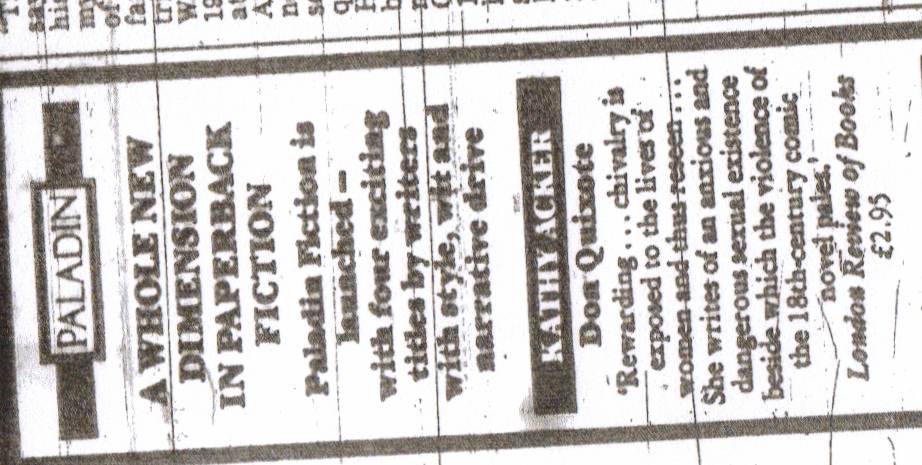 One thing that is striking about this mid-’80s book advertisement is that a Kathy Acker novel is being marketed at all, let alone that — called ‘exciting’ — it is being published on a literary list by a mainstream, mass-market publisher, and that she is being described as a writer ‘with style, wit and narrative drive.’ All of which is absolutely true, amongst other things, but even if Paladin were still an extant paperback imprint, it is almost impossible to imagine the same thing happening today in a mainstream that often seems obsessed rather with ubiquitous celebrity and/or proximity to power.
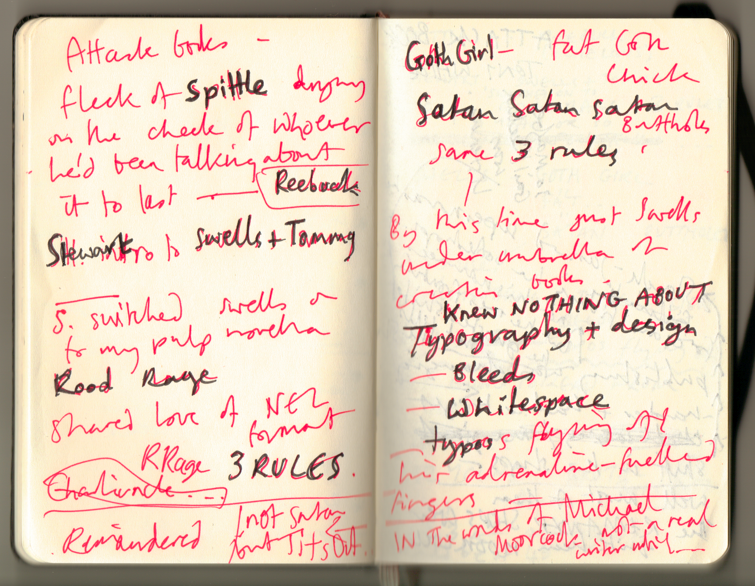
 With hindsight, I think Sinclair got something wrong here: it was no longer titles that had ‘the lifespan of a fruitfly,’ nor the writers who were ‘reforgotten,’ but the publishers, who were struggling at best to get coverage in the broadsheet review sections, hard-pressed to get books in to the bigger shops and unable to survive the closure of destination independents like Compendium in Camden Town. Small publishers such as Pulp Books, Low Life, Codex and Attack, to name only a few — just the ones that published me — are all long gone; ancient history, like Paladin.
 Meanwhile, And Other Stories have developed their own stylishly subversive and boutique variation of the subscription model. Depending how you look at it, And Other Stories‘ offer of four books a year for thirty-odd-quid may represent slightly better value for the reader than Unbound’s scale of support. Like Unbound it offers subscribers a printed thank you in the pages of the books they support, but while And Other… subscribers can participate in acquisition and other meetings, the ultimate editorial say-so is wielded, the website says, by the publisher, rather than a per-title subscriber threshold being reached.














You must be logged in to post a comment.