Commissioned for the 25th anniversary of the Chernobyl disaster, and to accompany the touring exhibition Nature Abhors a Vacuum by Jane and Louise Wilson, my 2012 novella Dicky Star and the Garden Rule also turned out to be an exploratory prototype for my latest novel The Fountain in the Forest.
Not only in terms of the period in which it is set (I’d long been looking for a way to write about the legacy of the social and political transformations that took place in the immediate aftermath of the UK Miners’ Strike in the mid-1980s, and this commission offered a way to make a sustained and detailed pass at the period), but also because it was the crucible for the development of a particular, Oulipo-inspired, mandated vocabulary technique, and an opportunity to test that out on a major (i.e. full-length) work of fiction. I then went on to use the technique to write The Fountain in the Forest, and the forthcoming titles in the Fountain trilogy.
It was such a privilege to collaborate with – and learn from – Jane and Louise, both on Dicky Star… and on the script for their critically acclaimed short film The Toxic Camera.
Dicky Star and the Garden Rule follows young Leeds couple Laura and Jeremy through the turbulent days at the end of April 1986 when the world’s worst nuclear accident occurred at the Chernobyl nuclear power plant in the Ukrainian Soviet Socialist Republic of the former Soviet Union. Jeremy and Laura’s story is told in vivid daily chapters that follow the unfolding disaster’s impact in the UK, but are also determined by their own quixotic puzzle: each chapter must be told using all of the answers to the Guardian Quick Crossword from that day in 1986. Drawing on newspaper archives of the former independent left-wing weekly Leeds Other Paper and the then still broadsheet Guardian, Tony White creates an evocative story of mid-1980s life.
Reviewing Dicky Star and the Garden Rule in Art Monthly magazine, Stephen Bury said: ‘This is an elegant demonstration that using such a text engine need not compromise the high quality of writing.’
Phil Kirby of the Leeds-based Culture Vulture blog said that it, ‘manages to convey the general paranoia about Chernobyl perfectly. ’
Tony White reading from Dicky Star and the Garden Rule at Free Word Centre, London
Issue 23 of Transition Gallery’s excellent Garageland magazine is dedicated to Living British Cinema, and I’m delighted to have been invited to contribute a short article on David Hare’s 1985 feature film Wetherby.
Regular readers may remember that I recently had the privilege of introducing a screening of Wetherby as part of the London Review Bookshop’s excellent LRB Screen film series, programmed by Gareth Evans. (The screenings – in fact all London Review Bookshop’s events – continue in an online form during lockdown, FYI.)
I’m particularly thrilled that my article is illustrated with a painting of a scene from the film by Cathy Lomax, from her Film Diary series.
I’d love you to read it.
The issue is guest edited by Lucy Bolton, and features a really wonderful and timely essay by film historian Pamela Hutchinson on (the sadly, now, late) Barbara Windsor and avian imagery in Sparrows Can’t Sing (Joan Littlewood, 1963), as well as contributions from artists including Matthew Richardson, Rosemary Cronin, Katherine Tulloh, Harry Cartwright, Paul Housley, Cathy Lomax, Jennifer Campbell, Alex Michon, Rose Bradshaw, Stephen Harwood, Paul Murphy, Davina Quinlivan and more. See full contents page below.
Lucy Bolton writes:
Diversity and inspiration are evident all across the pages of this rich and rousing issue. Contributors have chosen films that speak to them, for a variety of reasons, and been given the opportunity to engage with them here and now, in these very specific times.
You canbuy Garageland direct from Transition Gallery’s website, and there’s also a special offer on back issues right now. Here’s the contents page:
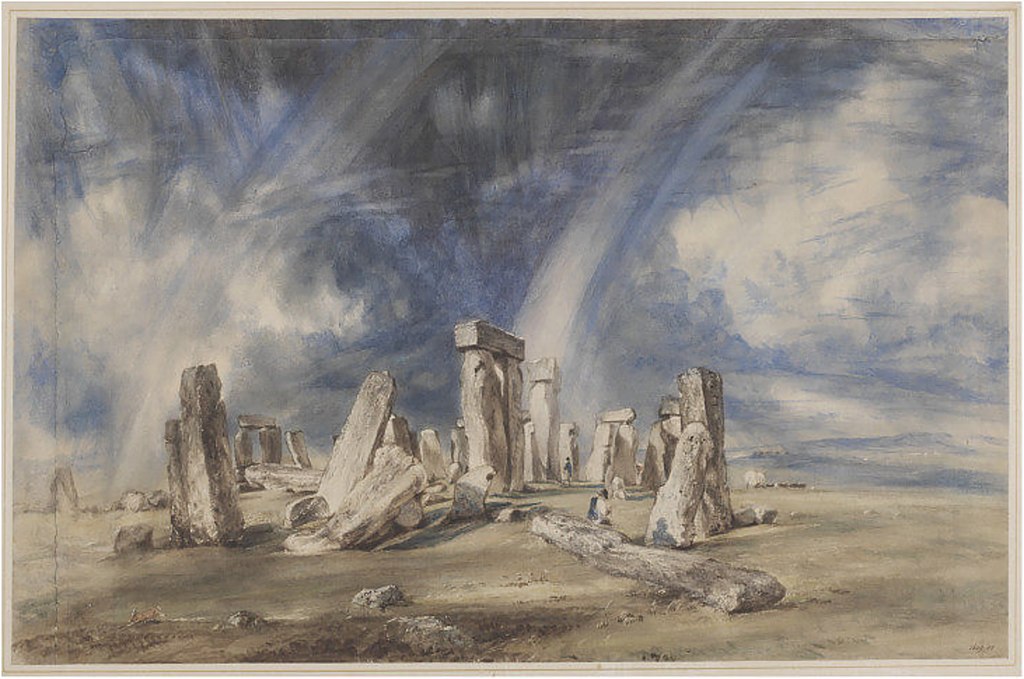
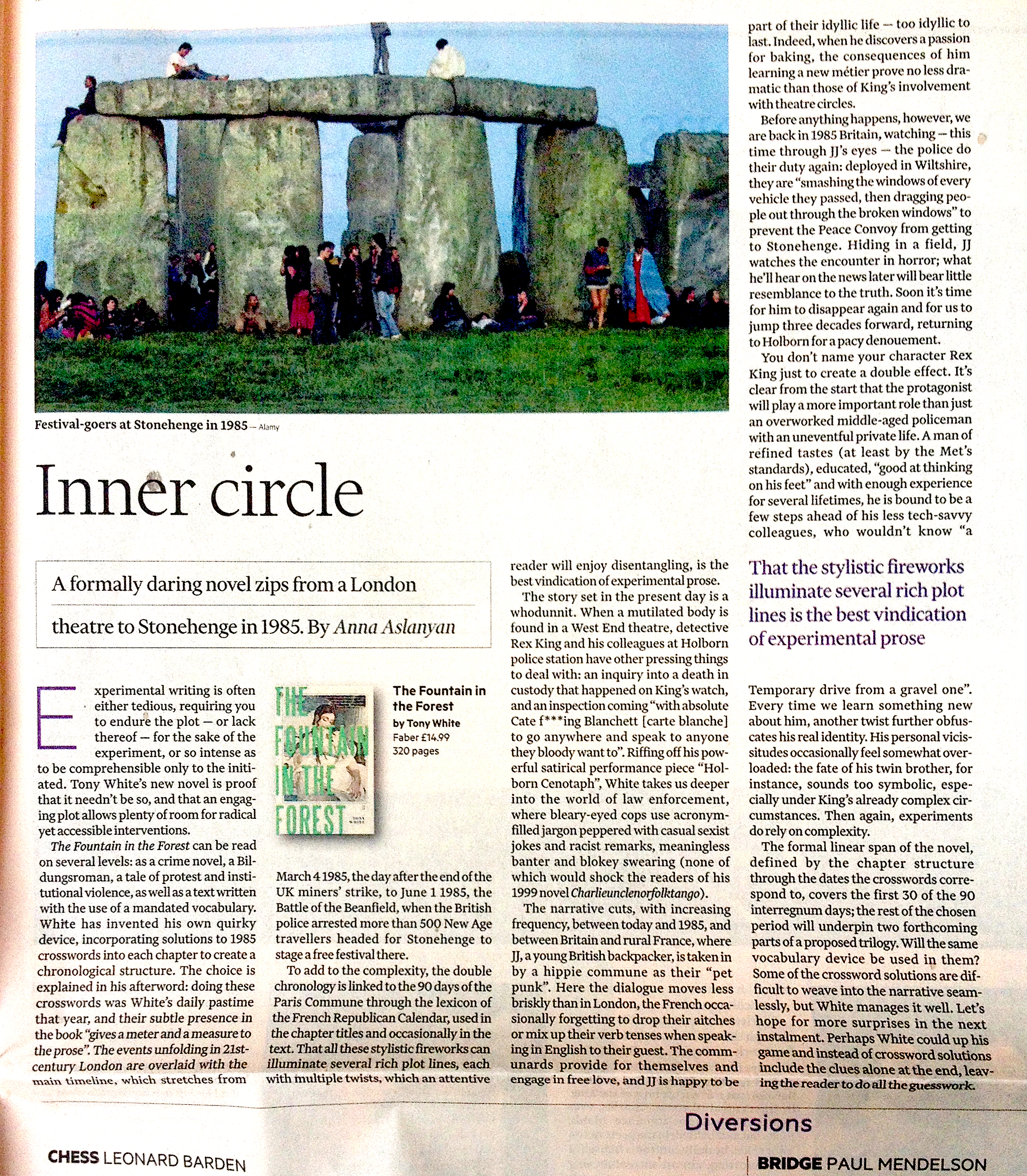
And the costs are not only financial and archeological, but also involve a less tangible, but nonetheless important public good. For millennia, Stonehenge has been visible free to all from track & road. It’s a view that has also inspired artists & writers including Turner, Constable, John Cowper Powys, and many more. (And me! Anyone who’s read my latest novel The Fountain in the Forest will know that it is a detective thriller set in London, at Stonehenge, and on the French Riviera.)
Under the new scheme, Stonehenge will no longer be visible to passing travellers from the road.
Amidst the grosser damage these tunnels will cause to a unique World Heritage Site, that free and ancient view of the stones will now be denied to future generations.
If this happens it will all be done no doubt in the typical hypocritical style, using words like ‘safeguard’ and ‘preserve’ while happily smashing everything.
Tony White interviewed in Ключавто
(It came up because editor Timur Ryzhkov had reminded me that that my first novel Road Rage! includes a wholly fictional plan to build roads over ancient sacred sites and stone circles across the UK!) But even then I didn’t fully understand the scale of the project and the damage it would cause within the World Heritage Site, and simply hoped that such an obviously disastrous plan would not go ahead.
The decision goes against the explicit advice of both the UNESCO World Heritage Committee, and the UK’s independent Examining Authority.
And it is even more surprising when you consider that the scheme was greenlit in 2017 by none other than the then Transport Secretary Chris Grayling – he of ‘Brexit ferry fiasco’ fame. On top of everything else, you’d think that this association with ‘Failing Grayling’ would be more than enough justification to drop such a destructive waste of money.
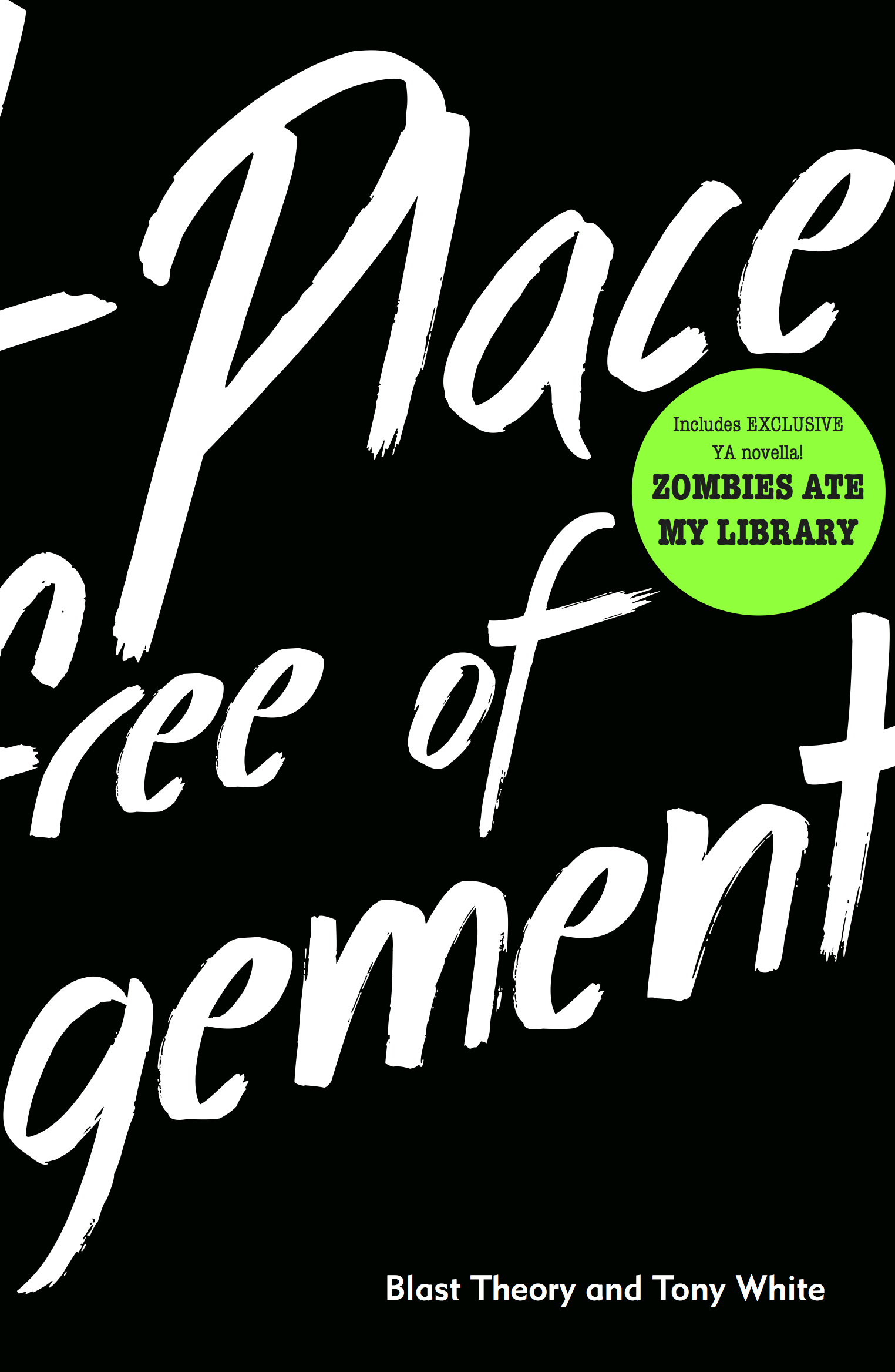
A scary story for Halloween? The closure of 100s of UK Public Libraries, slashing a statutory public service with many jobs lost. That’s what inspired Blast Theory’s and my novella ZOMBIES ATE MY LIBRARY.
ZOMBIES ATE MY LIBRARY follows four young people in the West Midlands—Alice, Gareth, Tommy and Rukhsana—as they plot a sleepover in a haunted library. What could possibly go wrong?
This was part of A Place Free Of Judgement made by Blast Theory and Tony White, with support from Arts Council England Lottery Funding and Arts Connect. It was made in collaboration with young people and staff from Telford Wrekin Council, Staffordshire County Council, Worcestershire County Council and in partnership with young people and staff from Dudley Metropolitan Borough Council, Shropshire Council and the University of Worcester.
(It’s got real ghosts and everything. Seriously, one of the libraries we worked with, on the site of an old hospital, really was haunted.)
I was sorry to learn today of the death of Diane Di Prima. Better known as a poet, Di Prima’s memorable 1961 short story ‘The Visitor’ was one of my picksfor author Jonathan Gibbs’ crowd-sourced short story project A Personal Anthology last year.
‘The Visitor’ is anthologised in The Moderns: an anthology of new American writing, edited by Leroi Jones aka Amiri Baraka, and published in 1963. I can’t remember where I picked up my battered copy of the Mayflower Dell paperback of The Moderns in the early-1990s, but this is where I first came across Di Prima’s writing.
The Moderns is a great anthology, progressive for its time – featuring works by William S. Burroughs, Ed Dorn, Hubert Selby, Jr. and more. LeRoi Jones packs them in too, with two or three or more stories per writer. And no space is wasted: if one story ends mid-page, the next one starts right away. What is striking now is that Diane Di Prima is the only woman included. Her writing also stands out because it is concise and economical – in marked contrast to most of the other contributions.
‘The Visitor’ is a story about poetry, but it is also about power and who has it and how they use it and who gets to write.
If anyone is interested to read ‘The Visitor’ and two other of Di Prima’s short stories, I just checked and there are a number of second-hand copies of The Moderns currently available on Abebooks (although they are not cheap).
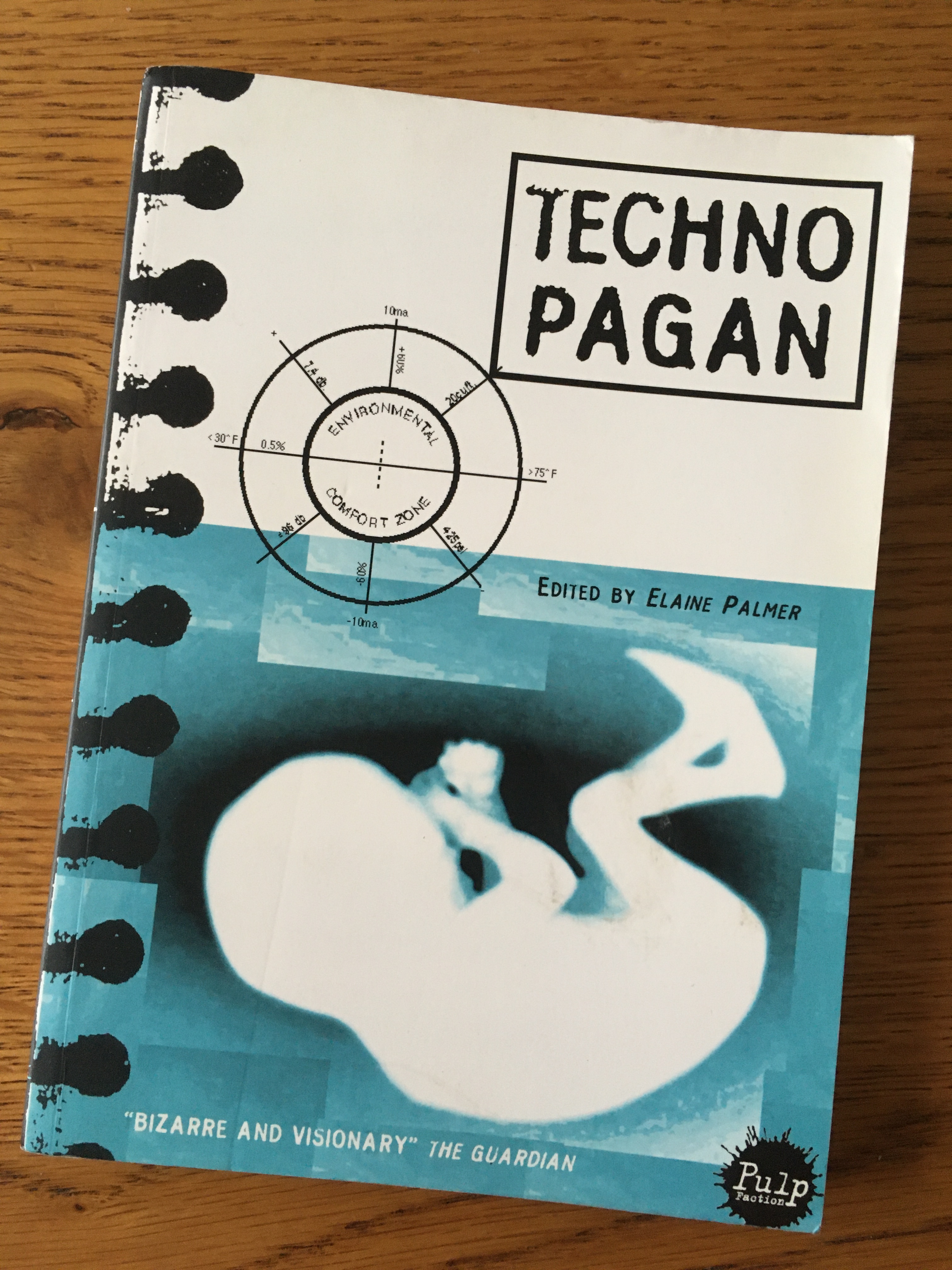
Twenty-five years ago today (or thereabouts) I had my first short story published in Technopagan, the second anthology in Elaine Palmer’s visionary Pulp Faction series. I’d seen a poster for Skin, Palmer’s first anthology, when I was cycling to work along the canal, from Hackney to Islington. So when I saw in Time Out that contributions around the theme ‘technopagan’ were being invited for a second publication, I realised that I had an unpublished story that might fit the bill, which I sent off. My story, ‘A Pagan Day’, was a bit rough around the edges, but luckily I was in some great company as you can see from the contents page below. Pre-publication, I had a call to say that there would be a photo-shoot for contributors out in Limehouse. We all met up at Tower Hill DLR station, where I gave Palmer a copy of Tim Etchells’ short story ‘About Lisa’, which I’d just published on Piece of Paper Press and thought she might like. I’m not sure that I ever saw that Technopagan press photo. Launch events that I and others may have read at (IIRC) were at Cyberia – the world’s first internet cafe, by then moved to Golden Square, Soho – and at the then Dillon’s, Longacre.
Update: Since posting these photos I found a press release, an author letter and a flyer relating to the Technopagan anthology, which turns out to have been launched at Madame JoJo’s in Soho on 6 November, with a further reading at Dillons on 16 November. I think the event at Cyberia may have been the launch of the Homelands anthology being trailed for February 1996. I’ll try and scan these and add them to the post later on.
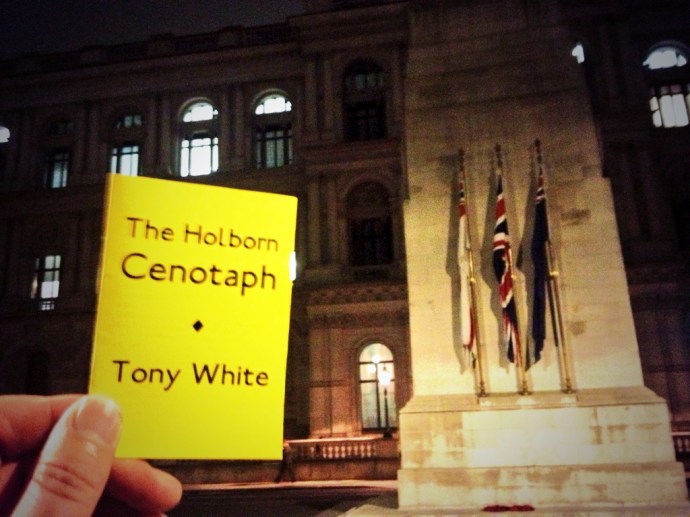
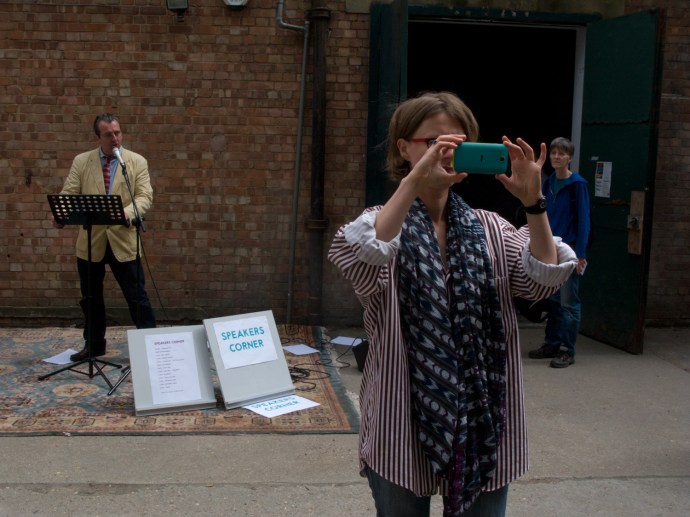
I performed my satirical short story ‘The Holborn Cenotaph’ as part of the 50th and final Leap in the Dark on 19 September. Thank you to David Collard for this opportunity, and for curating and hosting such a wonderful, regular literary night. A Leap in the Dark has been a real beacon of light during the lockdown, and an incredible feat of generosity and hospitality besides. David’s Leaps in the Dark began life as a Dadaist literary cabaret night in the derelict former Paddington Conservative Club, in West London, but since the Covid pandemic they’ve instead been broadcast twice a week on Zoom.
powerful satirical perfomance
Financial Times
‘The Holborn Cenotaph’ was first written for a one-off performance in Sir George Gilbert Scott’s wondrous, Renaissance Revival chapel at King’s College London, as part of The Cenotaph and the Public Sphere, a collaborative event devised by myself, the artists Stuart Brisley and Maya Balcioglu, and Dr Sanja Perovic of King’s, as part of a ‘loose collaboration’ (Brisley’s words) that we were conducting at the time. On that first night – and subsequently, where possible – a print edition of the full text of the work was given away after the reading.
One of the students, Zara Lyness—to whom I think you spoke during the evening—read the whole thing. Very well. And brought the listeners to silence the way you did. Certainly it is a performance text—like a saprophyte that attaches itself to its host in time and space.
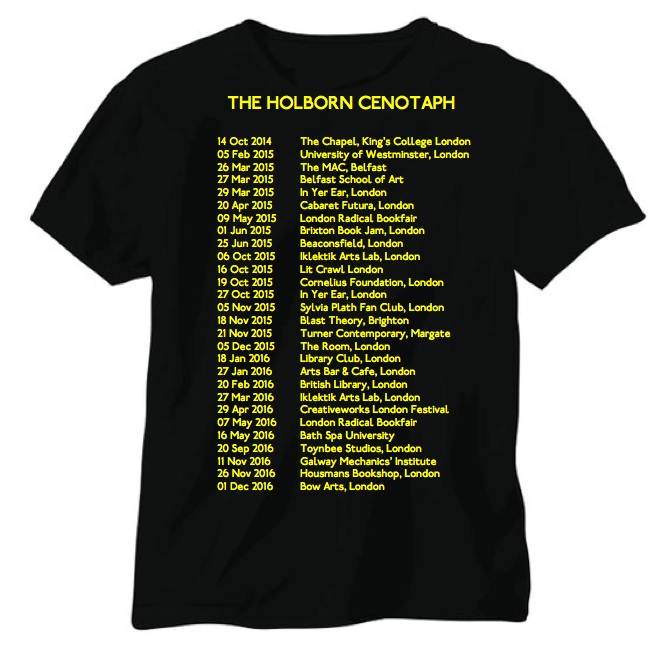
I of course retrospectively authorised Lyness’s performance. Since then, ‘The Holborn Cenotaph’ has become an ongoing, touring project, with more than forty performances to date in the UK, Ireland and Bosnia and Herzegovina, in bookshops, arts centres, and spoken word nights, in workplaces and libraries, at festivals, dinners, and bookfairs – from the British Library to the London Radical Bookfair, from Brixton Book Jam to Turner Contemporary, from TULCA Festival of Visual Arts in Galway to Festival Poligon in Mostar. My policy where possible has been never to turn down an invitation to perform the work.
‘The Holborn Cenotaph’ differs from most short stories in that a final form is never fixed, and the text has to be updated continually: before each live performance, or new publication.
I really miss doing and going to live performances! But with the live literature scene and most live book appearances currently curtailed, I have been looking for ways to adapt my work to the current restrictions, and have rewritten ‘The Holborn Cenotaph’ for Zoom and other live platforms. Saturday’s event was an opportunity to try out this new version of ‘The Holborn Cenotaph’, which is now specially adapted for online performance.
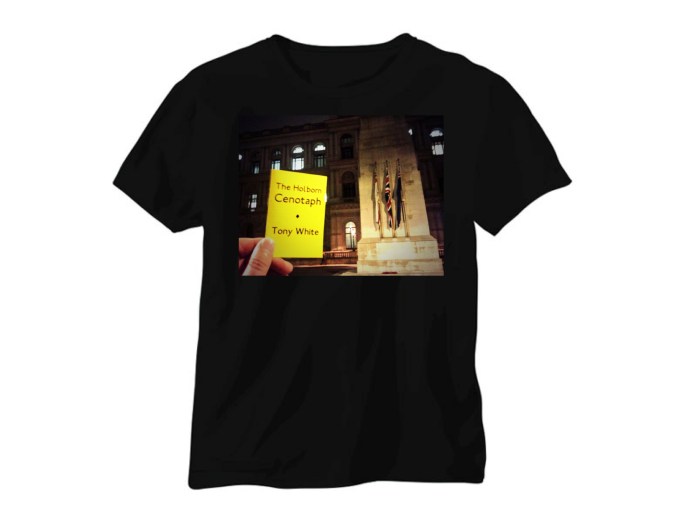
I mocked up this tour T-shirt after the first twenty-nine performances
Thanks again to David Collard and Laura Hopkins for fifty Leaps in the Dark! The new online version of ‘The Holborn Cenotaph’ got an incredible response on Saturday (many thanks to everyone for the generous comments), so I hope it may be possible to find some new partnerships and opportunities to do more online performances as part of other live-streamed performance and literary events.
I am always keen to hear from readers, friends and colleagues about possible opportunities to perform readings of my fiction. So if you can think of an opportunity to present the new online version of ‘The Holborn Cenotaph’, do feel free to get in touch.
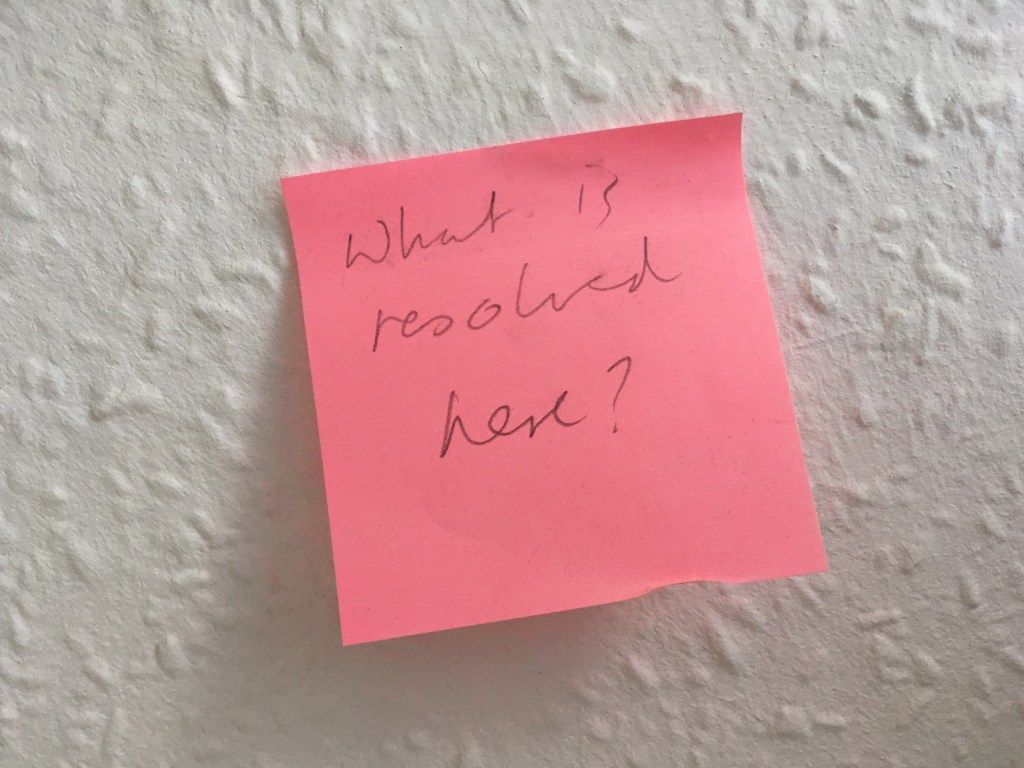
I took something down from the wall above my desk, and found this underneath. It had been there since maybe June 2015. I posted the photo on my Instagram, and some friends asked for more info – thanks all! Dermot wondered if it was taken in Berlin, neon_grime asked if it was something to do with forensics, while Andrea said ‘Do tell’. So I will ;)
In fact that’s my handwriting, and the Post-it and the question date from the early stages of writing my 2018 novel The Fountain in the Forest. Meaning that this will be a rare post about some aspects of novel-writing process, behind-the-scenes stuff – so if that’s not your thing look away now.
I was in the early stages of writing the novel – no more than half-a-dozen chapters in – and looking at what I needed to do and to make happen. Hence the question: ‘What is resolved here?’ It’s not that I believe particularly that stories or novels need resolutions per se – even (postmodern) detective novels – but there was something about Chapter 28 that I could see coming a long way off.
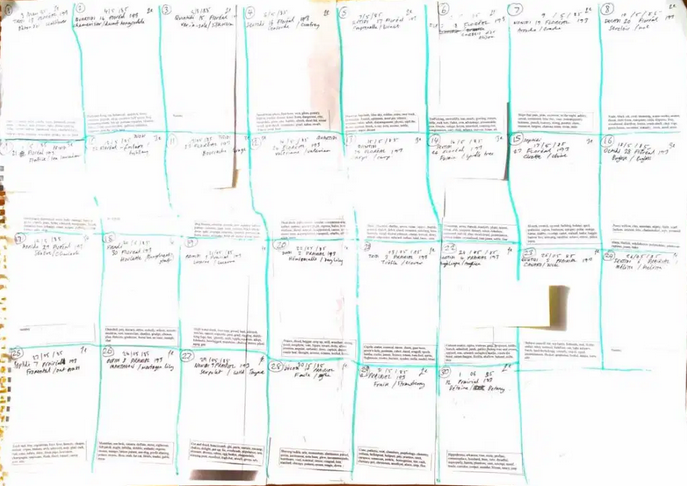
When I started work on The Fountain in the Forest I’d found that I needed to draw out a sort of calendar, a 30-panel grid on a sheet of A2 paper, to help me plan and structure the novel; to summarise stories, to visualise its ‘shape’, and how it might work through time. I’d post a photo here, but it would be hard to do without spoilers. The Fountain in the Forest and the next two novels in the trilogy investigate the continuing impact today of a pivotal moment in British social history: the 90 days between the end of the Miners’ Strike and the Battle of the Beanfield on 1 June 1985. All three novels of the Fountain Trilogy are mapped against this period. So 90 days = 90 chapters in total i.e. 30 chapters per novel. This grid was calendar-like because I was using the French Republican Calendar with its 10-day weeks as a frame for the novel. And viewed through this lens, those 90 days in 1985 become nine revolutionary weeks.
I ended up making three of these calendars, covering the whole 90-chapter trilogy: including Revolutionary Calendar elements, the Oulipo-inspired ‘mandated vocabulary’, etc. (I’ve written and spoken about those sources in more detail elsewhere BTW, not least in the preface and afterword ofThe Fountain in the Forest itself, but also on the Guardian Books podcast, for the Big Issue North, and on Little Atoms, among others.)
Grid for Volume III
I often pin something on the wall when writing a novel: a list, or some kind of ongoing diagrammatic representation. (Just not usually quite so detailed as with The Fountain in the Forest.) As the writing progresses, there’ll likely be a gradual accretion of highlighter pen, scribbled annotations, and Post-its rather like this one.
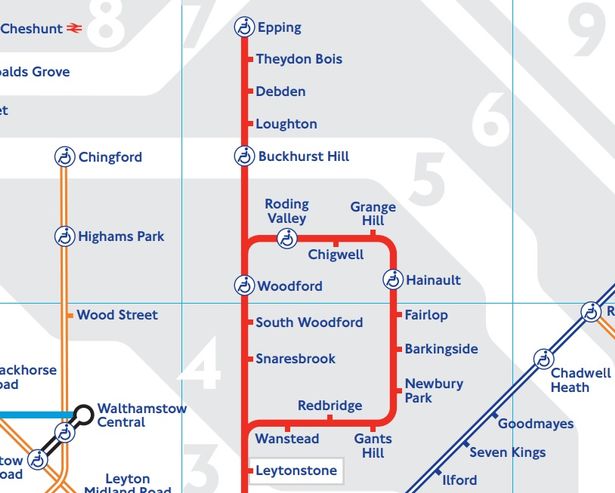
The ‘Hainault Loop’
When I was writing my novelFoxy-T back in 2000, I drew a tiny map on a Post-it and stuck that on my wall. That map – really just a line running from left to right, west to east – simply showed the main geographical movements of the main characters – Foxy-T, Ruji-Babes and Zafar – in relation to the flow of the narrative, from the start to finish of the novel. After staring at this for a few weeks I finally noticed that it looked a bit like a map of the Central Line on the London Underground: two lines join in the west, travel together for a while, then in the east one line veers off before returning a bit further along, a bit like the Central Line’s so-called ‘Hainault Loop’.
Fast forward a few years to the writing of The Fountain in the Forest and the calendar-like grid on my wall. Probably in common with many writers, I use Post-it notes to record ideas at speed when I’m writing novels (like, actually sitting at my desk and writing) because it’s not too distracting and I can quickly place them on/at some approximately relevant point in the structure – or the diagram of the structure – that is emerging and unfolding as each project progresses. I wrote this Post-it – ‘What is resolved here?’ – and stuck it on or near the panel for Chapter 28 of Fountain… (for short) shortly after realising that for all kinds of reasons Chapter 28 was going to have to be some kind of finale, in the theatrical sense of a prolonged final spectacular sequence of multiple parts, in this case complete with the representation of an actual historical battle.
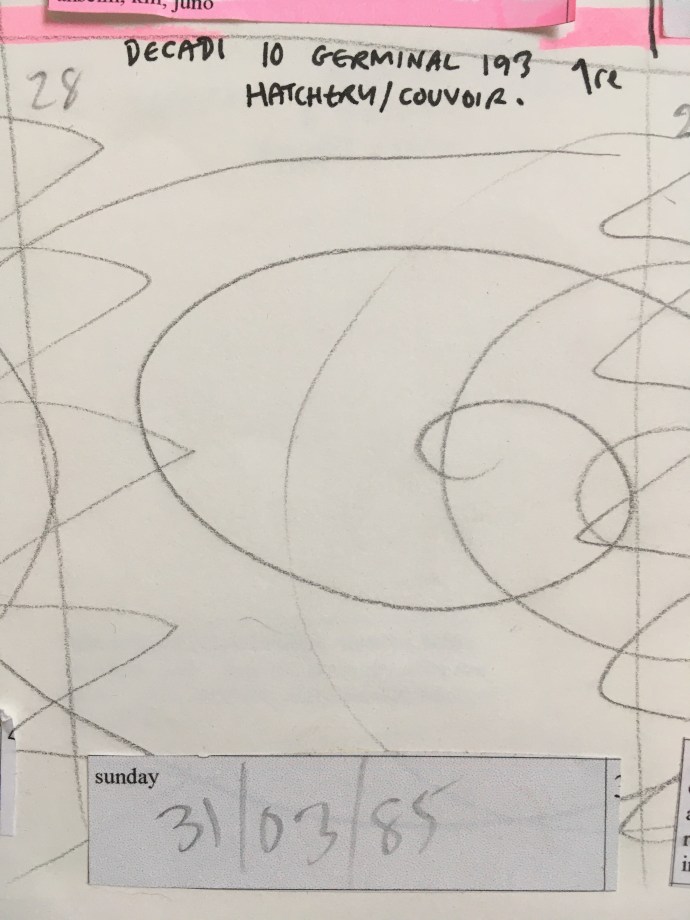
Here – without Post-its – is how the panel for Chapter 28 looked on the plan. I’d already marked the chapter out for special attention by putting it between a pair of zig-zag lines (no less!) and with a spiral to show that this finale might take the form of some kind of (perhaps psychedelic) ‘vortex’ in the text.
If you’ve read the novel you will know that The Fountain in the Forest (and in fact this applies to the trilogy as a whole) doesn’t simply tell the story of those 90 days in 1985 by plodding through them in chronological order, rather it freely moves backwards and forwards in time and to all points in between.
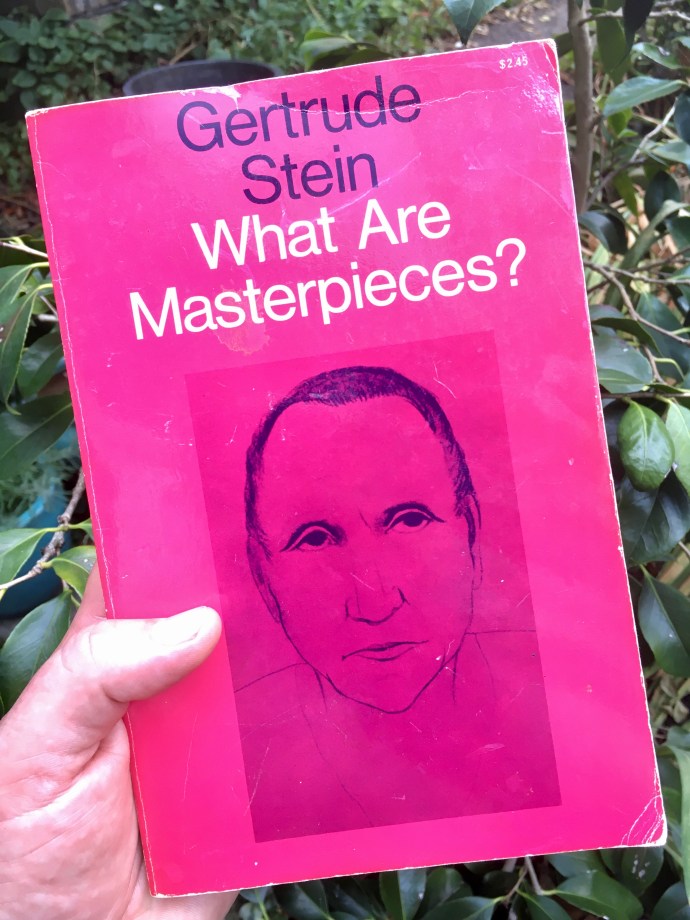
Gertrude Stein is good on literature not needing to simply relay events in sequence. ‘You can tell that so well,’ she says,
in the difficulty of writing novels or poetry these days. The tradition has always been that you may more or less describe the things that happen you imagine them of course but you more or less describe the things that happen but nowadays everybody all day long knows what is happening and so what is happening is not really interesting, one knows it by radios cinemas newspapers biographies autobiographies until what is happening does not really thrill any one, it excites them a little but it does not really thrill them.
Gertrude Stein, WHAT ARE MASTER-PIECES AND WHY ARE THERE SO FEW OF THEM
IIRC, Anderson also mentioned John Dos Passos’ USA, and Thomas Pynchon’s Gravity’s Rainbow perhaps in that same interview – both leads that I also followed up. Incidentally, much of my reading as a teenager came from references in songs and on record sleeves or in the music press, as well as my local public library. I can really relate to that line of Mark Fisher’s in his article ‘Why K?’, which serves as an intro to K-Punk: The Collected and Unpublished Writings of Mark Fisher (2004–2016) – he’s talking about ‘theory’, but it could equally apply to literature:
No sob stories, but for someone from my background it’s difficult to see where else that interest would have come from.
And it’s the more experimental detective novels, by Stein and others, that I remain interested in and which have influenced the Fountain Trilogy. (ICYMI at the time, I wrote about ‘experimental thrillers’ for the Guardian a couple of Christmases back, and followed up with more recommendations drawn from the readers’ comments here.)
So, Chapter 28 of The Fountain in the Forest was marked out early on as a kind of finale. This was for various reasons including that it was just two chapters from the end of what was to be a thirty chapter novel, but it was also because Chapter 28 was aligned with a particular date in 1985 that, when converted into the French Republican Calendar, was dedicated to the Hatchery. A lot of the buried themes and stories threaded and incubated throughout the novel would need to hatch in this finale. The Post-it might just as well have asked, ‘What hatches here?’
With The Fountain in the Forest being the first part of a trilogy, the un-asked question of course is, ‘And which stories are carried over to Volumes II and III?’
Once TheFountain in the Forest was done, I took that old plan down. And a new calendar grid for Volume II of the trilogy got pinned onto the wall in its place, inadvertently covering over this old Post-it. And I forgot all about this question – ‘What is resolved here?’ – until a month or two ago, when I took that later grid down off the wall and found this Post-it still stuck to the wall underneath. Coincidentally, this was when I was approaching writing a sort of finale to the next novel – the forthcoming volume II of the trilogy – but had realised that I needed to visualise aspects of this new novel’s shape, its stories, and its narrative machinery in a different way than a grid.
So for the past month or two there’s been a six-foot-long horizontal scroll hanging along the wall above my desk. I wish I could post a photo, but it would be hard to do without giving away spoilers to the next book. This new scroll has helped me to complete a new novel with a new shape and – compared to TheFountain in the Forest – a completely different series and species of reckonings. I can’t wait to share it with you, although I’m keeping the title under wraps right now ;)
If you need more Pantone 802c fluro green on your bookshelf and in your life – and let’s face it, who doesn’t? – right now Faber and Faber’s gorgeous Royale-format trade paperback of The Fountain in the Forest featuring Luke Bird’s sumptuous cover is currently 22% off on Amazon.
“rich, riveting … White is always convivial company … His books [are] characterised by stylistic innovation, a feeling for place, a love of rogues and rebels. The Fountain in the Forest is no different. It’s also the opening salvo in a trilogy. I’m already awaiting the next.” Sukhdev Sandhu, The Guardian, ‘Book of the Day’
“It is absolutely terrific … it can be enjoyed at the level of a thriller, and yet it does all these other fascinating things, and best of all it’s the first in a trilogy … It’s such a good book.” Andy Miller, Backlisted Podcast












You must be logged in to post a comment.