Fountain blue…

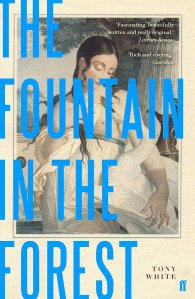
From forest green to fountain blue… Here’s the cover for Faber & Faber’s forthcoming paperback of The Fountain in the Forest, which will be published on 3rd January 2019. The cover still uses Louis Lafitte’s wonderful engraving – an allegory of the month of Thermidor, from his illustrated edition of the French Republican Calendar – and the left-justified typography that was used on the first edition, but this time in neon blue (Pantone 801c), rather than neon green.

I hope you like it as much as we do!

§

Buy The Fountain in the Forest

Sign up to receive news and invites to book launches and events

Read more reviews for The Fountain in the Forest

Strong Language: full programme, 11–14 Oct 2018

Strong Language is three days of readings, performances, projections, installations and discussions in Sheffield. With new work from Joolz Denby, M. John Harrison, Vlatka HorvatCourttia Newland, Selina Thompson, Tony White and more.

Strong Language is curated by the artist, writer and performance maker Tim Etchells of Sheffield’s Forced Entertainment. Highlighting radical writing and independent publishing in the UK it centres on Piece of Paper Press, a low-tech sustainable publishing platform founded in 1994 by novelist (and former Sheffield art student) Tony White. Each Piece of Paper Press book is made from a single A4 sheet, and titles are always given away free.

Artworks, publications and ephemera from Piece of Paper Press will be on display at Site Gallery throughout the weekend, opening at Strong Language Live #1 on Friday 7:00pm.

Take away your free copies of four new specially commissioned Piece of Paper Press titles – while stocks last.

Programme

The Fountain in the Forest – Tony White at Off The Shelf
Thu 11th October 6:00pm

Shifting between Holborn Police Station, rural 1980s France and the Battle of the Beanfield at Stonehenge, The Fountain in the Forest is a crime narrative with a difference. This is an ambitious, iconoclastic novel – an avant-garde linguistic experiment and meditation on liberty.

Tony White will be reading from the novel, and be in conversation with the novelist Nicholas Royle.

“rich, riveting … White is always convivial company … His books are characterised by stylistic innovation, a feeling for place, a love of rogues and rebels.” The Guardian, ‘Book of the Day’

Part of Off The Shelf Festival of Words
Book now: Tickets (In Advance) £6/£5 (concs)
Tickets (On the Door) £7/£6 (concs)
Venue: Site Gallery, 1-5 Brown Street, S1 2BS

§

Strong Language Live #1
Fri 12th October 7.00–9.00pm

Courttia Newland

Strong Language Live #1 gets the weekend off to a powerful and playful start with readings from the genre-defying authors M John Harrison and Courttia Newland who both have new texts published by Piece of Paper Press available to collect free on the night. There will be additional word play from curator Tim Etchells and from artist Vlatka Horvat who’ll be reading a text related to her brand new projection piece As Things, As Animals on display at locations around the city. Strong Language Live #1 also sees the opening of our enticing exhibition of Piece of Paper Press editions and ephemera.
FREE – EVENTBRITE BOOKING HERE
Venue: Site Gallery, 1-5 Brown Street, S1 2BS

§

Selina Thompson, RACE CARDS
Sat 13th October

A room containing 1000 questions about race, written by artist and performance maker Selina Thompson in three sittings across 24 hours one weekend in Edinburgh. You’re invited to answer one of them.

65. Are you black, or are you ‘new black’?
170. What is the long term psychological impact of white supremacy on people of colour?
220. My mum does not talk about race any more. It makes her uncomfortable, tired. Will this happen to me?

‘The work isn’t about answering questions; it’s about igniting an internal discussion in each of us that allows for the possibility of self-awareness, analysis and reflection.’ – Harold Offeh, This is Tomorrow.

Free. Venue: Pinball Park, 6 Paternoster Row, Sheffield, S1 2QQ (opposite Site Gallery and open for Site Gallery opening hours): Fri 11-18:00, Sat 11 – 18:00, Sun 11 – 16:00

§

Small is Beautiful
Sat 13th October 1:00–3:00pm

Small is Beautiful is a two part discussion event around the labour of love that is radical print. In the first part artist Penny McCarthy will talk to the artist Janette Paris about her celebrated Arch Comic – ‘Bringing art and life together’ since 2011 – and to Tony White about the ambitions and approaches of Piece of Paper Press, which over the years has seen contributions from artists, performance-makers and writers from Joanna Walsh to Michael Moorcock. In part two, Leigh Wilson chairs a discussion about passion, politics and innovation featuring a rich array of forces to be reckoned with in contemporary independent publishing, from Sheffield-based & Other Stories to Dostoyevsky Wannabe and Longbarrow Press. Both sessions will have lots of space for audience questions and discussion – so please get involved.
FREE – EVENTBRITE BOOKING HERE
Venue: Site Gallery, 1-5 Brown Street, S1 2BS

Strong Language Live #2
Sat 13th October 7:00–9:00pm

Saturday’s Strong Language Live #2 is a bold followup to Friday’s session comprising an inventive and restless evening of performances, readings and installations. Renowned punk poet, author and tattooist Joolz Denby shares the stage with performer Selina Thompson whose work touches on identity, bodies and the environment. Both Joolz and Selina will have new texts published by Piece of Paper Press available to collect free on the night. Lending further grace and gravity to the evening is Piece of Paper Press editor and author Tony White, reading stories including The Holborn Cenotaph – ‘his powerful satirical performance piece’ (Financial Times) – that mix contemporary urban concerns with an approach that’s both gritty and conceptual. Away from the performances watch out for installations and sound-works in another part of the newly opened building by curator Tim Etchells.
FREE – EVENTBRITE BOOKING HERE
Venue: Site Gallery, 1-5 Brown Street, S1 2BS

§

As Things, As Animals

Vlatka Horvat’s As Things, As Animals imagines and re-imagines human features, conditions, personality traits, and appearance via a collection of commonplace idioms comparing people to physical objects, natural phenomena as well as to animals, insects, and other creatures. Creating a picture of humanity that shifts between the comical, the grotesque, and the poetic, Horvat’s text is a surprising and playful compendium that moves from Strong as an Ox and Frightened as a Mouse to Thin as a Rake and Cool as a Cucumber. Projected large-scale on the walls of location(s) in the city centre, Horvat’s work is visible from 8 to 10pm.
FREE
Venue: city centre locations

Full programme also at www.ourfaveplaces.co.uk/strong-language

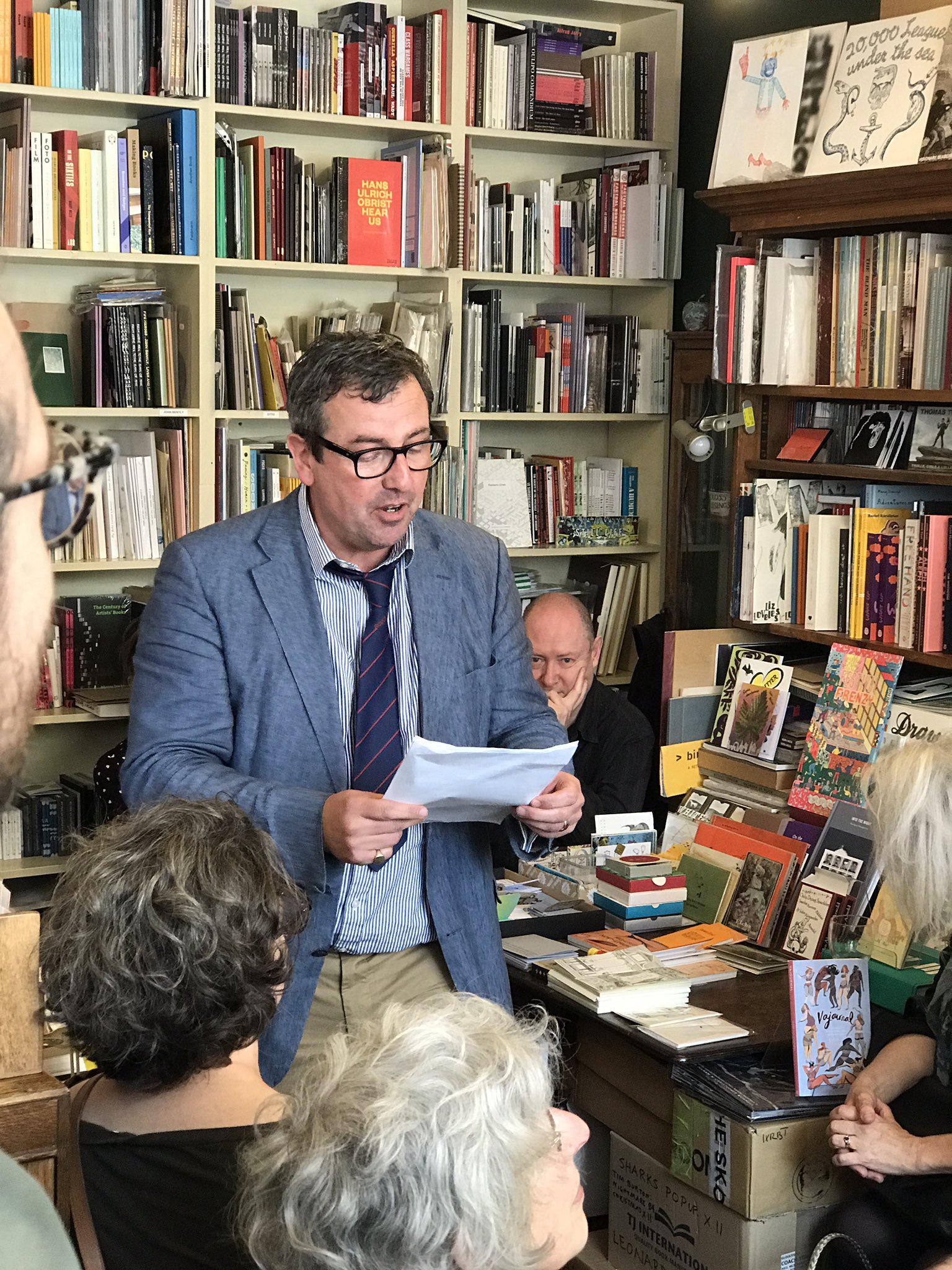
Tony White reading at Beaconsfield, London. Photo © Marianne Magnin, 2015

§

Buy Tony White’s The Fountain in the Forest

Book for The Fountain in the Forest at Off The Shelf, Sheffield, 11 Oct

Sign up to receive news and invites to book launches and events


A few more reviews and a favour?

I have been completely bowled over by the critical response to The Fountain in the Forest this year. Alongside the in-depth reviews in broadsheets such as the Guardian and Financial Times, and journals including The TLS and Spectator, there have been some really interesting and sometimes passionate reviews on literary blogs.

Most recently Tommi Laine, writing on the Helsinki Book Review:

a detective thriller of unique caliber … It is often acknowledged that restrictions feed creativity, and it is very much true here, considering what an original piece of writing The Fountain in the Forest turns out to be. It is a rather remarkable achievement when you keep in mind the constraints, or, perhaps, that is exactly why it excels. … intellectually stimulating, yet never elitist.

And this one from 1stReading:

The Fountain in the Forest is, first and foremost, an excellent detective novel. Rex not only manages to walk the mean streets but tread the fine line between three dimensional character and classic cop. The use of mandated vocabulary, presented in bold, is fascinating because it is possible to see the way it influences the story from single sentence to plot-point. Perhaps the novel’s most impressive achievement, however, is to revisit the politics of the 1980s, contending that the events of that decade not only reverberate in Rex’s life but echo through modern Britain. Two further volumes are to be welcomed.

ICYM, here’s Richard Marshall on 3am Magazine:

a complex and twisting plot with a genuinely shocking and satisfying dénouement … an extraordinary novel where our sympathies are for a cop who as cop represents the very forces of repression the gut of the novel abhors. … An astonishing achievement.

Nick Garrard for Storgy:

The Fountain in the Forest is a mystery built on mysteries … it has heart and tenderness and leads us to the most unexpected places and at the centre of all this puzzling is a thriller with deep hooks.

Paul Fulcher on The Mookse and the Gripes:

a quite extraordinary combination of a controlled Oulipian literary construct, page-turning detective thriller, and politically-charged social history.

Mondyboy on The Hysterical Hamster:

Wait.. what!?! … I think you’re going to want to read this book and you deserve to enjoy the mix of bewilderment and shock I just experienced because in a world where everything is telegraphed having the apple cart upended, smashed to pieces and then sold as firewood is something to cherish … plays with the genre with a twist so brazen that, on its own, is a commentary on the police procedural. What’s remarkable is that these experimental flourishes don’t undermine what is a gripping, stunning read. …The Fountain in the Forest has set a high bar for the rest of the novels I read this year.

Thom Cuell on Bookmunch:

smartly maps an experimental, Oulipo-inspired structure onto a well-executed police procedural, with both elements of White’s story-telling enhancing the other. … this is innovative storytelling, at once serious and playful, and White addresses serious social issues in his work with a compelling, very readable, style.

Nina Allan on The Spider’s House:

The Fountain in the Forest can be read with all the pleasure you might expect from a knotty police procedural, a knowledgeably detailed, intriguing and compelling police procedural at that. The story drives ever forward, even when it takes you backwards in time to take a look at the roots of the crime in question. Even when it flip-flops between two distinct time-streams and character identities within the space of a single sentence, the sense throughout is of a steady and satisfying accretion of significant information, i.e clues – exactly what you’d hope for from any good thriller. … You could read the novel with no knowledge of OULIPO and enjoy it just as well. … Anyone who enjoyed Keith Ridgway’s Hawthorn & Child or Nicholas Royle’s First Novel will love this book. Anyone who is into Ian Rankin or Denise Mina will love it, too. … Above all, there is the joy inherent in a book well made: language expertly deployed, place wonderfully evoked, ideas, characters, memories, theories, political subtext brought vibrantly to life, a good story well told.

Screen Shot 2018-09-28 at 08.50.53

Photo: Dawid Laskowski

Now here comes the favour.

The mass-market paperback of The Fountain in the Forest is published at the beginning of January 2019 – the new cover will be revealed shortly – so if you have enjoyed or are enjoying the novel, I need to ask a massive favour!

Can you please help us spread the word? Perhaps by giving The Fountain in the Forest a short reader review or even simply a star-rating on Amazon, Waterstones or Goodreads, should you find yourself in those virtual necks of the woods. I would be most grateful and it all helps with the book’s visibility, apparently, which helps find new readers! Thank you ;)

§

Buy Tony White’s The Fountain in the Forest

Book for The Fountain in the Forest at Off The Shelf, Sheffield, 11 Oct

Sign up to receive news and invites to book launches and events

Strong Language

strong language - handwriting-1
Strong Language. Three days of readings, performances, projections, installations and discussions at the Site Gallery and other locations around Sheffield. Curated by Tim Etchells, with new work from Joolz Denby, M. John HarrisonVlatka Horvat, Courttia Newland, Selina Thompson, Tony White and more.

Attention artists, publishers, readers and writers, and anyone interested in small presses, zines, artists’ books and other kinds of radical print. Strong Language is just for you. Be inspired at the newly reopened Site Gallery and other locations for readings, publications, installation, performance, and discussions involving publishers and writers in the North, and an exhibition of art work and ephemera from visionary micro-publishing project Piece of Paper Press.

Highlighting radical writing and independent publishing in the UK, Strong Language centres on Piece of Paper Press, a low-tech sustainable publishing platform founded in 1994 by novelist Tony White.

Free copies of four new specially commissioned Piece of Paper Press titles will be available at Strong Language events while stocks last.

More info shortly.

§

Strong Language, 11–14 October 2018, Site Gallery and other Sheffield locations

Buy Tony White’s The Fountain in the Forest

Read press for The Fountain in the Forest

Sign up to receive news and invites to book launches and events

Tonight – Alison Turnbull at Rodić Davidson Architects

I’m delighted to be doing an event tonight – Weds 5 September – with the artist Alison Turnbull. Here is the invitation:

Please join us at 1 Pied Bull Yard on Wednesday 5 September at 6–8 pm for a drink to celebrate the display of Alison Turnbull’s Japanese Paintings. The paintings are being displayed in the Bury Place windows of Rodić Davidson Architects throughout the summer. Alison will be joined by Tony White, author of the critically acclaimed, Oulipo-inspired detective novel The Fountain in the Forest. At 7pm Tony will read an extract from the short story he contributed to Alison Turnbull’s artist’s book Spring Snow – A Translation (Book Works). The London Review Bookshop next-door will be open on the evening and copies of both books will be available.

Alison Turnbull takes Japanese author Yukio Mishima’s novel Spring Snow as a starting point to produce Spring Snow − A Translation, which is literally a visual translation ordered by colour. Drawing on Mishima’s evocative use of colour in the novel, Turnbull condenses the narrative into a colour palette.

Screen Shot 2018-08-20 at 11.51.30

Alison Turnbull, Spring Snow – A Translation

§

Weds 5 September, 6–8pm, Rodić Davidson Architects, 1 Pied Bull Yard, London, WC1A 2AE

Buy The Fountain in the Forest

Buy Spring Snow–A Translation

Sign up to receive news and invites to book launches and events

Read press for The Fountain in the Forest


The Fountain in the Forest, Super-8

“rich, riveting … White is always convivial company … His books [are] characterised by stylistic innovation, a feeling for place, a love of rogues and rebels.” The Guardian, Book of the Day.

Shot on location in Vence, the South of France, July 2017, using a Canon Autozoom 512 Super-8 camera, and Edirol R-09 for the audio. Editing: Biscuit Town Productions.

§

Buy The Fountain in the Forest

Sign up to receive news and invites to book launches and events

Read press for The Fountain in the Forest

Newsletter #29

Dear friends,

I’ve just completed a residency in Split, a beautiful city whose bookselling heritage is facing dramatic changes including the closure of Morpurgo, the oldest bookshop in Croatia – I’ve written about this in my ‘Postcard from Split’ below.

The Fountain in the Forest is on the Guardian’s ‘Not the Booker prize’ 2018 longlist. It’s a reader poll, so if you enjoyed the novel, read on to find out how you can vote! There’s a round-up of The Fountain in the Forest reviews here.

With all best wishes and thanks for your support, as ever,

Tony

§

Postcard from Croatia – from Morpurgo to Mall of Split

I spent June writing in the beautiful city of Split on Croatia’s Adriatic coast, thanks to the KURS Association’s Marko Marulić residency programme for writers and translators, which gave me time and space to work on my next novel. As well as being a wonder of European Late Antiquity, Split is an historic literary and bookselling town, but there were big changes afoot during my stay, including protests that followed the closure of Morpurgo, the oldest bookshop in Croatia. I interviewed leading Croatian booksellers and authors about these issues for a short article, ‘Postcard from Split – all change in Croatia’s historic bookselling town’.

§

Vote for The Fountain in the Forest in the Guardian’s “Not the Booker prize”

It’s a great thrill that The Fountain in the Forest is on the Guardian Books ‘Not the Booker prize’ longlist. To have a chance of being shortlisted, The Fountain in the Forest needs your vote in the next few days – the deadline is 23:59 this coming Monday, 6 August. If you’ve enjoyed the book, do please vote!

In order to do so, you’ll need to write a few sentences about why you liked the book, and you must also vote for (but not write about) a second choice. There are very many great books to choose from.

§

Q. Did you ever use libraries when you were younger?

That’s what Story Smash asked me in a short filmed interview when I visited Nottingham earlier this year. I was in Nottingham to give a masterclass at the Story Smash event delivered by Nottingham City Libraries in partnership with the National Videogame Foundation and Nottingham UNESCO City of Literature, funded by Arts Council England. It was a great day. Here’s my answer…

§

ICYM – latest reviews for The Fountain in the Forest

Richard Marshall of the brilliant 3am Magazine has written an in-depth and impassioned review of The Fountain in the Forest:

a complex and twisting plot with a genuinely shocking and satisfying dénouement … an extraordinary novel where our sympathies are for a cop who as cop represents the very forces of repression the gut of the novel abhors. … An astonishing achievement.

Other recent blog reviews include those by Nick Garrard for Storgy,

The Fountain in the Forest is a mystery built on mysteries … it has heart and tenderness and leads us to the most unexpected places and at the centre of all this puzzling is a thriller with deep hooks.

Paul Fulcher on The Mookse and the Gripes,

a quite extraordinary combination of a controlled Oulipian literary construct, page-turning detective thriller, and politically-charged social history.

and Mondyboy on The Hysterical Hamster,

Wait.. what!?! … I think you’re going to want to read this book and you deserve to enjoy the mix of bewilderment and shock I just experienced because in a world where everything is telegraphed having the apple cart upended, smashed to pieces and then sold as firewood is something to cherish … plays with the genre with a twist so brazen that, on its own, is a commentary on the police procedural. What’s remarkable is that these experimental flourishes don’t undermine what is a gripping, stunning read. …The Fountain in the Forest has set a high bar for the rest of the novels I read this year.

§

If you don’t already receive my occasional newsletter, but would like to get news of events, projects and book launches, you can subscribe here.

Buy The Fountain in the Forest

Read more press for The Fountain in the Forest

Vote for The Fountain in the Forest in the Guardian’s NOT THE BOOKER PRIZE reader poll

I’m delighted to learn that my latest novel The Fountain in the Forest (Faber and Faber, 2018) is among some interesting novels on the Guardian Books “NOT THE BOOKER PRIZE” longlist, which is out today. In order to reach the shortlist next week, my novel needs your vote in the next few days (deadline is 23:59 on Monday 6 August). If you have already enjoyed or are enjoying The Fountain in the Forest it would be great if you could vote!

N.B. Even better, you have to vote for TWO novels (see full instructions at the link below), and the list of titles nominated also includes some great books by authors – friends and colleagues among them – including Gregory Norminton, Will Eaves, Joanna Walsh, Zelda Rhiando and many more. So as well as supporting The Fountain in the Forest, it’s also a great opportunity to support some really interesting and radical writing and small and independent presses…

Thank you!

VOTING AND FULL INSTRUCTIONS HERE

Read more reviews for The Fountain in the Forest here


Postcard from Split – all change in Croatia’s historic bookselling town

The window of my small, first floor apartment overlooks the 1,600-year old Roman walls of the Emperor Diocletian’s Palace, the fortified Roman town at the heart of the beautiful Adriatic city of Split in Croatia. The great, limestone blocks used to build this wonder of European Late Antiquity are so close on the opposite side of the narrow alley known as Ulica Bosanska (Bosnian Street) that I feel I could almost reach out and touch them. Every day the warm air above the palace has been filled with thousands of screaming swifts, feasting on the insects that rise above the sun-warmed roofs of an old town that over the centuries has knitted into, within and around the high walls of this great Roman palace.

Artist’s impression, a postcard from Split

Down at street level, at the outdoor market known as Pazar, in the bars and on the beaches, and along Riva, the city’s broad and palm tree-lined promenade, the holiday season has not quite started, but the city is already lively. Tourism is booming here. A city that was once a stopping-off point is becoming a destination.

I am here thanks to the KURS Association, and their Marko Marulić residency programme for writers and translators, which has given me time and space to work on my next novel. Even if you haven’t heard of Marko Marulić (1450–1524), you will almost certainly be acquainted with his legacy. His Psichiologia de ratione animae humanae (~1520) is the first literary reference to psychology. Thought of as the father of Croatian literature, Marulić wrote popular works of epic poetry in both Latin and Croatian languages, as well as works on Christian morality. His readers included Henry VIII, whose personally annotated copy of Marulić’s Euangelistarium is held in the British Library. The residency programme that bears Marulić’s name today aims to reflect that influence by making the literary scene of this city more vivid, and by connecting the literary life of Split with other European book centres.

Pazar, Split

Others have written at length about the impact on publishing of the wars of the 1990s and the dissolution of the former Yugoslavia, of factors including crimes against humanity, censorship, mass displacement of populations, the fragmentation of the former Yugoslavia with a population of some 22.5m into the new nation states of the contemporary Western Balkans, including Croatia (population 4.2m), and the consequent breaking up of a large ‘Serbo-Croat’ language group (and book-buying market) into smaller self-contained language groups, etc. While it is commemorated all around us, in street names and national holidays, the Homeland War ended in 1995. Today, the world of Croatian books and bookselling has more pressing concerns.

The Croatian book industry is still recovering from the collapse in May 2017 of Algoritam MK, at the time the country’s largest bookshop chain, which had been founded in the mid-1990s by the publisher of the same name. At the peak of its expansion, Algoritam MK had four branches in Zagreb alone, as well as shops in Pula, Rijeka, Dubrovnik, Varazdin, Osijek, Split – some thirty-five branches in all. When the chain collapsed in May 2017, many Croatian publishers were owed enough (in the words of newspaper Večernji List) to cause them ‘difficult problems’. The collapse also froze large amounts of stock and deprived publishers of a major distribution channel. A further knock-on effect was that many publishers slowed down their production schedules.

The effects of Algoritam MK’s collapse are being felt particularly keenly in Split. Just a few weeks ago a protest was held in the city. It was a quiet affair. There were no banners, nor marching, and no chanted slogans. Instead there was what local academic and author Nada Topić – an expert on the city’s bookselling history – described to me as ‘a walk with a book’.

Summoned by a Facebook invitation, a group of citizens gathered on Pjaca (pronounced ‘Piazza’) in the old town and walked across the square, each carrying a single book. Their destination was the city’s historic Morpurgo bookshop, which had latterly been owned by Algoritam MK, and which as a result now stands empty and shuttered. The protest had been intended as a symbolic plea for the shop’s reopening.

Until it closed, Morpurgo was not only the oldest bookshop in Croatia, but one of the oldest in the world to have traded continuously in its original location (although nationalised and renamed under Tito, it took back the name Morpurgo in the 1990s). It was founded in 1860 by Vid Morpurgo, whose motivations for opening the bookshop were not primarily financial, it is said, but to promote literacy and foster the development of a Croatian cultural sphere. The mid-19th century was a period of revival of the Croatian national identity after centuries of oppression and occupations, and the shop hosted meetings and discussions with leading figures associated with this revival.

‘You must remember,’ local novelist and Split native Edi Matić told me as we peered through the window at the empty shelves inside, ‘that before Morpurgo opened this bookshop there was nothing here! Split was a town of illiterate peasants and fishermen.’

Nada Topić said, ‘Like many other Croatian cities in the past decade, Split has lost many bookstores. There are several reasons for this, one of them is the high rents in the city centre. Morpurgo is not an exception in that sense. Although the bookshop is privately owned, the space is legally protected as a cultural asset. Since its foundation in the 1860s, Morpurgo has had a very important political, and later cultural role in the development of both Split and Dalmatian society, especially the culture of reading. However, the bookstore has been closed for a year now, and its future remains uncertain.’

It is ironic that Nada Topić’s own book about the history of Morpurgo and its contribution to literary and national culture was published only a few days before the shop’s untimely closure, and had been part of its final window display.

Facing Morpurgo at the opposite end of Pjaca is the large Miroslav Krleža Bookshop, which has been here since the end of the Second World War. Until last May it was the Algoritam MK bookshop. Now like some other former AMKs it has been taken over by a new, smaller chain named Znanje. The exterior may be slightly shabby, but the lights of Miroslav Krleža Bookshop are firmly on, and there are posters for the latest Jo Nesbo thriller on either side of the entrance. Inside is a large and bustling shop, with two or three booksellers and a steady stream of customers. Perhaps twenty-per-cent of the floor space is devoted to stationery, school-bags, educational toys and gifts, the rest is given over to books, which line the walls and are piled high on tables. Most titles are from Croatian publishers, including Pogledaj što je mačka donijela (roughly, ‘Look what the cat dragged in’), the latest short story collection by Split-based author Ante Tomić. And there are other European language titles on sale too, with imported editions of current UK bestsellers, and many UK and international titles in translation – many of the same titles that you’d see in any London bookshop today. Znanje’s buying is centralised rather than branch-led, but if a title is not in stock the shop can be selected as a collection point for books bought from the Croatian online bookseller Superknjizara.

The imposing and ornate four-storey building above the shop is currently undergoing renovation. The upstairs windows are all open and there is the sound of angle-grinders and power tools; the shouts of builders. Like most other city centre premises in Split, these upper storeys seem destined to become holiday apartments. After that, the shop premises themselves will need to be refurbished, and locals fear that the building’s new owners and investors may be looking to attract retail operations with higher yields than books.

But there are new bookselling opportunities in other parts of the city.

Mladen Zatezalo, director of publishing house and bookshop chain VBZ, tells me that they currently have nine bookshops covering most of Croatia’s big cities – Zagreb, Split, Rijeka, Zadar, Velika Gorica, Solin, Čakovec and Slavonski Brod. Following the financial crisis in Europe and Croatia some larger stores had to be closed, including two large bookshops in Zagreb and Rijeka, and a small, chic store in Split old town that I remember from a previous visit, but which closed in 2014, its premises now home to the international cosmetics chain M.A.C.

Since then VBZ have been looking for other sites in Split and the surrounding area. In January this year they opened a large shop in Mall of Split, a prestigious new out of town shopping centre situated at the gateway to the city, where motorways from all directions join Ulica Domovinskog Rata (‘street of the Homeland War’), the main road into Split city centre. The sheer scale of the development, its prominent location and the English language name certainly draw attention to Mall of Split, which is a highly visible landmark on the taxi ride from Split airport.

Mall of Split homepage

‘Mall of Split is very well positioned,’ says Zatezalo. ‘Its location makes it a nice stop for tourists as well as for locals. We believe that this shopping centre has big opportunities to grow and that it will attract many customers not only from Split but also from the surrounding area.’

From VBZ’s perspective, the bookshop in Mall of Split has had a good start and is performing successfully. I ask Mladen what he feels are the main challenges for bookshops in Croatia more generally.

How long have you got? he jokes, but suggests that alongside the collapse of Algoritam MK, the main issues are: that publishers are producing significantly fewer new titles than ten years ago; that there is ‘less and less’ media space for books and bookshops in newspapers and on TV; that overheads are high and take an increasingly significant share of turnover; and that in Croatia there is no proper cycle of bookselling (e.g. first publishing in hardcover or trade paperback, and then mass market paperback), so some books are immediately sold in both newsstands and bookshops in order to get back money invested as soon as possible. Additionally, he tells me that while traditionally bookshops were the places you’d go when you needed textbooks for your kids, some cities – Zagreb and Osijek among them – are starting to give books to pupils directly. This is great, Mladen says, but it puts bookshops out of the picture for textbooks, as well as for stationery, which parents are now tending to buy in the larger supermarkets such as Müller or Konzum.

Tony White (L), Jurica Pavičić and Borivoj Radaković at Ghetto Club, Split

White and Radaković with Maja Vrančić of KURS

Renato Baretić (L) and Ivica Ivanisević

In the midst of all this change, one literary institution in Split remains constant. Every Tuesday night for almost two decades a generation of writers have been meeting for dinner at the wonderful Konoba Hvaranin on Ulica Ban Mladenova. A small, traditional restaurant with a deservedly big reputation, Hvaranin serves Dalmatian cuisine, meaning mainly seafood. The regular Tuesday meetings were a source of mutual support and intelligence-sharing at a time when these writers were young tyros, writing their first novels and plays, and starting out as journalists. Now time has passed, and novelist and newspaper columnist Ivica Ivanisević points out one or two sadly absent friends among those gathered in several framed group photos – not least among them Hvaranin’s then owner Vinko Radovan, who died a couple of years ago and is now succeeded by his son, also called Vinko. The food at Hvaranin is incredible. I find that I cannot wait until Tuesday for my next fix of their spinach tagliatelle with mussels and clams – it’s divine. Over a late glass of Hvaranin’s house red, Split-based literary translator Dražen Čulić – whose idea this had been, all those years ago – tells me that Tuesday nights were settled upon simply because this was a night when not much else was going on. The idea that every Tuesday you could guarantee to touch base with friends and colleagues had somehow stuck.

Tony White reading at Ghetto Club Split, photo © KURS

As well as giving me time and space to write, my residency in Split brought one obligation: I was required to give a public event here – to talk about my books, and to give a reading from my new novel The Fountain in the Forest. My old friend and collaborator, the Croatian author, playwright and translator Borivoj Radaković travelled down from Zagreb to interview me in front of an audience at the picturesque and bohemian Ghetto Club, high in the walls of Diocletian’s Palace. Afterwards, we spoke to the bestselling Croatian author Renato Baretić – whose novel Osmi povjerenik (‘The Eighth Commissioner’) won five major national literary prizes in 2004, including the Ksaver Šandor Đalski Award, and remains the most highly awarded Croatian novel ever.

Baretić described the closure of Morpurgo as ‘a tragedy.’

Actually, it’s miraculous that Morpurgo survived this long, surrounded by so many hungry developers and other alligators. Imagine this: in 1860 a young Jewish man of 22, whose parents had arrived from Germany, opened the first bookshop in the town, the first public library and reading room, and the first publishing house. He never learned the Croatian language particularly well, his whole life he spoke and wrote in Italian, but he was a serious Croatian patriot and a vocal supporter of the reunification of Dalmatia and Croatia. You would think that someone clever might use the name of Vid Morpurgo as one of the strongest symbols of Split, and that his bookshop would still be here, one of the oldest in Europe, having sold books in continuity for the past 158 years. But no. This time next year there will be yet more shiny bars and pub crawl venues in the old city center. Named ‘Morpurgo’s’, of course.

Next morning, going out for a walk and a last cup of coffee on Riva before we head to the airport, we stop to take a photo in front of Morpurgo. As I strike a pose by the door, local author Ante Tomić appears, as if by magic. ‘Look what the cat dragged in!’ I say, and Tomić joins me in the photo. He’s much taller than me, so I stand on the step to compensate. The darkened bookshop with its ornate Art Nouveau frontage makes a picturesque backdrop, but I am reminded of something that Nada Topić said: ‘In losing Morpurgo, Split has not only lost a bookstore, but also a symbol of its cultural life, an important part of the city’s identity.’

Tony White (L) and Ante Tomić

Without Morpurgo, and if the Miroslav Krleža Bookshop were to close as locals fear, the only bookshop remaining in the city centre could be Školska Knjiga, a small educational bookshop that occupies part of the ground floor of an elegantly proportioned 17th century Baroque palace on Voćni Trg (Fruit Square), selling text-books and set-texts, best sellers and literary classics.

On a large stone plinth outside Školska Knjiga, stands a larger than life-size bronze statue of Marko Marulić himself – the coiner of ‘psychology’ and the father of Croatian literature, after whom the residency programme that has brought me to Split is named. The sculpture is by the renowned 20th century Yugoslavian-era sculptor Ivan Meštrović, and in his imposing vision Marulić holds an open book towards an unseen audience. Traditionally this has been interpreted as representing the great man reading aloud in public. But in the new city of Split, in an historic old town at least that seems to be in danger of losing its bookselling heritage entirely, it almost looks as if a frowning Marulić is pointing at the book quizzically, as if to say, ‘Remember these?’

Street readings – The Fountain in the Forest

I was delighted to have the opportunity to devise a guided walk (with readings) around the block in Holborn, London, of locations from my novel The Fountain in the Forest, which took place yesterday, 3 July, as part of a Summer Symposium, put on by The Culture Capital Exchange (TCCE).

Starting at the Art Workers’ Guild in Queen Square, the walk took in landmarks including the site of Wyndham Lewis’s Rebel Art Centre of 1914 on Great Ormond Street, Sid’s (a.k.a. Conduit Coffee House) on Lamb’s Conduit Street, Holborn Police Station, and the celebrated fish and chip shop Fryer’s Delight, interspersed with readings from The Fountain in the Forest, before making a final stop in October Gallery on Old Gloucester Street for a reading of The Holborn Cenotaph.

In the event we were slightly pressed for time, and were unable to make the slight detour to visit the historic and architecturally pioneering Holborn Library.

I hope there will be further opportunities to give the walk, which takes around one hour. If you are interested in taking part in such events in the future and are not already on my mailing list, you can sign up at the link below.

Here’s the handout that we gave to participants.

The TCCE summer symposium was subtitled ‘Refresh, Reboot, Retool: new imaginaries for challenging times’. Bringing together

academics, artists, creatives, policy-makers and people from other sectors, Refresh Reboot, Retool: new imaginaries for challenging times sets out to create a space in which to encourage, debate, conversation, play, knowledge exchange and co-creation about some of our most important contemporary challenges including: politics, diversity, identity, place and environment.

§

Find out about forthcoming readings on my events page

Buy The Fountain in the Forest

Sign up to receive news and invites to book launches and events

Reviews of The Fountain in the Forest

Find out more about TCCE, The Culture Capital Exchange