Missorts #1 — short story workshops and more

Information is now up about Missorts, my new fiction and public art project for Bristol, commissioned by Situations for Bristol City Council. Missorts will be developed through short story workshops inspired by Bristol’s radical literary heritage and reflecting the past and present of the Portwall and Redcliffe areas of the city. Here’s the blurb:

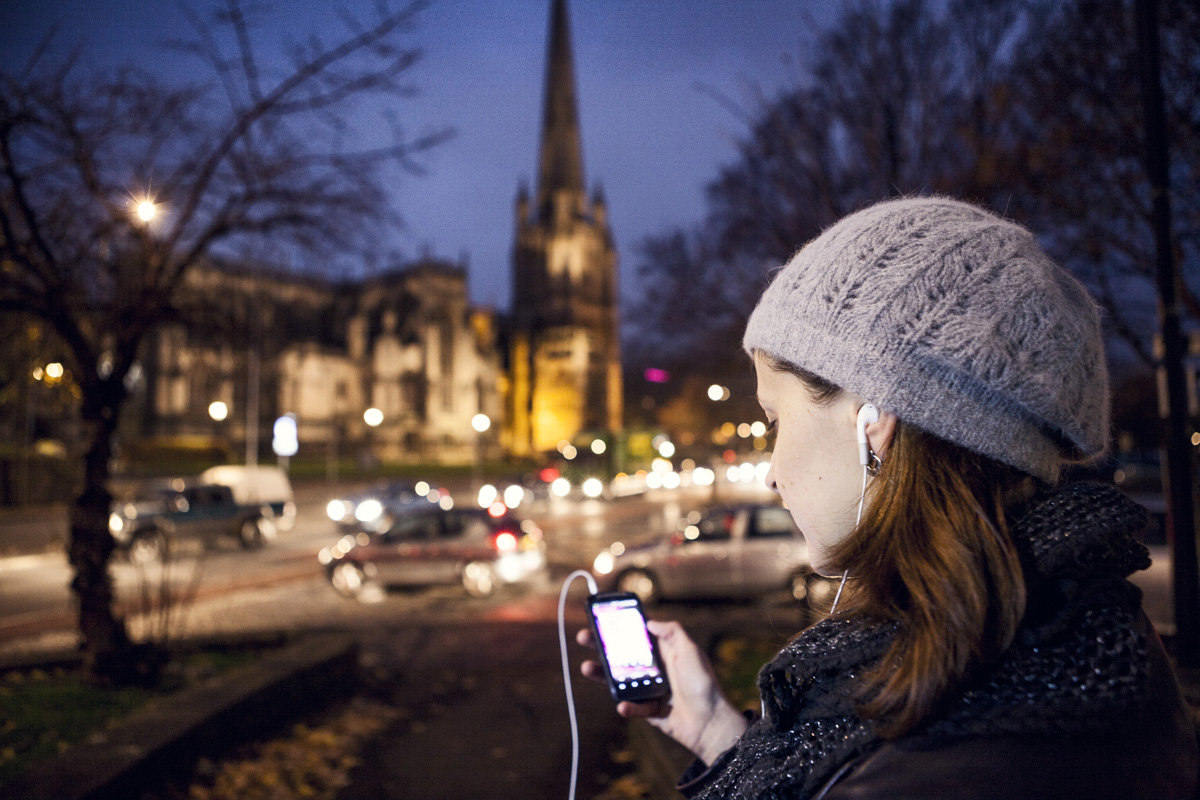
Missorts takes account of the transient nature of the area and the diversity of writings, objects and architectures that are found there. The project will contribute its own set of new ideas to the site: a series of short stories which will be published as part of a street-level mobile app and interventions edited by Tony White for Redcliffe Way. The project will launch in November 2012. 

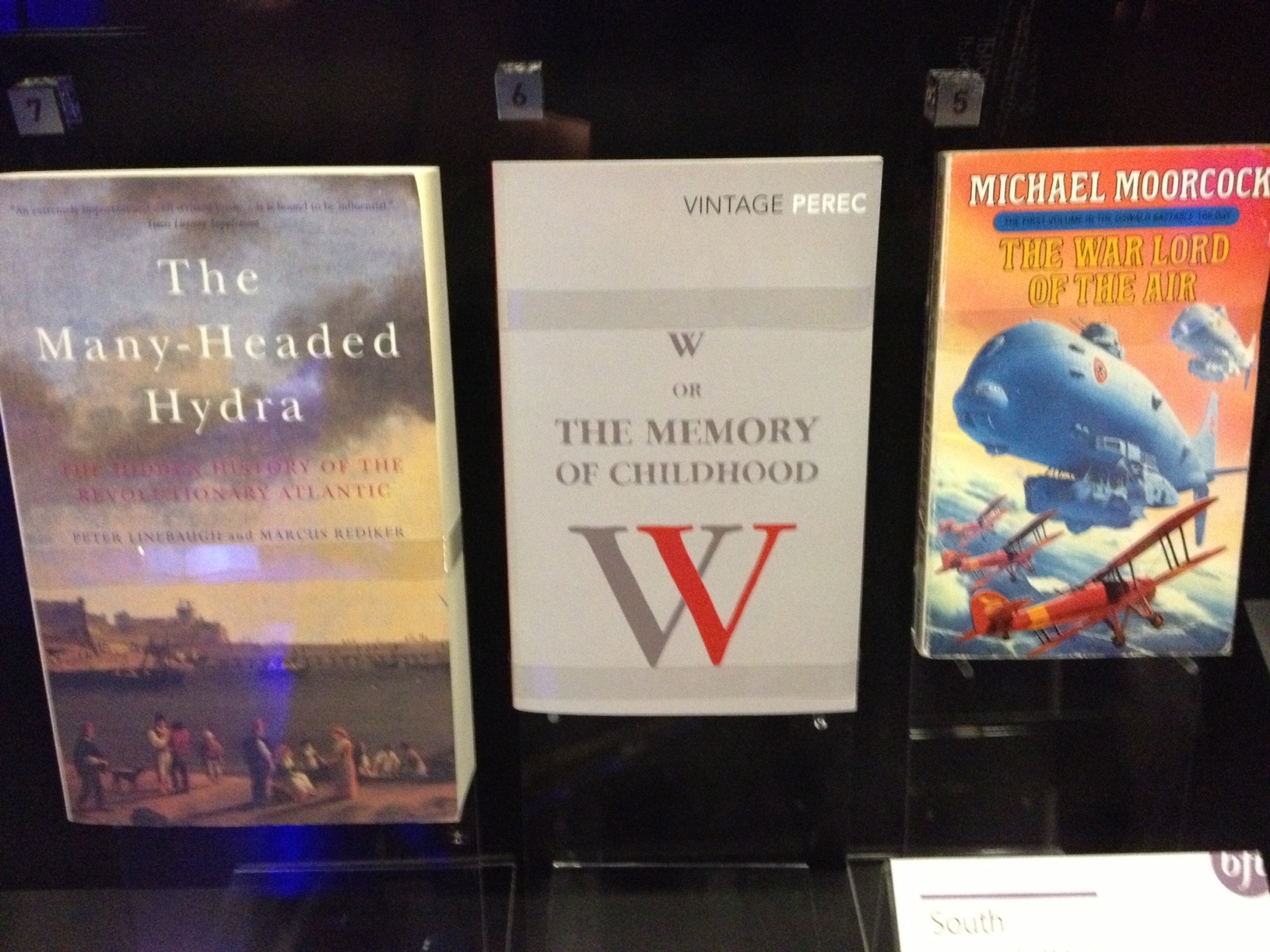
I love writing short stories, and I’ve edited and published a fair few by other people over the years too, whether in the anthologies I’ve edited, for the Idler, or with Piece of Paper Press, and some great writers among them: Steve Aylett, Stewart Home, Nicholas Blincoe, Stella Duffy, Victor Headley, Tim Etchells, Billy Childish, Michael Moorcock and many, many more. I’ve also devised some short story workshops that have been offered to all kinds of writers in recent years, ranging from the workshops I developed when I was writer in residence at the Science Museum in London, to those for architecture postgraduates at the UCL Bartlett School of Architecture and at Portsmouth University. Of course I’ll be bringing all of that experience with me to inform the process in Bristol, but Missorts is also an opportunity to explore the possibilities of publishing new fiction in a new way, as part of a public art project, and using new technology to do new things. I’ll blog more on this aspect of the project as it progresses.

Right now, the most important thing to say is that at the heart of the Missorts project are a series of free short story workshops that I’m running, beginning on 19 and 22 June at Bristol Record Office, which will lead to publication of selected stories and are open to anyone over 18. We’re spreading the word through writers’ groups and bookshops, by e-flyer and leaflet, looking for writers who might be interested in taking part and working with me to write one or more new short stories that could be published as part of Missorts. Places are limited of course — there is a registration/application form on the Situations website.

Panel beating

This Friday 8 June I’ll be speaking at The Literary Conference: Writing in a Digital Age. Here’s the blurb:

an up-to-the-minute conference to make sense of the many possibilities open to writers today, with practical sessions, workshops, case studies, working examples, debates and networking. […] The discussions will explore the key issues facing writers, such as making and selling ebooks, choosing to self-publish or go via traditional routes, an exploration of the emerging international markets, how technology changes literary forms, social media and other promotional tools.

The panel I’m part of has been put together by Sophie Rochester of the excellent The Literary Platform, which if you don’t know it is, ‘a free online resource dedicated to showcasing projects experimenting with literature and technology,’ and well worth checking out. Here’s the blurb for our panel, which is at 12:15 on Friday:

What does new technology mean for the art of storytelling? This session, curated in association with The Literary Platform, gets to the bottom of how much writers should factor in other platforms and, importantly, the reader when constructing their stories. It will look at how traditional writing is changing, and help inspire writers to develop their skills around new approaches to storytelling.

Among other things, Sophie has asked me to talk about Ivy4evr, my collaboration with the brilliant Blast Theory for Channel 4.

§

The Literary Conference: Writing in a Digital Age
8th June – 9th June 2012
Free Word Centre, 60 Farringdon Road, London EC1R 3GA

Publication pre-history

Here is a link to a recent interview that I gave to Richard Marshall (right) of 3:am Magazine and which was just published. We met up in a pub on the Thames on a sunny day in April to talk about Dicky Star and the garden rule, my specially commissioned novella published to accompany a series of new works by the artists Jane and Louise Wilson. But first we spoke about the Balkans, about the short story anthology Croatian Nights that I co-edited with Borivoj Radaković and Matt Thorne, my non-fiction work Another Fool in the Balkans, and a particular strand among my short stories published since 2005:

perhaps a dozen, which again are not collected but were published in small editions here and there, and which began with my own short story for Croatian Nights – ‘Gobbledegook’ – which applied the cut up technique to transcripts of the Milošević trial. I was reading these transcripts, and found myself drawn to the linguistic and performative texture of the proceedings as well as what was being discussed, the bigger story. Glitches in translation and corrections to pagination. Points in the proceedings where the defendant was dissembling, wasting time or pretending the equipment was broken. Complaining about his headphones. Places where the proceedings were breaking down.
 
3:AM: Why were you reading this stuff?
 
TW: Because it is important. Here is a body of writing that is being produced by the ICTY, the International Criminal Tribunal for the Former Yugoslavia, which is concerned with understanding the creation of criminal fascist states in contemporary Europe and the commission of war crimes and genocide. But this body of work – the evidence and the proceedings – is almost unimaginably vast. There are literally hundreds of thousands of pages of transcripts of just the Milošević trial alone, and you can multiply that by all the other trials that are happening and see that there exists this vast literature that is published but largely unread by anyone outside of the proceedings, unless scholars or academics. It’s a huge archive but largely ignored. Yet to me it’s one of the most significant bodies of writing that has been produced in the last decade and it seems imperative to engage with this, to open it up, to read it and draw attention to it. However, because I’m a writer of course I engage with it through fiction…

In the interview we traced the networks that produced those books, the short stories and various related activities back to the early 1990s. Publication pre-history for me, in the sense that my fiction was first published in 1995. We briefly discussed my work with the artist Gordana Stanišić, whose untitled, month-long walking piece I commissioned for The Showroom gallery and which took place during May 1994. I have written more extensively about Stanišić’s work in Another Fool in the Balkans, but interestingly I see that copies of the small publication produced to accompany Stanišić’s live art work — which I’d thought long sold-out — are still available to buy from The Showroom.

Here are a couple of photographs of that work taken by Hugo Glendinning.

Jeremy, ill — the afterword from Dicky Star and the garden rule

My new work of fiction, Dicky Star and the garden rule is published by Forma on 26 April with a launch event at the Free Word Centre in London. Here is the text of a short afterword that is included in both the print and ebook editions, which discusses some aspects of the story’s relationship to the work of the artists Jane and Louise Wilson.

§

Dicky Star and the garden rule was commissioned alongside and to form a critical response to the remarkable body of research and creative works currently being produced and exhibited by the artists Jane and Louise Wilson, who themselves are responding to and investigating the Chernobyl disaster of 1986 for a major commission and series of exhibitions that began at the John Hansard Gallery, Southampton in 2011 and continues at Dundee Contemporary Arts and the Whitworth Art Gallery, University of Manchester through 2012.

The story occupies the Chernobyl time-line, from 26 April 1986 when the accident occurred, until 7 May when reports of the true scale of the disaster were printed in UK newspapers following the Kremlin press conference of the previous day. Rather than work with Jane and Louise in Ukraine or to have drawn too heavily upon the unique interviews and testimonies that they have been collecting in the course of their own research, it seemed pertinent to explore, in a work of fiction, the same events from a UK perspective and using contemporary print media as my primary source.

A metaphor for this approach might be that of the scientific control. In an experiment – e.g. one designed to test the effects of a particular drug – the control is of course the experimental sample that remains untreated or subject only to some standard or pre-existing variable or attribute in contrast to, or to provide a point of comparison with the main, treated sample.

My own research draws on two main sources. Firstly, the Leeds Other Paper archive, which is held in the local and family history section of Leeds Central Library. LOP was an independent, alternative left-wing newspaper published between 1974 and 1994 in that city, where I lived during the period in question. Secondly, archive copies of the Guardian newspaper held in the British Library’s national newspaper collection at Colindale, London.

I am also indebted, as ever, to the writings of Michael Moorcock. As noted by a character in the text, the Guardian book page (singular) of Thursday 1 May 1986 includes a review by Robert Nye of a then new Michael Moorcock novel, The City in the Autumn Stars. This is the sequel to an earlier novel by Moorcock, 1981’s The Warhound and the World’s Pain, in whose pages my character Jeremy finds what seem like eerie predictions of the Chernobyl disaster. These few short and prophetic-seeming passages are quoted here (on pages 18, 19 and 43) exactly as found in Michael Moorcock’s work. (Further bibliographical information in ‘Notes’ below.)

Alongside the LOP’s prior anti-nuclear content, its critical stance and its notable dissemination of accurate scientific information about risks posed by ‘the cloud’ (as the plume of Chernobyl fallout was popularly referred to at the time), and the Guardian’s own extensive coverage of the disaster, I was particularly drawn to the then broadsheet’s back pages, to Steve Bell’s memorable cartoons of radioactive sheep and to the two crosswords, especially the Quick Crossword which I had been fond of doing at the time.

I was mindful of Jane and Louise Wilson’s eloquent deployment in the large-format photographic works comprising Atomgrad (Nature Abhors a Vacuum) of an actual rather than metaphorical yardstick* – a legacy of their work in the Stanley Kubrick archive – and thinking too of the experimental literary strategies and constraints used by the French writer and novelist Georges Perec (1936-1982) and the other members of Oulipo, the Ouvroir de littérature potentielle. During the later years of his life, Perec composed a weekly crossword for the news magazine Le Point. Might the Guardian crosswords themselves, I wondered, synthesise both of these imperitives? Could they be used to provide meter (in a loosely poetic sense) and measure, as well as a useful literary constraint, a mandated vocabulary that might form in effect the tightly controlled variable needed for a literary if not a scientific control? Dicky Star and the garden rule was written to test that proposition.

In following the Chernobyl timeline then, this story is structured as a series of daily chapters running from 26 April to 7 May 1986 (Guardian days only, so excluding Sundays), the course of each of which (including the names of the two main characters) was determined by its own puzzle: that without going ‘off subject’ and as economically as possible it had to incorporate every answer to that day’s Quick Crossword, each of which I completed before beginning to write.

The title is itself adapted from a speculative, crossword-style clue of my own, which also relates to these works of Jane and Louise Wilson and might alternatively be expressed as follows: Dicky Star (anag) – garden rule? (9).

Tony White, Oxford, January 2012

* Even at this resolution, if you look closely at the photograph (above, right) by Jane and Louise Wilson you can see that a yardstick with its alternating black and white pattern has been carefully placed in the upper and right-hand portion of the glassless centre-light (tight up against the ‘hanging stile’ and beneath the ‘top rail’) in the right-hand door.

§

Dicky Star and the garden rule launch, 26 April 2012, 18:30 (Doors 18:00). Freeword Centre, 60 Farringdon Road, London, EC1R 3GA. RSVP essential. Please email Divya Thaker on dt@forma.org.uk or +44 (0)207 456 7820.

For updates and further details about forthcoming exhibitions of Atomgrad (Nature Abhors a Vacuum) by Jane and Louise Wilson follow Forma Arts and Media Ltd.

Launch of Dicky Star and the garden rule

I’m really looking forward to the launch of Dicky Star and the garden rule. Here is the info from the Forma website. Come and join us. All are welcome. RSVP info below.

26 April 2012
18:30 (Doors 18:00)
Freeword Centre
60 Farringdon Road
London, EC1R 3GA

Forma is delighted to announce a launch event to celebrate the publication of a specially commissioned work of fiction by Tony White, author of the novel Foxy-T (Faber and Faber).

Dicky Star and the garden rule follows young couple Laura Morris and her boyfriend Jeremy through the turbulent days at the end of April 1986 when the world’s worst nuclear accident occurred at the Chernobyl nuclear power plant in the Ukrainian Soviet Socialist Republic of the former Soviet Union.

Dicky Star and the garden rule is published to accompany Atomgrad (Nature Abhors a Vacuum) by artists Jane and Louise Wilson, a series of works commissioned by Forma to reflect on the 25th anniversary of the Chernobyl disaster. Novelist Tony White reveals Jeremy and Laura’s story in vivid daily chapters that follow the disaster’s impact in the UK, but are also each determined by their own quixotic puzzle: each daily chapter must be told using all of the answers to the Guardian Quick Crossword from that day in 1986.

Tony White will read excerpts from the book and be joined in conversation by writer and broadcaster Ken Hollings. Followed by drinks reception.

RSVP essential. Please email Divya Thaker on dt@forma.org.uk or +44 (0)207 456 7820.

The good news or the bad news?

‘Which do you want first,’ we used to say. ‘The good news or the bad news?’

The bad (although very old) news is that there is no Glastonbury this year. It’s a shame as I’ve enjoyed doing gigs at the Free University of Glastonbury over the past couple of years. Highlight of the 2011 festival for me was performing with Richard Norris of The Grid and The Time and Space Machine on a new live version of my short story ‘A Porky Prime Cut.’

The story was commissioned by SCAN in Bournemouth and Poole and is set in and around Turbary Common and the West Howe area of the conurbation. The ‘Porky Prime Cut’ of the title refers of course to the messages that were scratched into vinyl records by legendary pressing engineer George Peckham, and the ebook of my story includes links to various resources by and about George. The story itself tells of a subtle war of attrition between wannabe art students and soul boys of the time, a particular byproduct of which was a certain acid house myth about, ‘Bournemouth soul boys who were so “hard core” that they were into T.G.’

If you know Richard Norris’s work you’ll immediately see why it was such a good fit to work with him on the story: he really was a UK acid house pioneer. Richard co-produced (with Genesis P-Orridge) Psychic TV’s Jack the Tab LP, a piece of musical metafiction in its own right in that it was presented as if it were a various artists compilation of the then nascent UK acid house scene.

The good news is that we enjoyed doing the Glastonbury gig so much that a few weeks later I went down to Richard’s studio in Lewes, East Sussex to record a studio version. Here is an exclusive preview of that session: me reading ‘A Porky Prime Cut’ with Richard’s fantastic accompaniment. Click the ‘forward’ button on the small player icon below to start.


Creative Commons License
A Porky Prime Cut by Tony White, music by Richard Norris is licensed under a Creative Commons Attribution-NonCommercial-NoDerivs 2.0 UK: England & Wales License. Download a free ebook of ‘A Porky Prime Cut’ (published by James Bridle’s Artists’ eBooks project), which includes beautiful photographs of Turbary Common by Bournemouth photographer Diane Humphries.

§

For news of more live events including the Free Word Centre, London on 26 April, and — just confirmed — the Port Eliot Festival in July, see my new Events page.

More good news: Taste the Lazer, a new LP by The Time and Space Machine is out next week!

Who has the right to write in the UK right now?

It was just confirmed the other day that my new work of fiction, Dicky Star and the garden rule, will be launched at the Free Word Centre in London. This launch event will be on 26 April 2012. All are welcome.

I’m particularly pleased about this for several reasons, not least because the Free Word Centre’s stated ethos is to be a place ‘where reading, writing and free speech come together.’ As such the centre on London’s Farringdon Road is home to organisations including the Arvon Foundation, Apples and Snakes and The Reading Agency that each promote and support literacy and writing in the UK. English PEN is based there too, and Index on Censorship who ‘defend freedom of expression on behalf of people around the world.

Events in recent months and days have demonstrated, if such demonstration were needed, that freedom of expression is an issue in the UK at the moment. I’m not talking about supposed freedoms of people in positions of power to defy ‘the PC brigade’ and spout any old racist, sexist, homophobic garbage, but the freedoms for example last year, to comment on the so-called ‘England riots’ of summer 2011 as they were happening, and more recently, the freedom to publish opinion in relation to the war in Afghanistan.

After the riots across the UK of August 2011, two young men, Jordan Blackshaw of Northwich, Cheshire, and Perry Sutcliffe-Keenan of Latchford, Warrington, were each given four year jail sentences following their conviction on charges of incitement to riot.

There were of course some critical responses to these and other harsh sentences relating to the 2011 riots, but elsewhere in the media there was an active evocation of complicity, a rhetorical call upon a consensus that may or may not exist. As one commentator put it:

If we know one thing for certain about the England riots, it’s that the public have been urging the courts to dish out some serious punishment.

‘The public’? Certainly the Lord Chief Justice’s judgement was clear: offences committed during the riots were as such ‘aggravated crimes’, and sentences should therefore, ‘be designed to deter others from similar criminal activity.’

The judgement in the cases of Blackshaw and Sutcliffe-Keenan discusses in some detail whether or not the ‘event’ pages they had created (not ‘websites’ as he erroneously describes them throughout) were a joke or were literally intended (are these the only two possibilities?), and seems to conflate agreement after the event and under questioning regarding possible effects of the posts with a prior intention. In his judgement, this means that Blackshaw, ‘believed the offences he was inciting would happen,’ (paragraph 57) and that Sutcliffe-Keenan, ‘accepted that he had encouraged the commission of riot, and intended to encourage its commission,’ (paragraph 59), even though Sutcliffe-Keenan had later cancelled his ‘event’ with the message, ‘“only jokin f… hell,”’ (pararaph 63).

Another way of looking at these particular cases might be to suggest that what Jordan Blackshaw and Perry Sutcliffe-Keenan had actually done was to use social networks to compose short pieces of creative writing in response to current events and circulate them to each of their small groups of friends; to publish them, in other words. No-one, not even the young men themselves, actually turned up at these so-called ‘events.’ Perhaps this was because of messages from the police that were posted on Blackshaw’s page at least, warning of the consequences of attending. Or could it be that nobody turned up because the status of the posts as fictions was already clear to those involved? Perhaps, whether Blackshaw and Sutcliffe-Keenan quite understood this or not, the Facebook ‘event’ function was being used primarily as a publishing rather than a purely logistical medium.

In both cases it is also cited in the judgement (and therefore deemed, one must assume, as being of significance) that the pages were ‘also made available for general public viewing,’ but given the well-documented complexity of, and rapid changes to, Facebook’s privacy settings, this may not have been quite the clear decision that is suggested.

Certainly, these were pieces of writing that if penned by another and published or framed in a different way might have been understood as satirical or parodic commentaries or fantasies about the riots and/or those participating in them, about Government policy, and economic and other injustices, or about Facebook itself and the types of social relations it enables prescribes.

Interestingly, the title of Blackshaw’s ‘event’ (yes, it had a title!), ‘Smash D[o]wn in Northwich Town,’ is even constructed as a rhyme. There is a town called Northwich, but there is no such place as ‘Northwich Town.’ It is a deliberately poetic construction.

In October 2011 both convictions were upheld by the Court of Appeal.

As I write this, recent days have seen a similar arrest for a piece of writing published on a social network, but unlike the events of August 2011, this time there was also an opportunity to compare it with what was in some ways a similar piece of writing, but one that had been published in a different context.

Firstly, someone used a social network (Twitter) to post a link to the Guardian letters page where he and others had had letters published voicing criticisms of the official statements about the six British soldiers from 3rd Battalion the Yorkshire and 1st Battalion The Duke of Lancaster’s Regiments who were tragically killed in Afghanistan on 6 March 2012. In the lead letter (see right) another correspondent, Gregor Truter, characterised these statements as ‘sentimental and frankly appalling.’ He then pointed to the failure to acknowledge the huge numbers of civilian casualties in the war so far, and described the language of the official pronouncements as ‘hypocritical and shameful. Cowardly, disgraceful, appalling.’

Secondly, the Independent reported that a young man of nineteen named Azhar Ahmed from Ravensthorpe, West Yorkshire had posted a message on a social network (Facebook) where he criticised the official statements about the six British soldiers from 3rd Battalion the Yorkshire and 1st Battalion The Duke of Lancaster’s Regiments who were tragically killed on 6 March 2012. Ahmed characterised these statements as ‘gassin,’ and pointed to the failure to acknowledge the huge numbers of civilian casualties in the war so far. Ahmed’s use of language (see far right) was unskilled and much more intemperate than that of Truter. The comments of a spokesman for the West Yorkshire Police have been widely reported:

He didn’t make his point very well and that is why he has landed himself in bother.

Clearly, the gist of each of these more or less contemporaneous pieces of writing, if not the language or the media used to publish them, was very similar, but while some received the approbation of having their letters published in a national newspaper, Azhar Ahmed (who published in a place where such official approval is not needed) was arrested and charged with ‘a racially aggravated public order offence,’ even though as Kenan Malik points out: ‘Ahmed never mentioned race, ethnicity or even culture or faith in his rant.’ There is more very useful discussion of Ahmed’s arrest on — of course — the Index on Censorship blog.

All three examples — whether one is comparing Azhar Ahmed’s argument to those of more obviously educated writers of letters to the Guardian, or looking at all closely at Jordan Blackshaw and Perry Sutcliffe-Keenan’s convictions for incitement to riot — are in some way also about writing, publishing and power, and new ways that social media is being used. Does the treatment of these young men also suggest that not everyone has the right to write in the UK right now? That some people in the UK are allowed to write but others are not?

§

Join English PEN:

English PEN promotes the freedom to write and the freedom to read in England and around the world. Anyone can join our membership, whether you’re a writer, a reader, an editor, a translator, a publisher, a literary agent… or just someone who is passionate about literature.

Support Index on Censorship by subscribing to their magazine for future issues including, in June 2012, ‘Olymic challenge’:

As London prepares to host the Olympics, Index takes a look at sport and freedom of speech. Should countries with poor human rights records be allowed to host international sporting championships? Is there any evidence that sport can have a positive impact on free speech? Or is it time to stop expecting sport to be morally improving?

See also China Miéville’s eloquent piece on the racism surrounding the Tintin au Congo case in the Belgian courts. It is, he says,

depressing to have to point out, yet again, that there is a distinction between having the legal right to say something & having the moral right not to be held accountable for what you say. Being asked to apologise for saying something unconscionable is not the same as being stripped of the legal right to say it.

Dicky Star and the garden rule is published on 26 April 2012 by Forma. Pre-publication copies are exclusively available from the Dundee Contemporary Arts (DCA) Shop.

The Ghost of Music Industry Past

This stickered CD turned up in some forgotten corner of the house the other day, and it seemed so striking that I had to share it. A relic of another era perhaps, but one that is worth looking at again, especially when analogies between the music industry and book publishing seem to have been popping up everywhere recently.

Here for example was Future Book’s useful four-part comparison from the end of last year. Here is Danuta Kean blogging about the music industry’s failures to enforce copyright and how that might play out for publishing. Here is another widely reproduced piece by an anonymous publisher predicting that there is, ‘no future in printed books. They’ll be like vinyl: pricey and for collectors only.’ (And here is writer Steven Hall rejecting that same analogy on Twitter).

In light of this, and when the figures about the cost to the music industry of file sharing are revealed to be occasionally ‘dodgy’, it is interesting to see these kind of inflated figures again too: five CDs for £50!

This is what buying music looked like in July 2001, and that promotional sticker is real.

The significance of the date is not that we’re looking at this from the vantage point of the current recession, when the thought of spending £50 in a record shop in one go might pinch a little for most of us. It is rather that this was produced a few months before the launch of the iPod, at a time when even though the MP3 format had been around for the best part of a decade, there was still no easy, mainstream way to legally obtain music online, and there wouldn’t be for another couple of years.

That’s why I found this sticker so surprising, because I’d forgotten how bad things were. The contrast in scale between this last gasp of how the industry wanted us to buy our music — the model they were clinging to, and no wonder — and how we do it now, mostly it would seem via the online purchase of single tracks for pennies, relatively speaking. Even when we do have to buy an album at full price it’s more likely to cost a vinyl-LP-reminiscent £6.99 for either the CD or the download, although the latter will often be packed with extra material.

So it is with a re-issue of the reggae classic Come Back Darling by the mighty Johnny Osbourne (produced of course by the late, great Winston Riley) that has been knocking around for a while. The downloadable version of Come Back Darling weighs in with an impressive sixty-one tracks instead of the original twelve, and even then it doesn’t quite squeeze in all the ground-breaking music produced by Riley in those Techniques sessions. So while Johnny Osbourne’s boisterous classic ‘See and Blind’ is there, Dennis Alcapone’s even more exuberant version of the same track is missing. Luckily for me I’ve had both singles on vinyl since I was a kid. Luckily for you, ‘Look into Yourself’ by Dennis Alcapone is on Youtube, which also didn’t exist back in 2001 when this CD was stickered.

‘O Brother,’ indeed. Fifty quid for five CDs? Blimey! It’s a reminder, if one were needed, that extending copyright and strengthening copyright protection cannot retrospectively protect a monopoly industry from shooting itself in the foot, or from its own past greed and complacency.

For more on the riveting subject of copyright extension in books and film respectively, you may also be interested in Adrian Hon’s gently satirical ‘Eternal Copyright: a modest proposal’ for the Telegraph:

Under the current system, if you lived to 70 years old and your descendants all had children at the age of 30, the copyright in your book – and thus the proceeds – would provide for your children, grandchildren, great-grandchildren, and great-great-grandchildren. But what, I ask, about your great-great-great-grandchildren? What do they get? How can our laws be so heartless as to deny them the benefit of your hard work in the name of some do-gooding concept as [sic.] the “public good”, simply because they were born a mere century and a half after the book was written?

And film director Alex Cox interviewed by Craig Terlino (via Boing Boing):

Now they want to have longer copyright periods because they say the young artists are relying on this money. The young artists never see any money because they sign away that money to big media corporations […] We, the artists, lose all of our rights to these massive corporations, who then come down heavy on these kids for downloading films and music that we never see a penny from. It’s complete bullshit. I want to encourage your audience to go and pirate a bunch of my stuff right away.

And finally — brace yourself — here is an interesting piece by Frédéric Filloux from the Guardian on why ebooks are like software.

Off-Broadway

(adjective) 3. (Publishing/Literature) designating the kind of experimental, sometimes (but not exclusively) lower-budget productions, non-traditional collaborations and commissioning partnerships, innovative distribution models and prototyping associated with literature published outside of ‘traditional model’ publishing by the mainstream houses.

With apologies for taking what is a very specific set of criteria relating to theatrical productions in Manhattan and applying them to literary publishing in the UK, but I’ve noticed that ‘Off-Broadway’ is becoming a useful metaphor, an easily understood shorthand when talking about my more experimental literary projects; particularly stories or books that allow me to explore future publishing-type scenarios.

So, for example, when someone asks — as they did last night — what I’m working on or what I’ve got coming up next, I will thank my interlocutor for their kind interest and tell him or her that I have a new work of fiction coming out on 26 April which is called Dicky Star and the garden rule.

If their curiosity remains unsated, as was the case yesterday evening, I will continue. Telling them that this book was commissioned alongside new works by the brilliant artists Jane and Louise Wilson as a kind of open-brief, arm’s-length collaboration, that this will be on general release in both print and ebook editions as well as being on sale at Jane and Louise’s exhibitions over the coming year, and that it will be launched with events in London and later (we hope) in Leeds and Manchester and more.

Should I be pressed to expand further, as indeed I was, I may add that review copies are going out this week, and that a limited number of pre-publication copies are also exclusively available from the DCA Bookshop at Dundee Contemporary Arts, where Jane and Louise Wilson’s exhibition is on until 25 March.

‘Sounds great,’ they will say. ‘Is that with [name of usual/previous publisher]?’

‘No,’ I will reply. ‘It’s kind of Off-Broadway.’

Tony White, Dicky Star and the garden rule. Forma Arts and Media Ltd. Publication date: 26 April 2012. Extent: 49pp. Size: 210 x 148 mm. Distribution: Cornerhouse http://www.cornerhouse.org/books ISBN 978-0-9548288-6-8. Price: £5.00

In case of emergency

February 4 is National Libraries Day: ‘a free-to-join gathering of people who believe in the importance of libraries.’

Well, count me in, because libraries of one kind or another are places in which I seem to spend a lot of time, although my use of them has changed over the years. When I was a child I went to the library to borrow books, and I’ve encouraged the same as a parent. Now when I go to libraries it is most often as part of the process of writing them, because of course there is more to libraries than the lending and borrowing of books, vitally important though that is.

Libraries can also be both a repository for and a gateway to archives of all kinds, many of which are simply unavailable anywhere else. For example, I was researching for a forthcoming fiction title among bound archive copies of the now defunct alternative news weekly Leeds Other Paper in Leeds Central Library recently. Most UK newspapers are held in the British Library’s Newspaper Collection in Colindale, London, but not the Leeds Other Paper. These copies of the LOP in Leeds Central Library may well constitute the only complete collection that exists of this important alternative newspaper.

While waiting to access the LOP archive I also happened across the Leodis project, a fantastic photographic archive of the city that was established by Leeds Library & Information Service as part of a Yorkshire-wide Lottery-funded photography archive digitization project in 2003. The Leodis site is a bit clunky in many ways, but not bad for something that launched in 2003. Back then, even now-familiar approaches to copyright and licensing and the ways that we access and interact with content online like Creative Commons were still more or less part of a creative, legal and publishing avant garde, so e.g. there is no obvious notice on the Leodis site about whether, how or under what terms one can use the photos, beyond the options to leave comments or (and I’m resisting the urge to put an exclamation mark at the end of this sentence) to buy a print.

It is well worth digging around — well, wading through — the Leodis site however as there is some really great material on there, not least of which for a bibliophile are the many pictures of the Library itself, which has gone through various transformations over the years including the recent excavation of a magnificent tiled hall, originally the reading room and now a visually stunning cafe. Browsing through the photos, I found myself particularly drawn to some images of the Music Library, the very shelves and false ceiling of which it was in fact that had needed to be removed to reveal the spectacular tiled hall beneath. The Music Library still exists, it has simply been moved upstairs.

In light of popular myths about the supposedly recent so-called ‘dumbing down’ of libraries to accommodate music, DVDs and other media, it was interesting to read in the text accompanying this great image that

The [Leeds] Music Library was started in 1950, as part of policy to establish subject departments, rather than keeping all stock as a vast collection. Originally music scores and books were available, in 1957 a record lending library service began. This cost £2,500 for which 1,837 records were purchased.

The work of fiction that I was in Leeds to research is set in the city in the mid-1980s. Many of the LPs in the Music Library’s loan collections at that time could well have been purchased as part of that same late-1950s job lot, but they were still in good condition and still being loaned out nearly thirty years later. The Music Library’s vinyl loan collection is now long gone of course, but I was pleased when trawling some secondhand dealers recently to find for sale one mint vinyl copy of an LP that had been a Music Library favourite when I lived in Leeds, and which now I thought about it I was keen to hear again: Follow the Drinking Gourd by Alex Foster and Michel Larue.

Foster and Larue’s album was released in 1958 by a New York record label called Counterpoint who up until the previous year had traded as Esoteric Records, a willfully obscure jazz and art-house label started by Jerry Newman which operated out of 75 Greenwich Avenue (now the Bar-B-Que restaurant). As a student in the early 1940s, Newman had cut live recordings of jazz gigs direct to disc. He set up the label after WWII, in part at least to release those early bebop recordings. Newman’s interest in live recording continued, too. For a fantastic example of this, see the Ghostcapital music blog, which has a great rip of Newman’s live recording of the Toraia Orchestra of Algiers that was released on Esoteric in 1952, plus high quality scans of cover art, record labels etc.

According to Bill Morgan’s The Beat Generation in New York: A Walking Tour of Jack Kerouac’s City (City Lights Books, 1997), Kerouac hung out in the back room of Esoteric because a school mate worked for Newman. Supposedly he cut some recordings in Newman’s studio, but a 1955 plan to record On the Road with live accompaniment from saxophonist Allen Eager never happened.

In a foreword on the back cover of their 1958 long-player for Newman, Michel Larue and Alex Foster suggest that ‘American Negro Folk Music has been too long neglected […] Here is music created years ago, yet [it] is the source of the present American trend in music.’  According to a short biographical note,  their ‘new approach in Folk Music’ was the result of Foster and Larue wanting to collaborate and perform in night clubs, not just for the theatre and concert hall audiences to whom they’d each been playing up to that point.

I don’t know how many copies of Michel Larue and Alex Foster’s vinyl LP are still floating around, but — and I can’t say this clearly enough — if you see it, buy it. The production of Foster and Larue’s sparse arrangements is clear and spacious, and there’s a stagey kind of rockabilly-funk to their percussion-and-bass-propelled versions of Blues, gospel and folk standards that include a masterful and probably definitive ‘John Henry’.

If you can’t get hold of the vinyl, the record has also recently been reissued for CD and MP3 (albeit under another name — ‘American Negro Slave Music’ — and with a slightly reduced track listing) by the Essential Media Group label. Here is their page on the Myspace player.

The title-track of Foster and Larue’s original vinyl release — Follow the Drinking Gourd — is of course a folk classic in its own right, with a long and complex if not to say contested heritage. See the website of Joel Bresler’s fascinating Follow the Drinking Gourd: A Cultural History project for more on this. Bresler reveals that Foster and Larue were the first Black artists to record the song, but among the numerous versions of ‘Follow the Drinking Gourd’ that are collated and discussed in his wide-ranging commentary I was particularly delighted to see one by the Welsh folk and country act Triban, who recorded the song in both Welsh (as ‘Dilyn y Sêr‘) and English languages.

Regular readers may recall that I’ve written about Triban here before, in connection with the destruction over the past decade of the former Redgrave Theatre in Farnham, Surrey (a connection that is both too slight and too convoluted to repeat here). However, that single emblematic act of cultural vandalism pales in comparison with what could be about to happen to public libraries all over the country: a century or more of work for education, literacy and the public good swept away with no thought for the consequences.

The bad news in this new cultural and educational emergency is that there is of course no one simple way to raise the alarm.

Tim Etchells, ‘Emergency Phone’, 2012.

§

National Libraries Day, Saturday 4 February 2012:

See the activities map and other resources on the National Libraries Day website for information about events happening on the day.

If you are on Twitter, follow @NatLibrariesDay and the hashtag #NLD12.

Further listening:

Alex Foster and Michel Larue, American Negro Slave Songs (Digitally Remastered), Essential Media Group, 2009. (Possibly MP3 only), £7.49

Michel Larue, Songs of the American Negro Slaves, Folkways/Smithsonian Institute, 2009 (Original Release Date: 1 Jan 1960). CD £21.59, MP3 £5.99.

Triban, Harmony: Y Casgliad/The Collection, 1968-1978, Sain Records, 2011. SAIN SCD 2637 CD bocs set £16.99 (also available as 64-track MP3 download)

Forthcoming fiction:

Tony White, DICKY STAR AND THE GARDEN RULE, Forma Arts and Media Limited, publication date: 26 April 2012, 49pp, size: 210 x 148 mm. ISBN 978-0-9548288-6-8 Price: £5.00